

Archive Spotlight: Where Our Everyday Phrases Come From
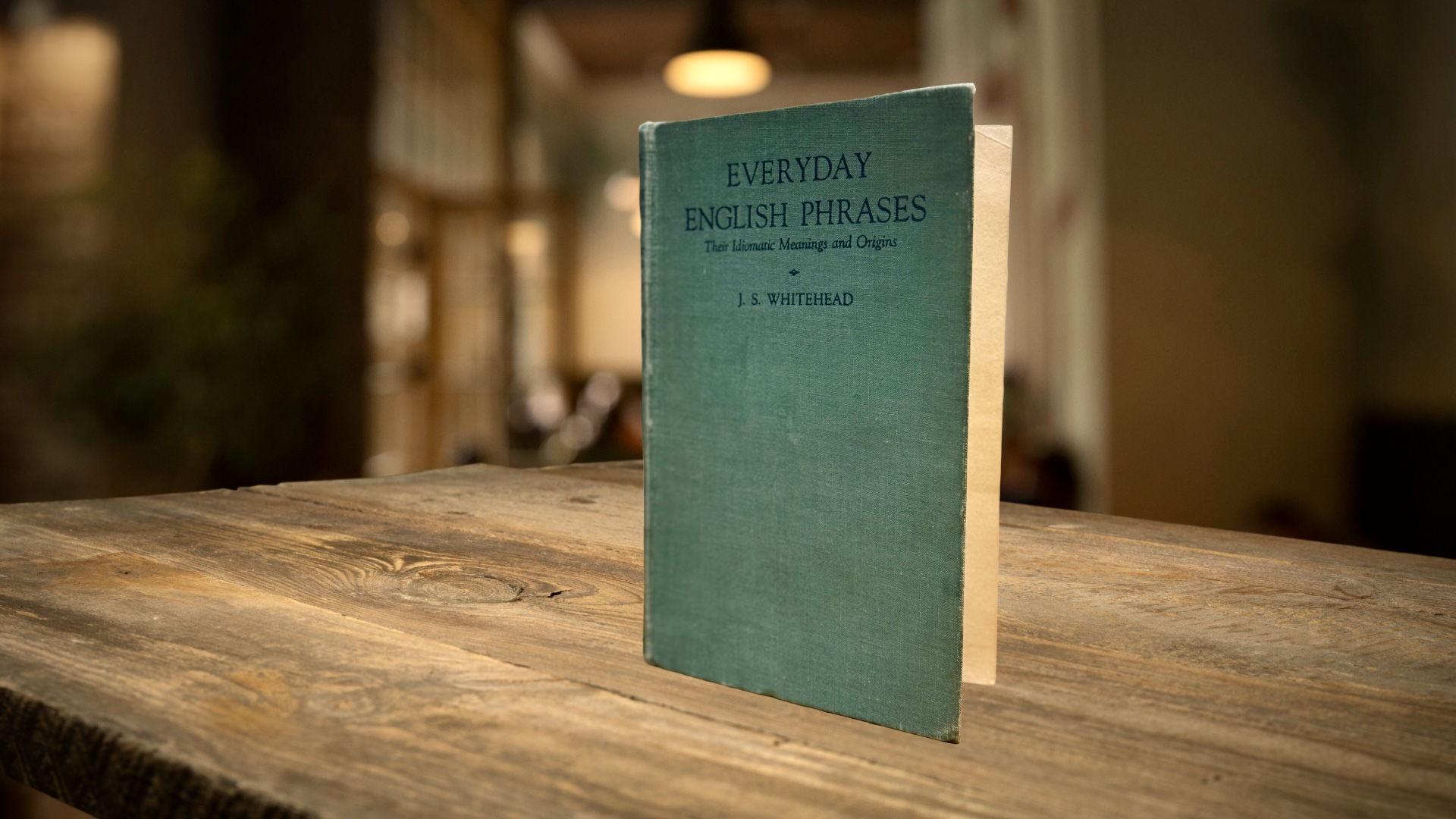
While exploring the Lancashire Authors Collection at the University of Greater Manchester, we came across a fascinating and slightly unexpected book: Everyday English Phrases: Their Idiomatic Meanings and Origins by J. S. Whitehead, first published in 1937 by Longmans, Green and Co.
At first glance it might appear to be a simple reference book. But spend a few minutes with it and it quickly becomes something much more engaging. The author explores the stories behind the phrases we use every day, expressions that most of us understand instinctively but might struggle to explain.
- Why do we say someone will ‘chop and change’ when they can’t make up their mind?
- What does it really mean to “pay homage”?
- Where does the phrase ‘by hook or by crook’ come from?
The book was originally written to help students learning English understand these expressions. As the foreword explains, idioms are one of the most difficult parts of any language for non-native speakers. A phrase might make perfect sense to someone who has grown up hearing it, but appear completely mysterious to someone encountering it for the first time.
Whitehead set out to solve that problem by tracing the origins of familiar sayings, explaining where they came from and how they came to mean what they do today. The result is a collection of short, engaging explanations that turn everyday language into little pieces of social history.
Why Books Like This Still Matter:
Although this book was written nearly ninety years ago, its subject feels surprisingly modern. People are still fascinated by the hidden stories inside everyday language.
Today, audiences hear about word origins through sources like Susie Dent’s language explanations on Countdown, podcasts about etymology, or modern reference works such as Brewer’s Dictionary of Phrase and Fable. These contemporary explorations of language continue the same tradition that Whitehead was contributing to in 1937: uncovering the history hidden inside ordinary words and expressions.
What is particularly striking when reading this older book is how many of the phrases it discusses are still part of everyday speech. Expressions like ‘chop and change’, ‘pay homage’, and ‘by hook or by crook’ are phrases we still hear regularly today. Language changes constantly, but it also carries the past with it. Many of the expressions we use without thinking are rooted in older ways of life, in trades, industries, and everyday experiences that shaped earlier generations.
Language Never Stops Changing:
Of course, language doesn’t just preserve the past, it keeps moving forward too. The rules we learned at school, about never splitting an infinitive or always writing in complete sentences, still have their place in formal writing. But use them rigidly in a text message or an online conversation and something feels off. Too stiff. Like you’re trying too hard.
That instinct is actually language doing what it has always done: adapting to context. We naturally write differently depending on who we’re talking to and where. A message to a friend looks nothing like a covering letter, and that’s not a mistake, it’s fluency.
New words and phrases are entering everyday use all the time, often arriving through technology, social media, or popular culture. Some will fade quickly. Others will stick around long enough that future readers might one day find them in a book like Whitehead’s, wondering how they came to mean what they do.
The same process that gave us ‘on tenterhooks’ from the textile mills is still happening now. The language of one generation becomes the history lesson of the next.
A Phrase with Local Connections:
One phrase that stood out immediately was ‘on tenterhooks’.
Today we use it to describe the feeling of anxious anticipation, the kind of suspense you might feel while waiting to see what happens next in a gripping story.
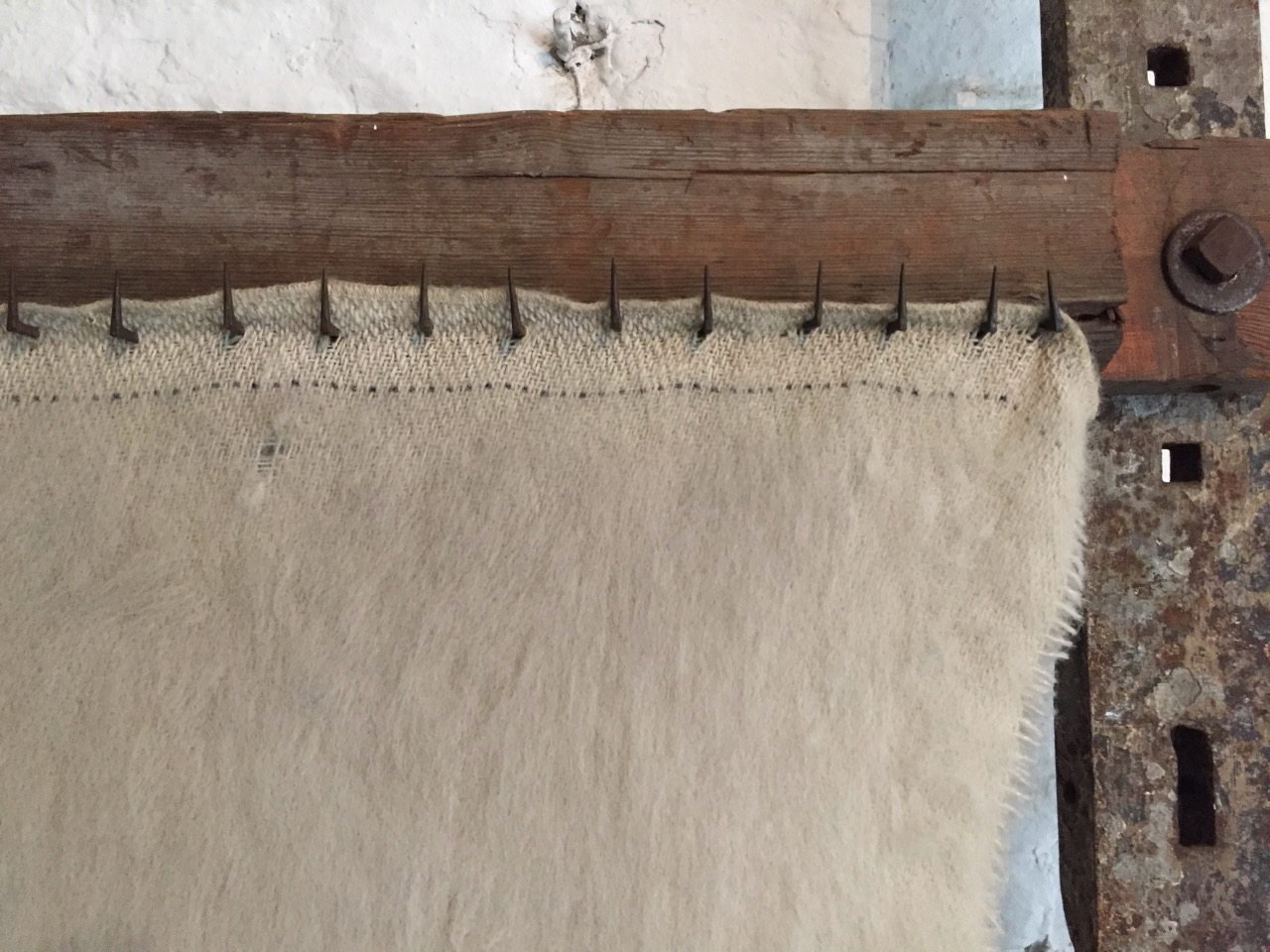
But the phrase actually comes from the textile industry.
A tenter frame was used to stretch newly washed cloth so that it would dry evenly. The cloth was fixed to the frame with hooks and pulled tight across it. Over time, the image of cloth stretched tightly on hooks became a metaphor for tension or suspense.
For a town like Bolton, with its deep connections to the textile industry, this is a particularly striking reminder of how language grows out of everyday working life. The mills that once shaped the town’s economy also shaped the words people used to describe the world around them.
Phrases that began as practical descriptions of work eventually became part of everyday speech, long after the industries themselves had changed.
Discovering Unexpected Gems in the Archive:
One of the most enjoyable things about browsing the Lancashire Authors Collection is that you never quite know what you will find. Shelves of books written by authors connected to the region contain everything from local history and memoirs to unexpected subjects like the origins of everyday phrases.
On this visit, I simply picked a book from the shelf out of curiosity, and ended up discovering a fascinating exploration of how our language evolved.
Moments like this are part of the pleasure of working with archives and special collections. A book chosen at random can open up an entirely new perspective on language, history, and everyday life.
If you enjoy books, language, or local history, the Lancashire Authors Collection at the University of Greater Manchester is well worth exploring. You might discover something unexpected that captures your attention in exactly the same way.
A Writing Prompt: The Characters Behind the Words
Many everyday phrases began not just in places, but with people. A phrase often carries the echo of a particular kind of character, the stubborn trader who wouldn’t budge, the mill worker who knew exactly how tight to pull the cloth, the market seller who always found a way.
Bolton’s textile heritage gives us ‘on tenterhooks’, but behind every phrase like that is a world full of vivid, memorable people. The workers, the bosses, the neighbours, the eccentrics, the characters who made a place what it was.
This month’s Reading Bolton theme is Memorable Characters, and everyday language offers a wonderful way in.
Think about the people connected to Bolton who live on in your memory, real or fictional, from books or from life.
They might be:
- A character from a Bolton-set novel or story who has stayed with you
- Someone from local history whose personality feels larger than life
- A family member or neighbour whose sayings or habits you still think about
- A figure from Bolton’s industrial past who you’ve read or heard about
- Or simply someone who, like a good phrase, seemed to capture something true about the place
For this month’s Reading Bolton theme, you could write a short portrait of a memorable character and the words, phrases, or stories they left behind.
The best characters, like the best expressions, have a way of lasting long after everything else has changed.
If someone springs to mind, we’d love to hear about them through the Reading Bolton project.




If we are talking about characters who capture the true spirit of Bolton, I have to go back to my grandfather, Arthur. Long before he was writing shaky congratulations in my graduation card, he was a man entirely shaped by the quick wit and sharp humour of the town’s busy markets and streets.
Arthur was a character who could summarise a person or a situation in a single sentence. His absolute favourite saying, one he used whenever he met someone who thought a bit too highly of themselves, was that they were “all froth and no beer”.
He lived by the opposite rule. He was quiet, observational, and fiercely grounded. He had this wonderful habit when he was deep in thought of tapping his wedding ring against his teacup, a tiny, metallic rhythm that let everyone in the kitchen know he was about to deliver a dry, brilliant one-liner. He didn’t need to shout to command a room; his presence was built on decades of working hard and knowing exactly who he was.
Arthur passed away a few years ago, but he lives on in those sharp little phrases that still echo in our family. He was a true Bolton character, resilient, unpretentious, and unforgettable.