
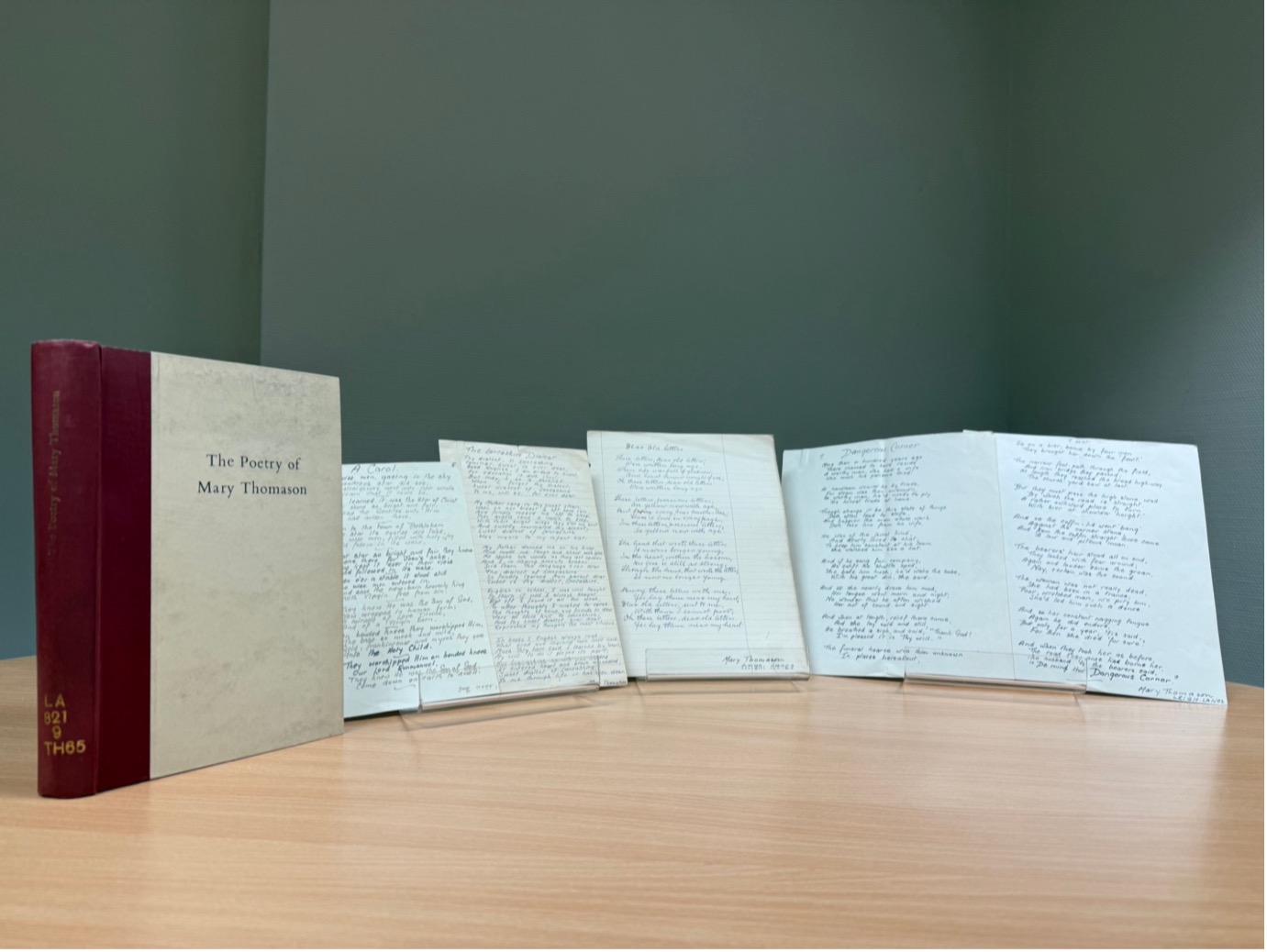
While exploring the Lancashire Authors Collection at the University of Greater Manchester, we came across a small set of handwritten poems by Mary Thomason, a poet from Leigh who died in 1937.
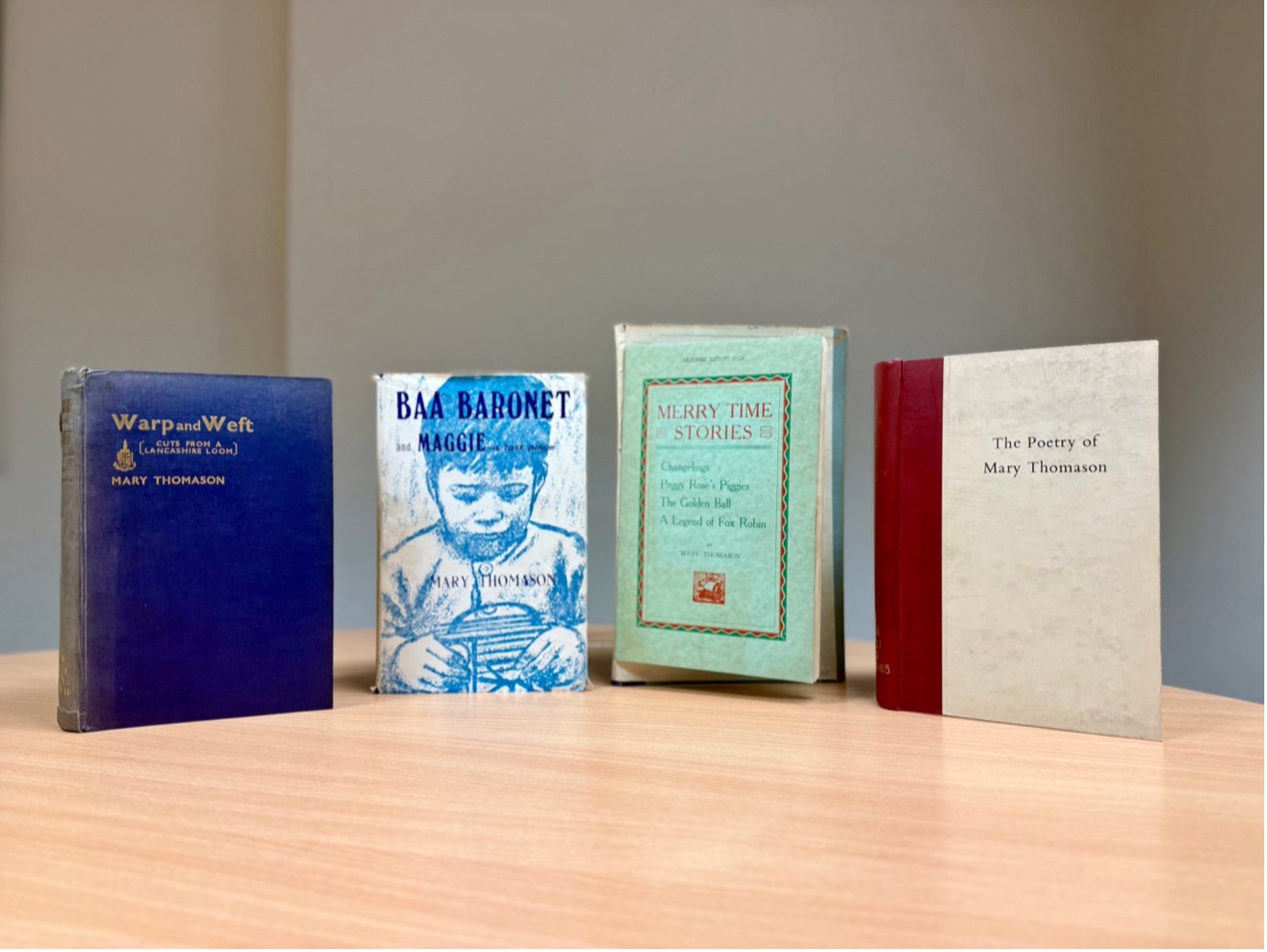
These manuscripts are particularly interesting because the same poems later appeared in the printed collection The Poetry of Mary Thomason, which was published after her death via her daughter and printed by Tillotsons, a well-known Lancashire printing company.
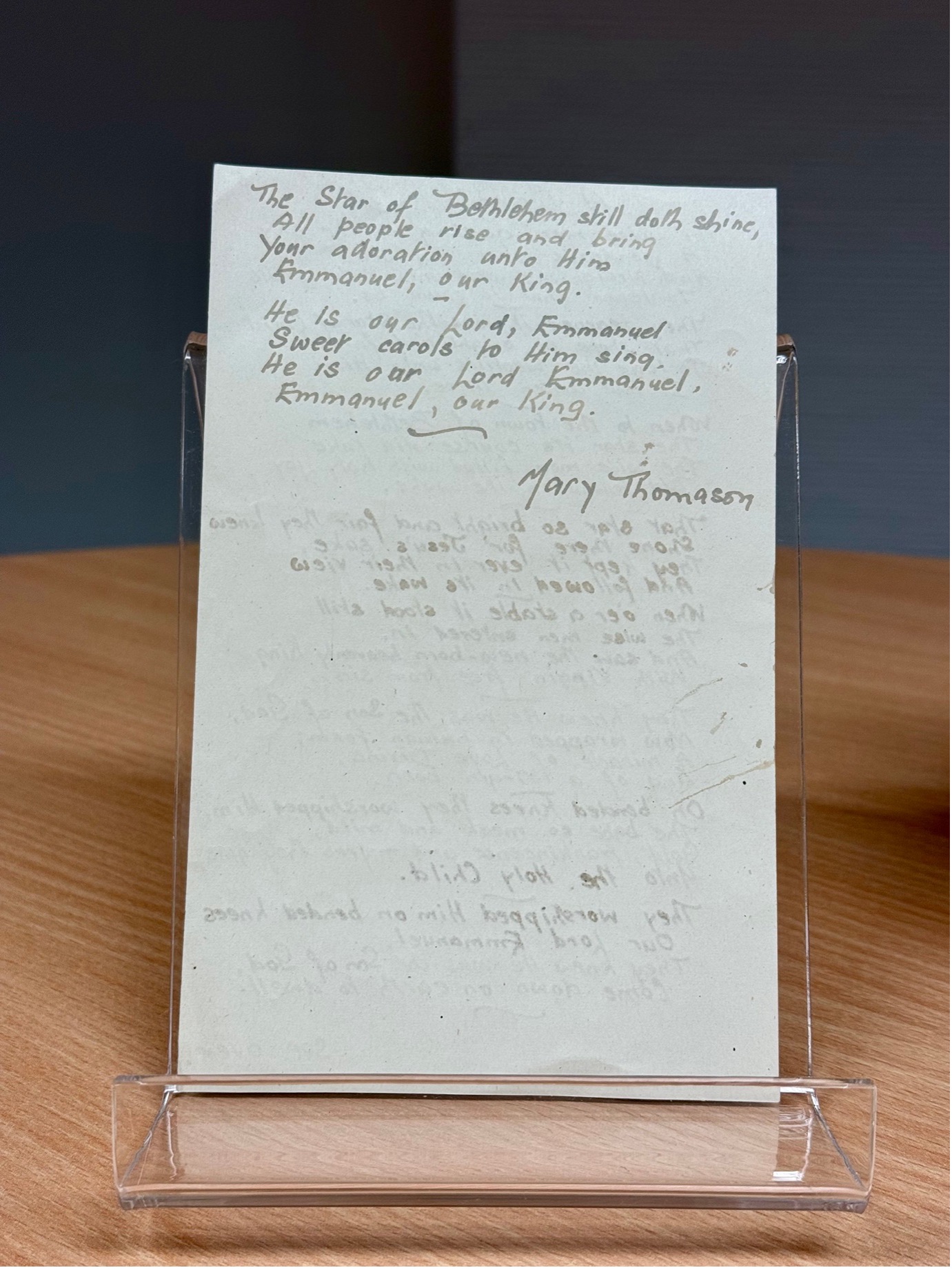
Seeing the poems written in the author’s own hand offers a different connection to the work than reading a printed book. The handwriting, layout, and careful presentation bring us closer to the moment when the poems were first written.
Four Poems Preserved in Manuscript:
Among the manuscripts preserved in the collection are four poems:
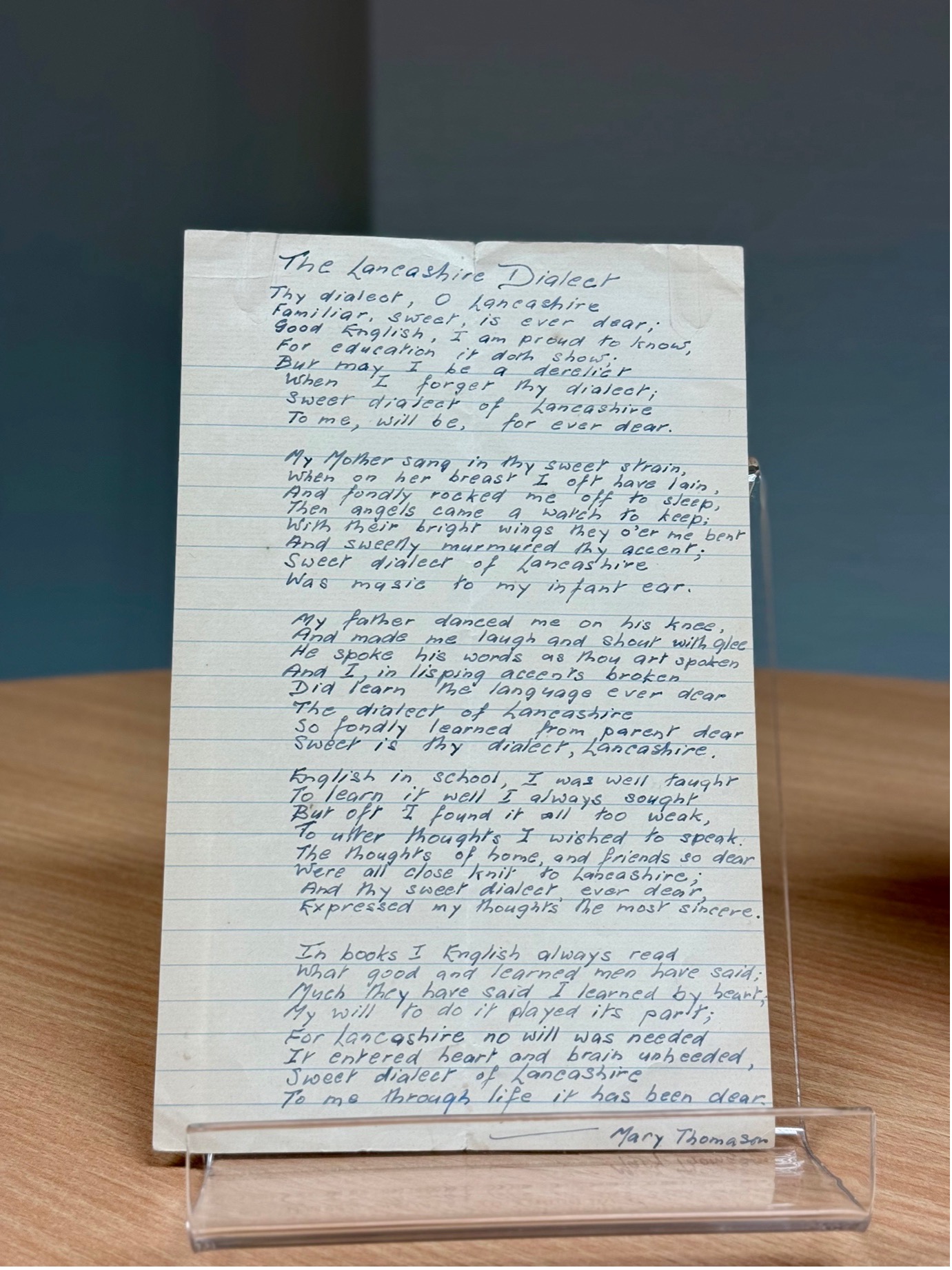
- The Lancashire Dialect
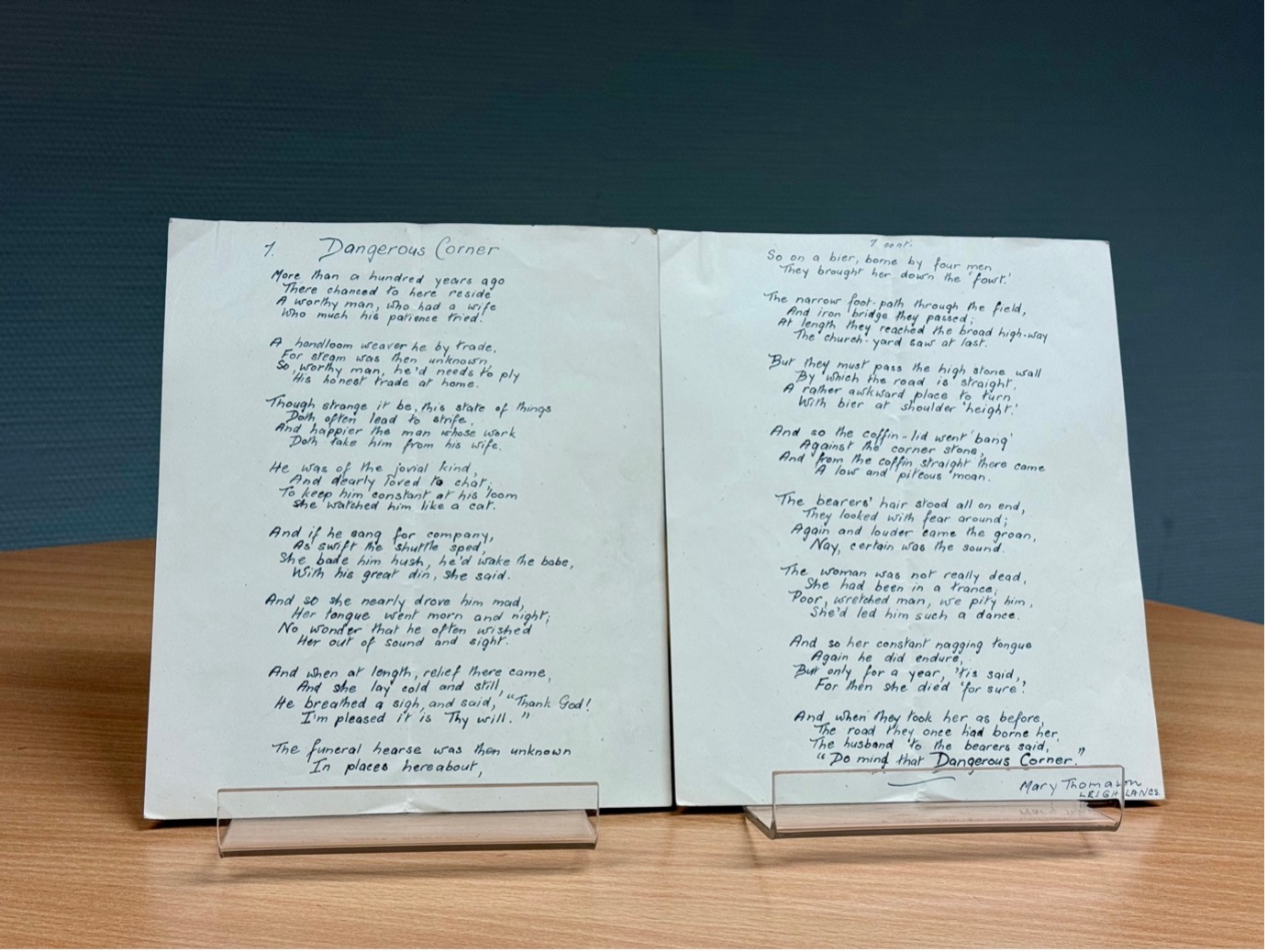
- Dangerous Corner
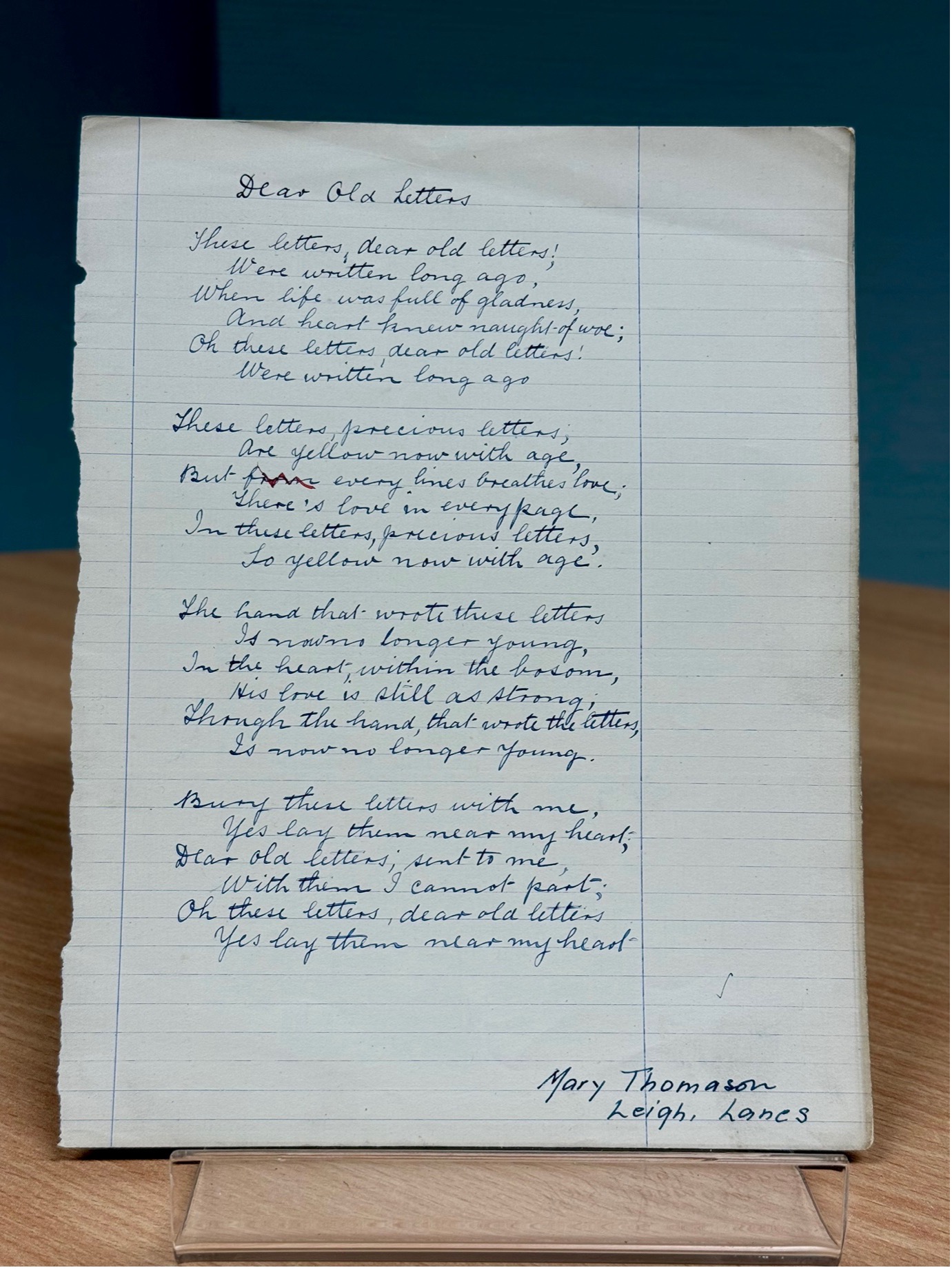
- Dear Old Letters
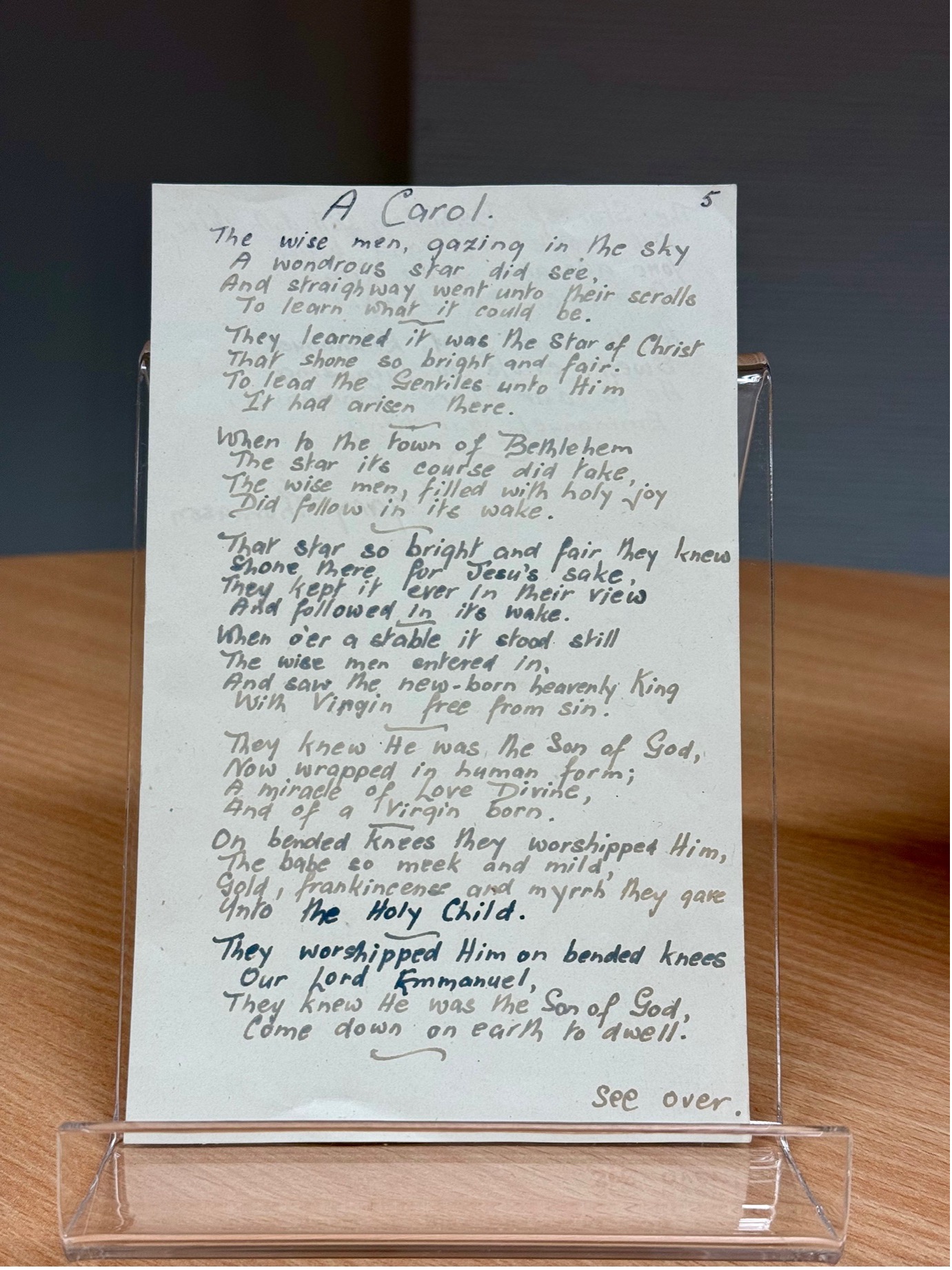
- A Carol
Each poem is written out neatly and clearly, with very few corrections. Rather than rough drafts, the pages appear to be carefully written versions of the poems, suggesting that Thomason took pride in presenting her work clearly on the page.
Seeing these manuscripts reminds us that before poems were shared widely through print, they first existed as individual handwritten pages.
Language, Memory, and Everyday Life:
The poems themselves explore themes that feel closely tied to everyday experience.
- The Lancashire Dialect:
One poem celebrates the Lancashire dialect, reflecting warmly on the language heard in childhood and family life. The poem describes the dialect as something familiar and comforting, learned naturally at home long before formal education introduced standard English.
For Thomason, the dialect of Lancashire was something that stayed with her throughout life, not just a way of speaking, but a connection to family, community, and place.
Dialect poetry has long been an important part of the region’s literary tradition, preserving the sounds and rhythms of local speech.
- Dear Old Letters:
Another poem, Dear Old Letters, reflects on the emotional power of letters written long ago.
The poem describes letters that have grown “yellow now with age”, yet still carry memories of the time when they were written. Through these small objects, the writer reflects on the passing of time and the way written words preserve moments that might otherwise fade.
- Dangerous Corner:
The poem Dangerous Corner tells a darker and more dramatic story. It recounts a tale from many years earlier in which a funeral procession encounters an unexpected and unsettling moment along a narrow path and bridge.
Blending humour, tension, and storytelling, the poem reads almost like a piece of local folklore. Its narrative style shows another side of Thomason’s writing, not just reflective poetry, but storytelling rooted in everyday life and community traditions.
- A Carol:
The fourth poem in the group, A Carol, reflects the tradition of seasonal or celebratory verse that many poets contributed to newspapers, community events, and church publications.
Together, the four poems show the range of Thomason’s writing, from reflections on language and memory to storytelling and seasonal verse.
From Manuscript to Printed Book:
After Mary Thomason’s death in 1937, her daughter gathered her poems together and arranged for them to be published in the volume The Poetry of Mary Thomason.
The handwritten pages preserved in the archive allow us to see these poems in the form they existed before or alongside that printed collection.
They remind us that behind every printed book lies a quieter stage of writing, the moment when a poem is first written down.
Preserving Local Voices:
Collections such as the Lancashire Authors Collection help preserve the work of writers connected to the region.
Some writers achieved national recognition, while others captured the character of their local communities through poetry, stories, and personal reflections.
Mary Thomason’s poems reflect the language, memories, and storytelling traditions of Lancashire, small but meaningful pieces of literary history.
A Writing Prompt: Words Worth Keeping
Mary Thomason’s poem Dear Old Letters reflects on how written words can hold memories long after they were first written.
It raises an interesting question:
What piece of writing would you keep because it holds a special memory?
It might be:
- a letter from a relative
- a note inside a favourite book
- a postcard from a holiday
- a message saved because it reminds you of someone or somewhere important.
Sometimes the smallest pieces of writing carry the strongest connections to the past.
Through the Reading Bolton project, we’re inviting people to share the books, stories, and reading memories that connect them to the town.
You never know, the words people write today may become part of the stories discovered in archives in the future.