
Chapter Five:
We asked:
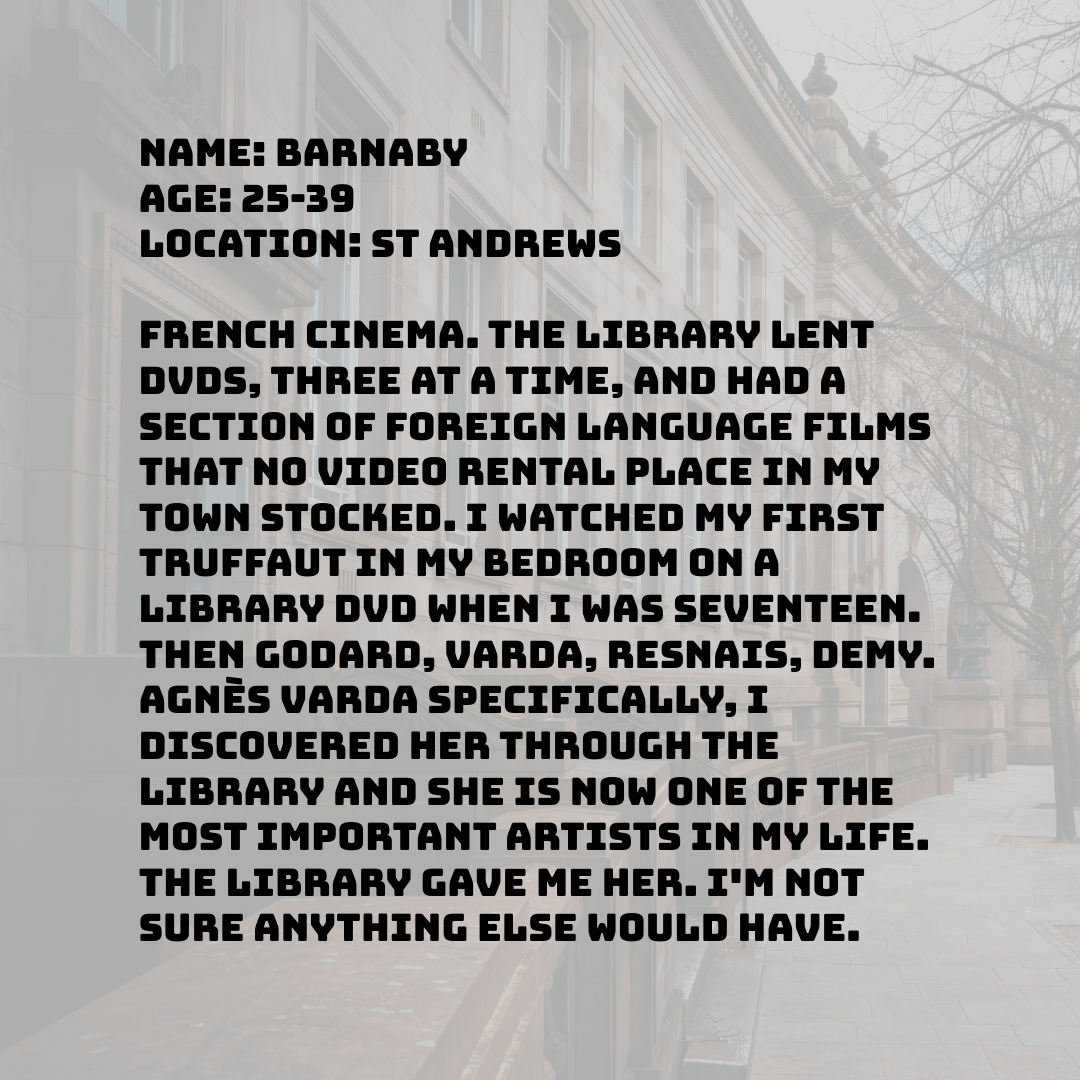
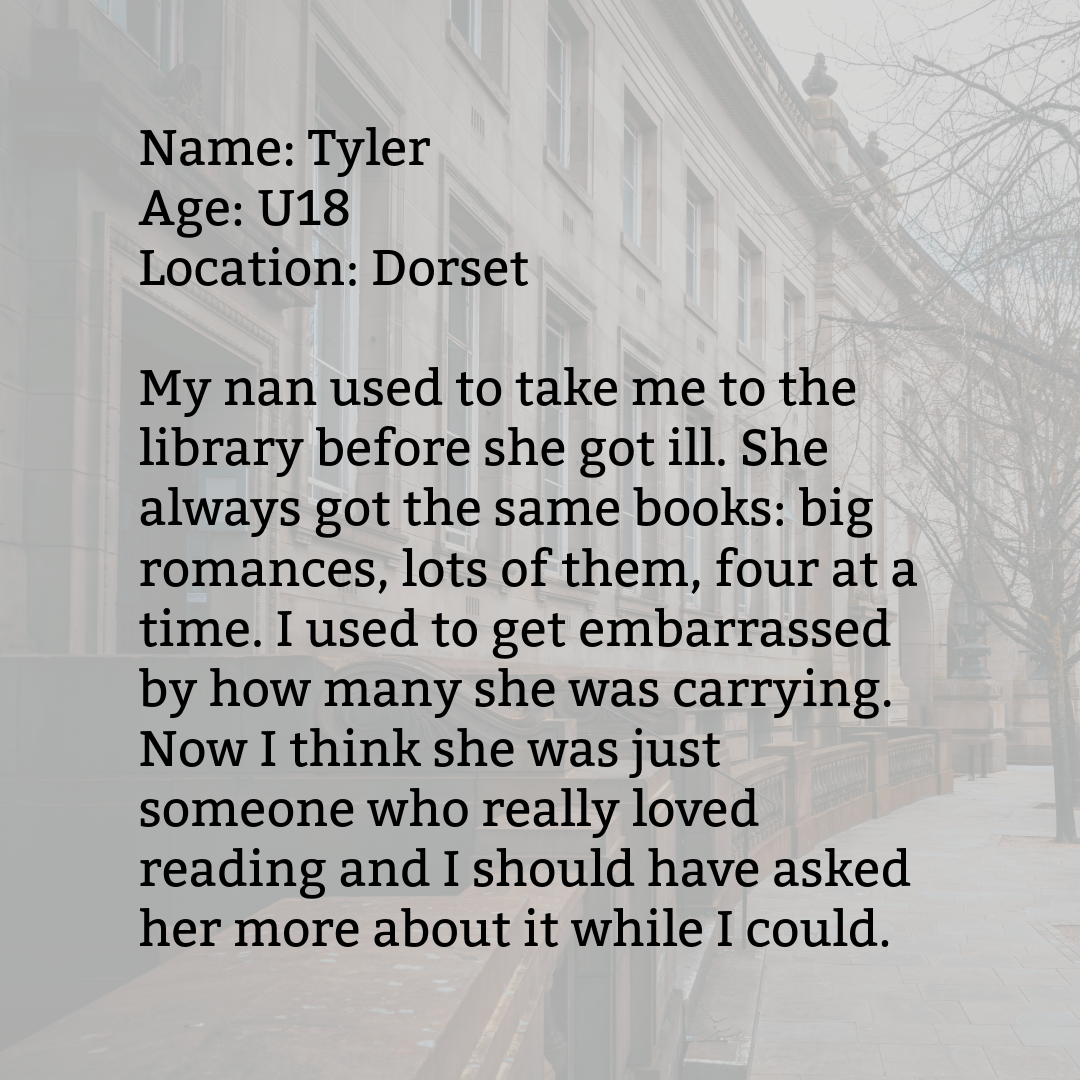
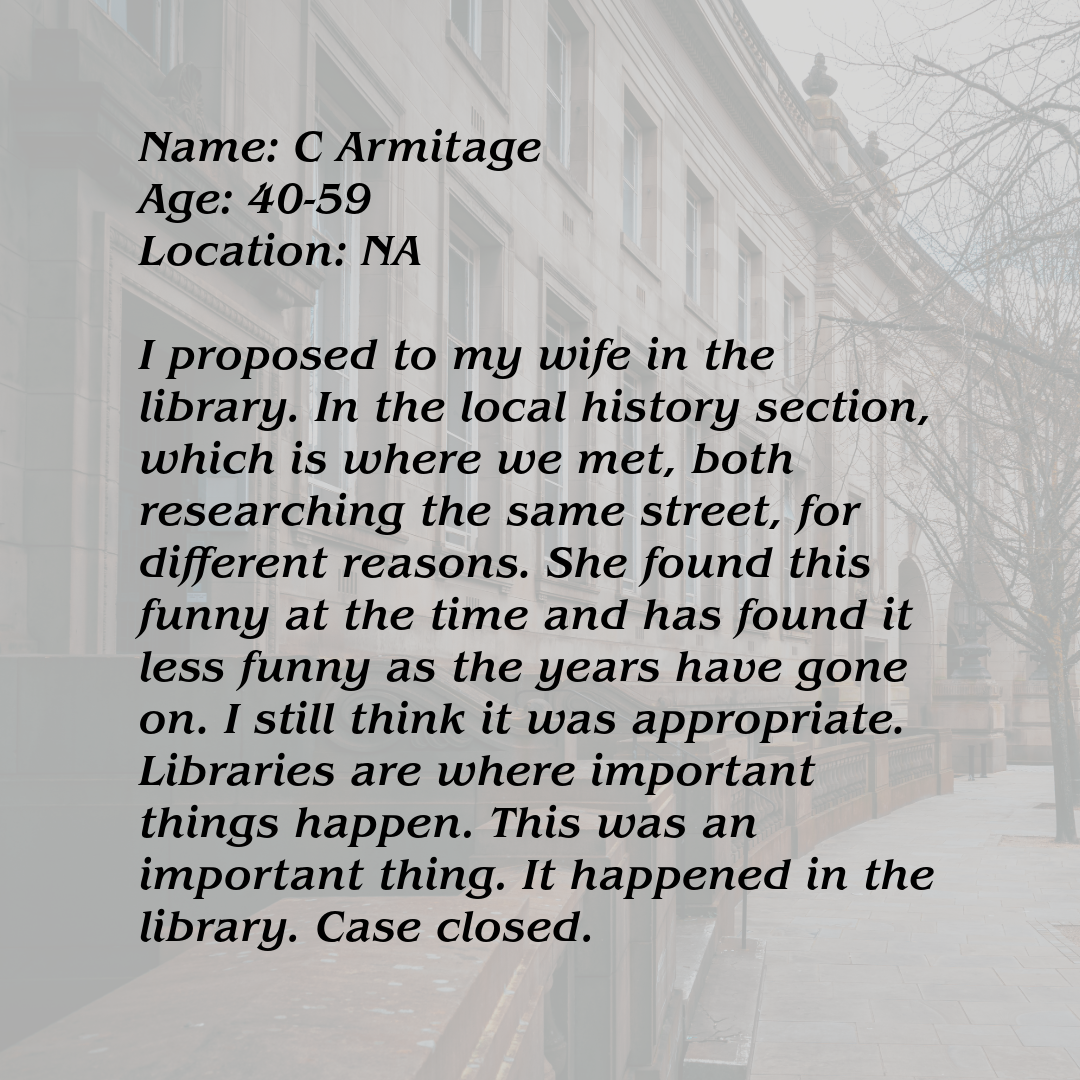
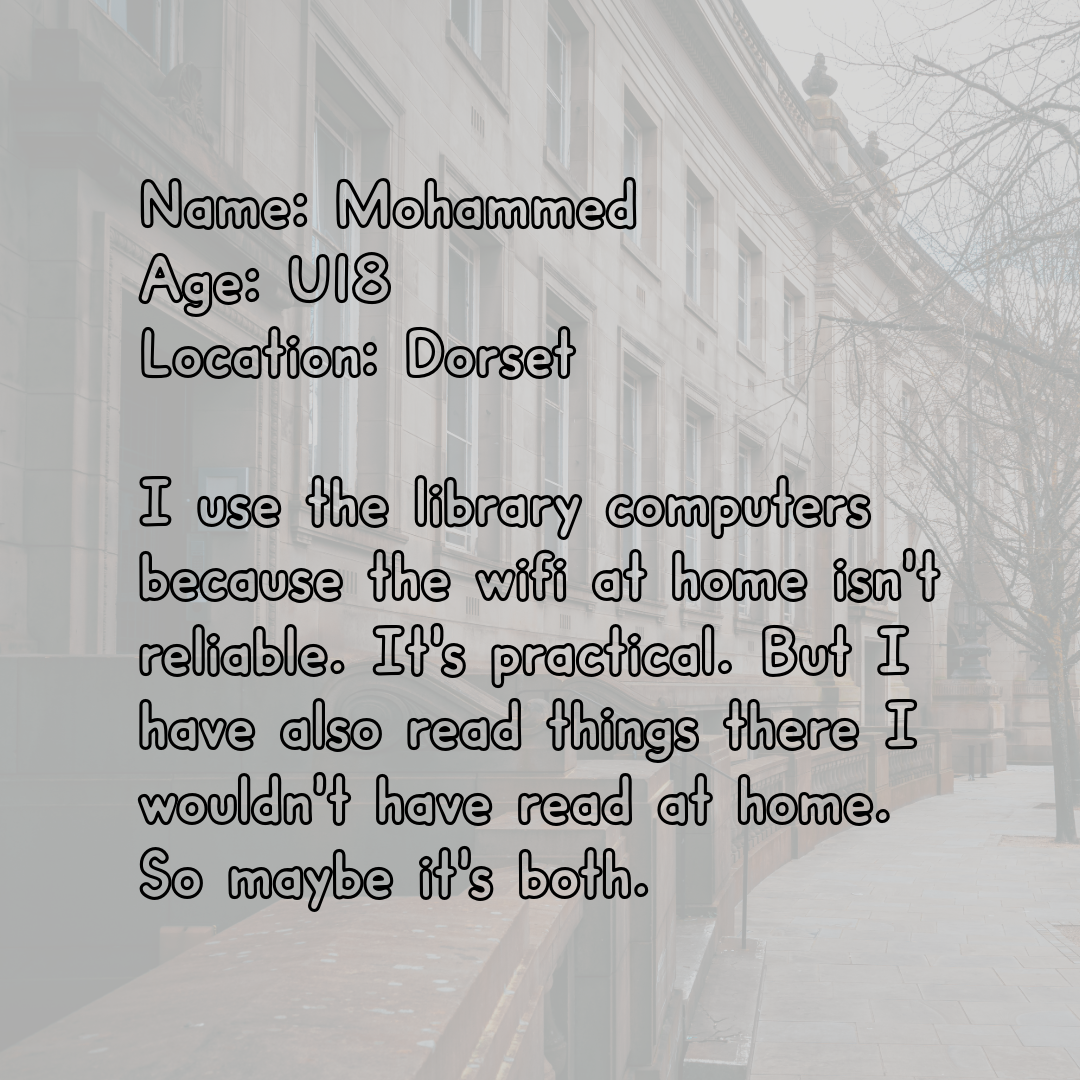
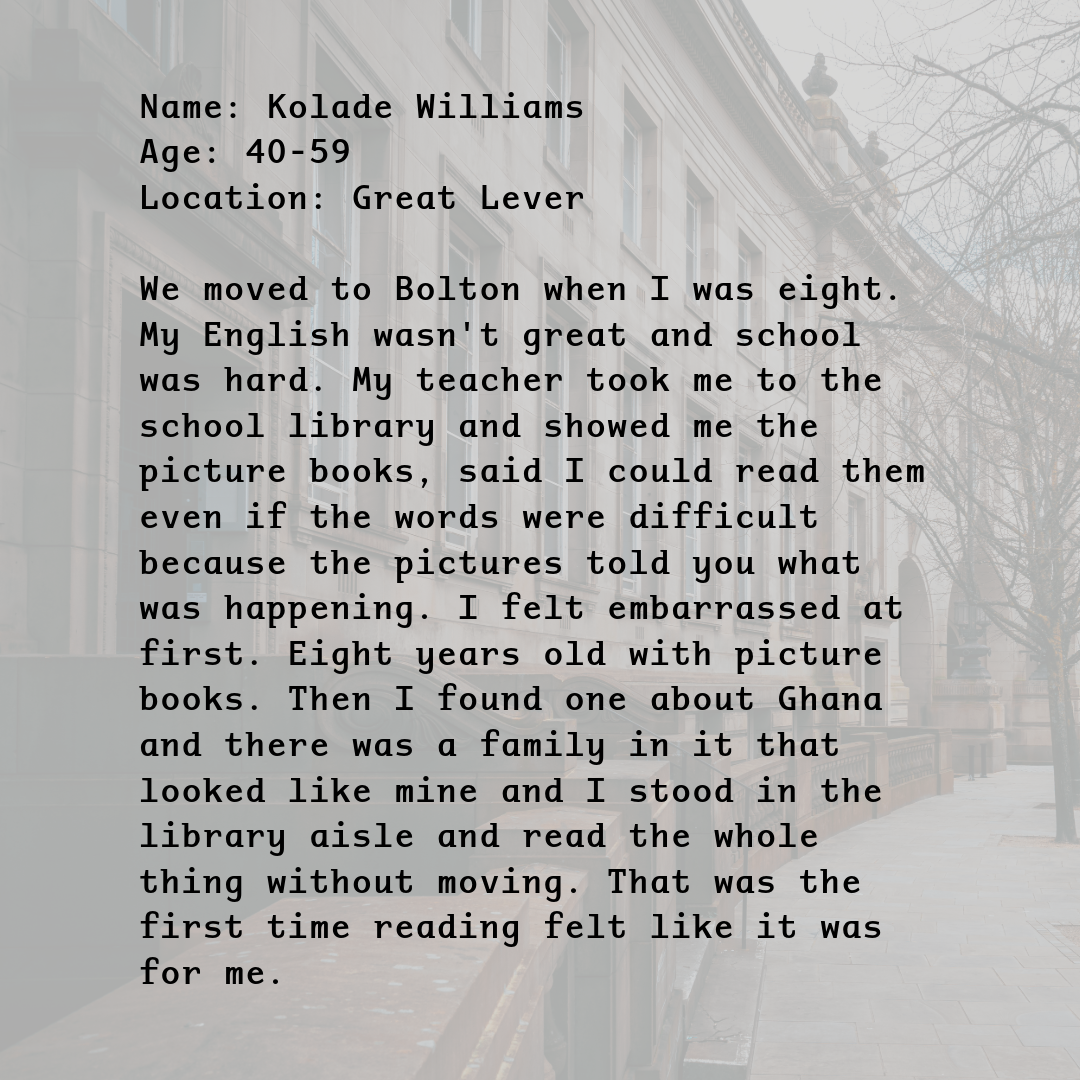
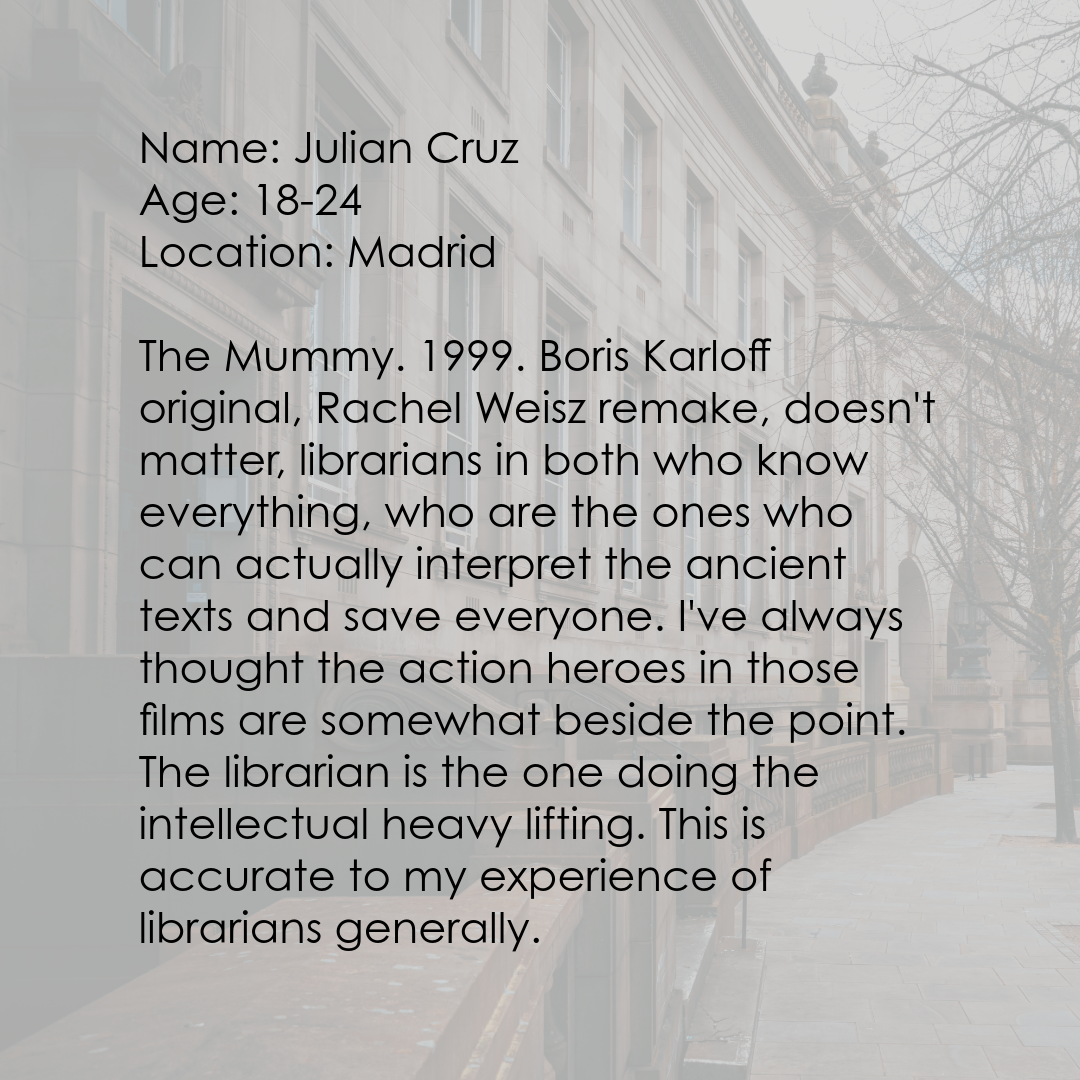
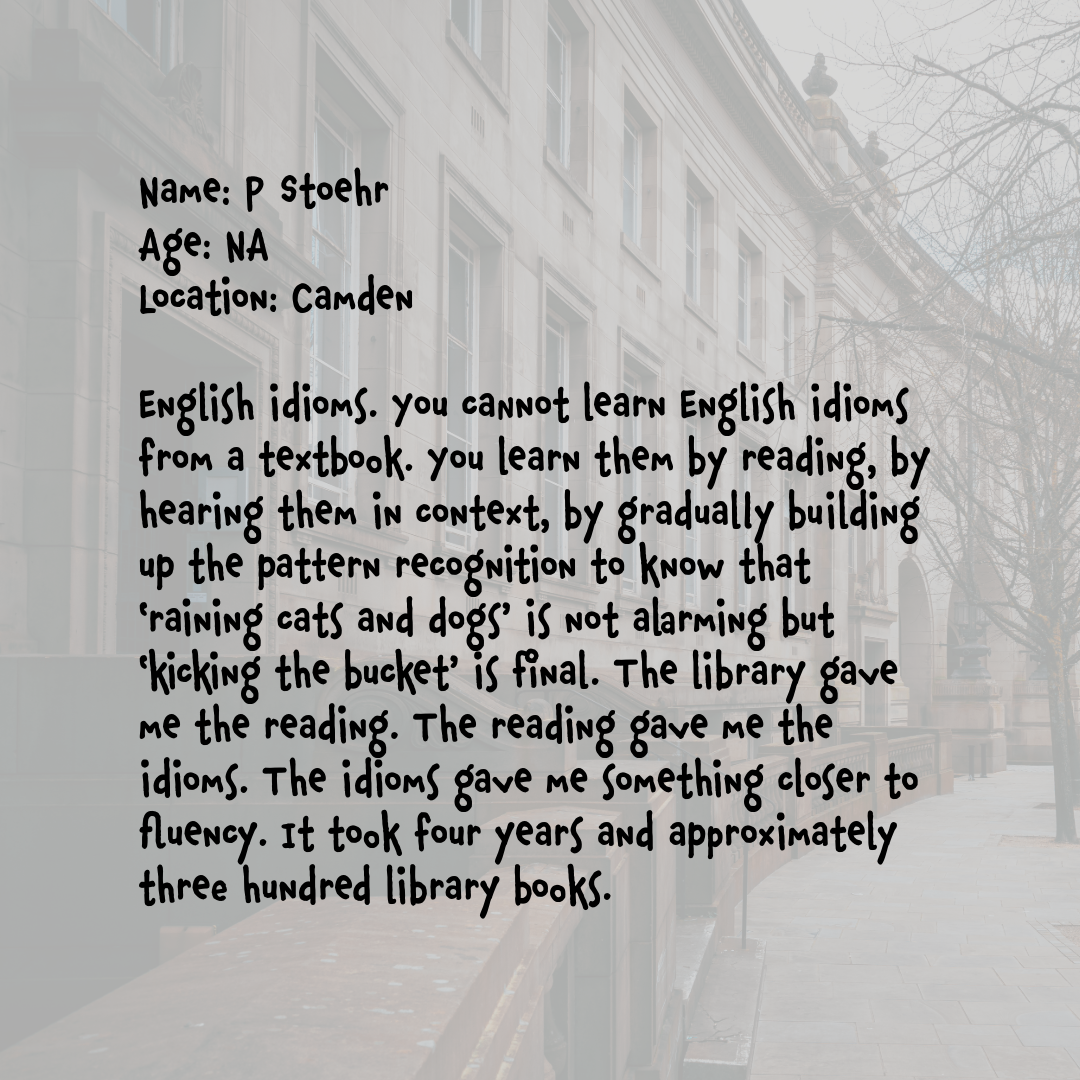
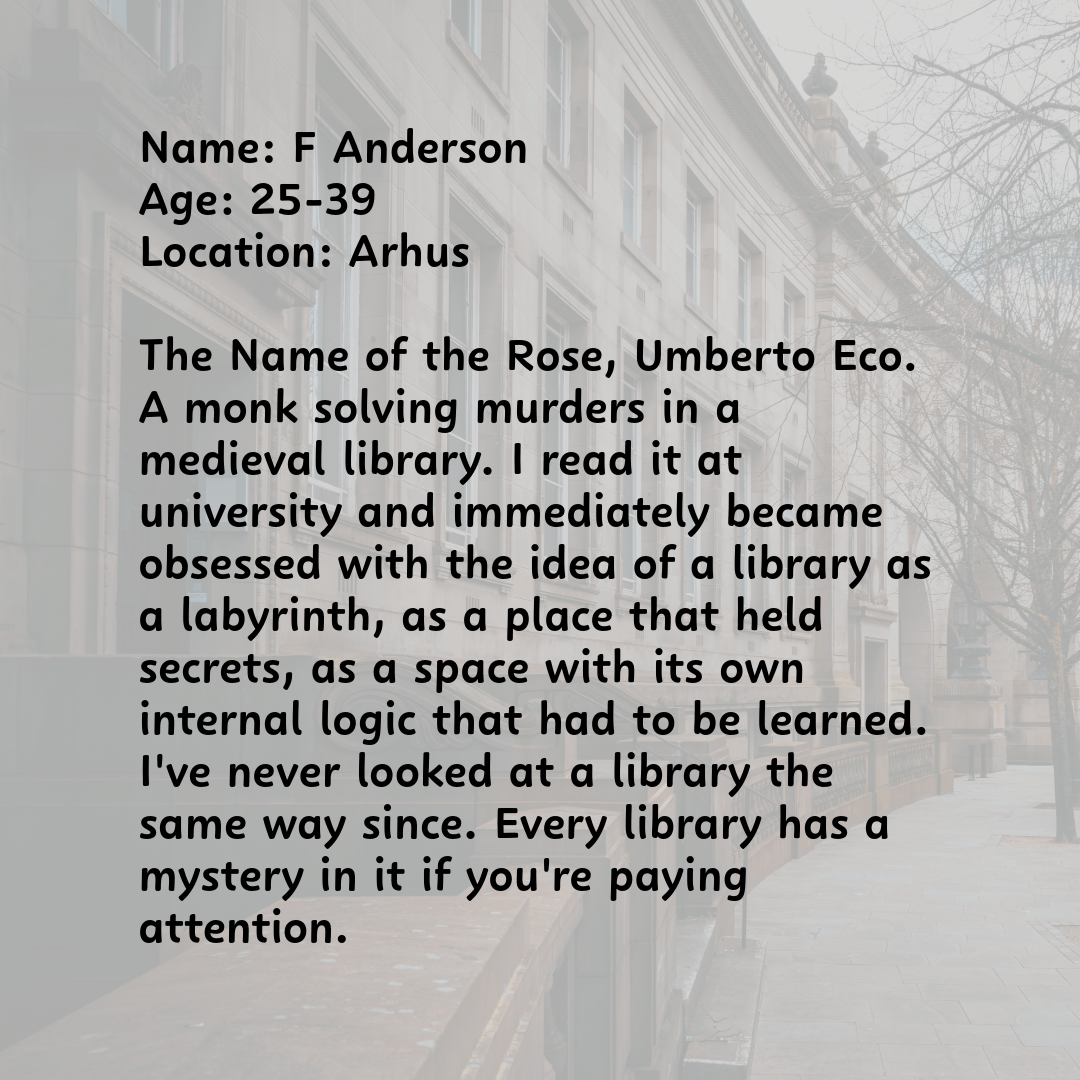
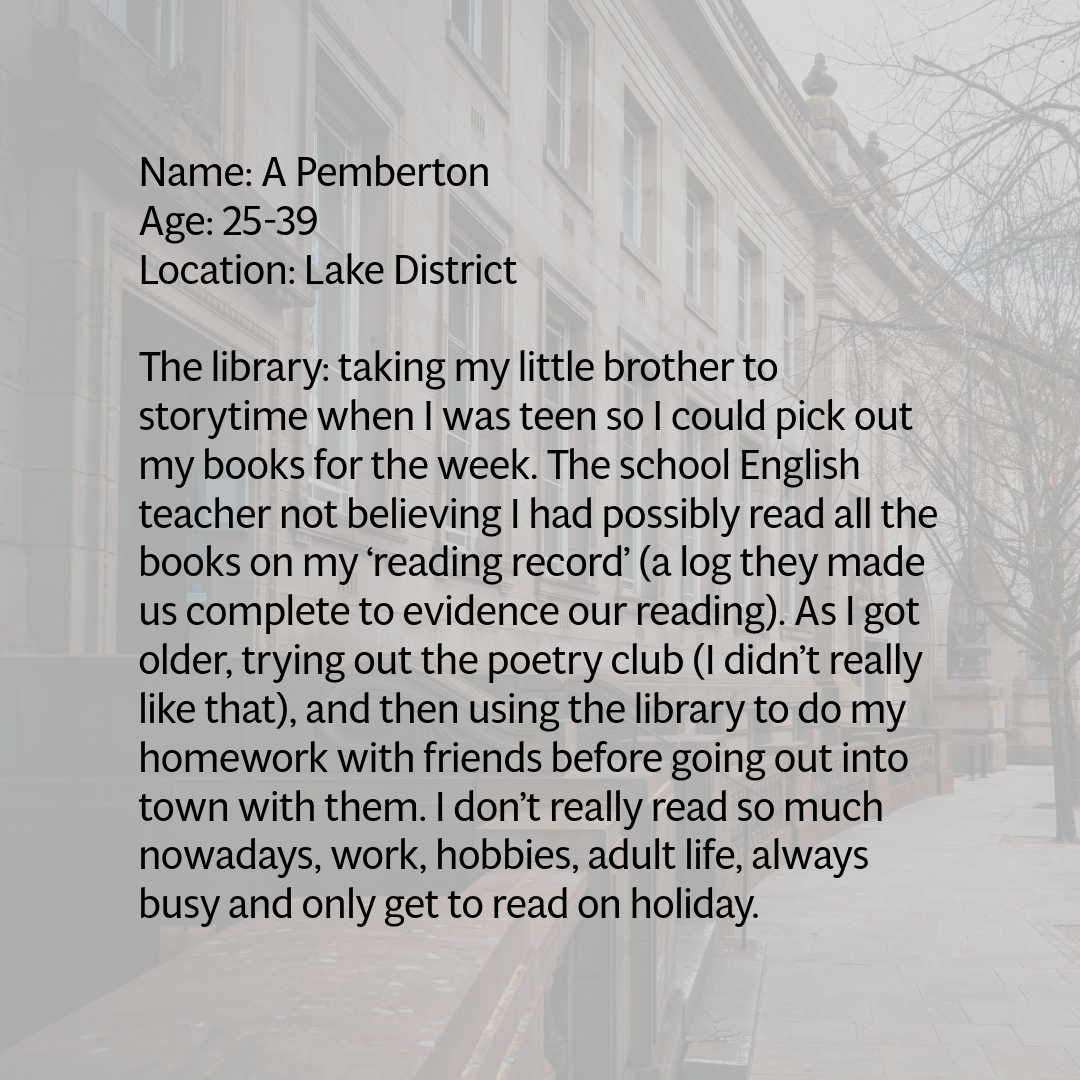
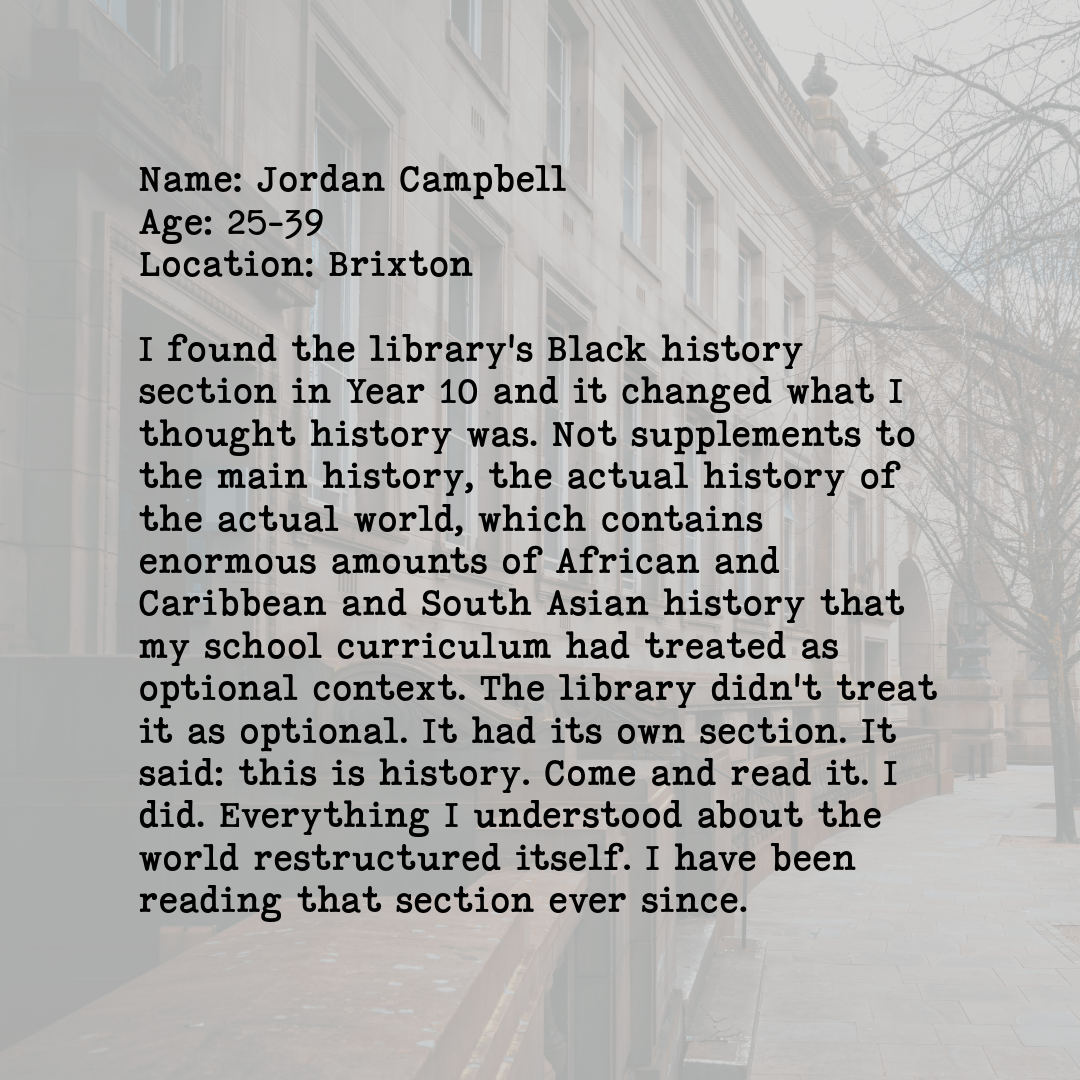
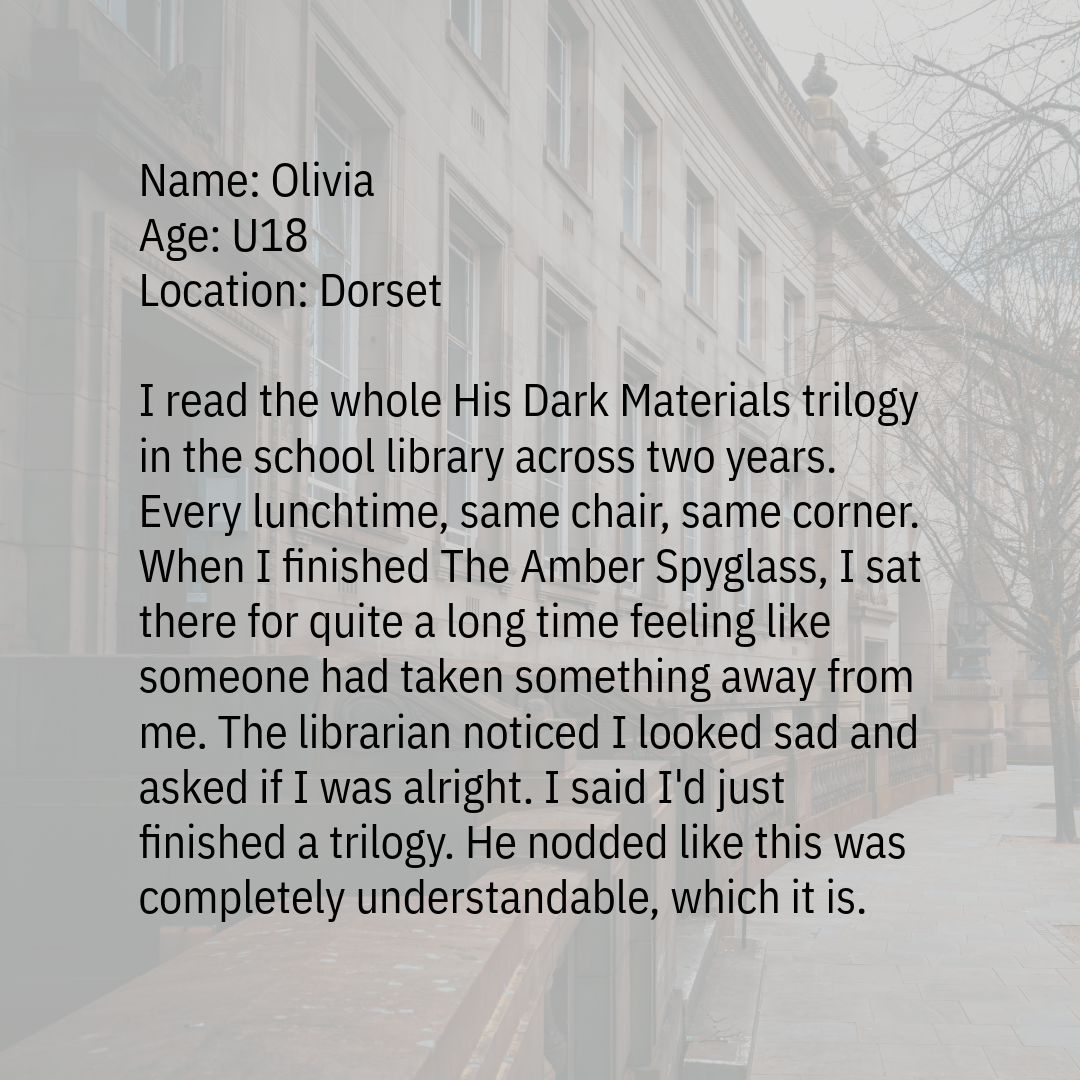
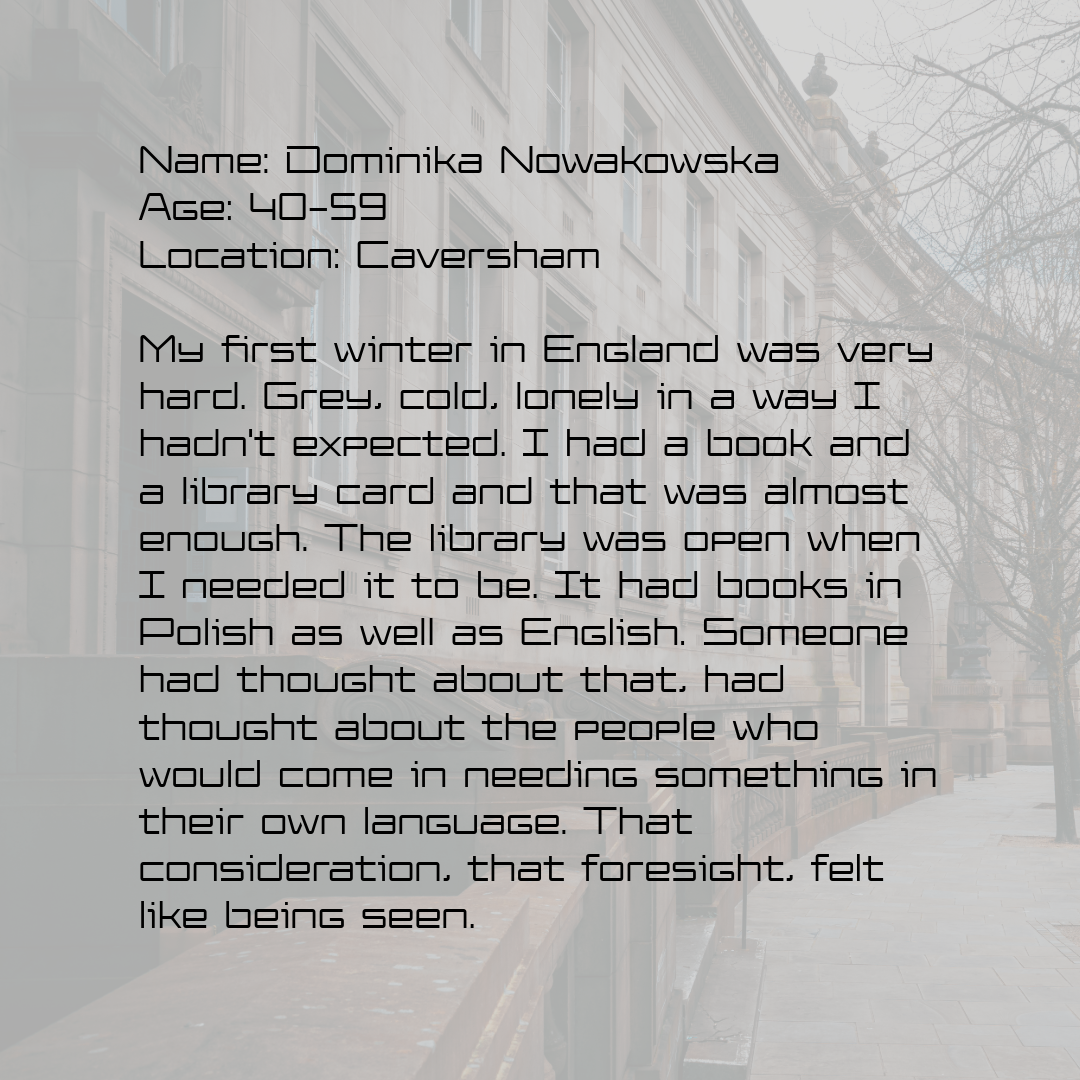
‘What do libraries mean to you? What has a library meant in your life?’
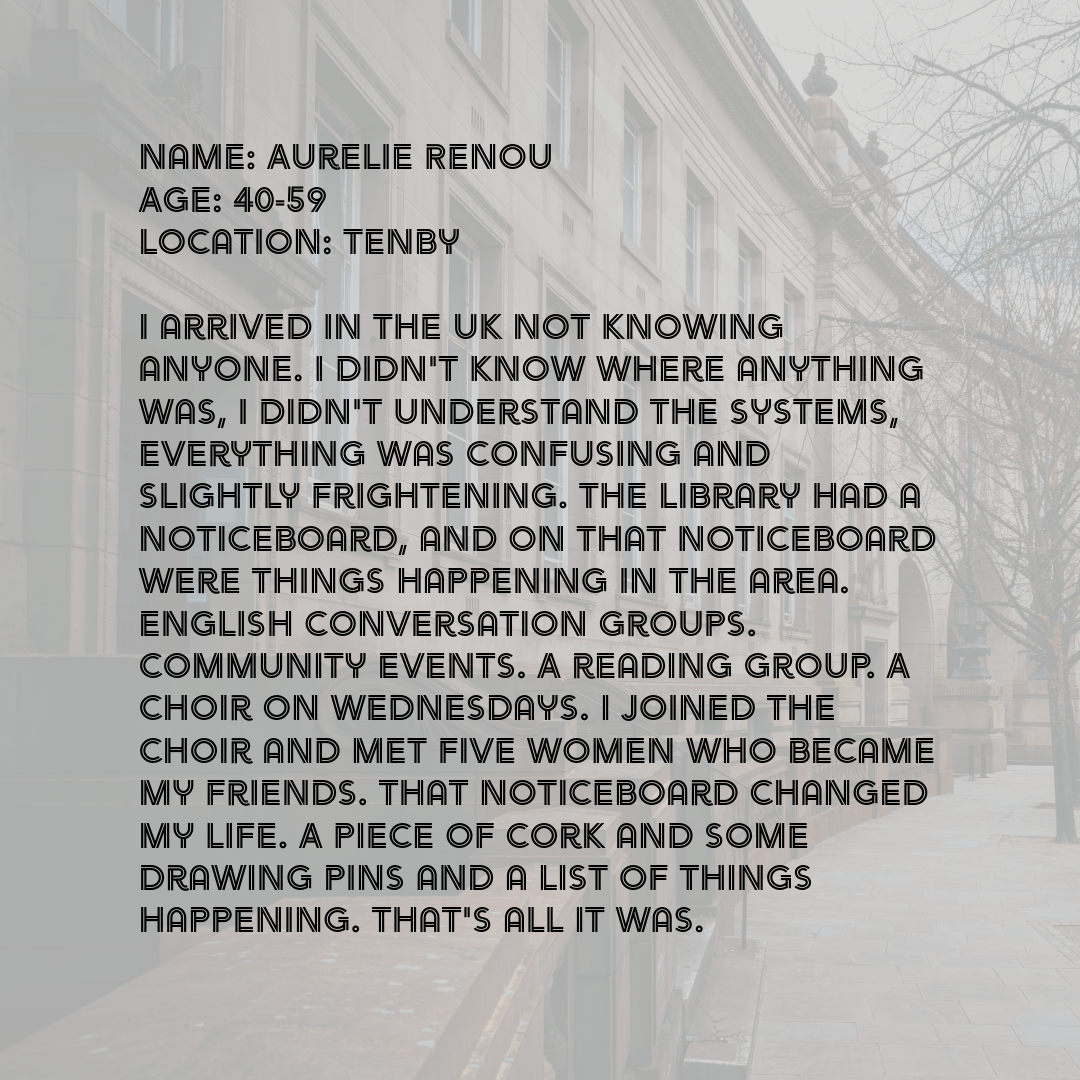
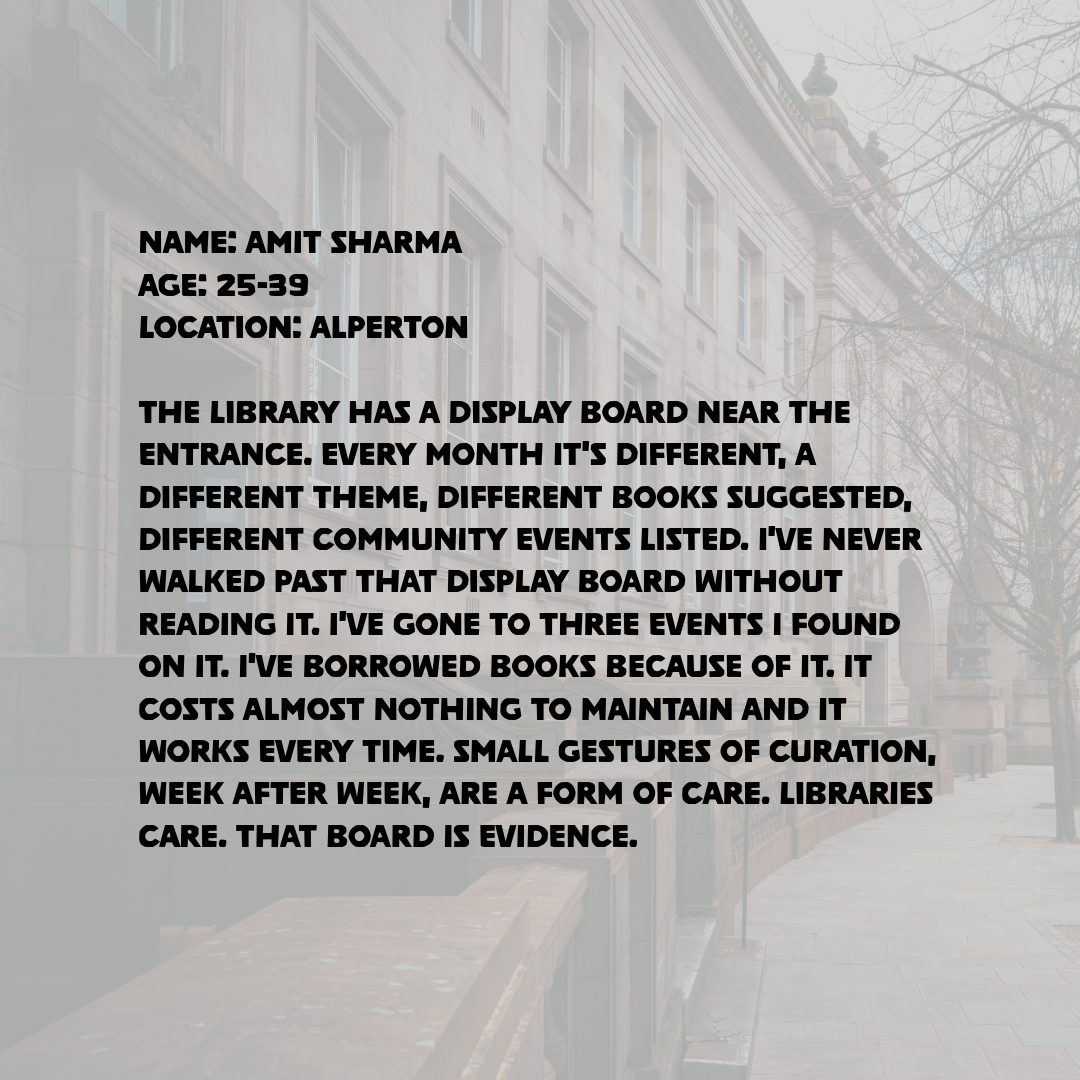
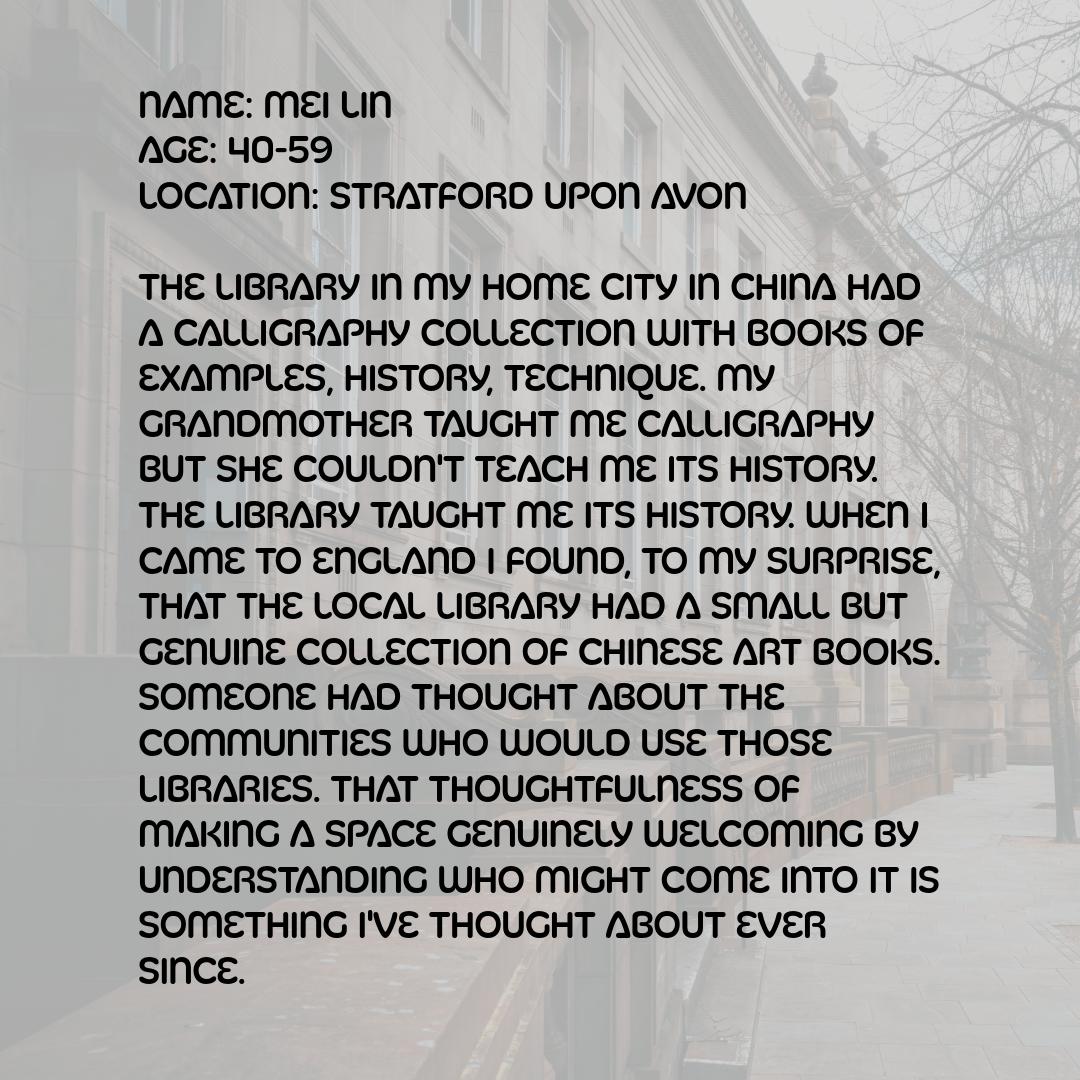
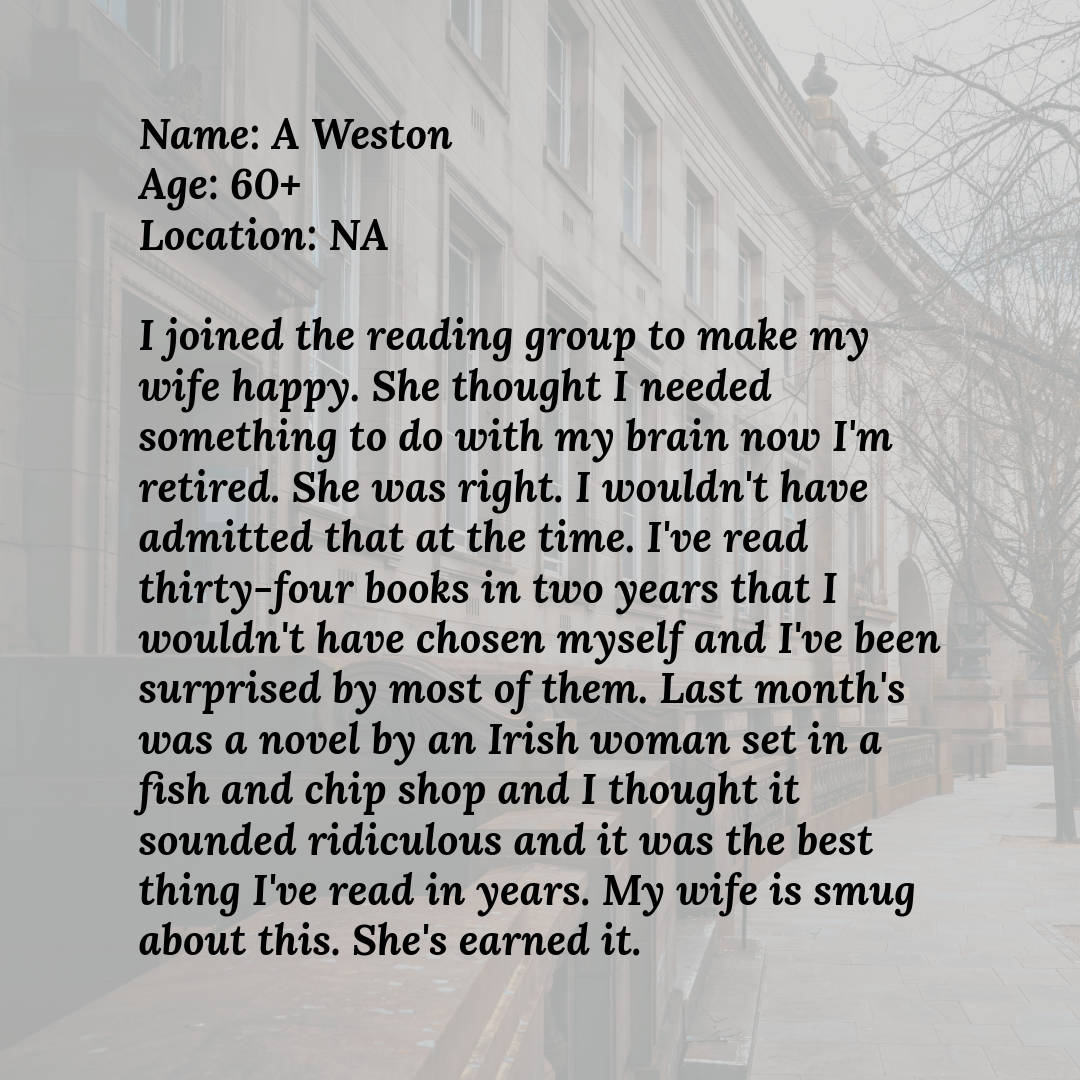
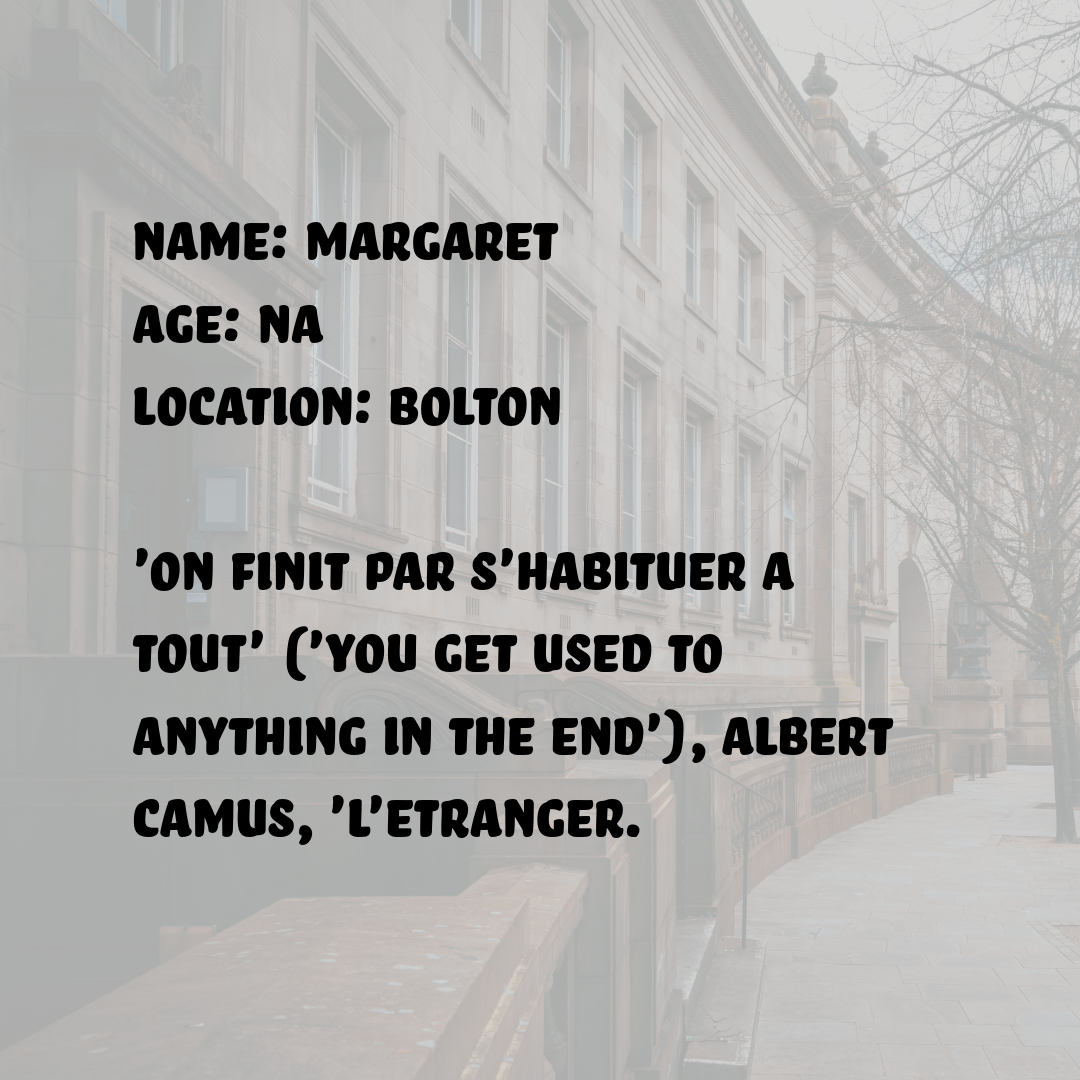
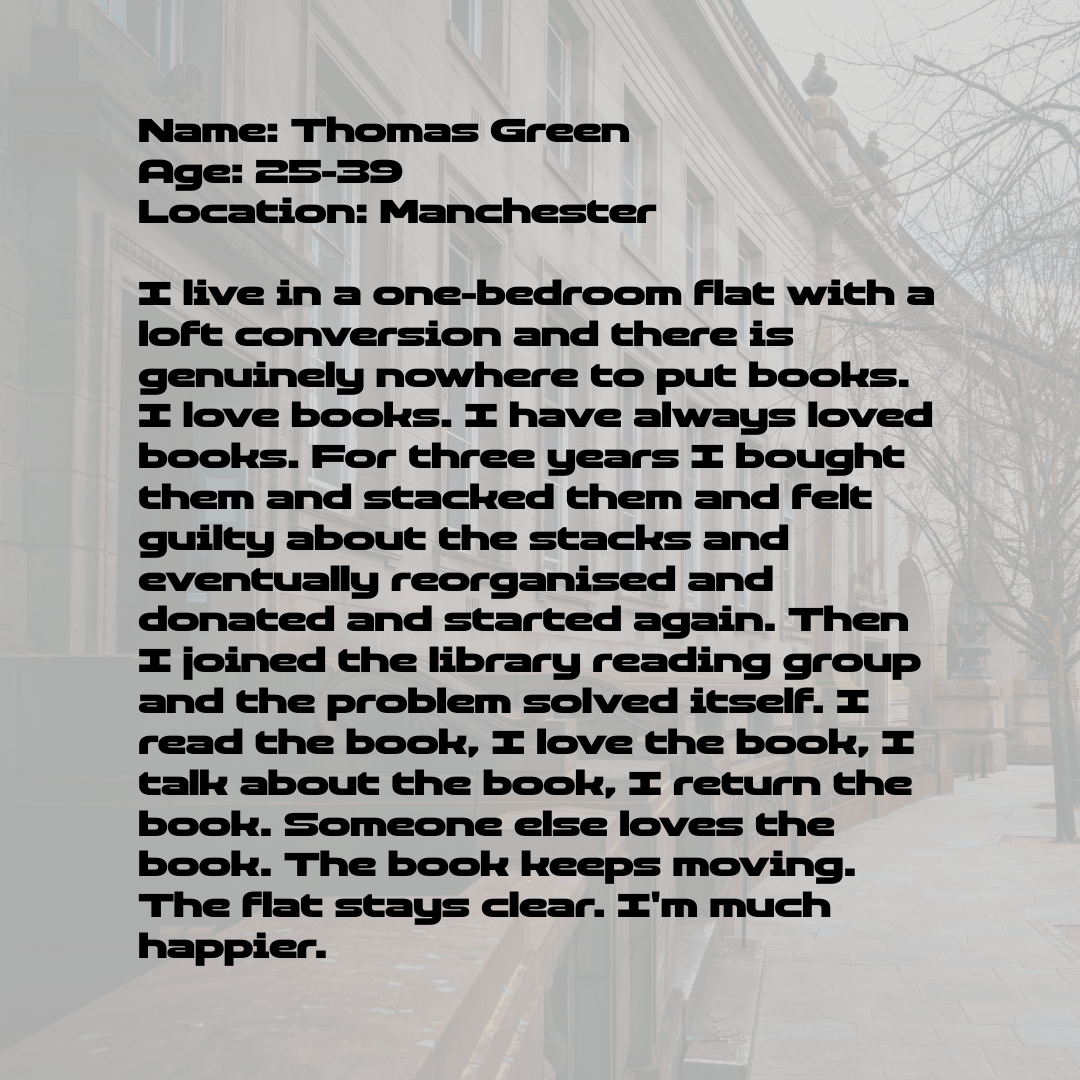
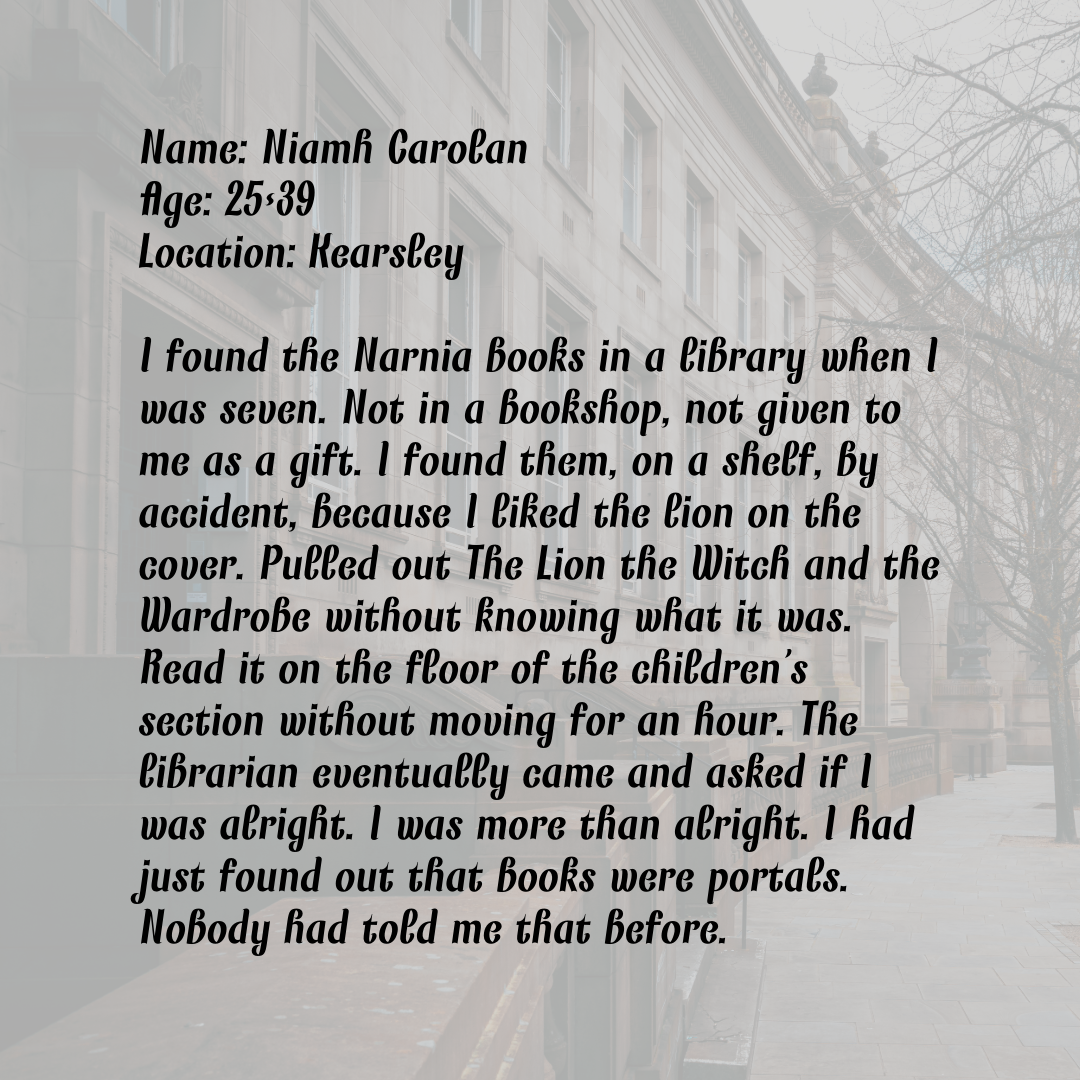
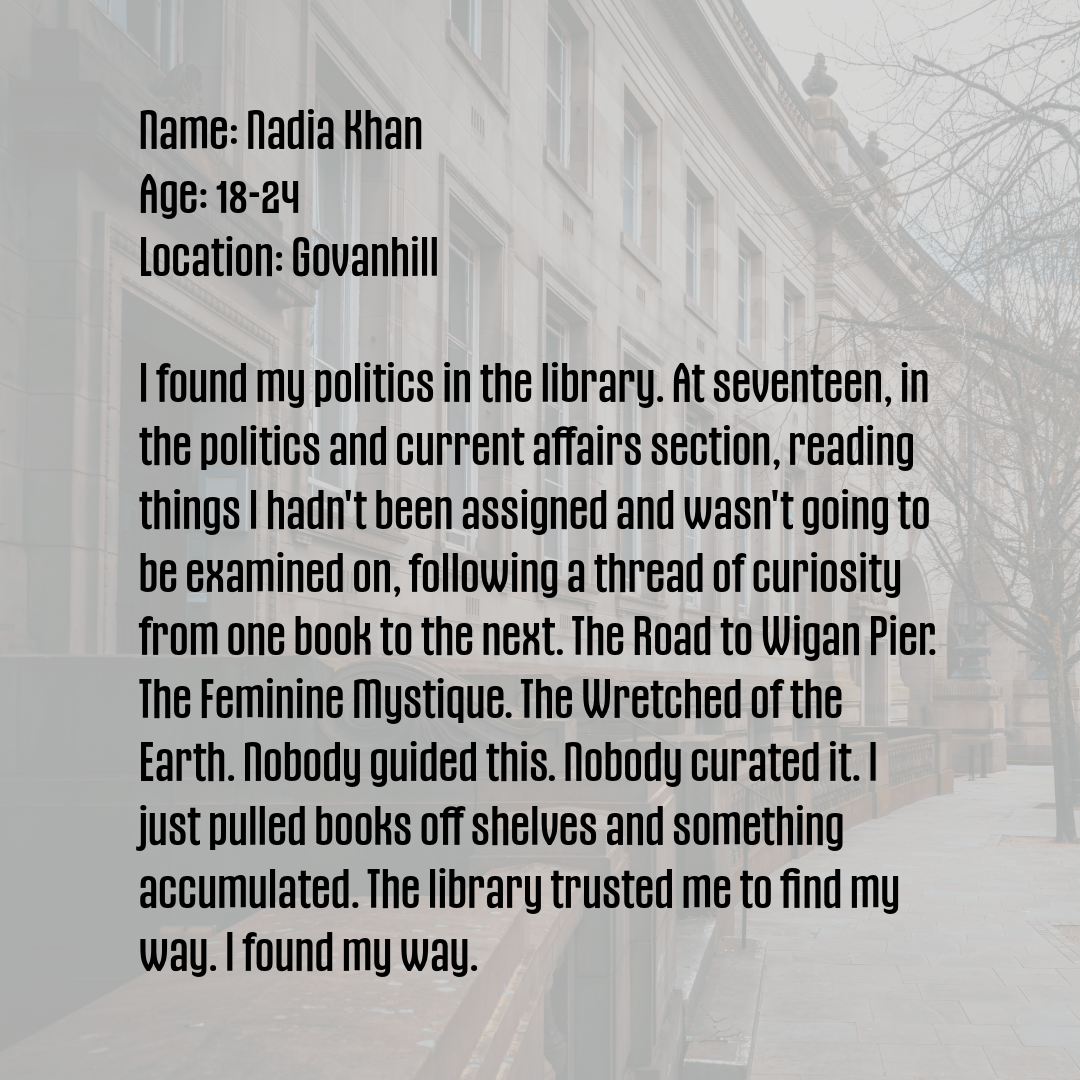
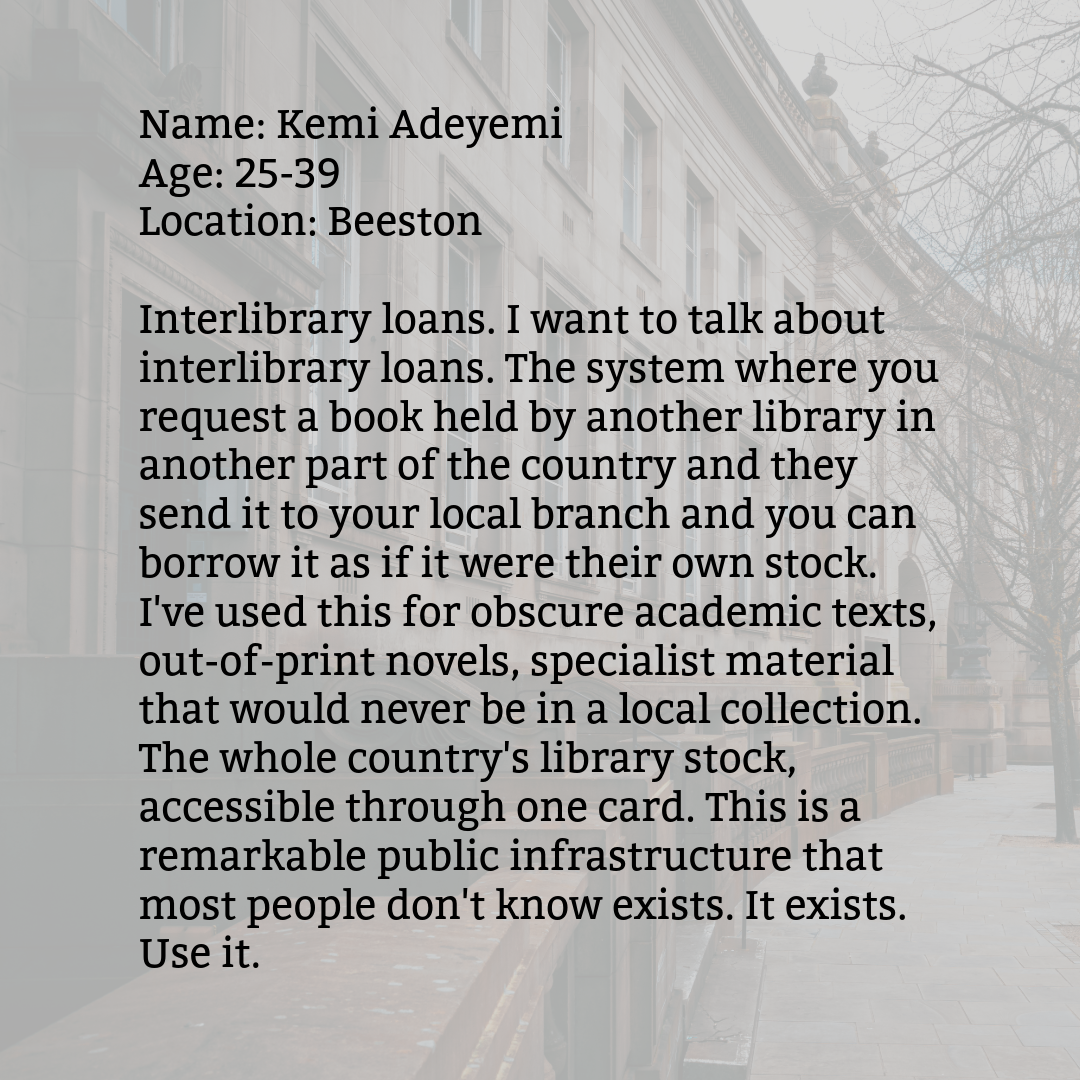
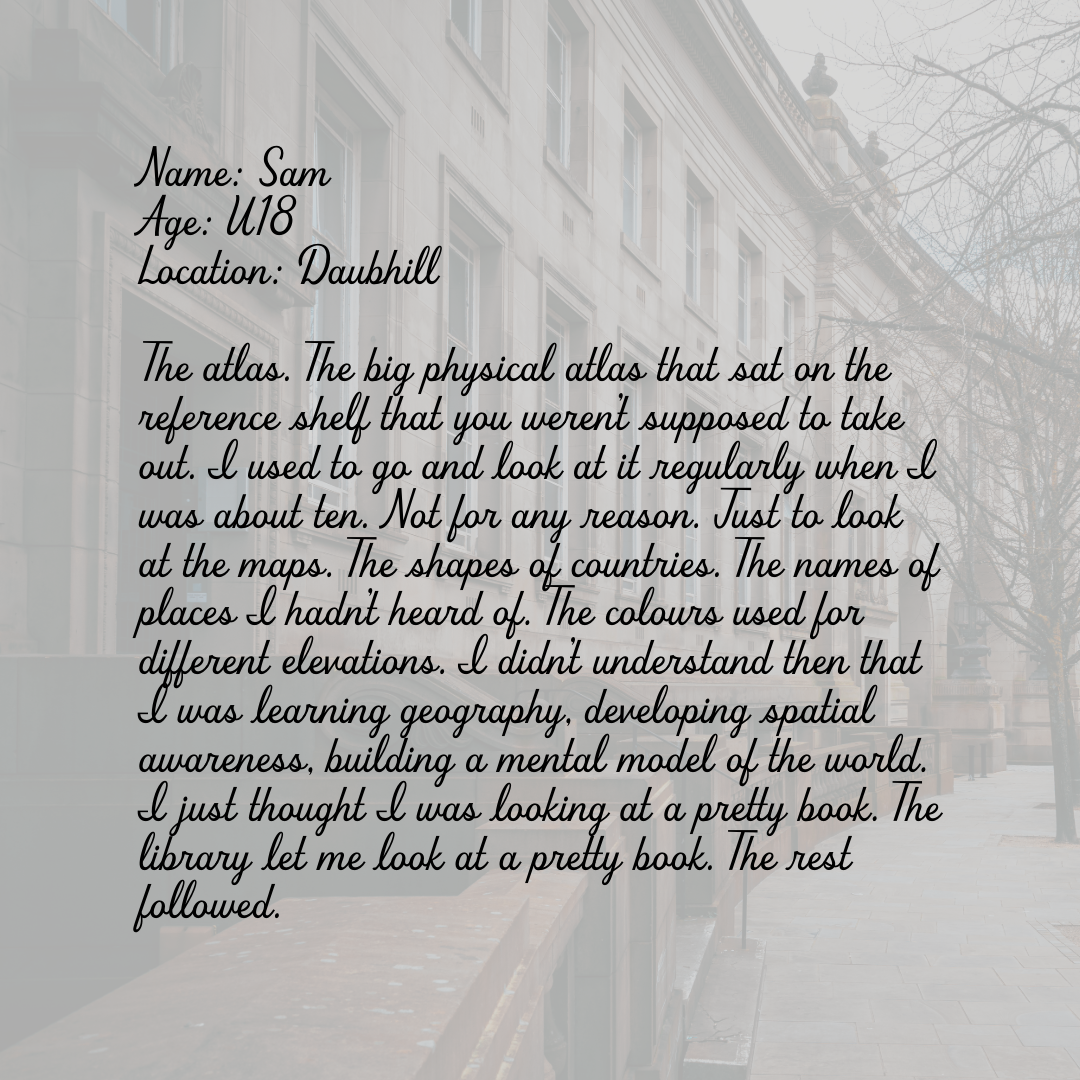
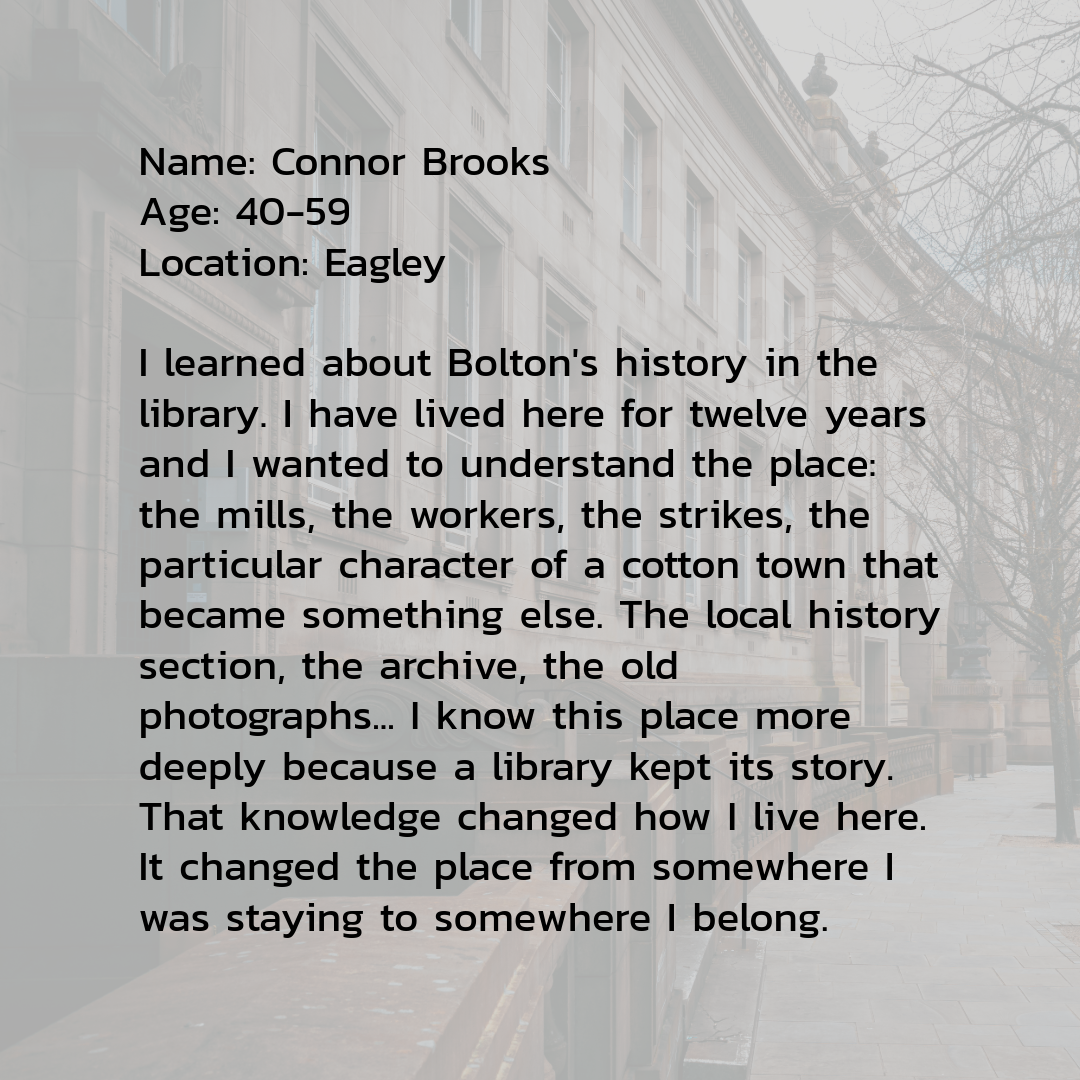
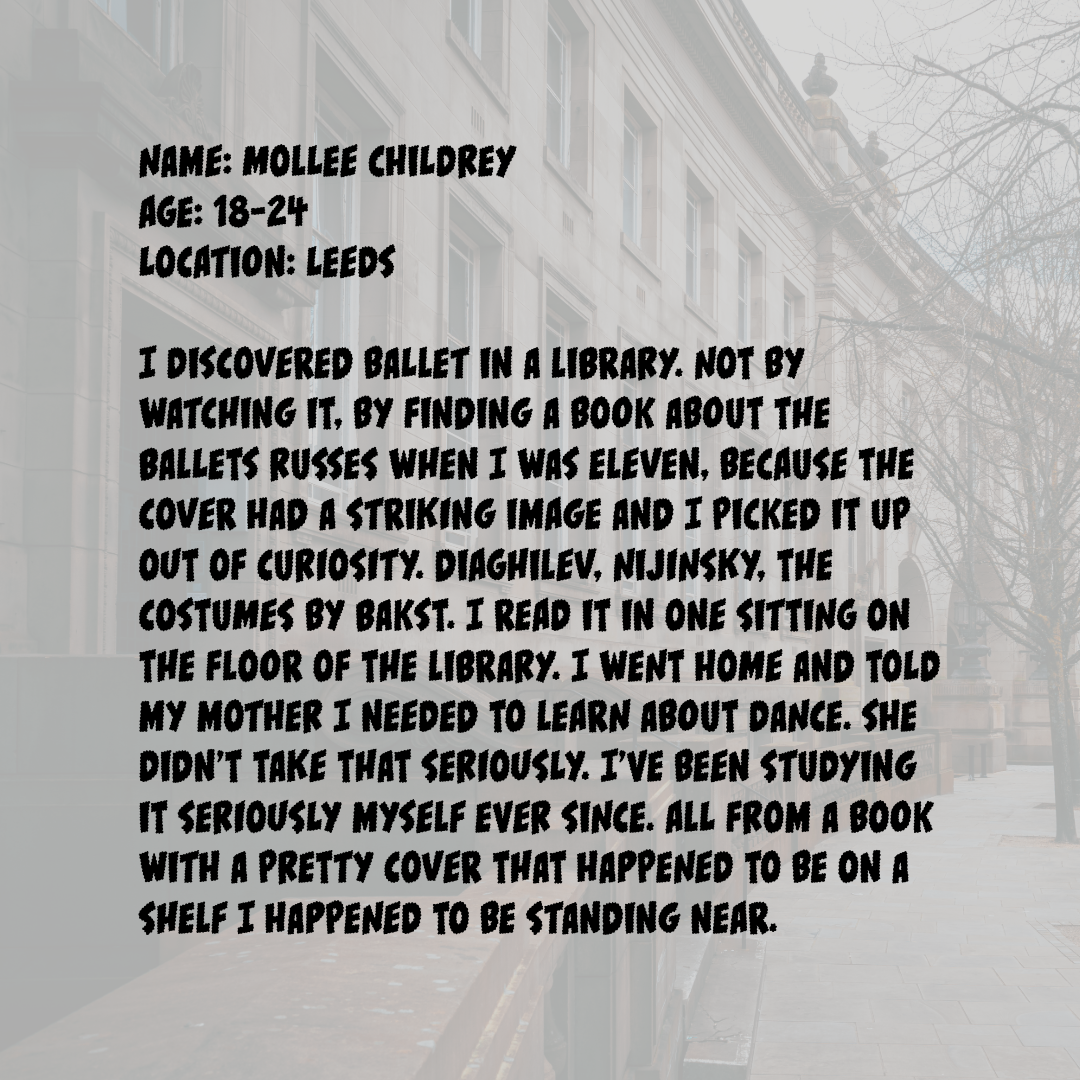
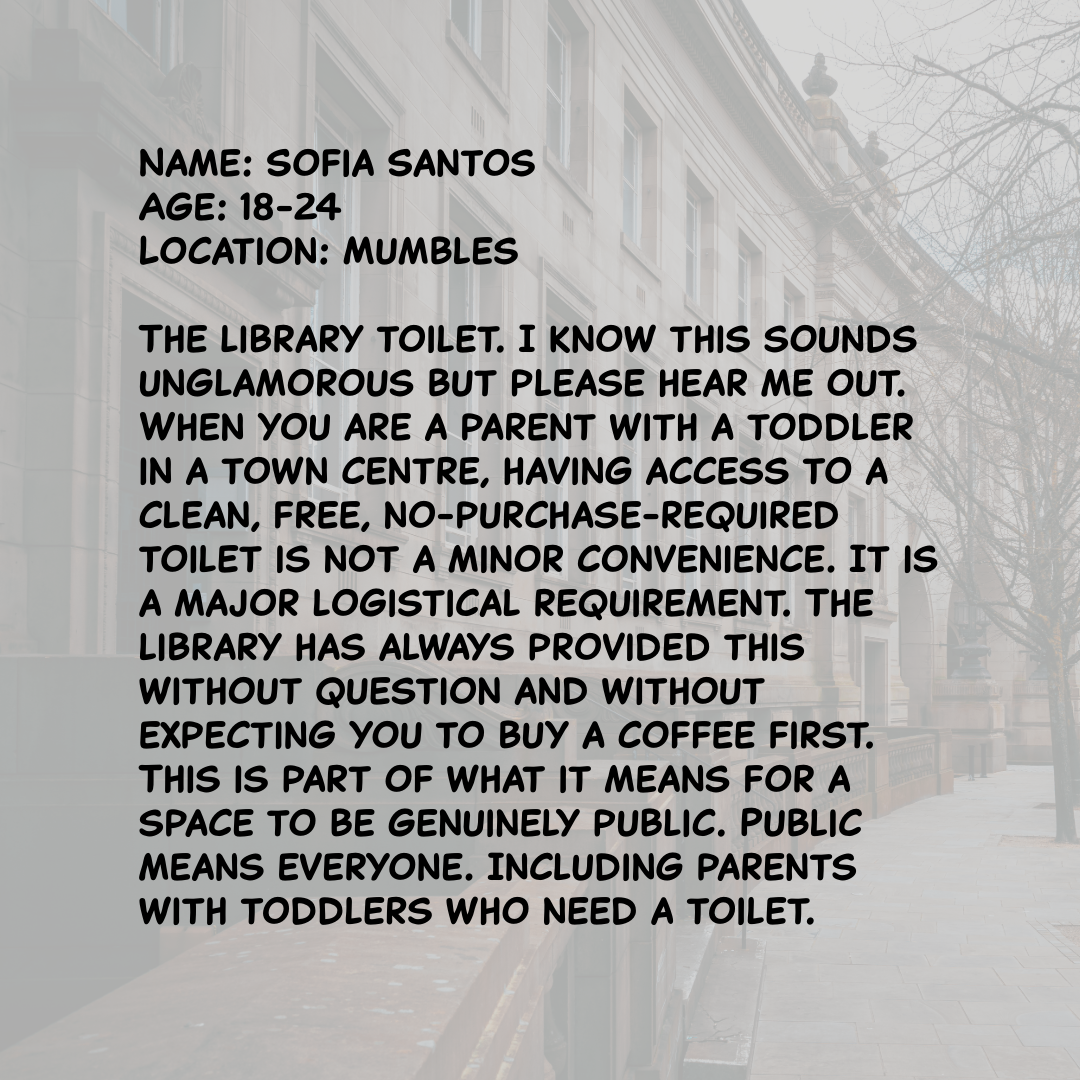
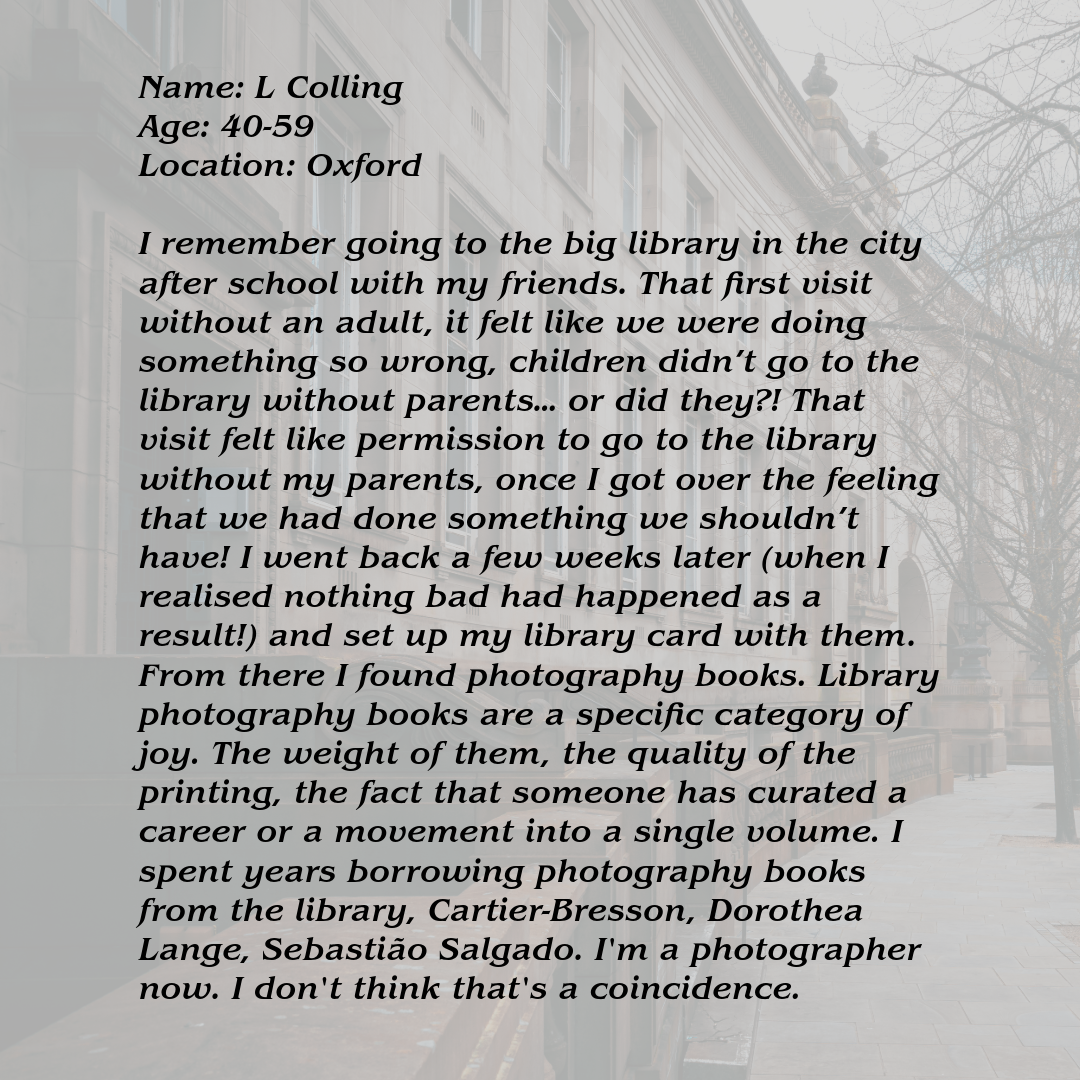
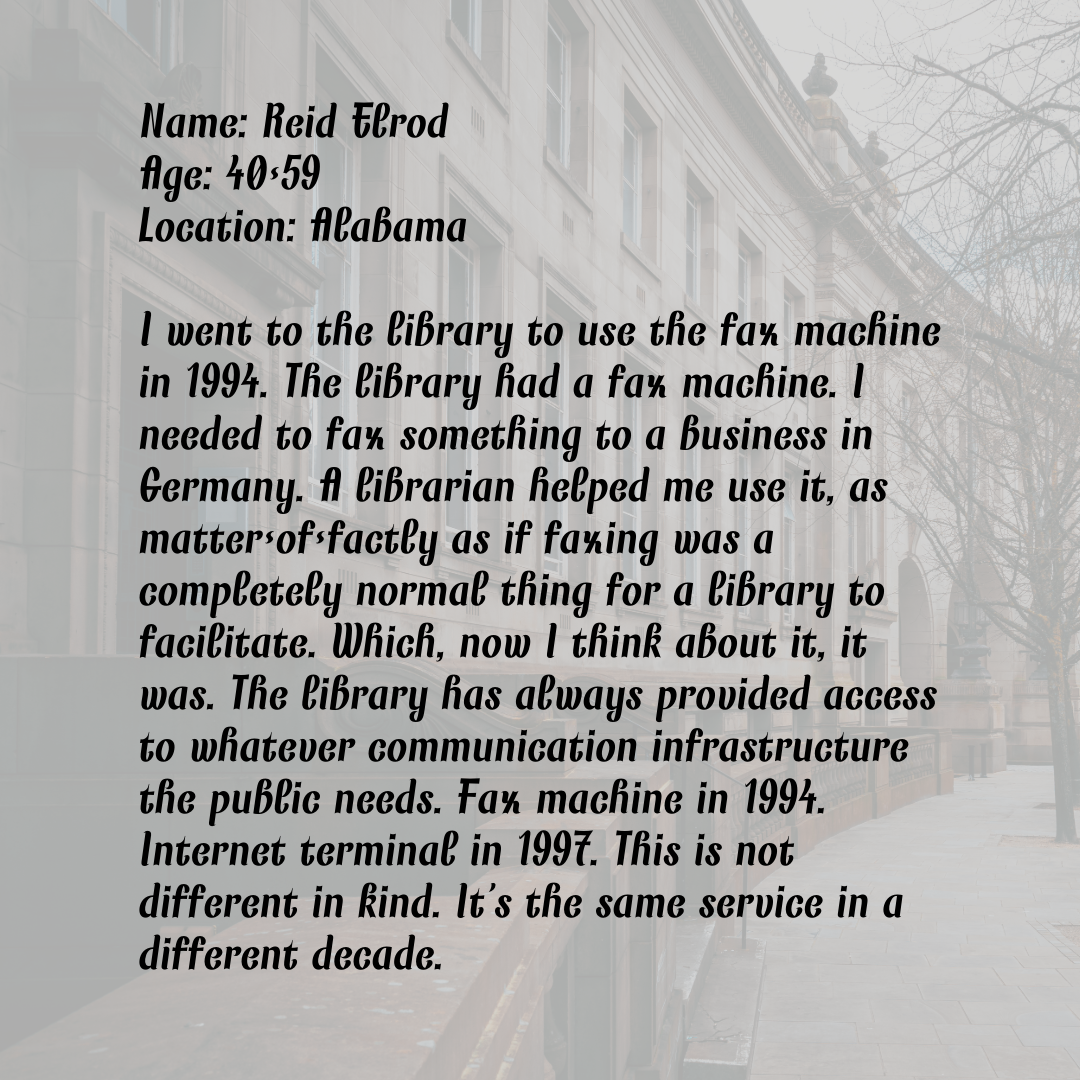
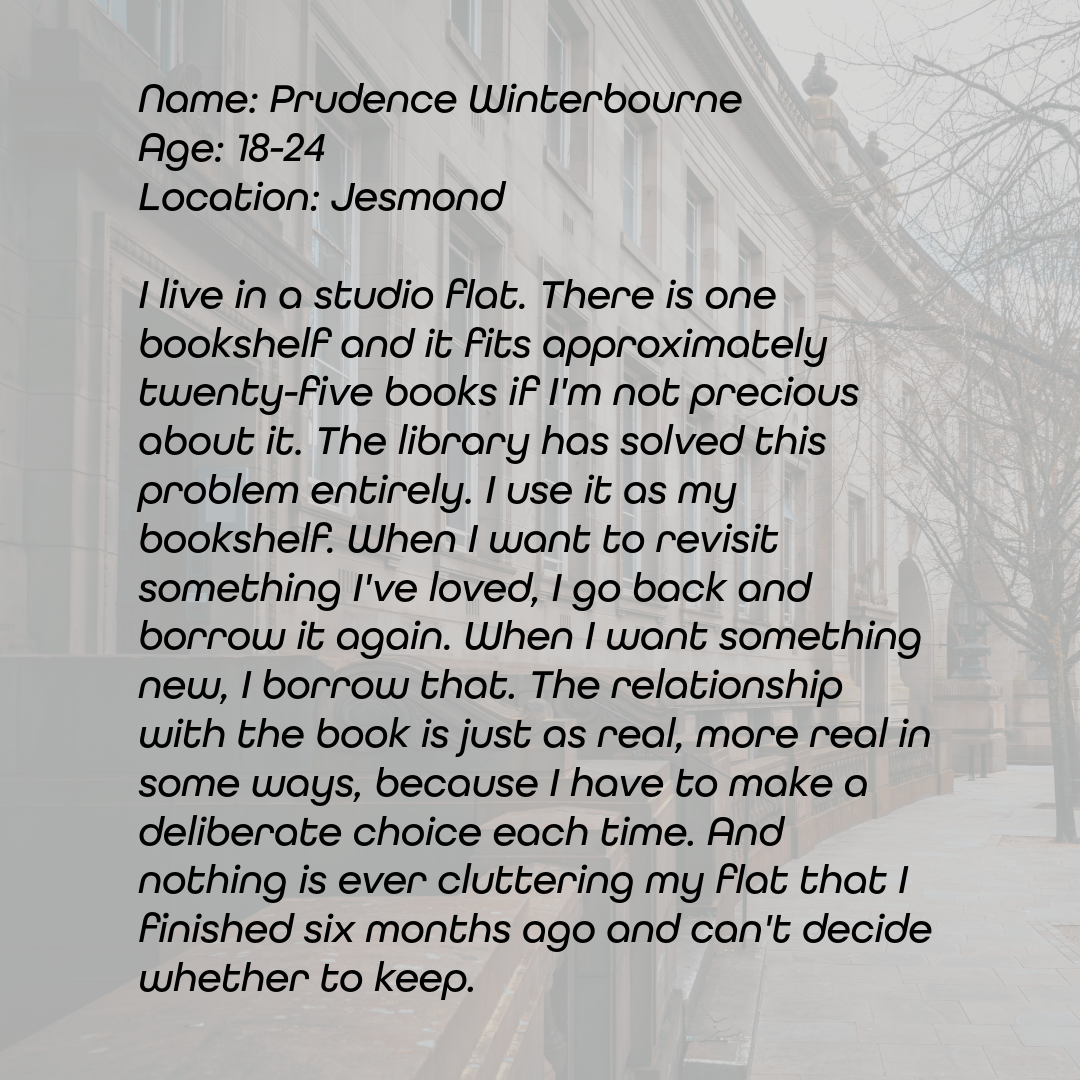
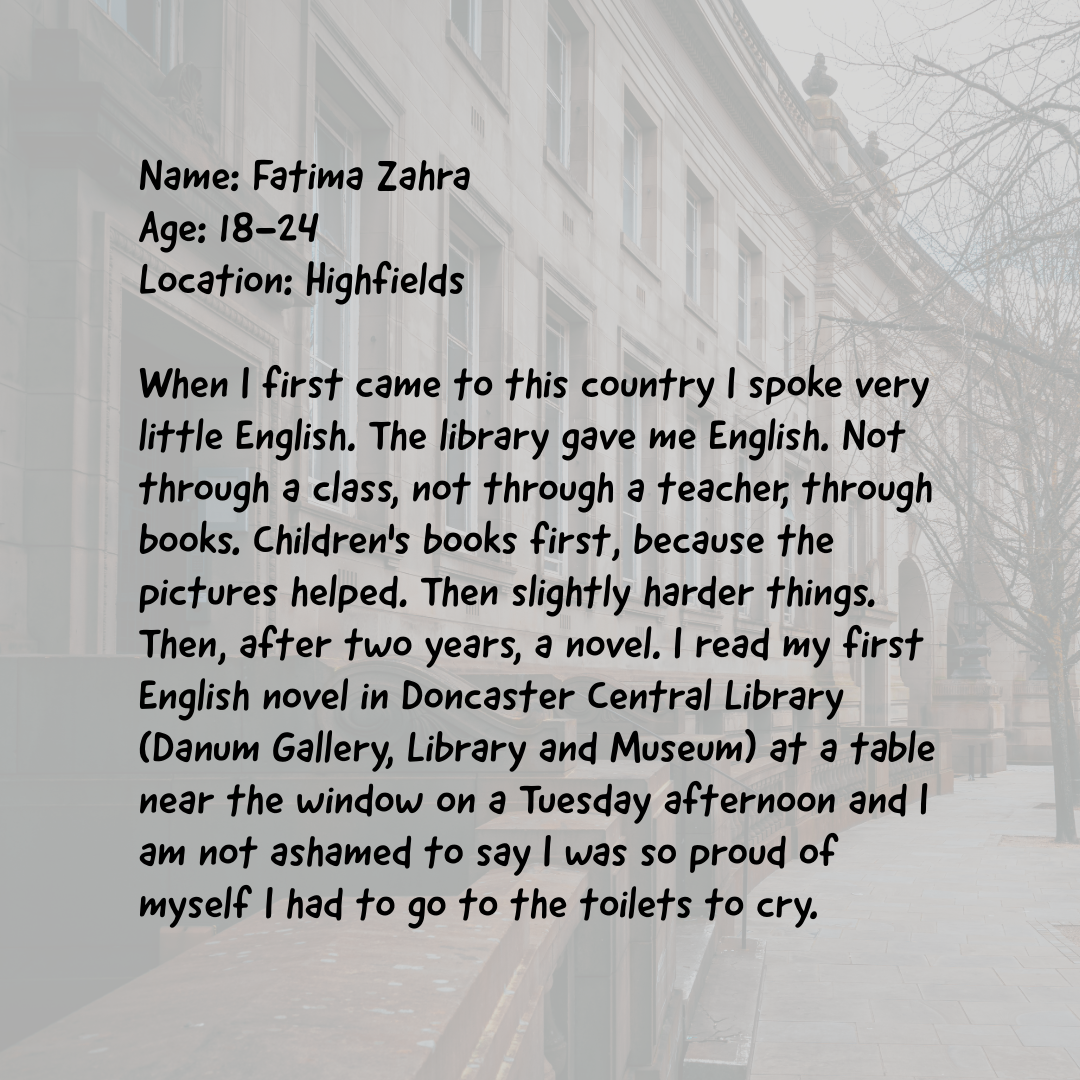
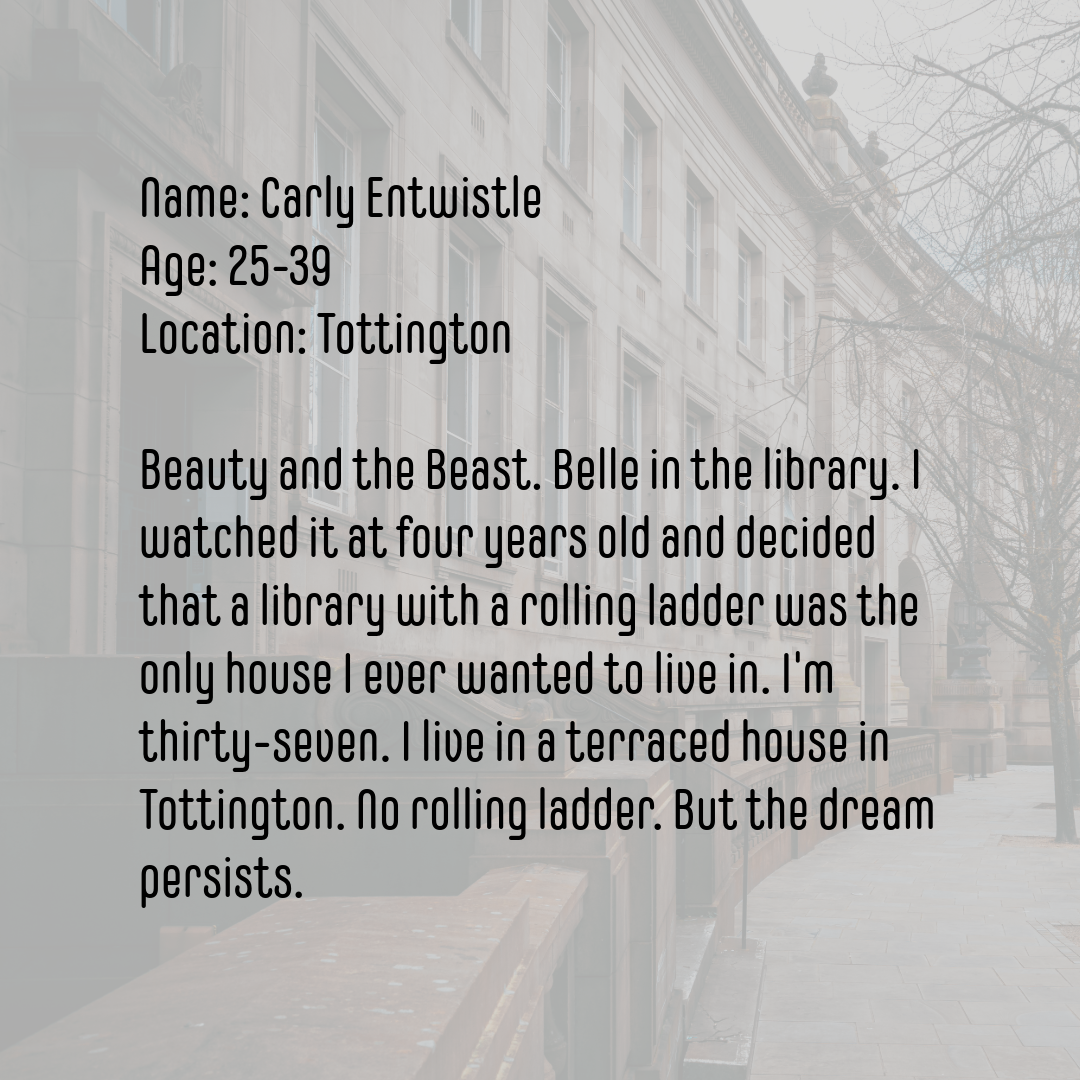
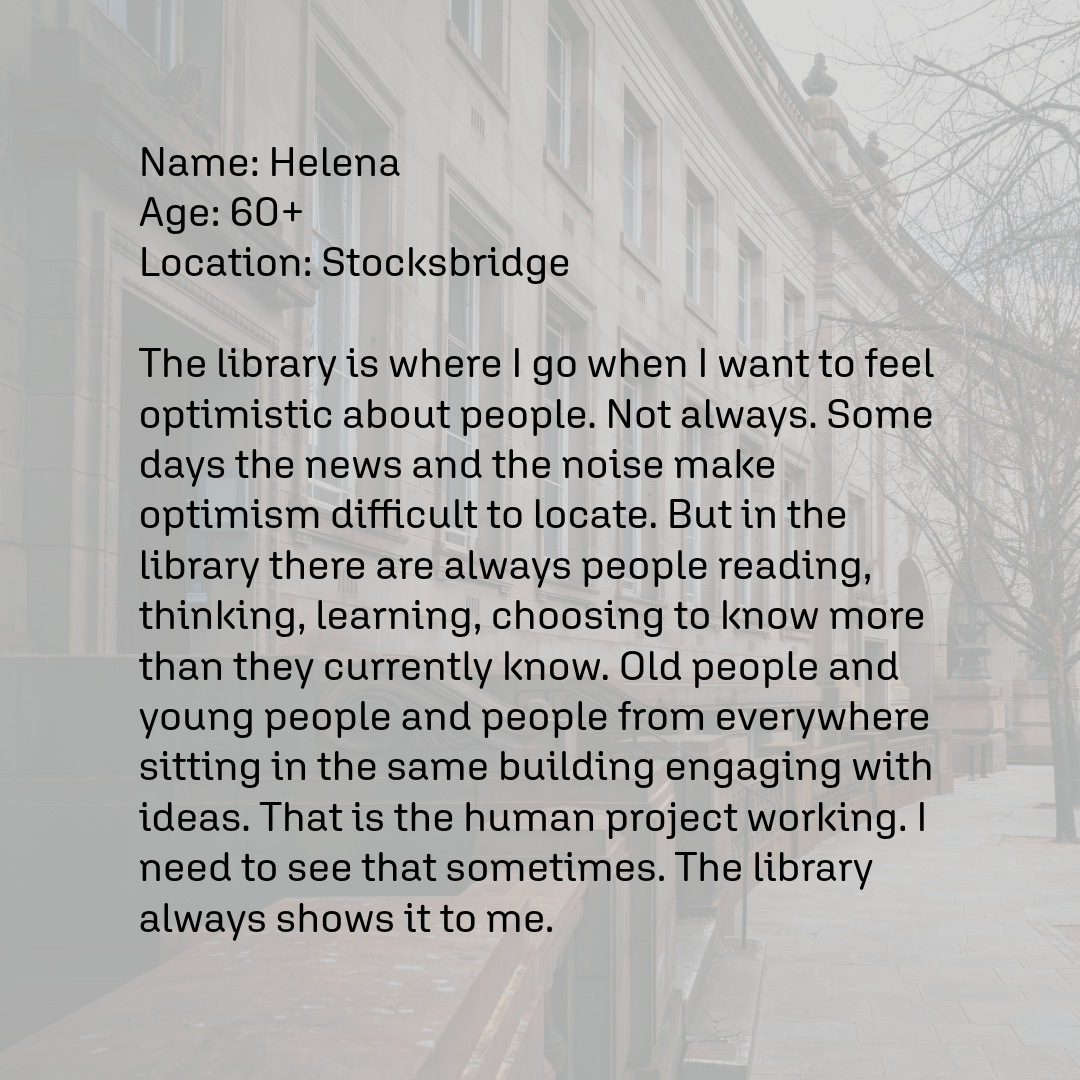
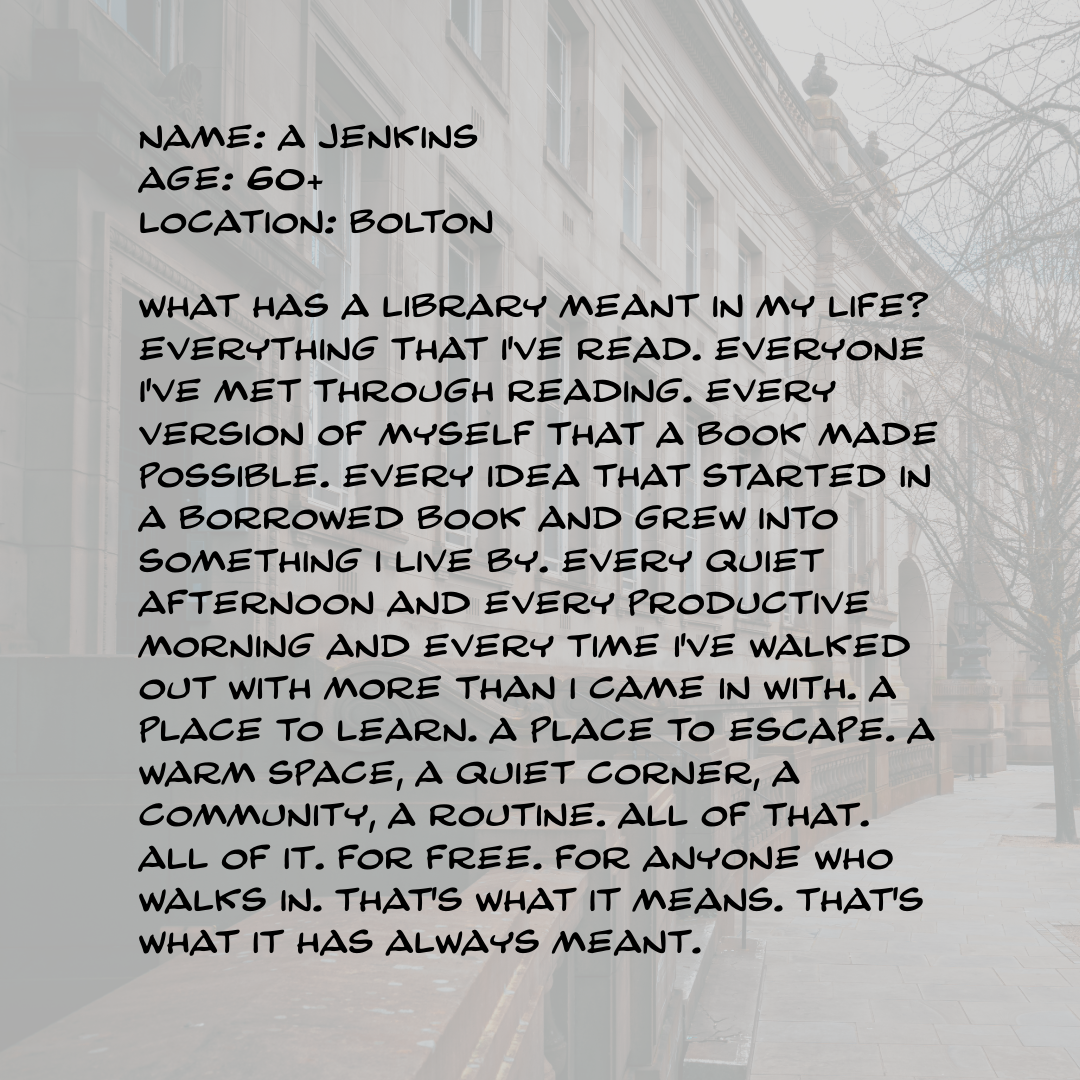
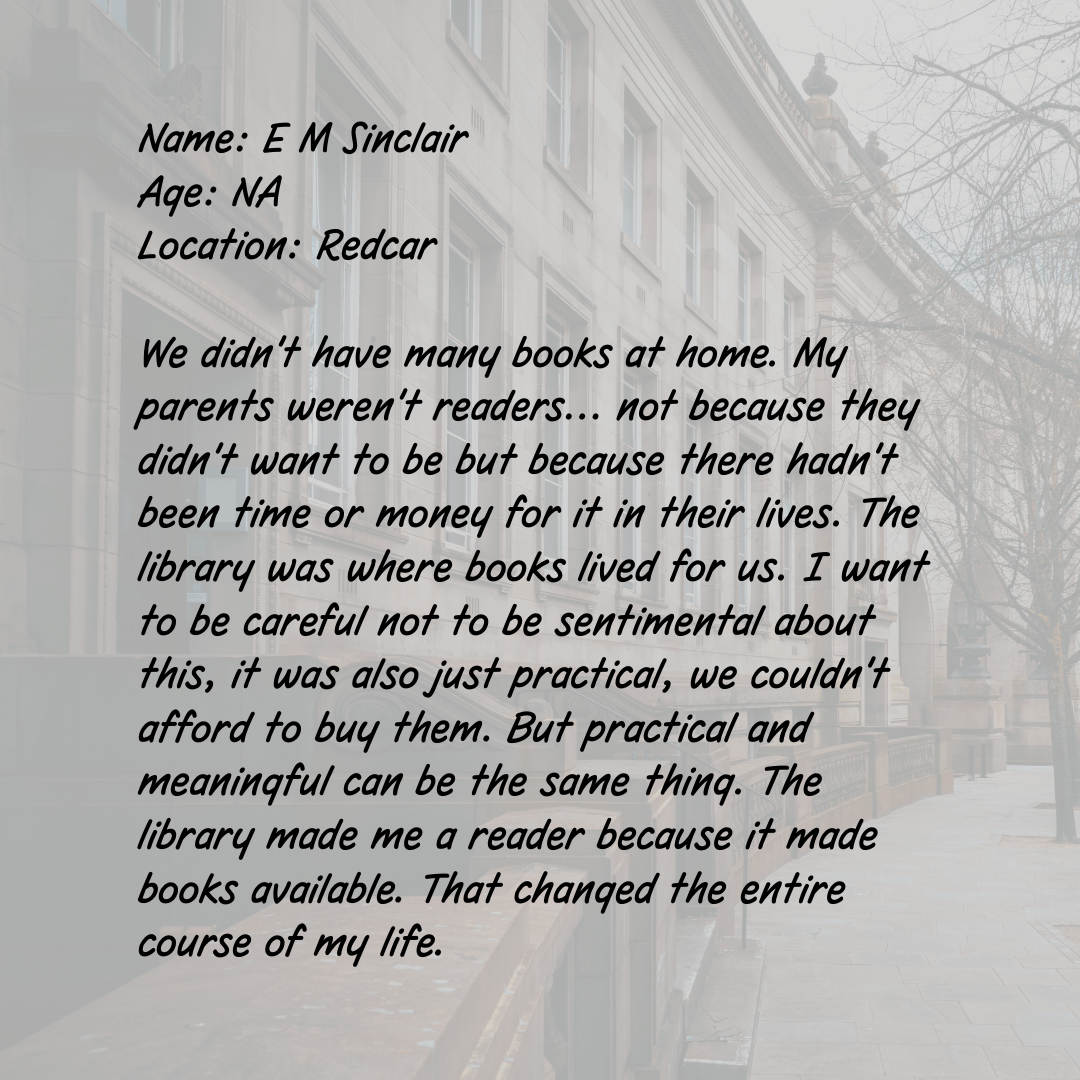
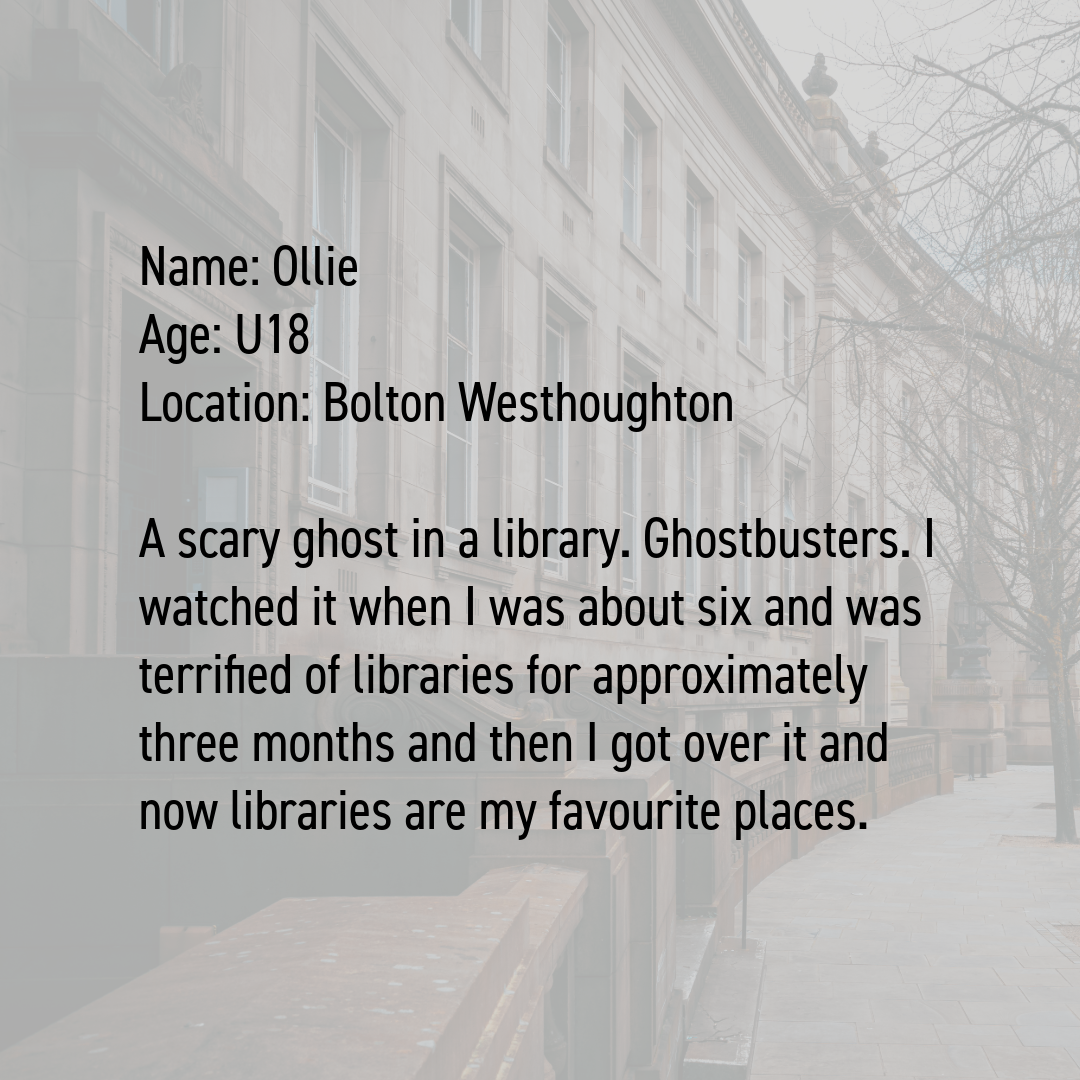
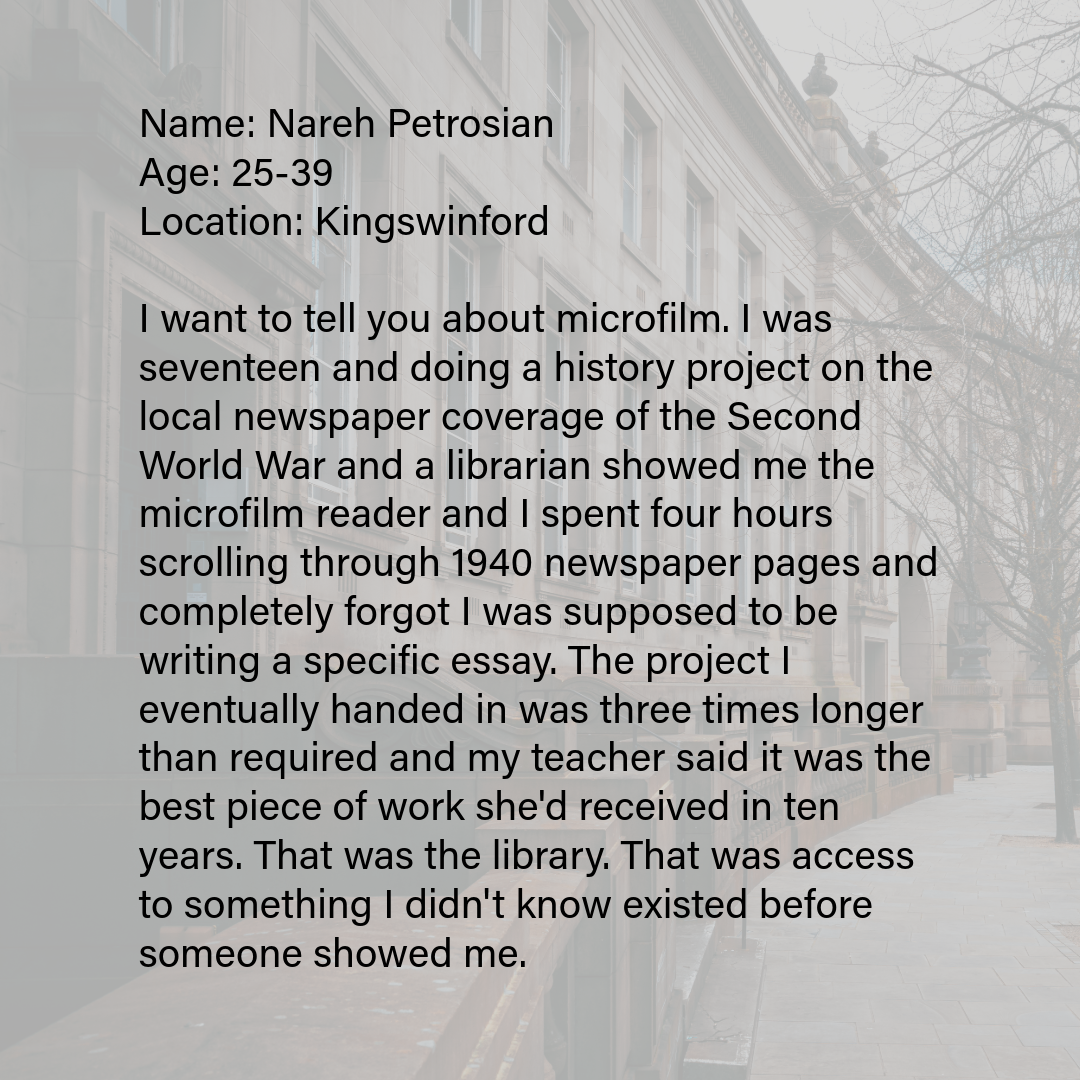
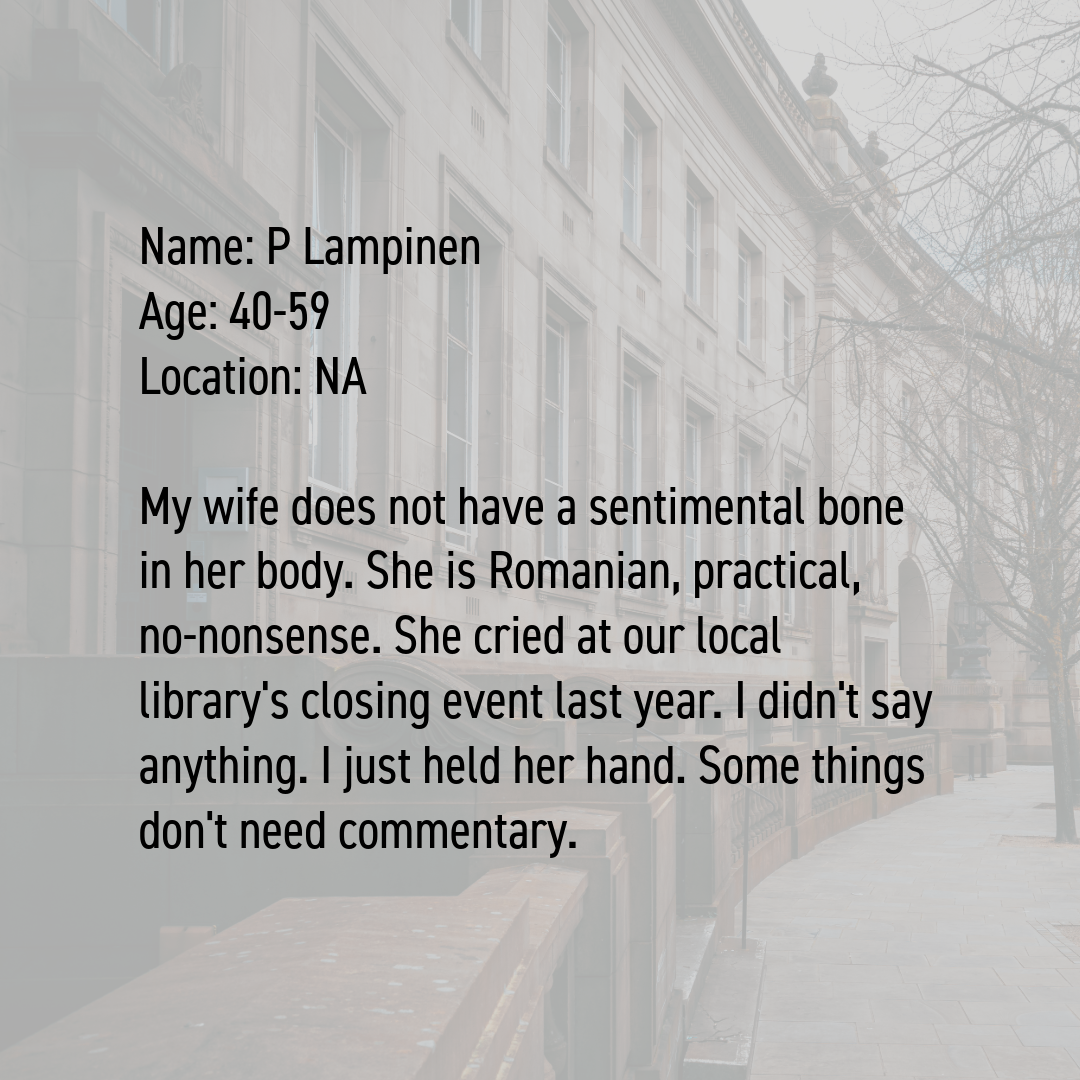
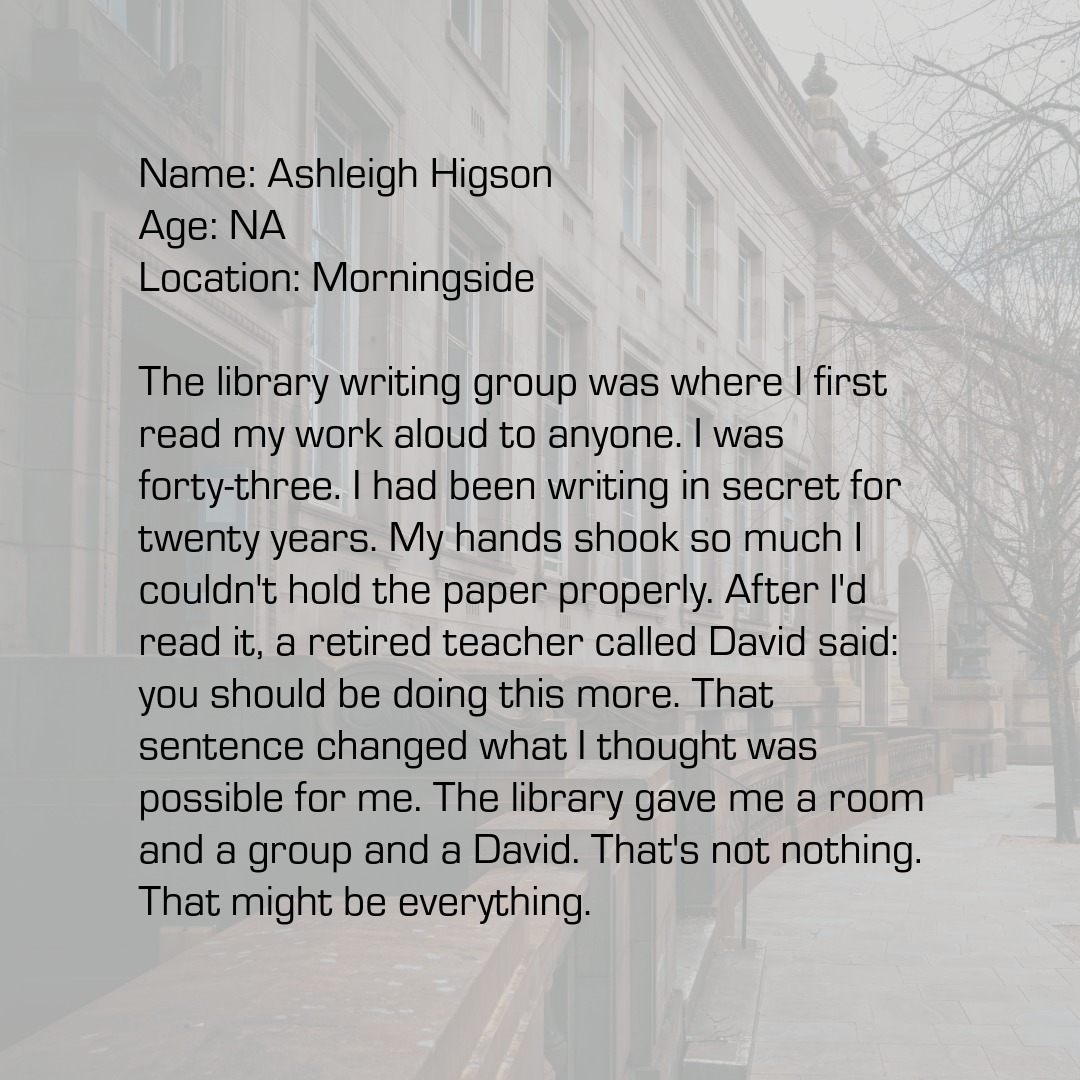
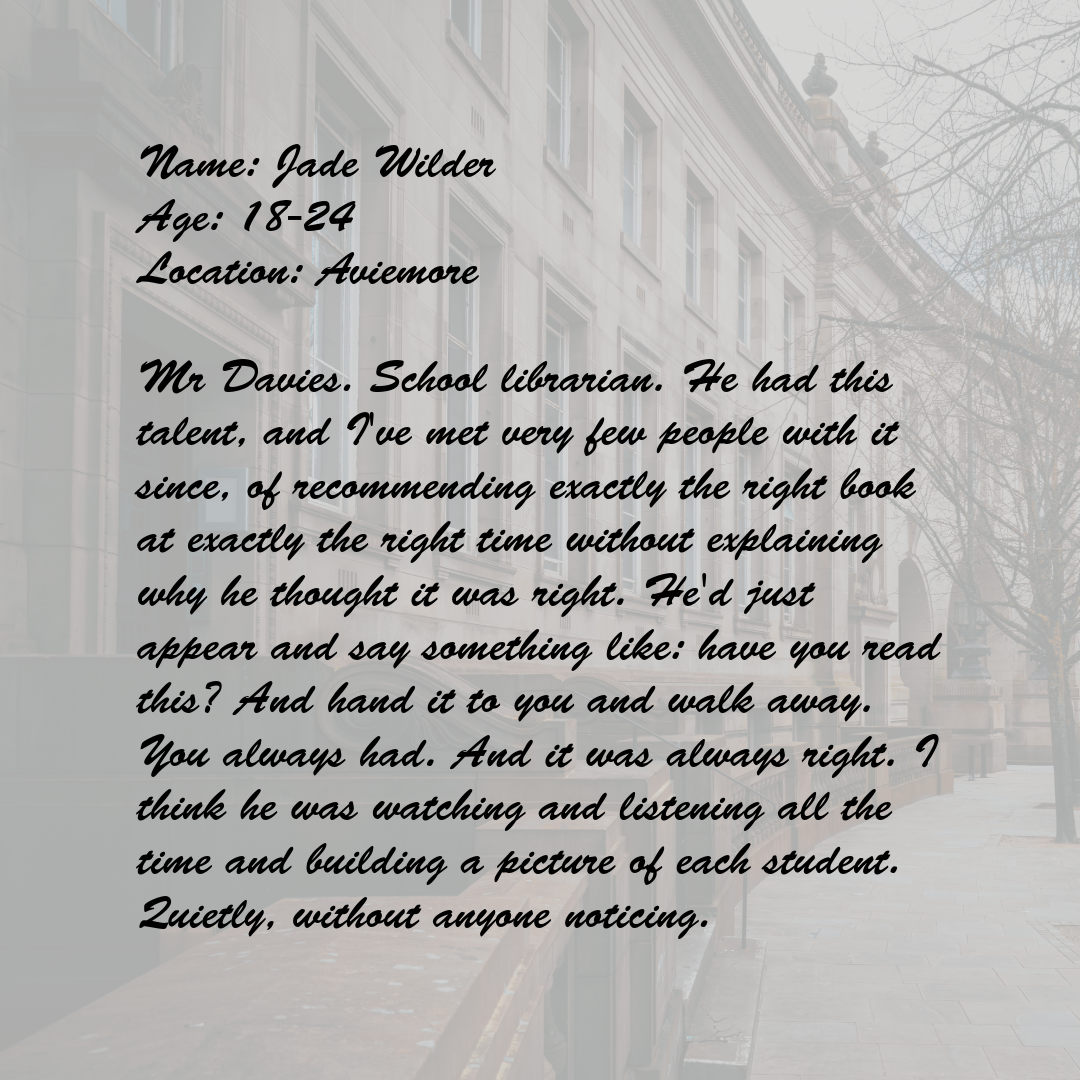
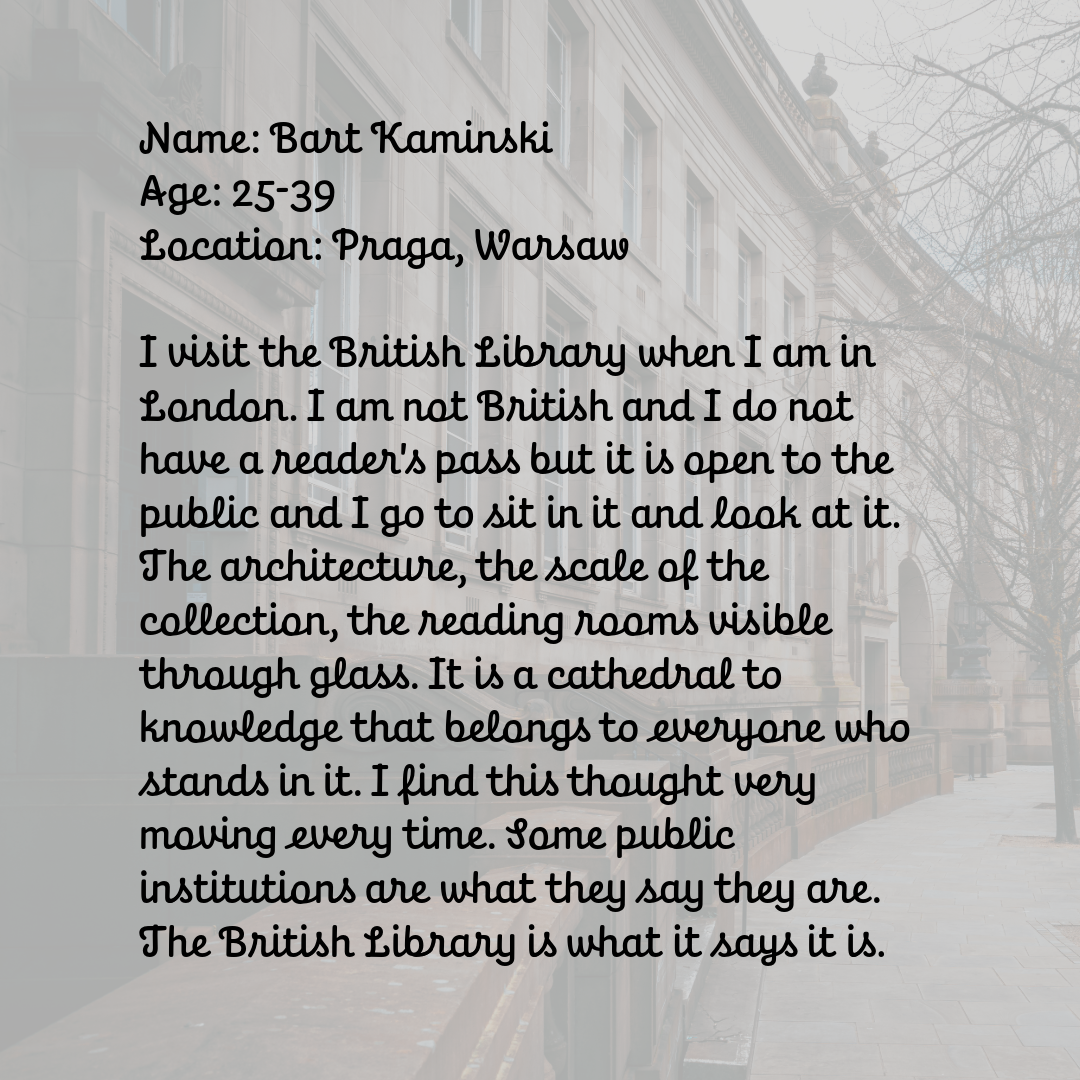
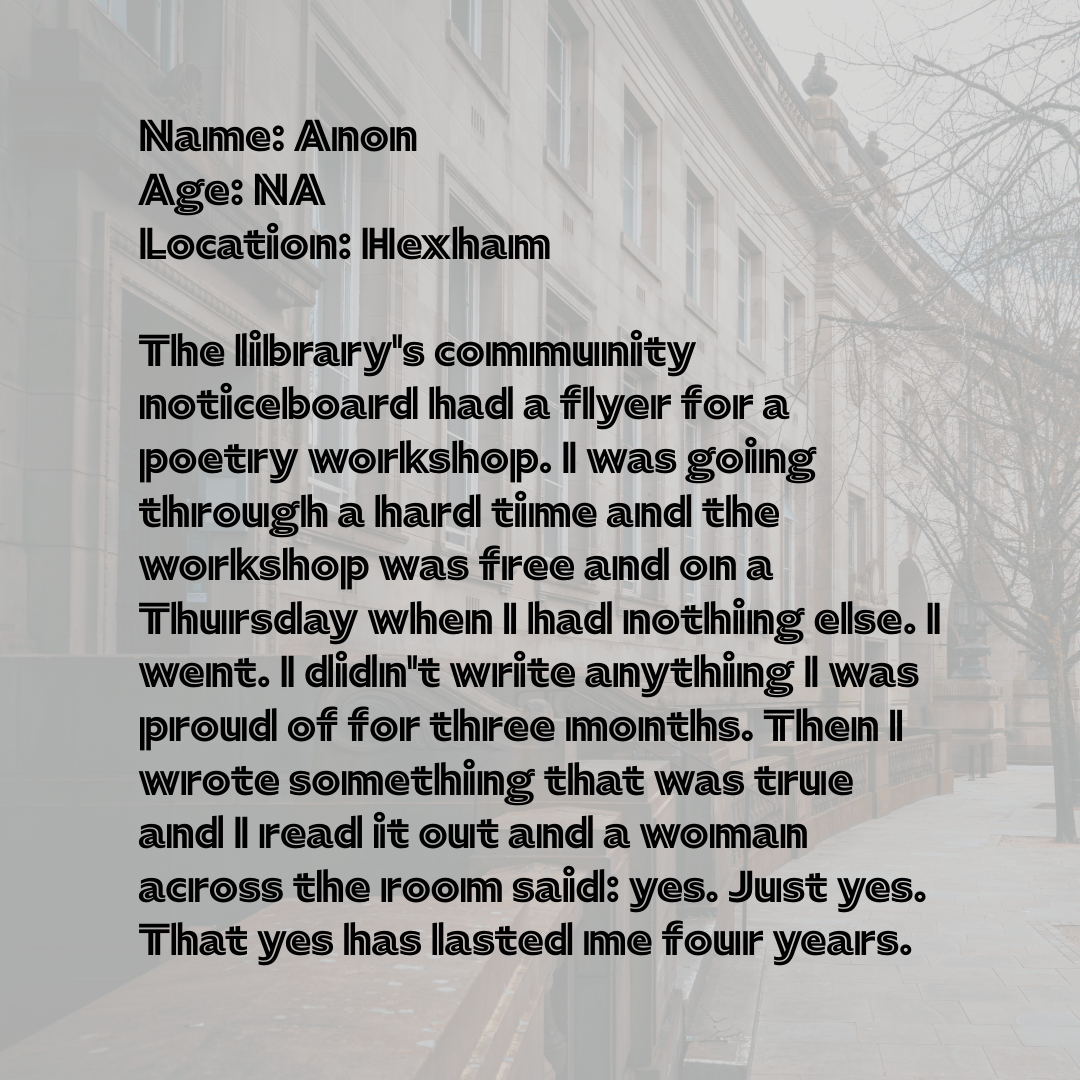
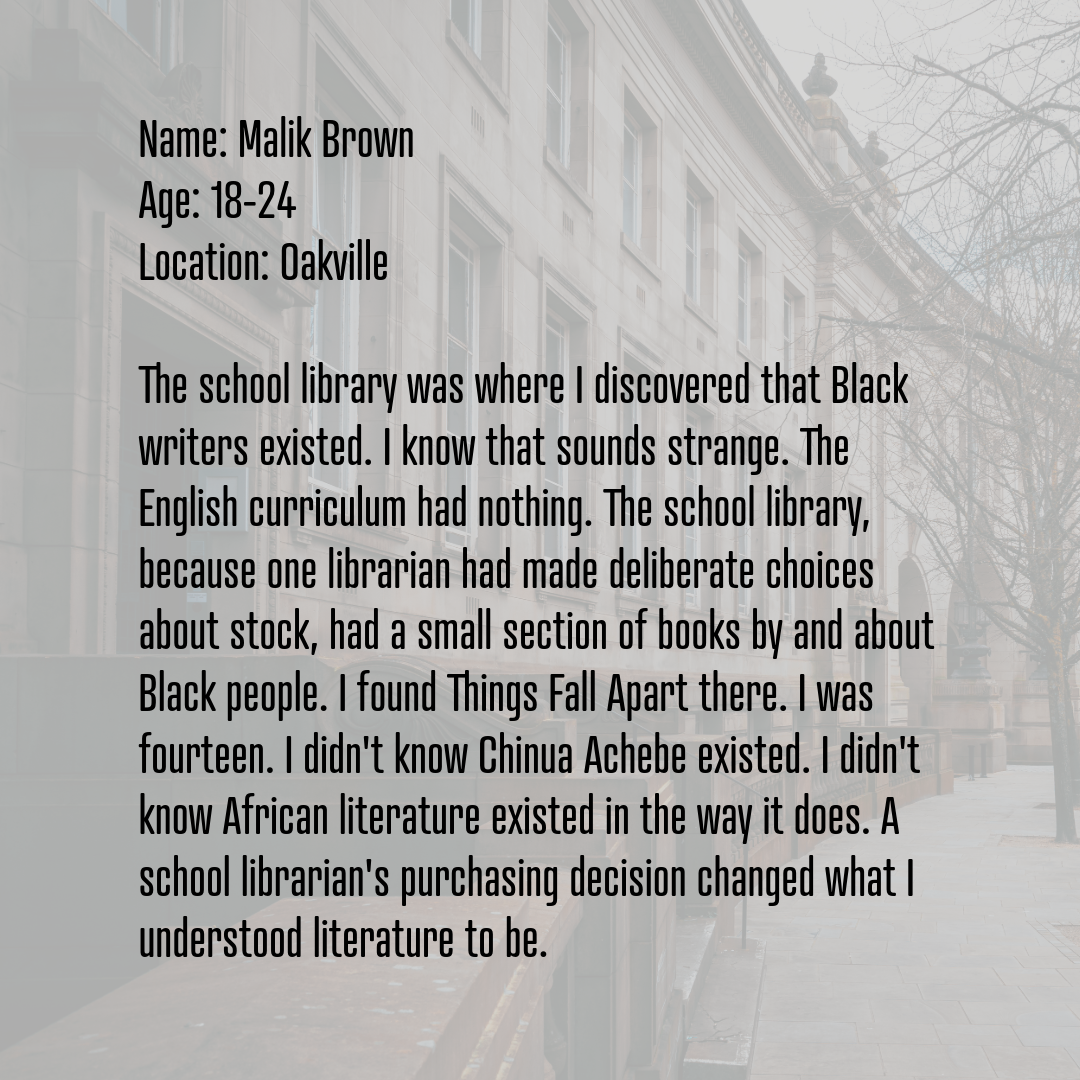
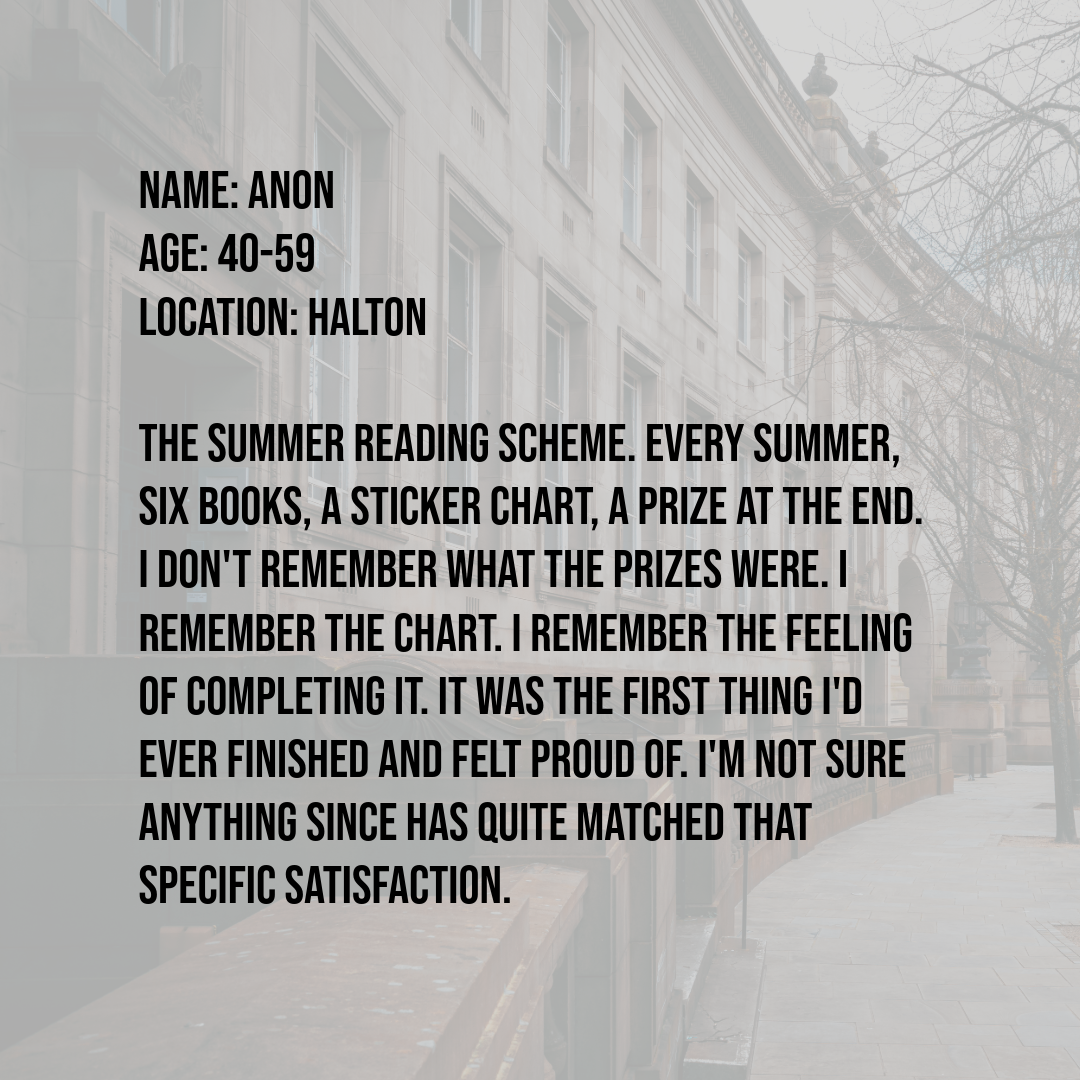
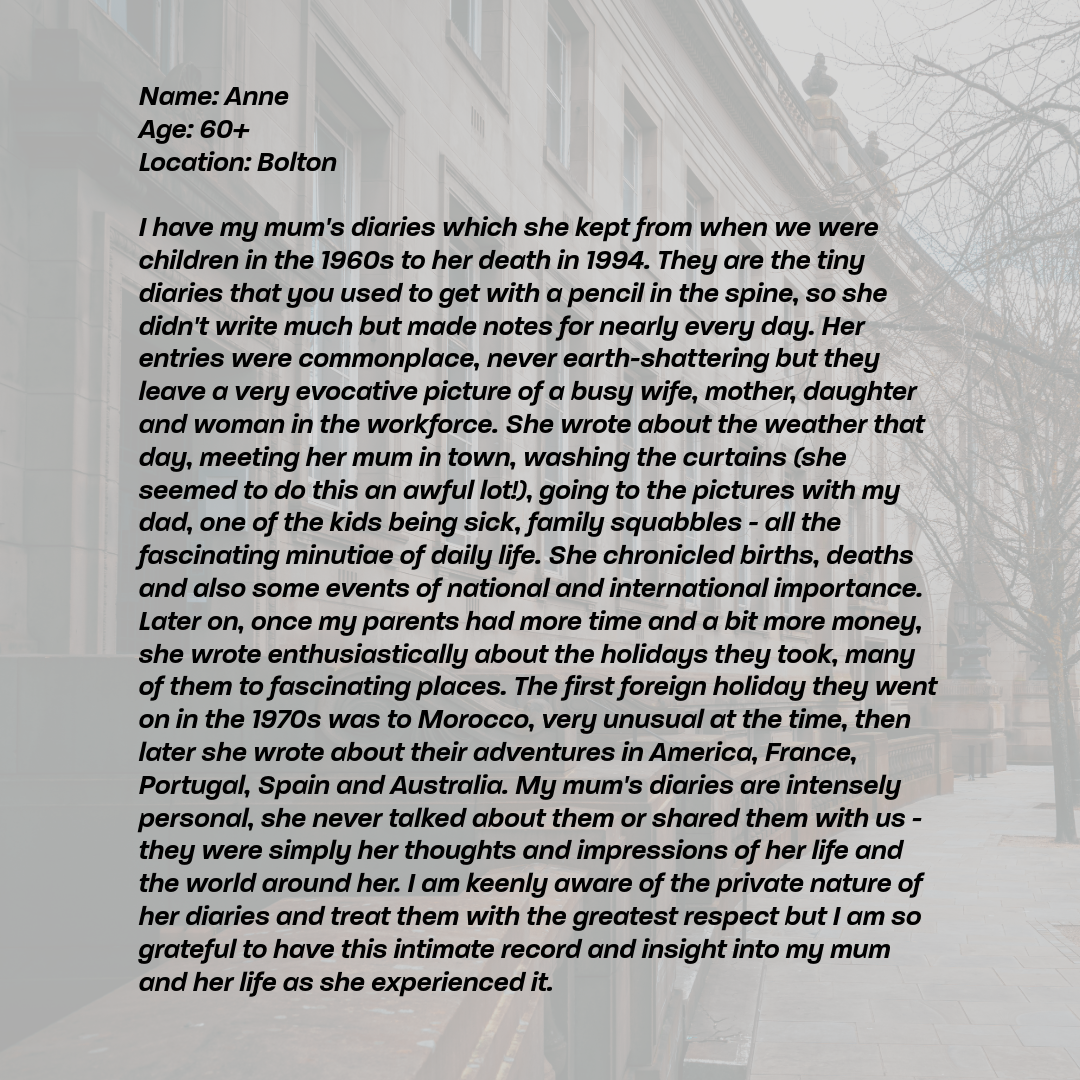
We weren’t sure what to expect. We thought people might tell us about books they’d discovered, or places they’d loved. We didn’t quite anticipate what actually arrived.
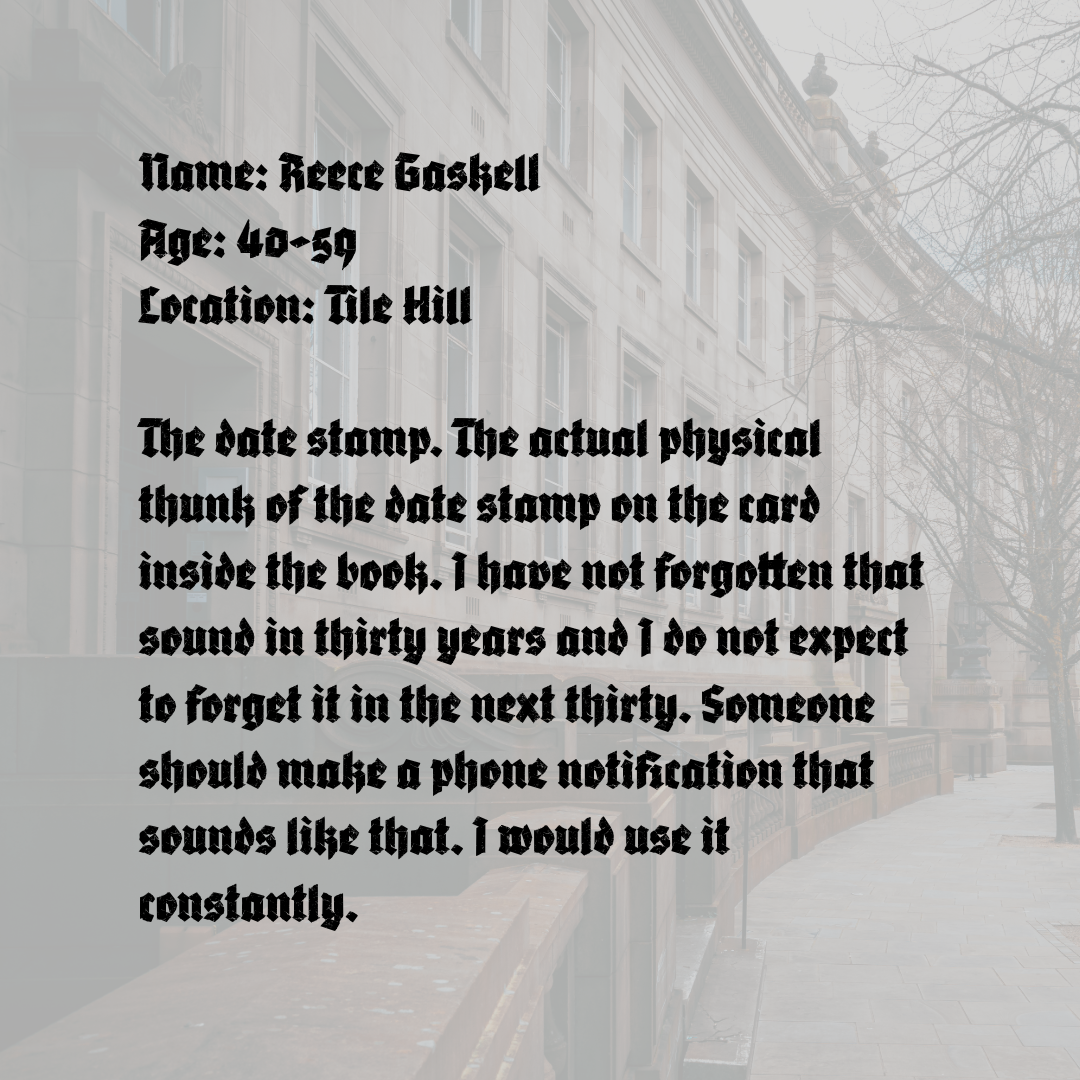
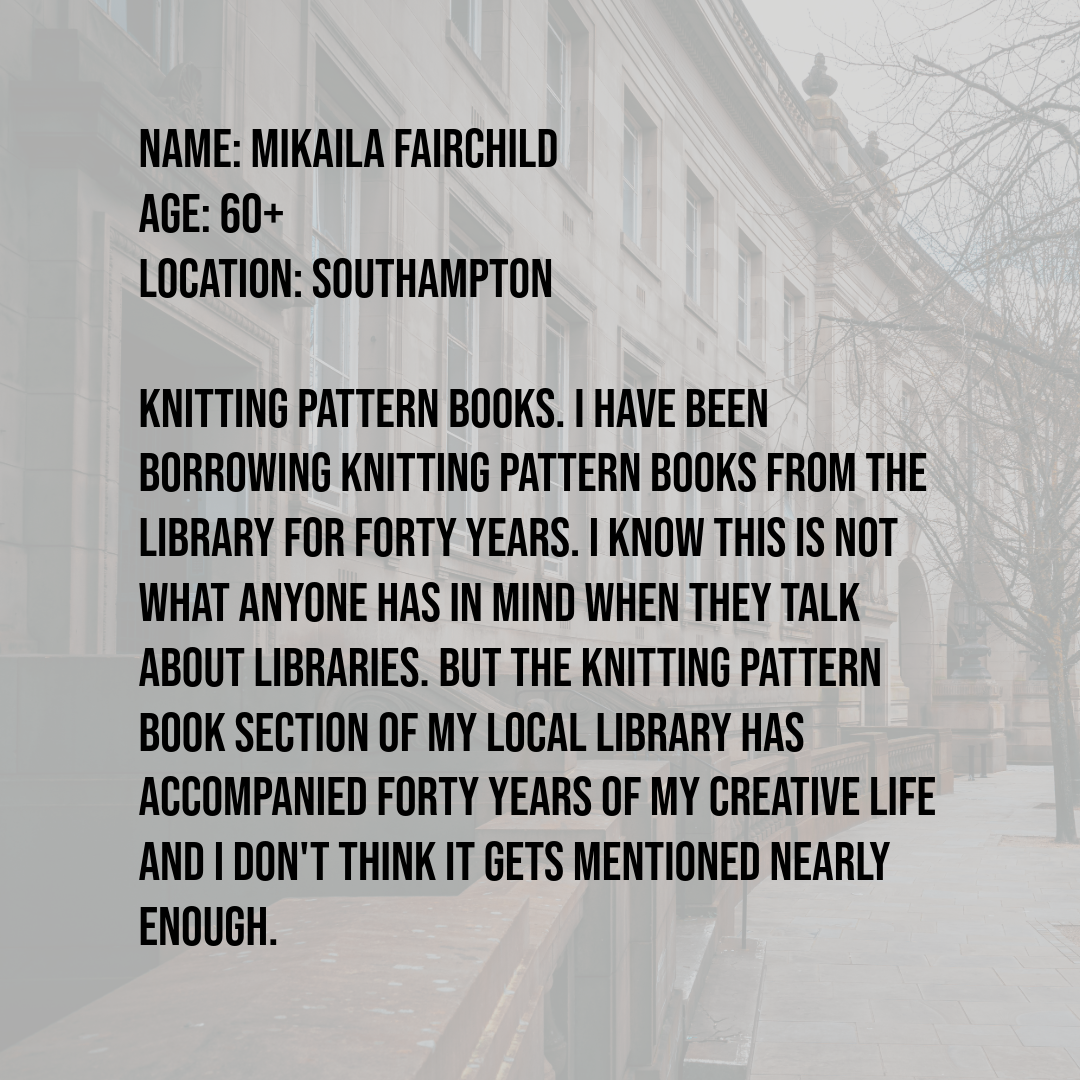
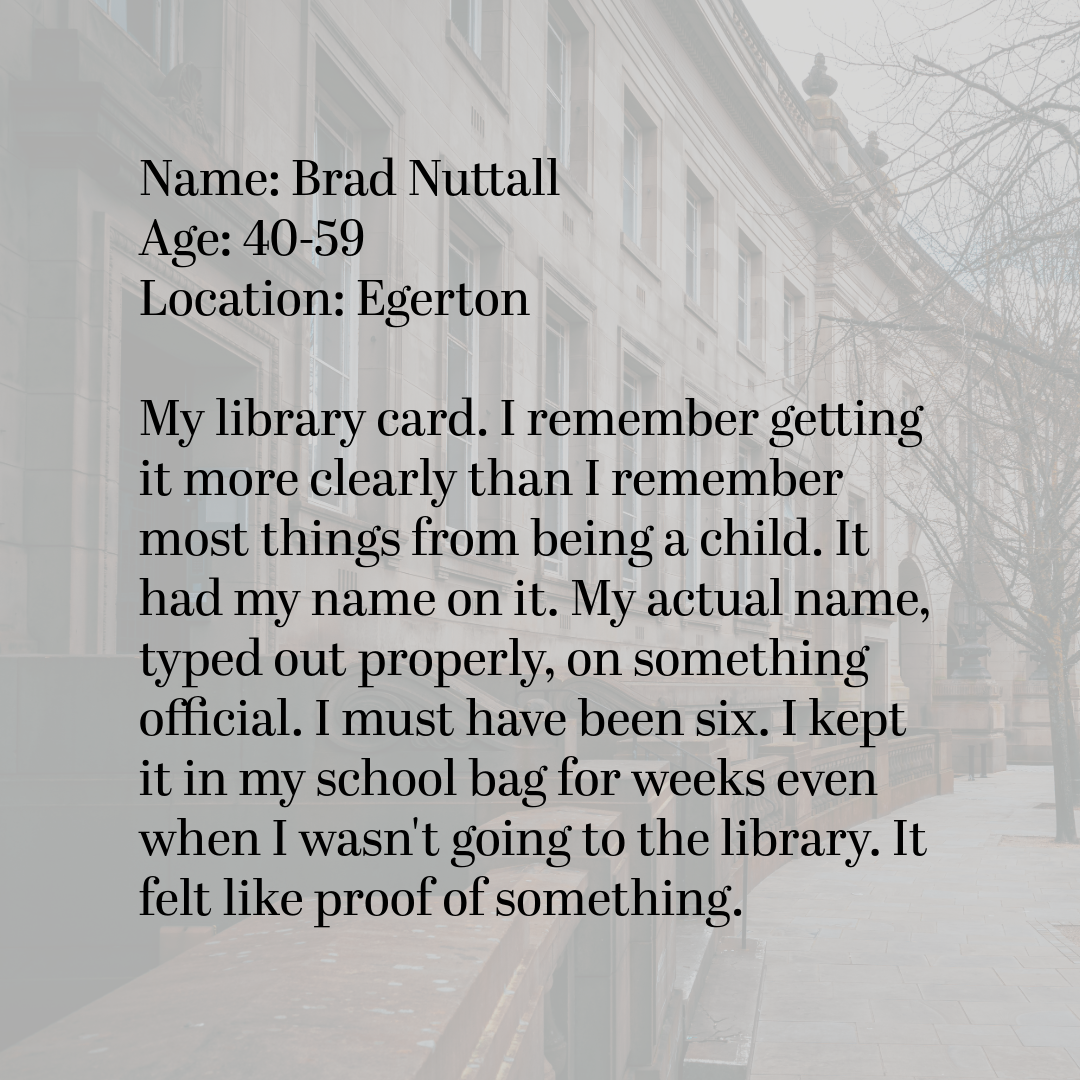
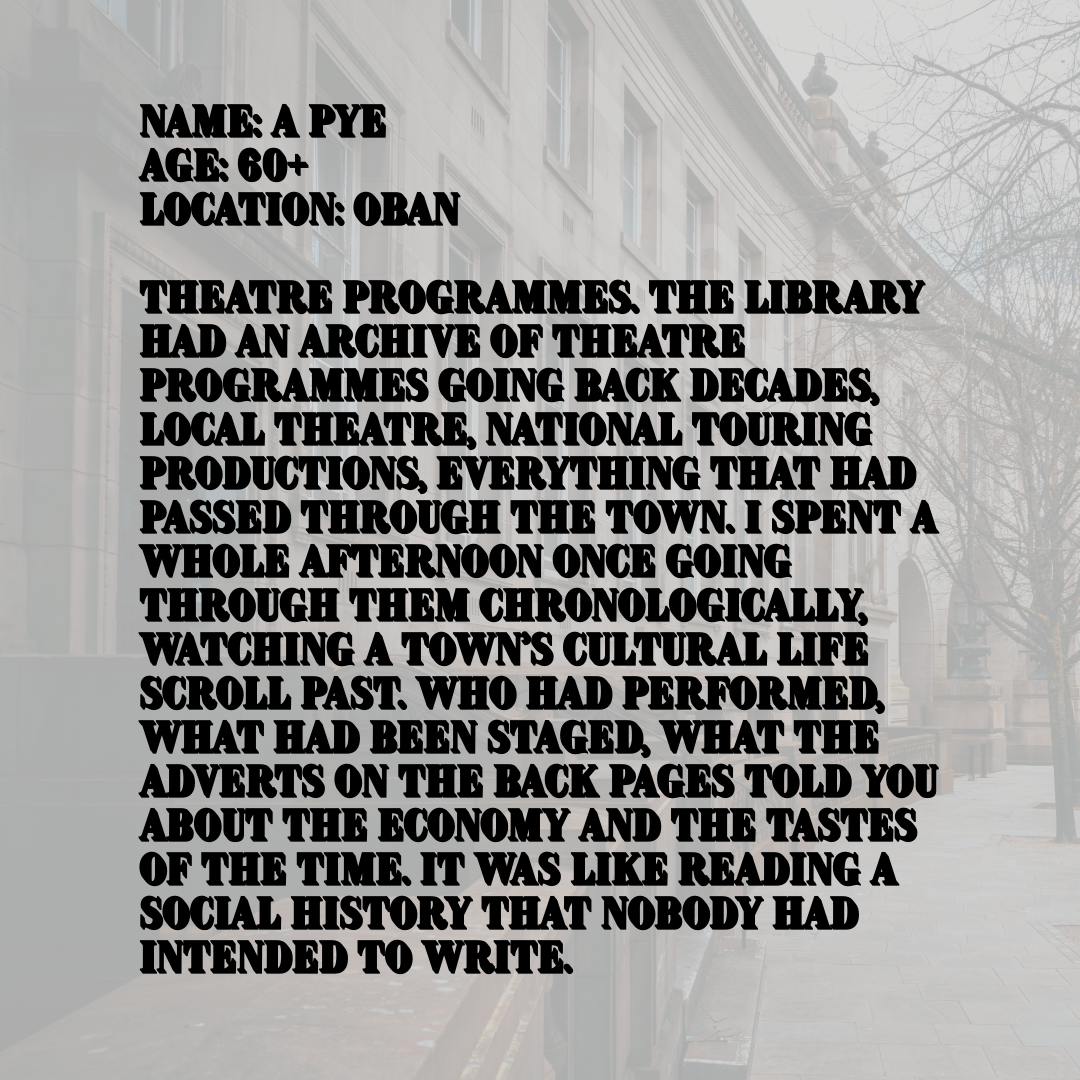
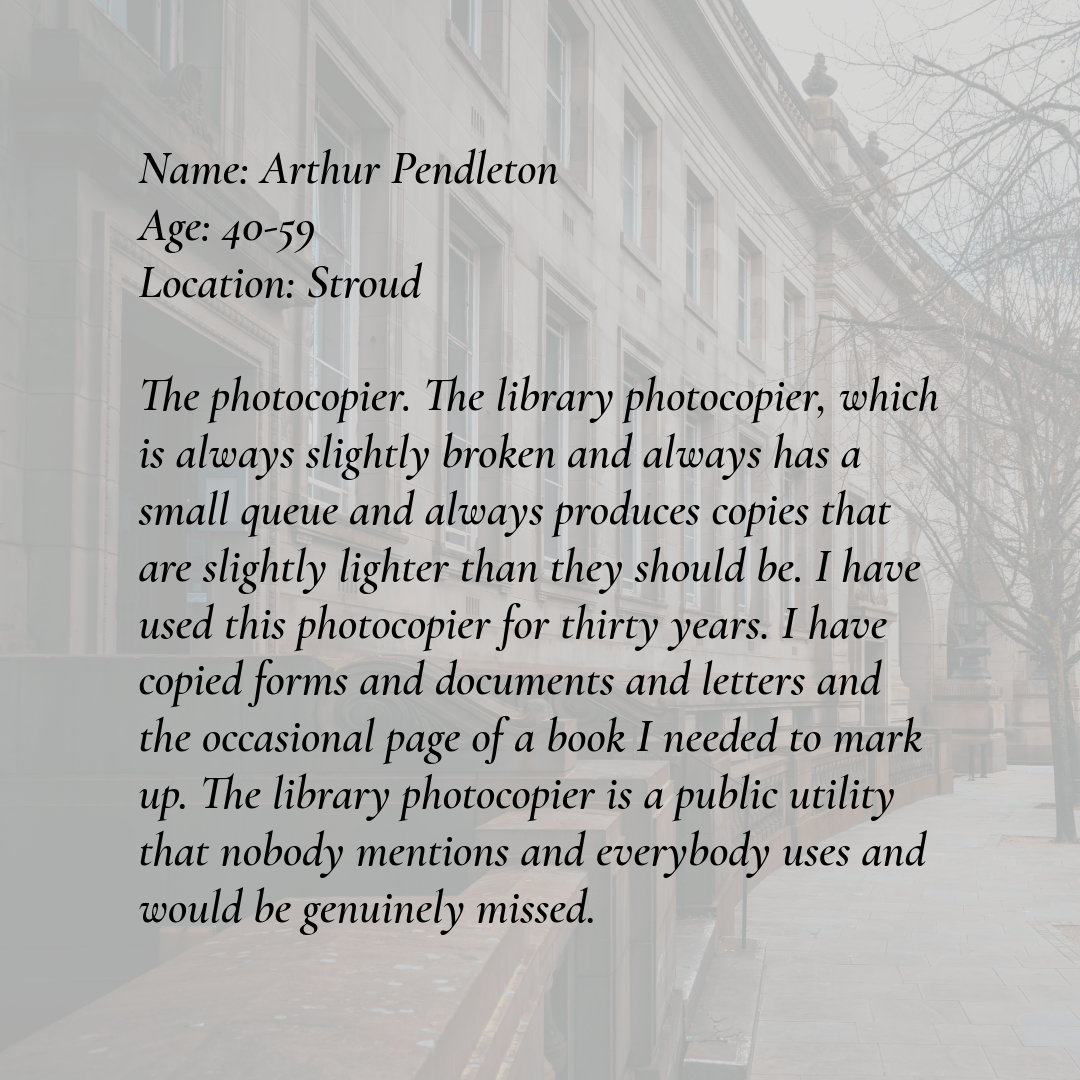
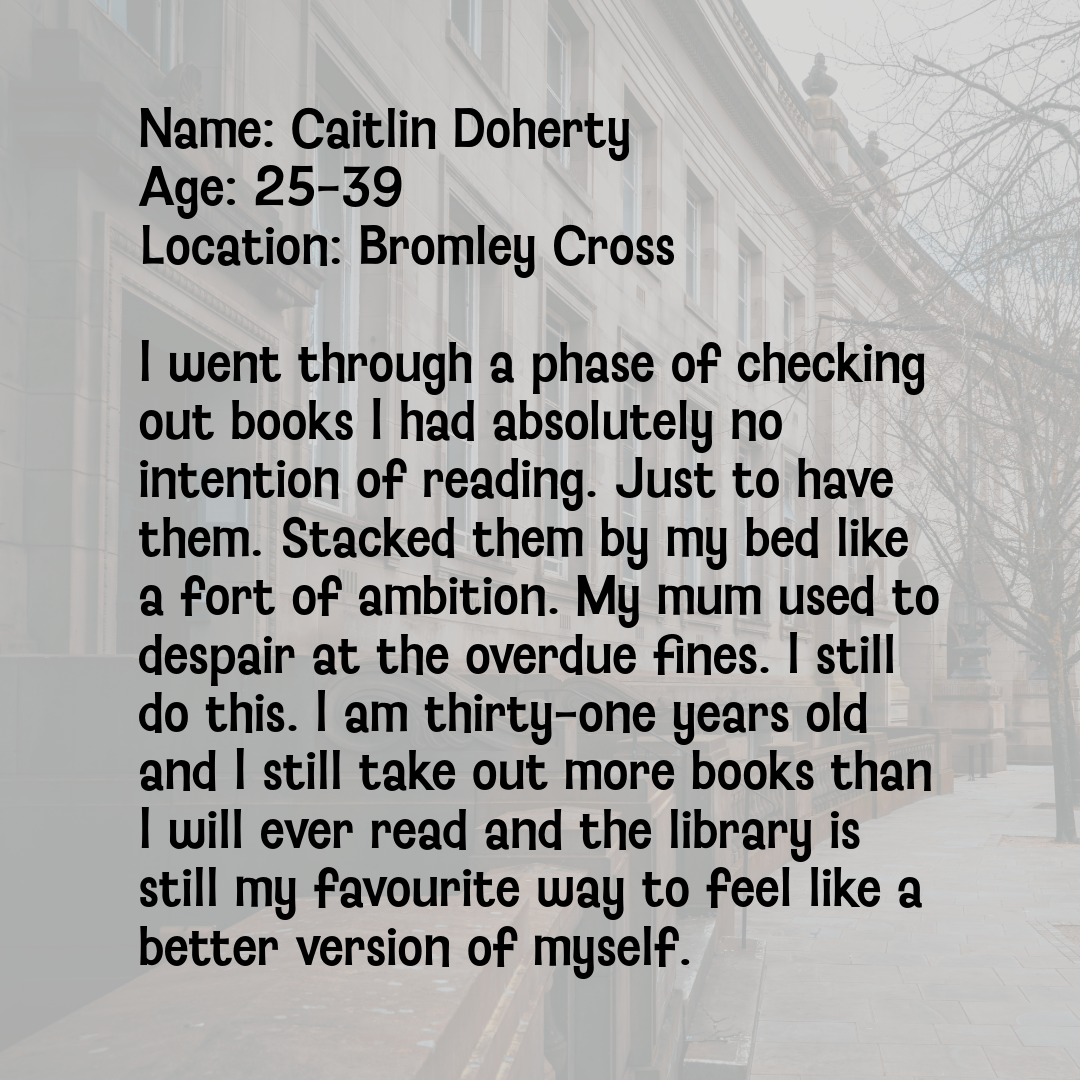
- People told us about the date stamp.
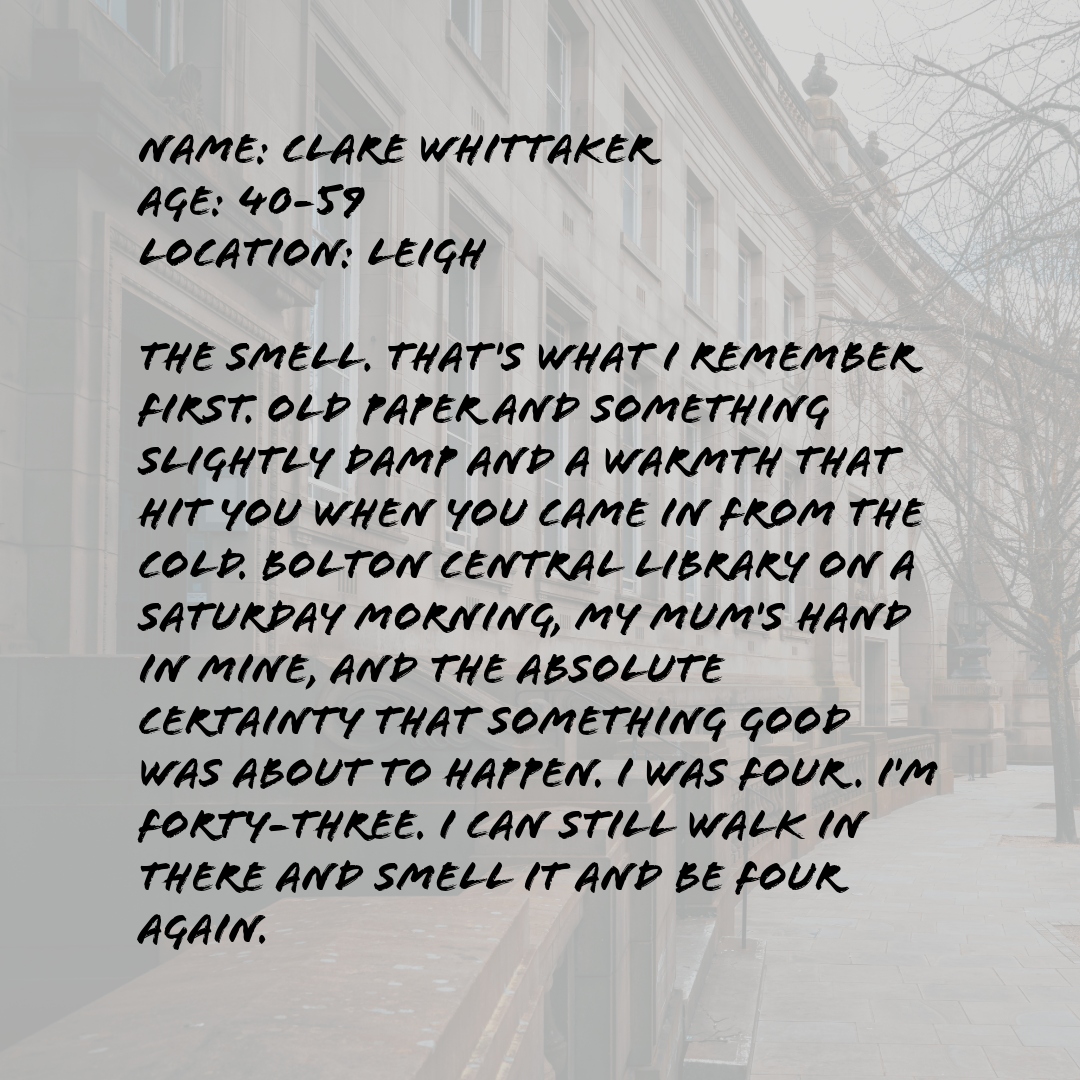
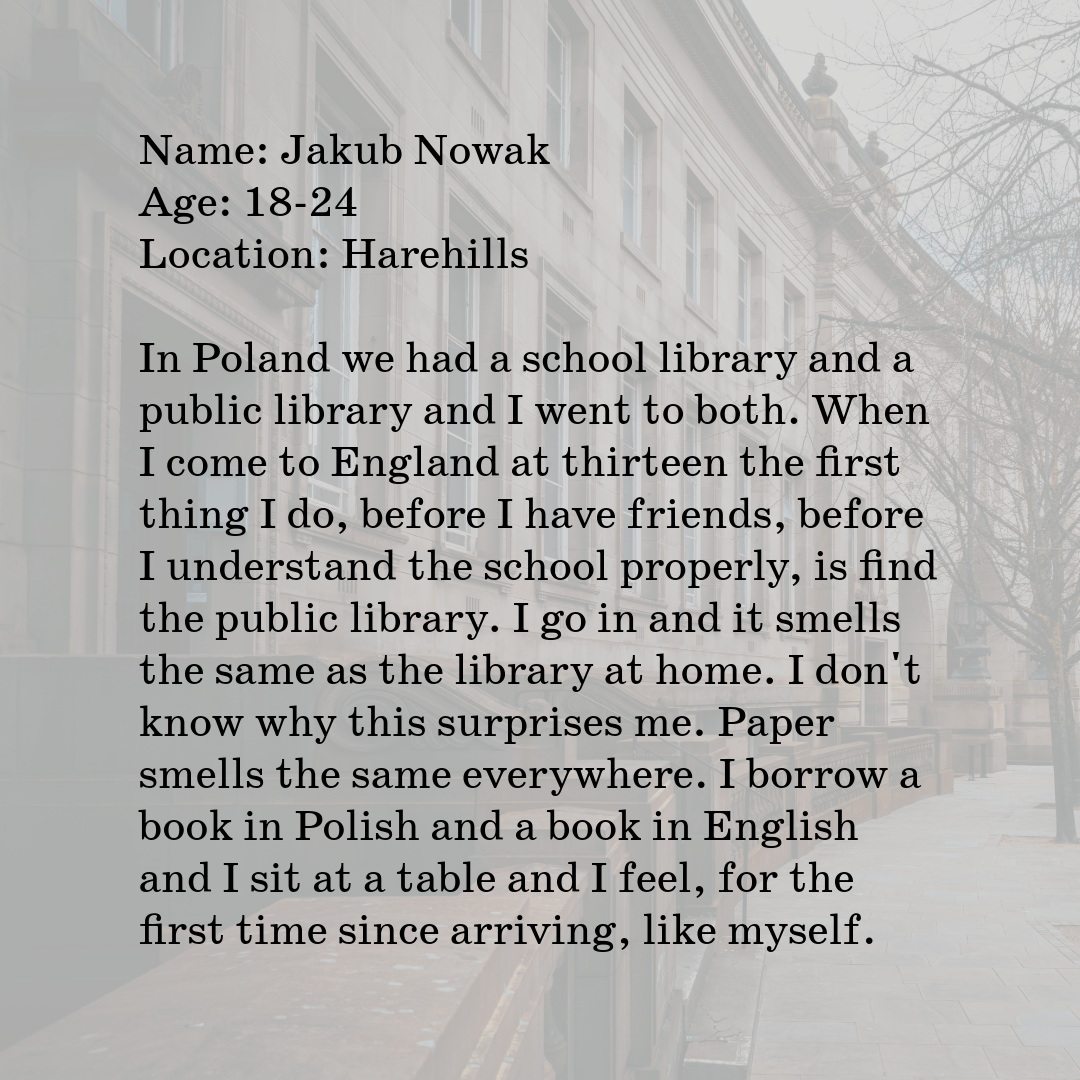
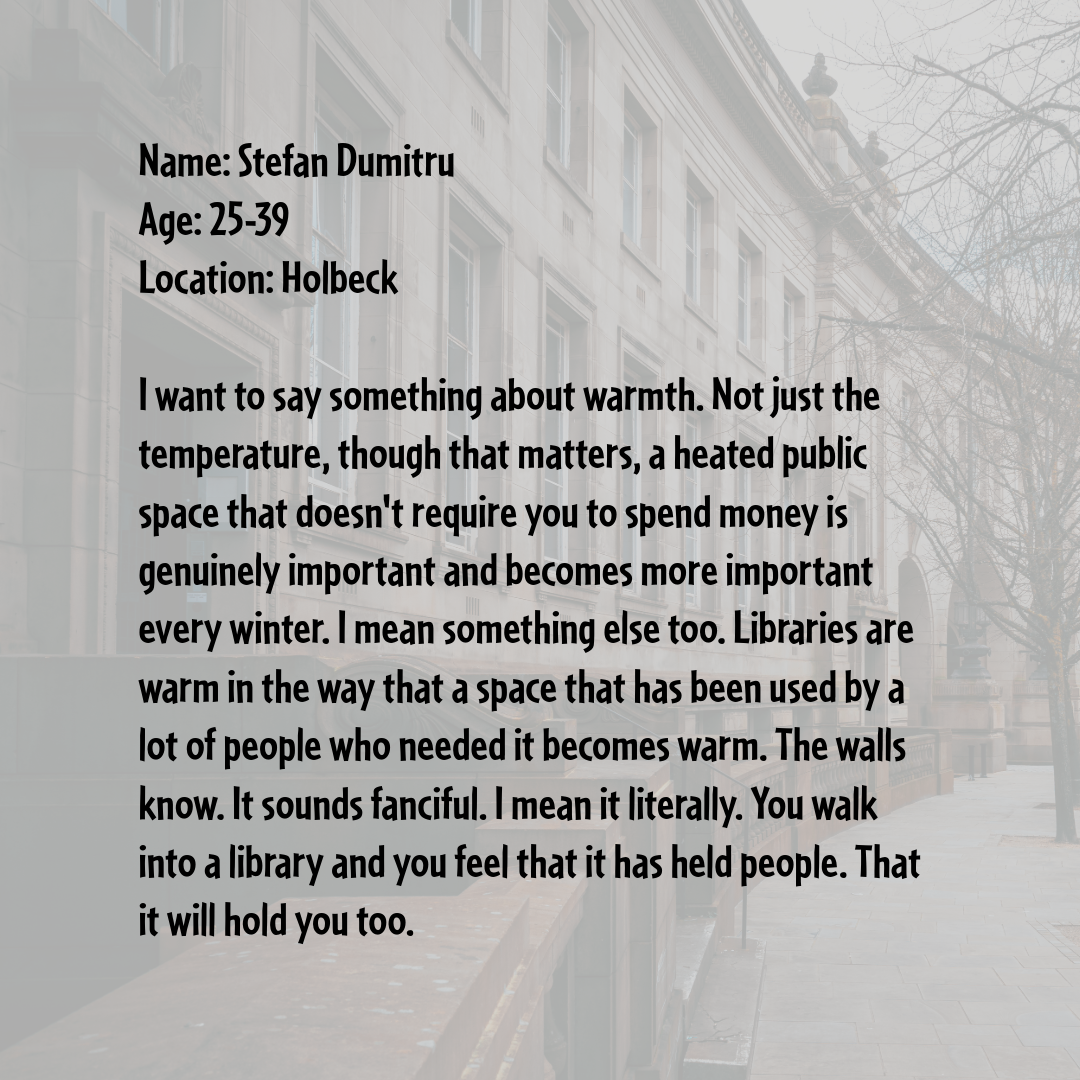
- The smell of old paper and warmth when you came in from the cold.
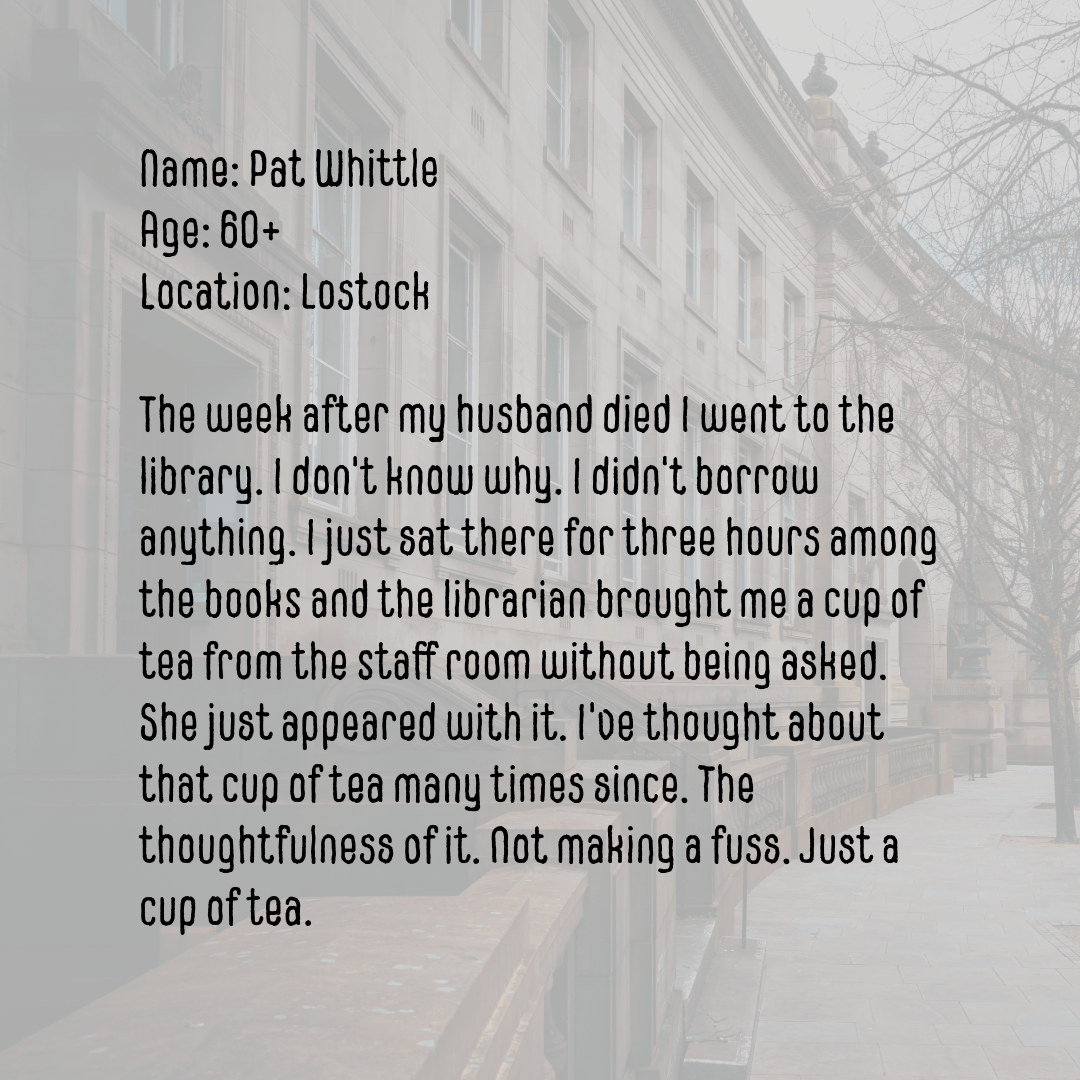
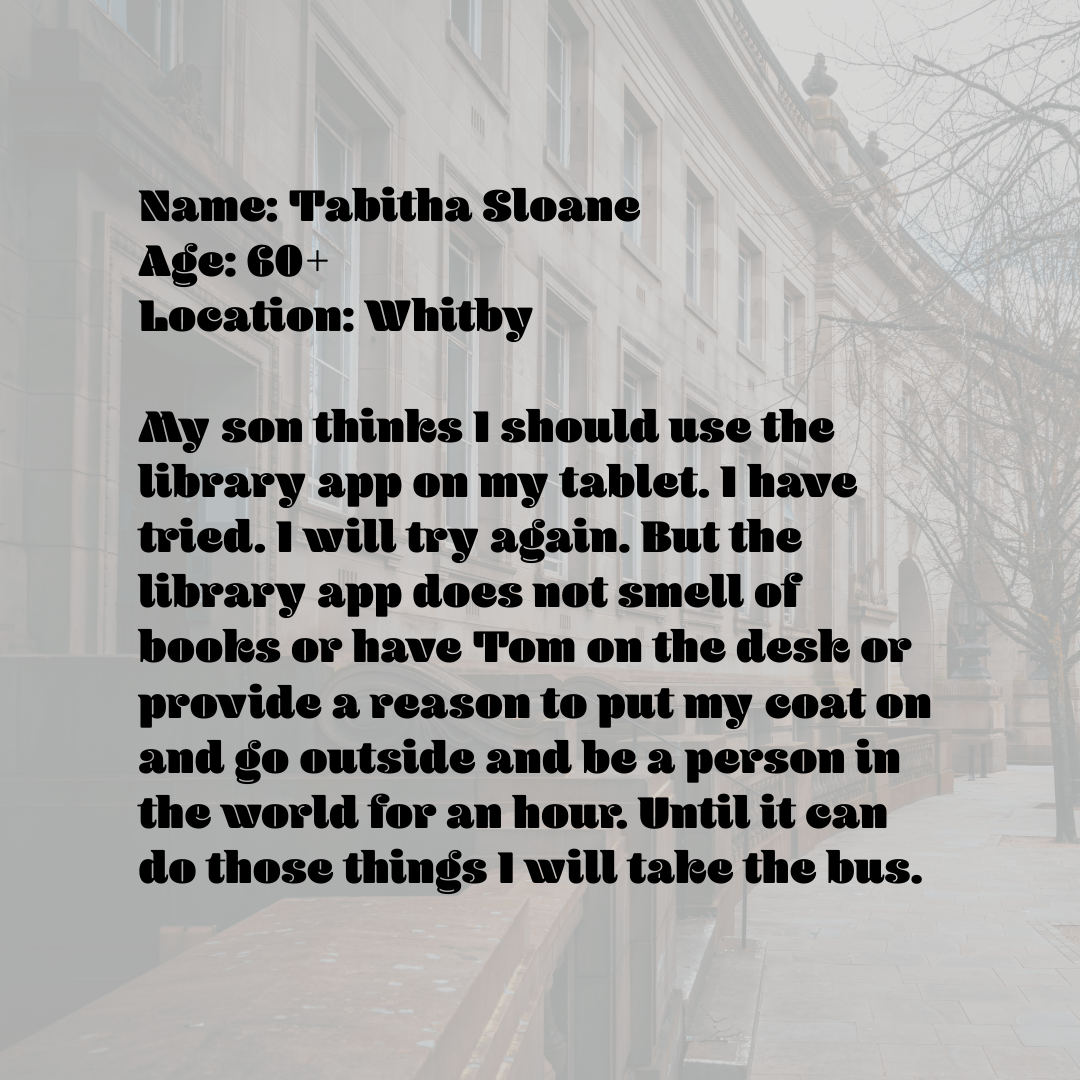
- A librarian who appeared with a cup of tea from the staff room without being asked, and without making a fuss about it.
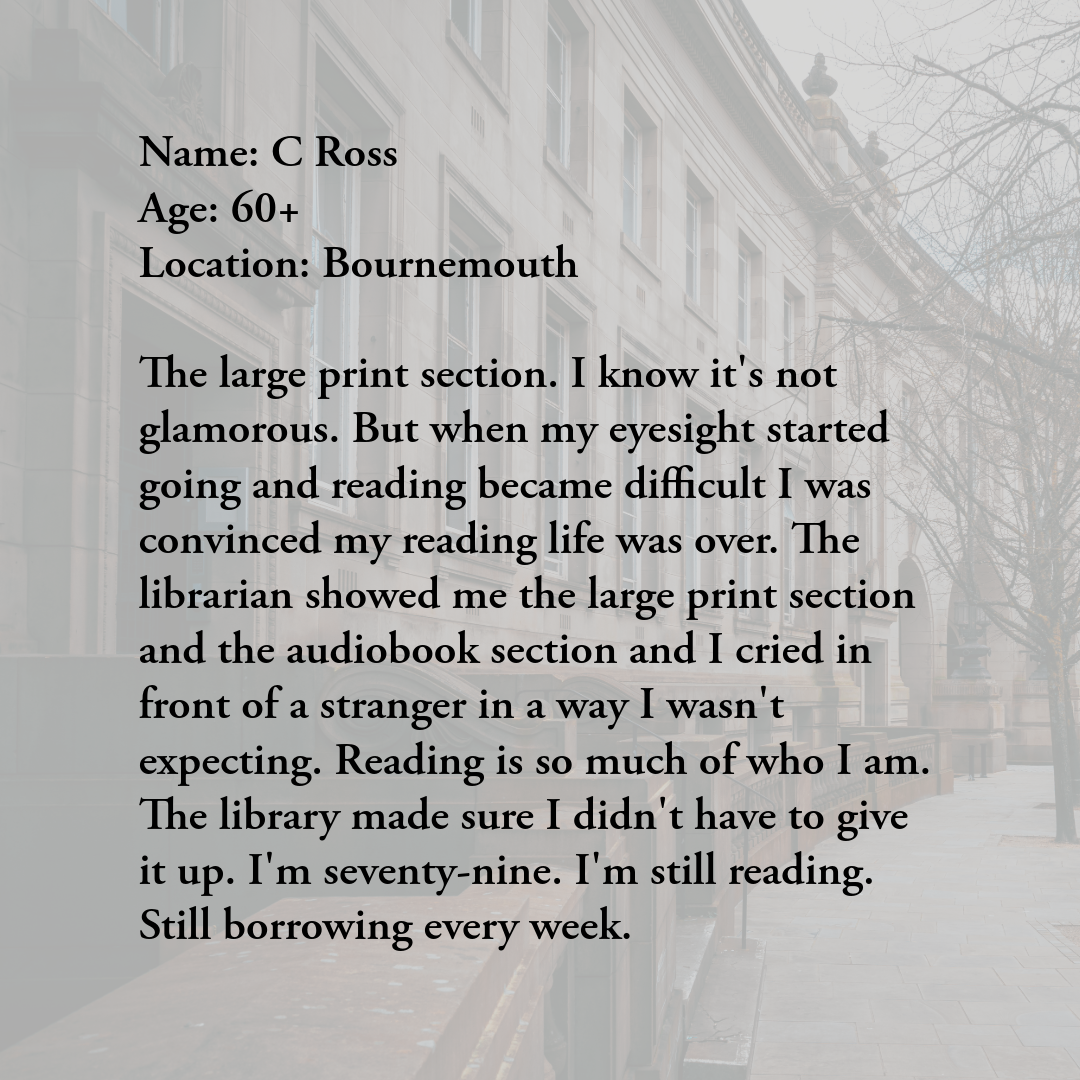
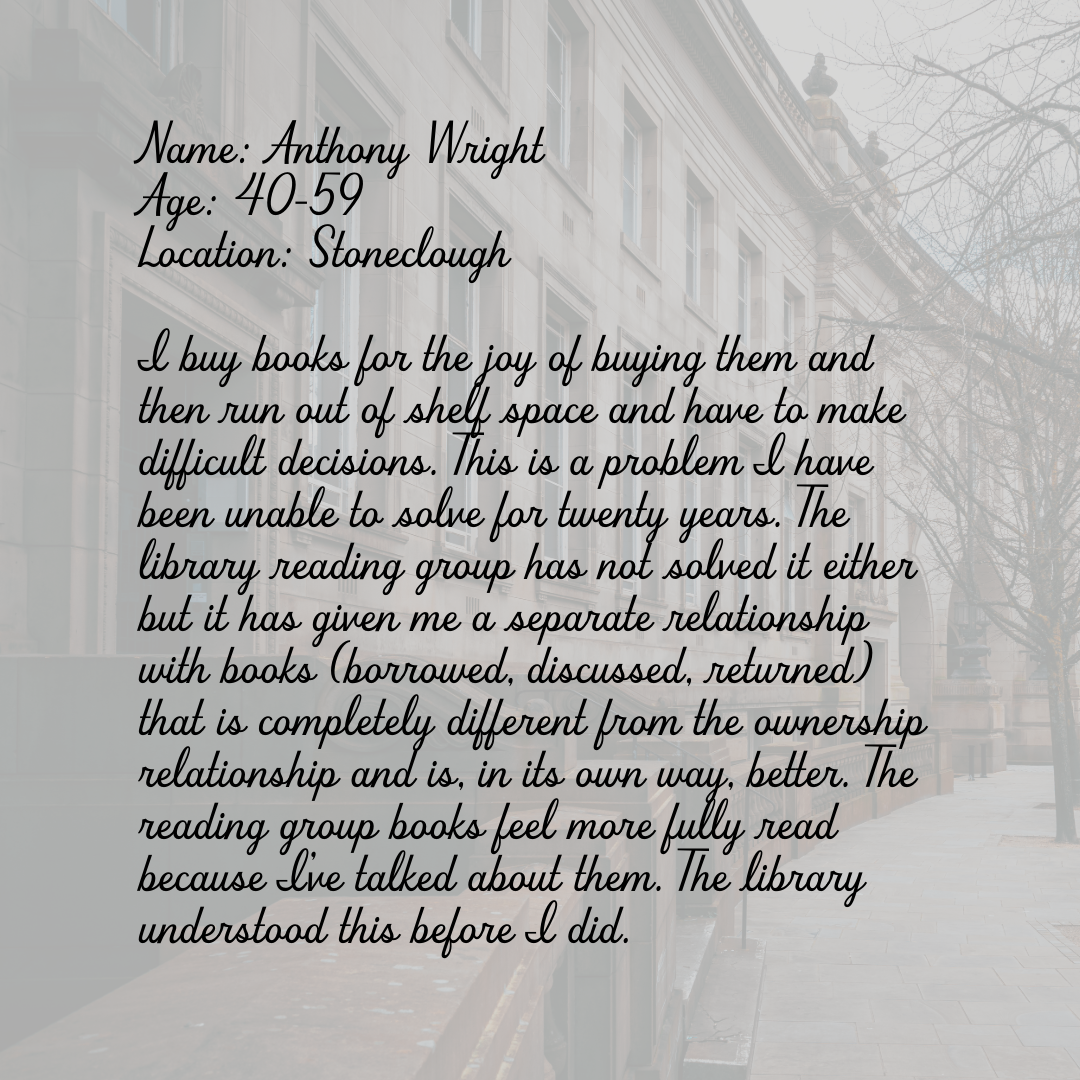
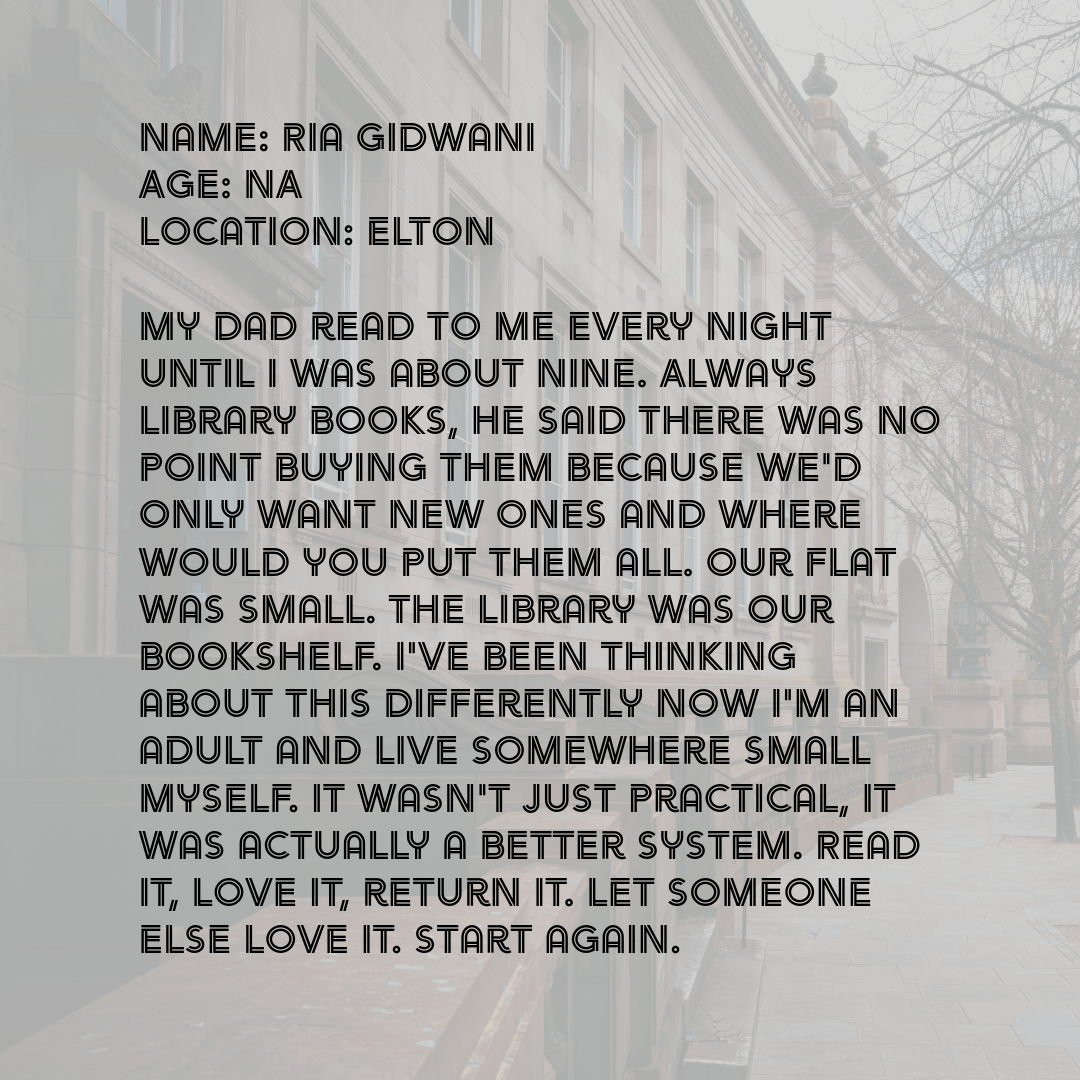
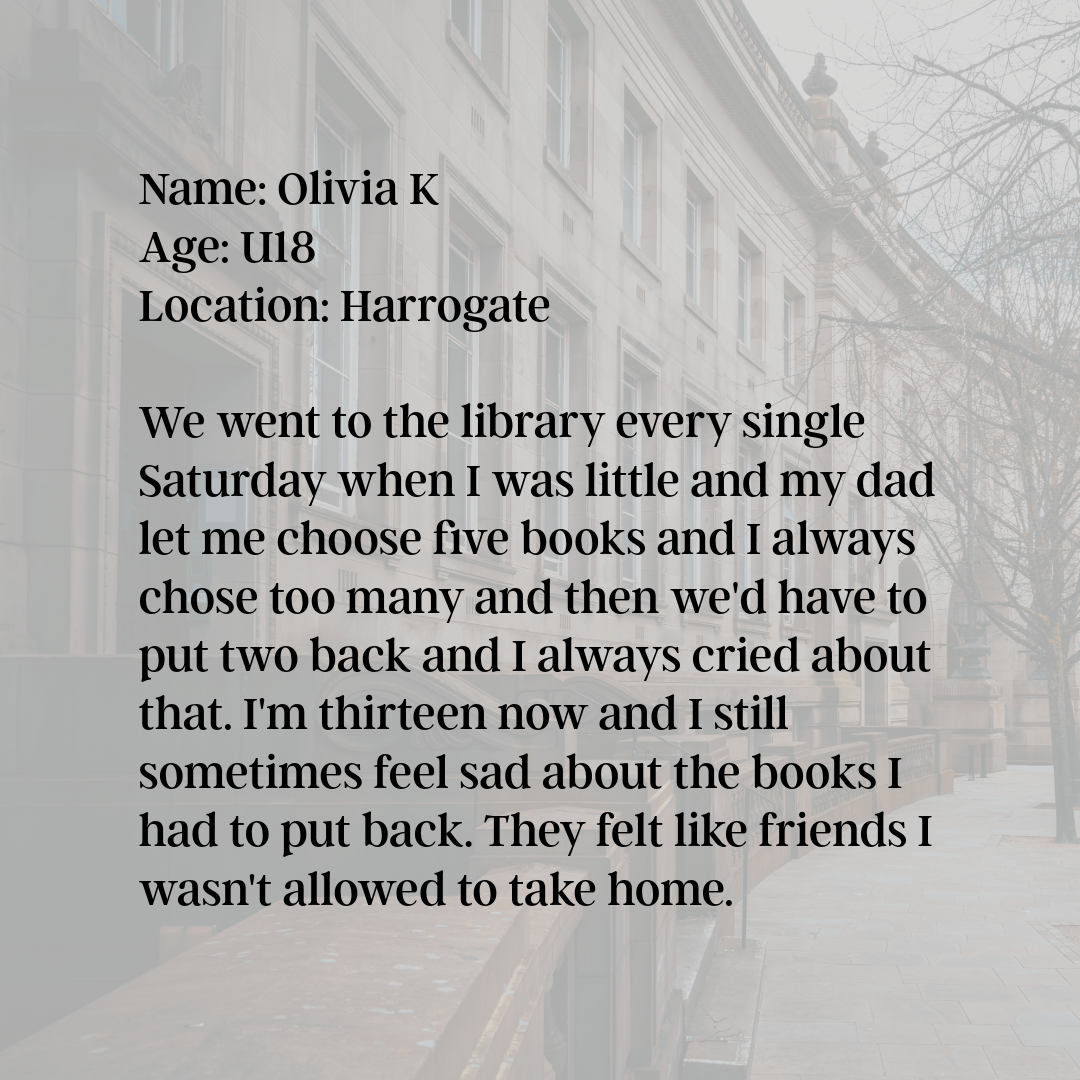
- They told us about the books too. But often the books came second.
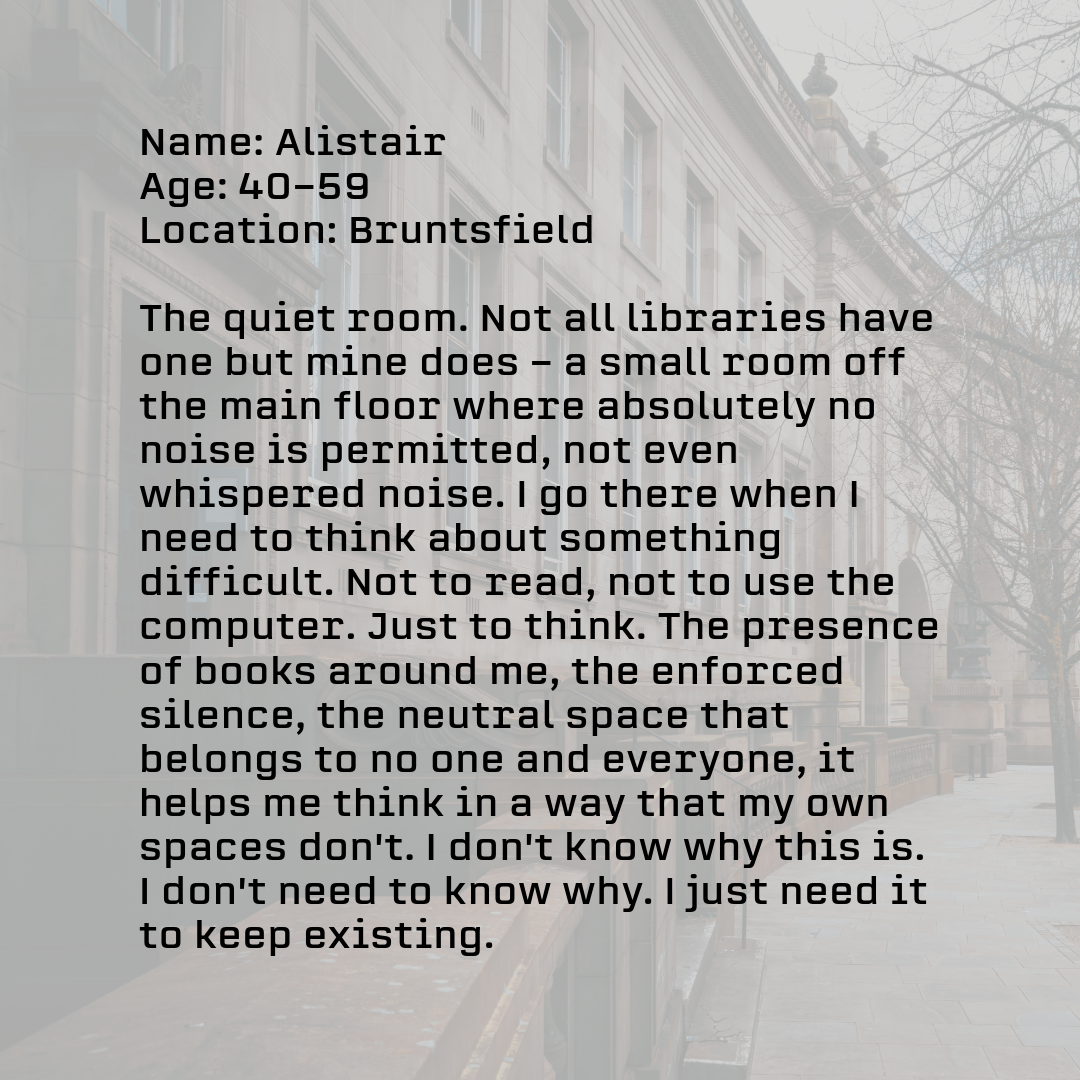
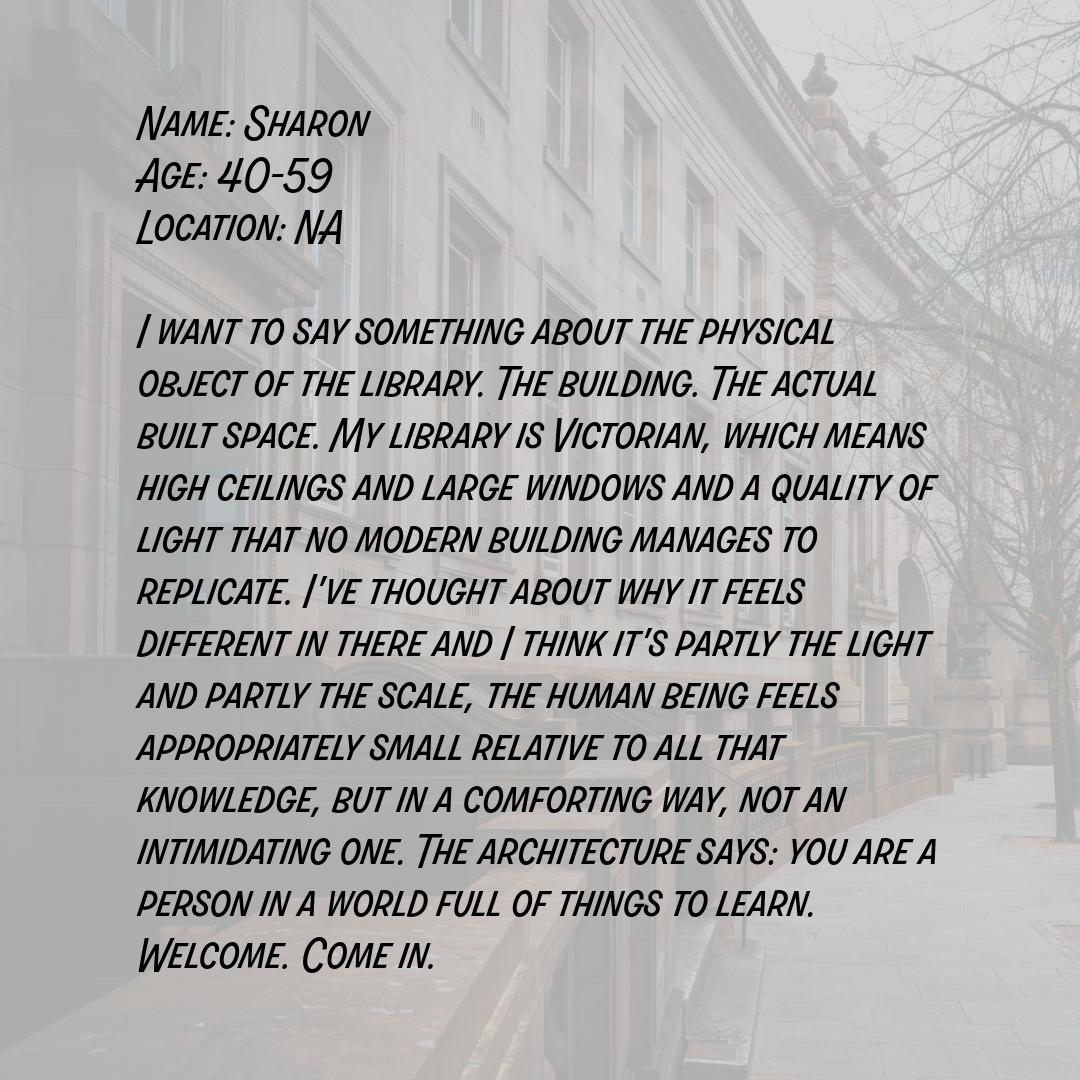
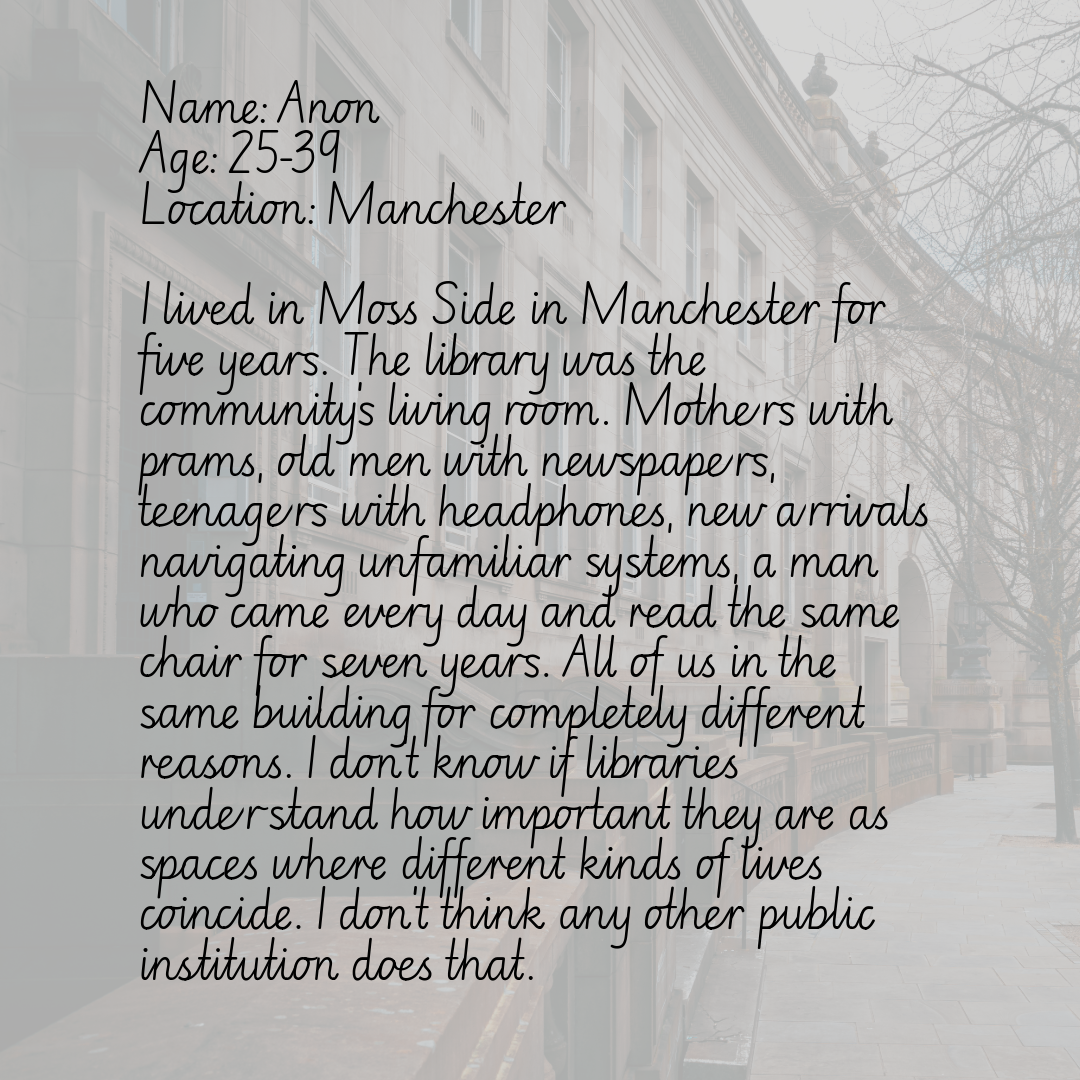
What came first was the building. The room. The fact that it was just, open.
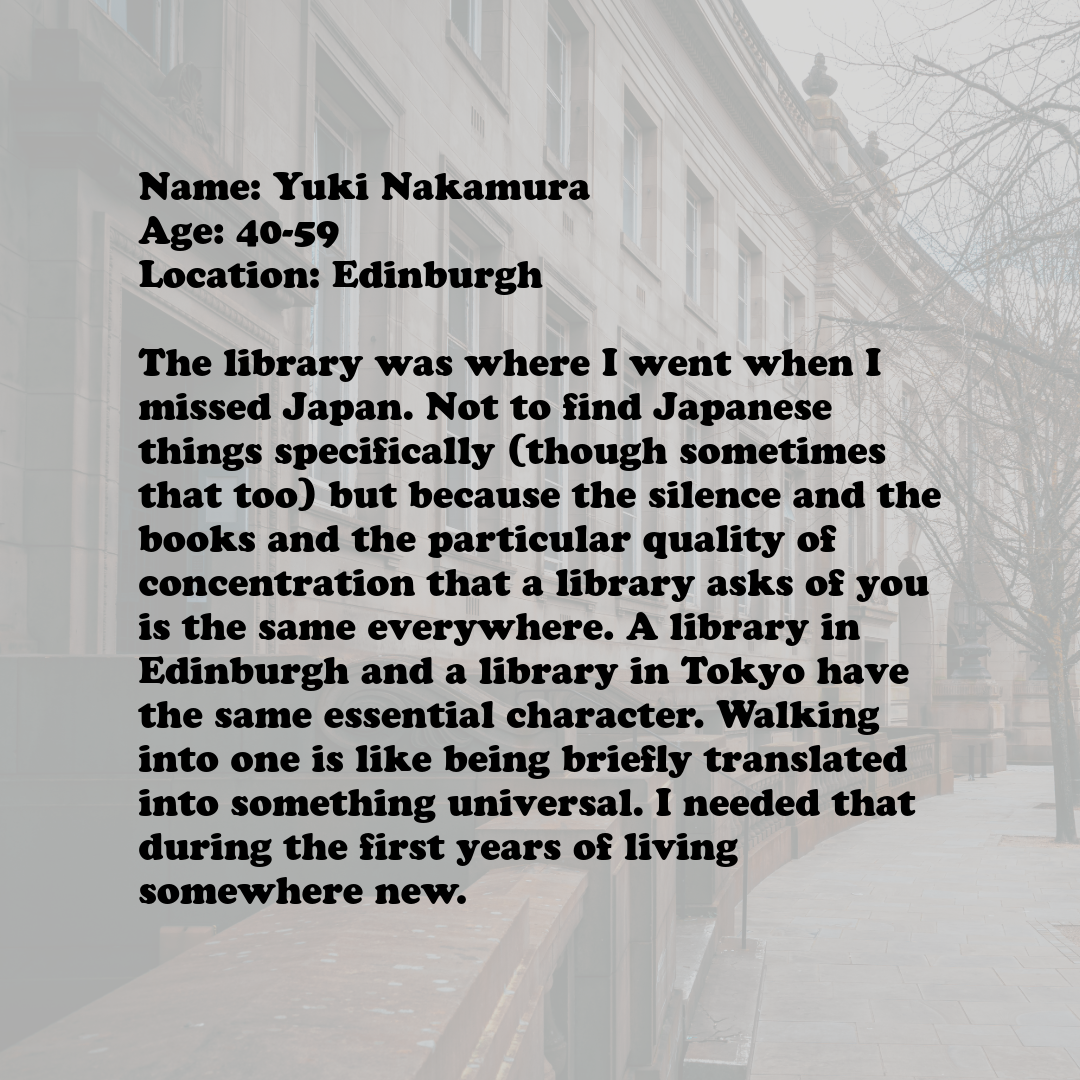
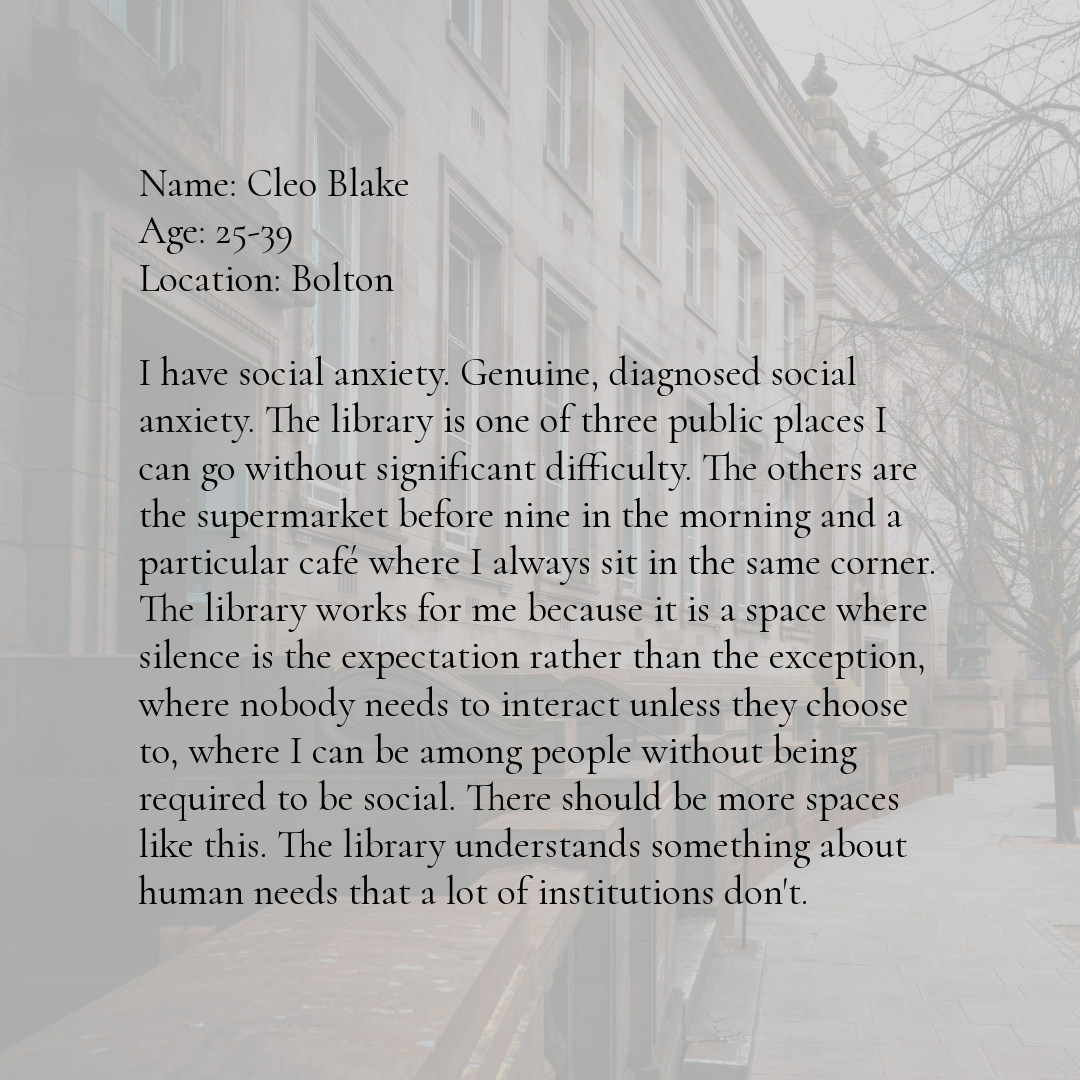
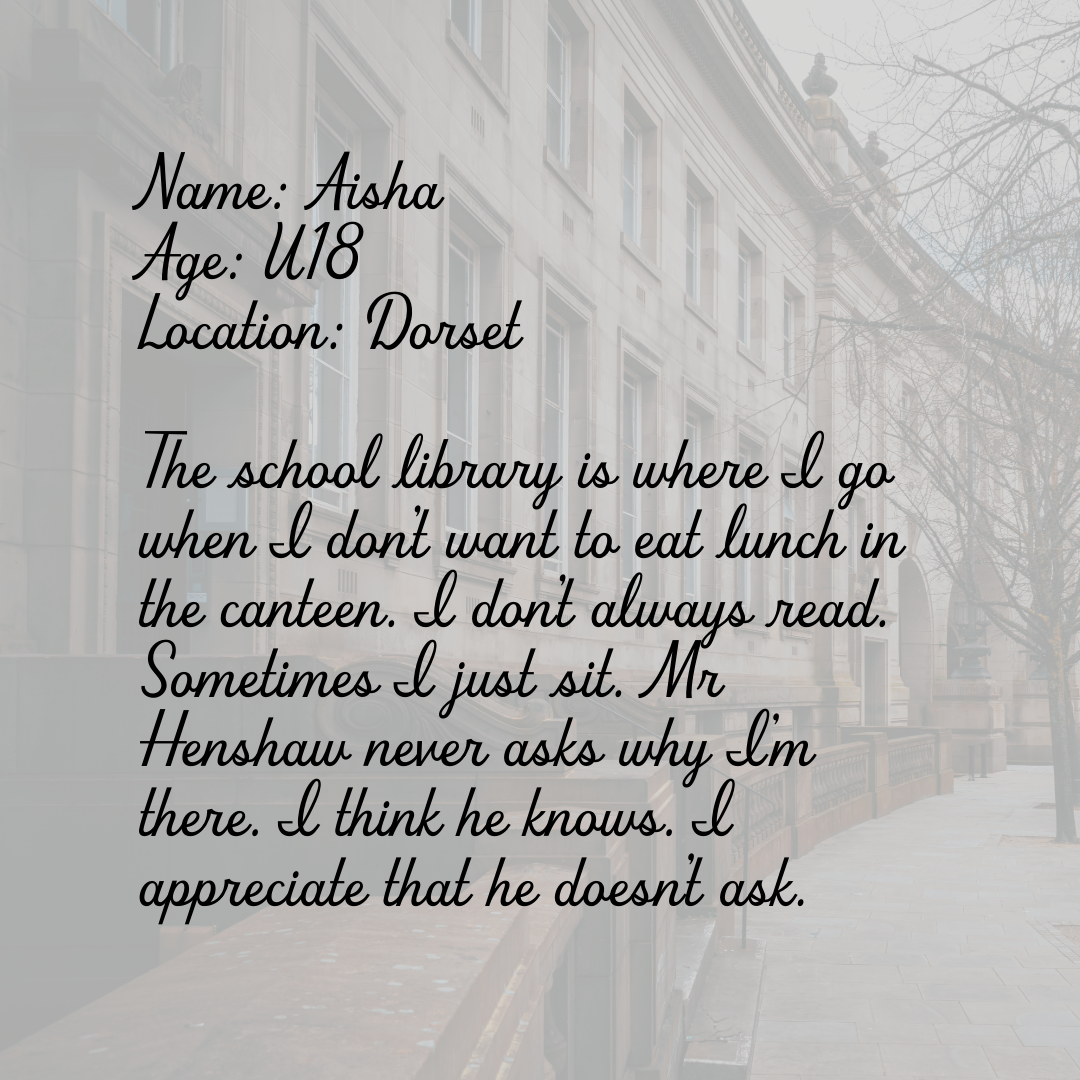
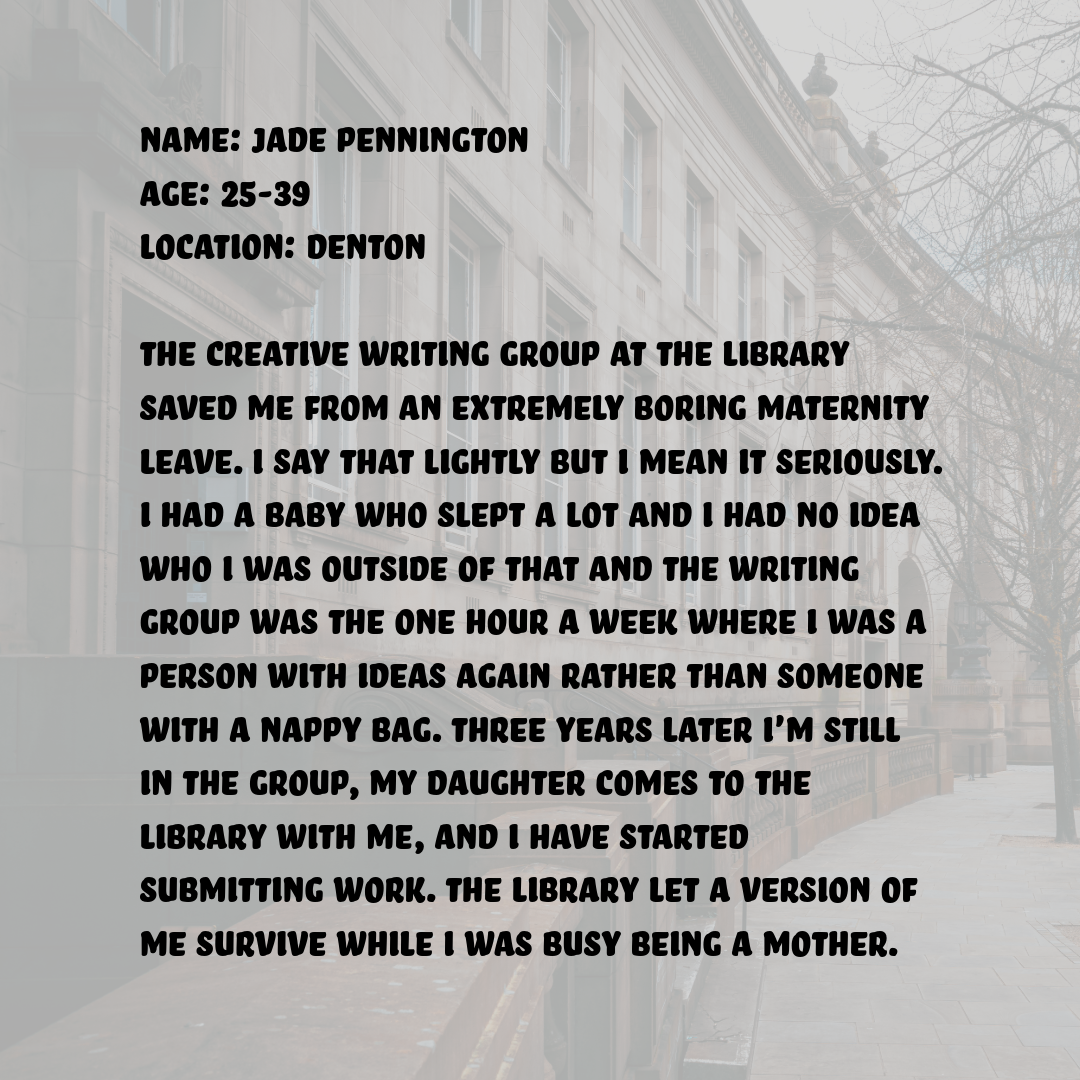
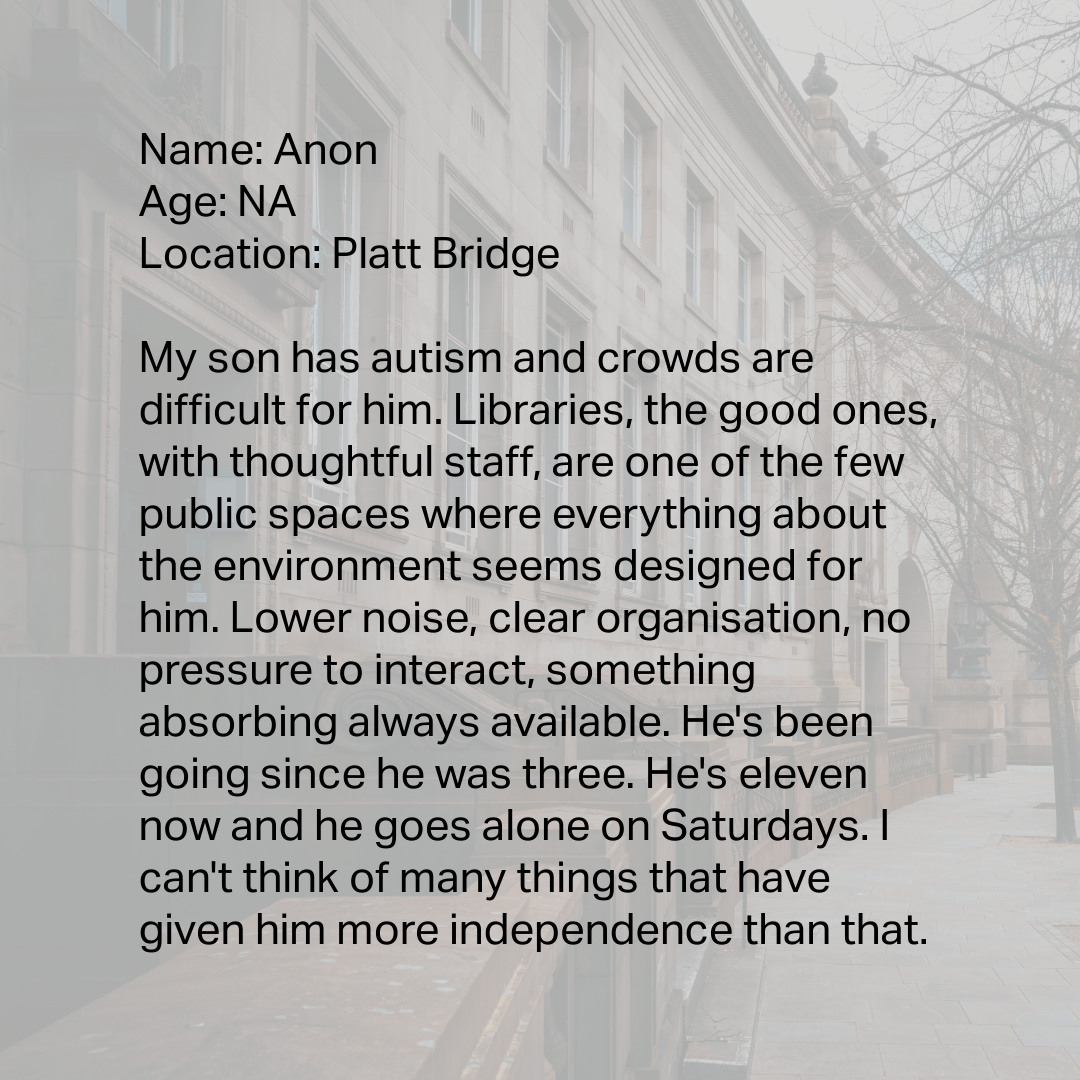
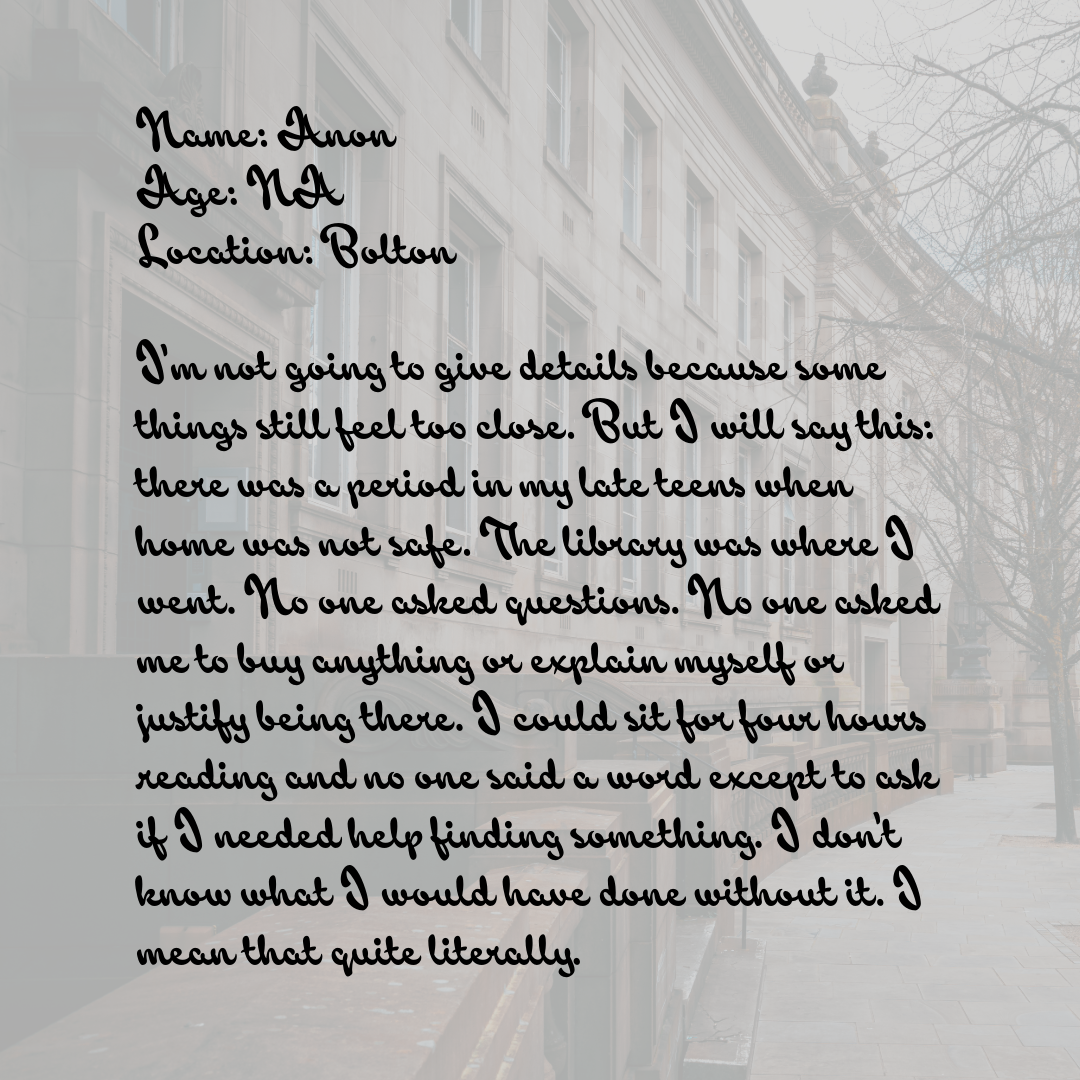
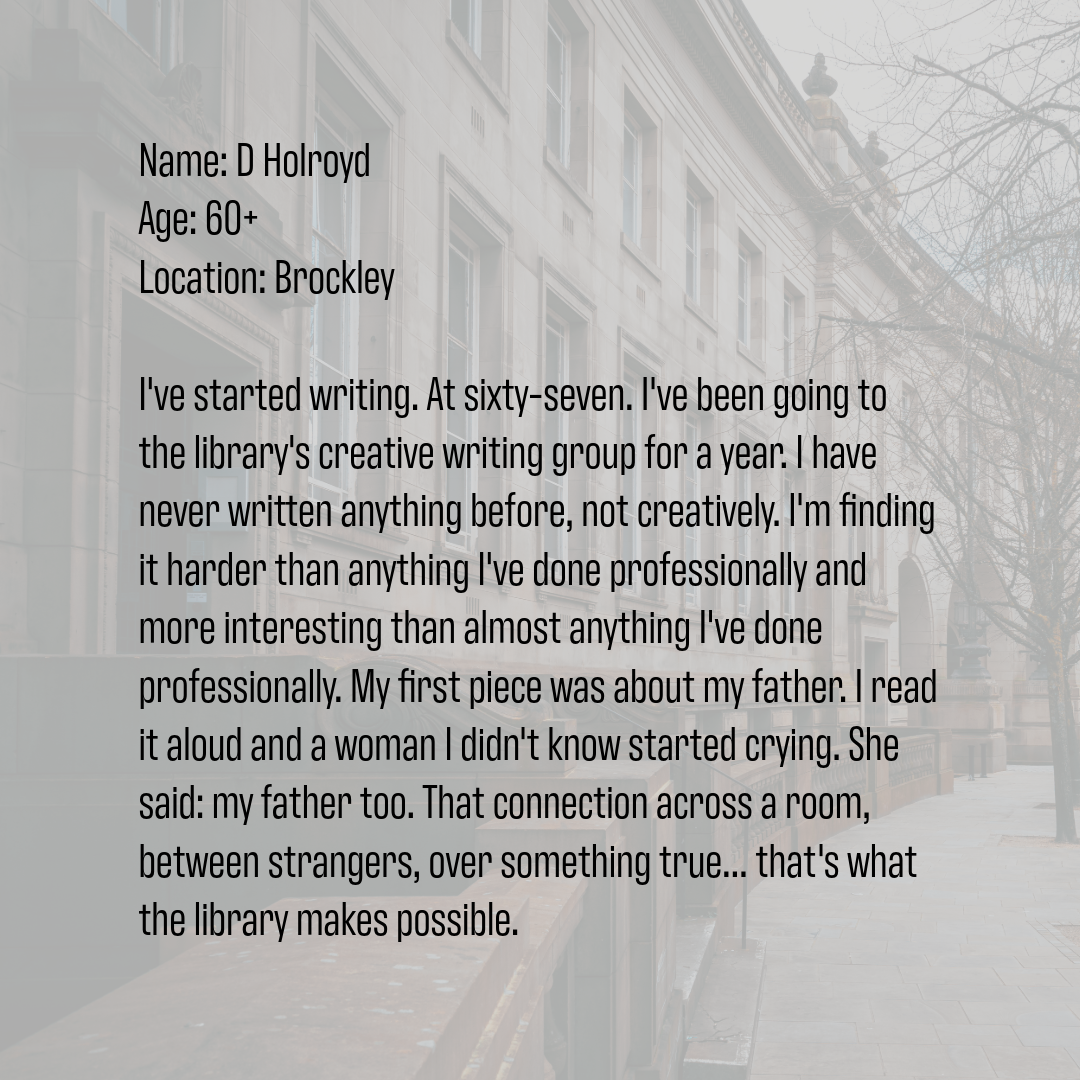
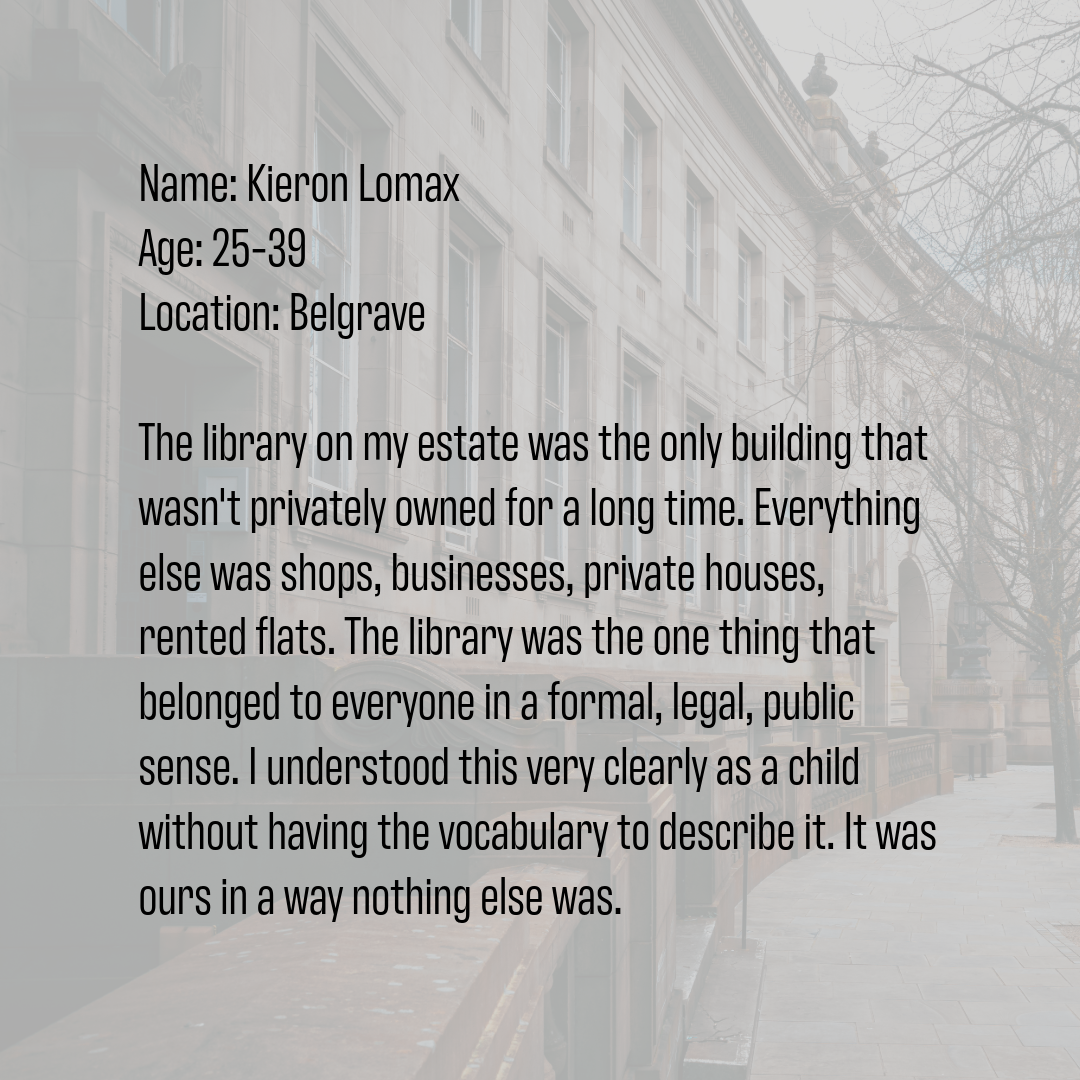
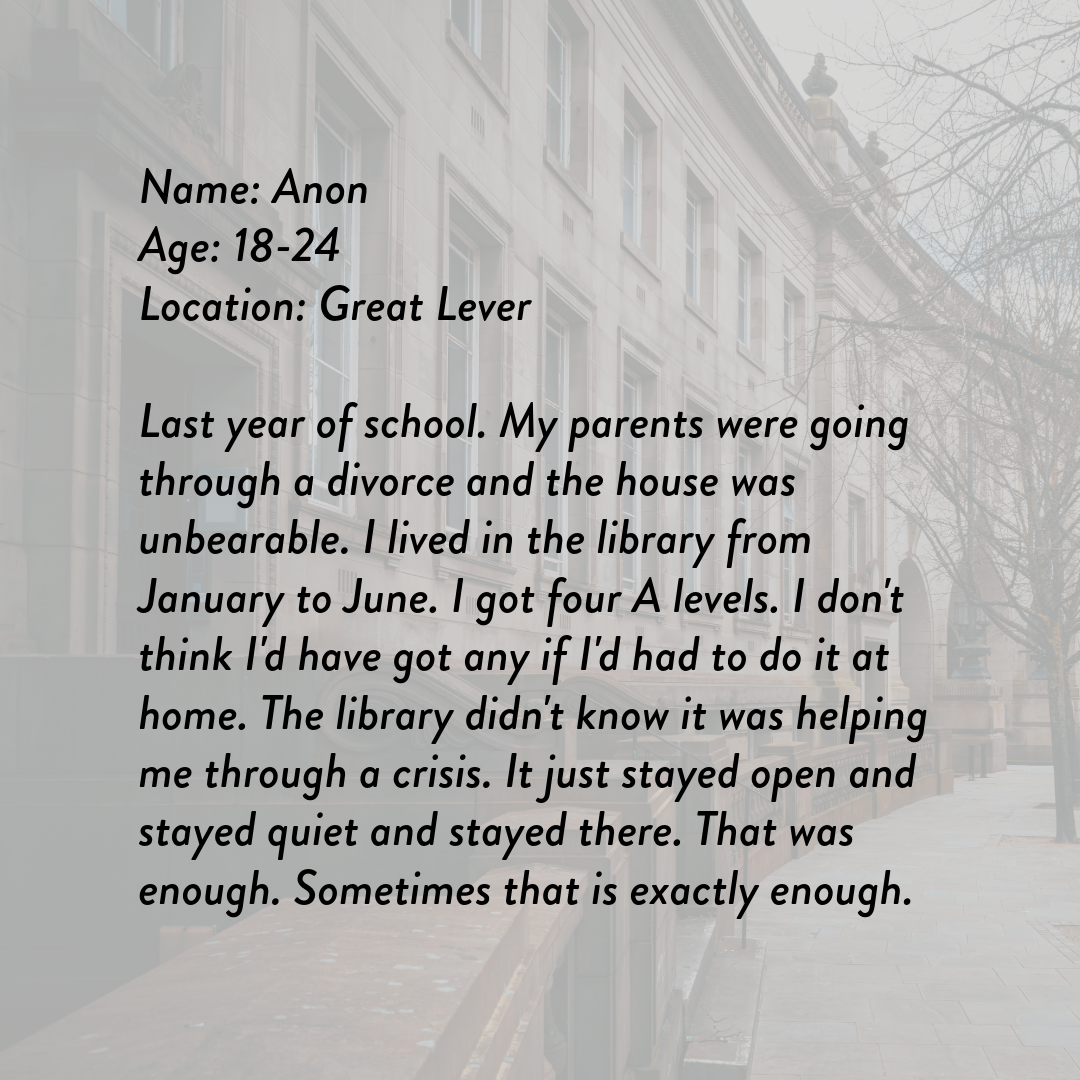
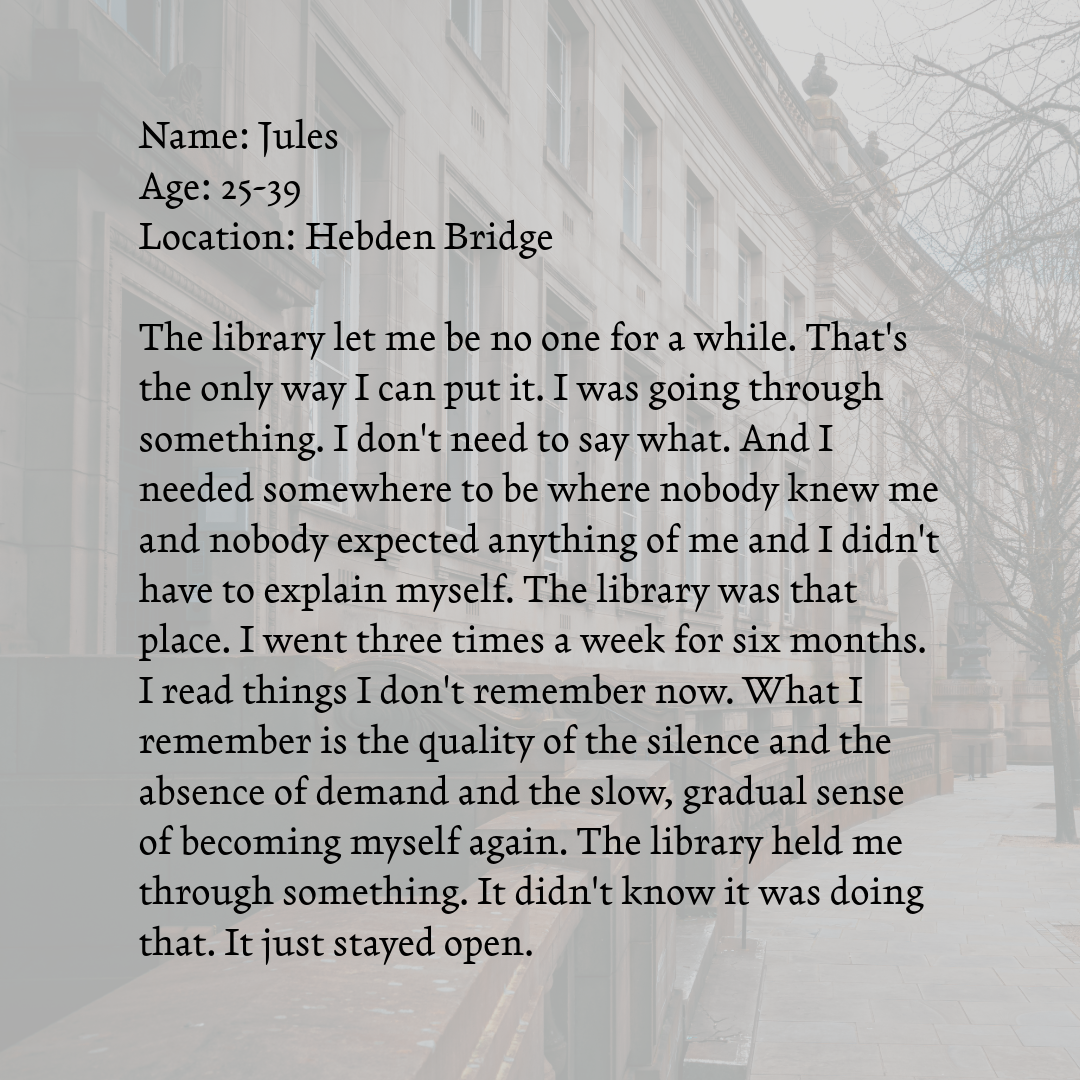
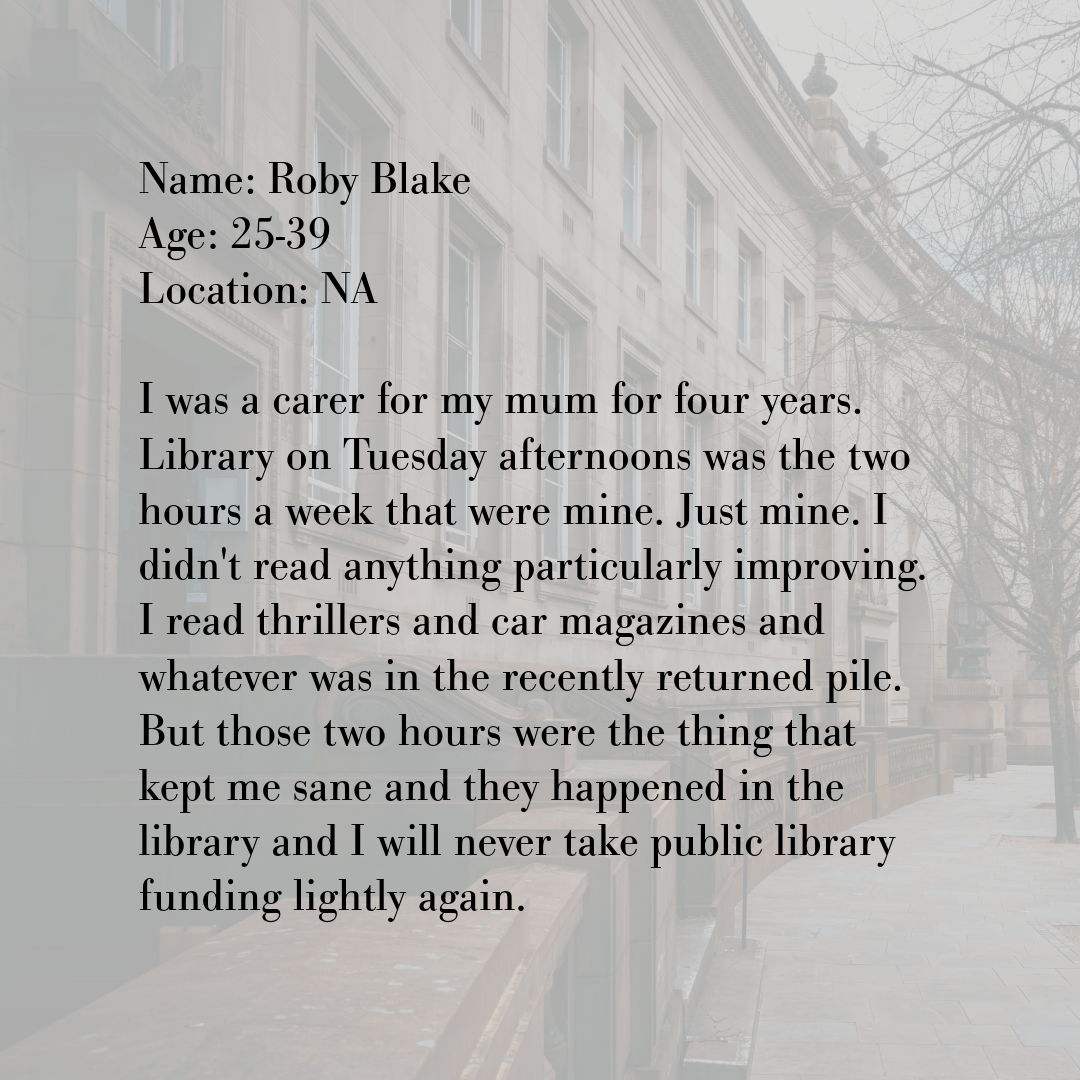
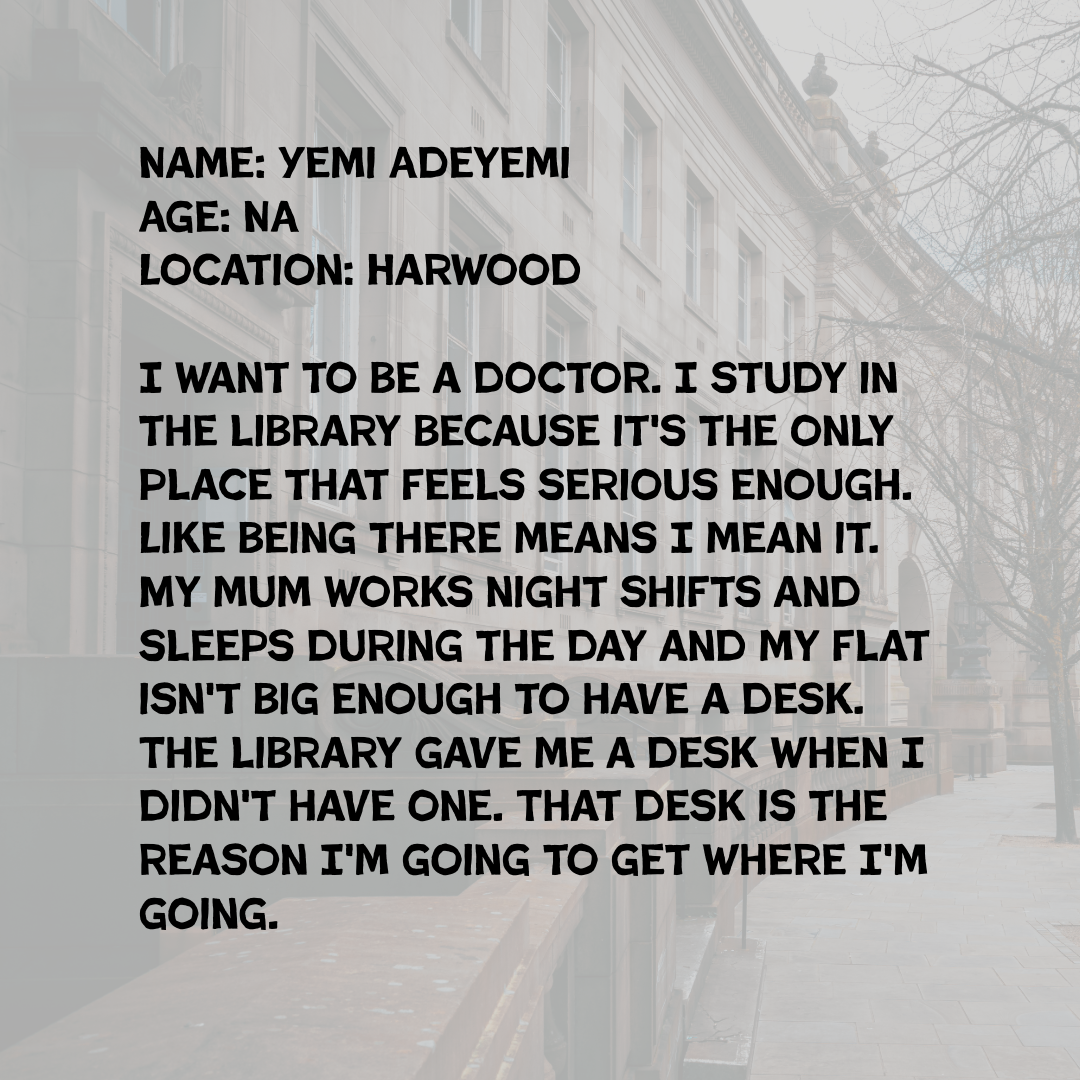
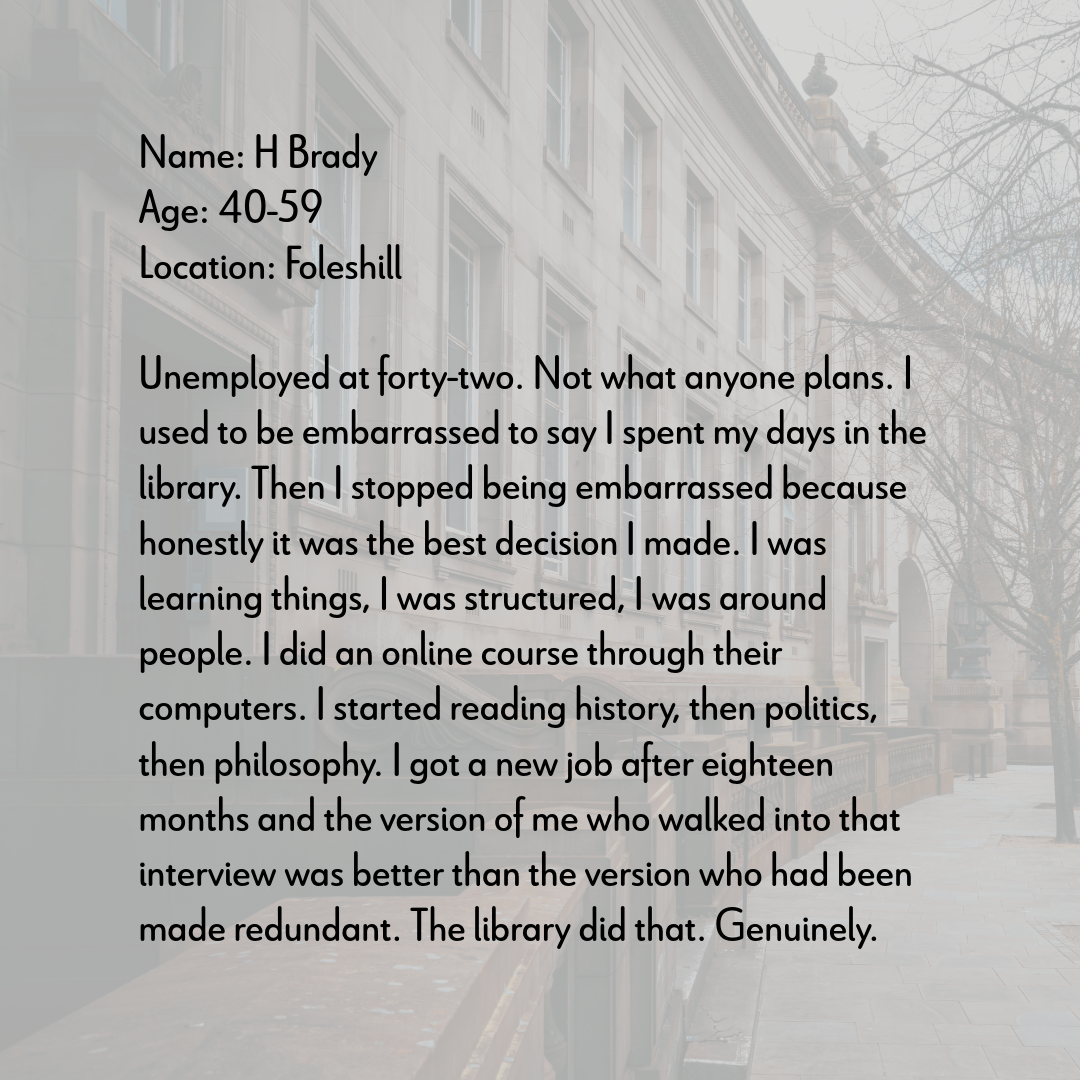
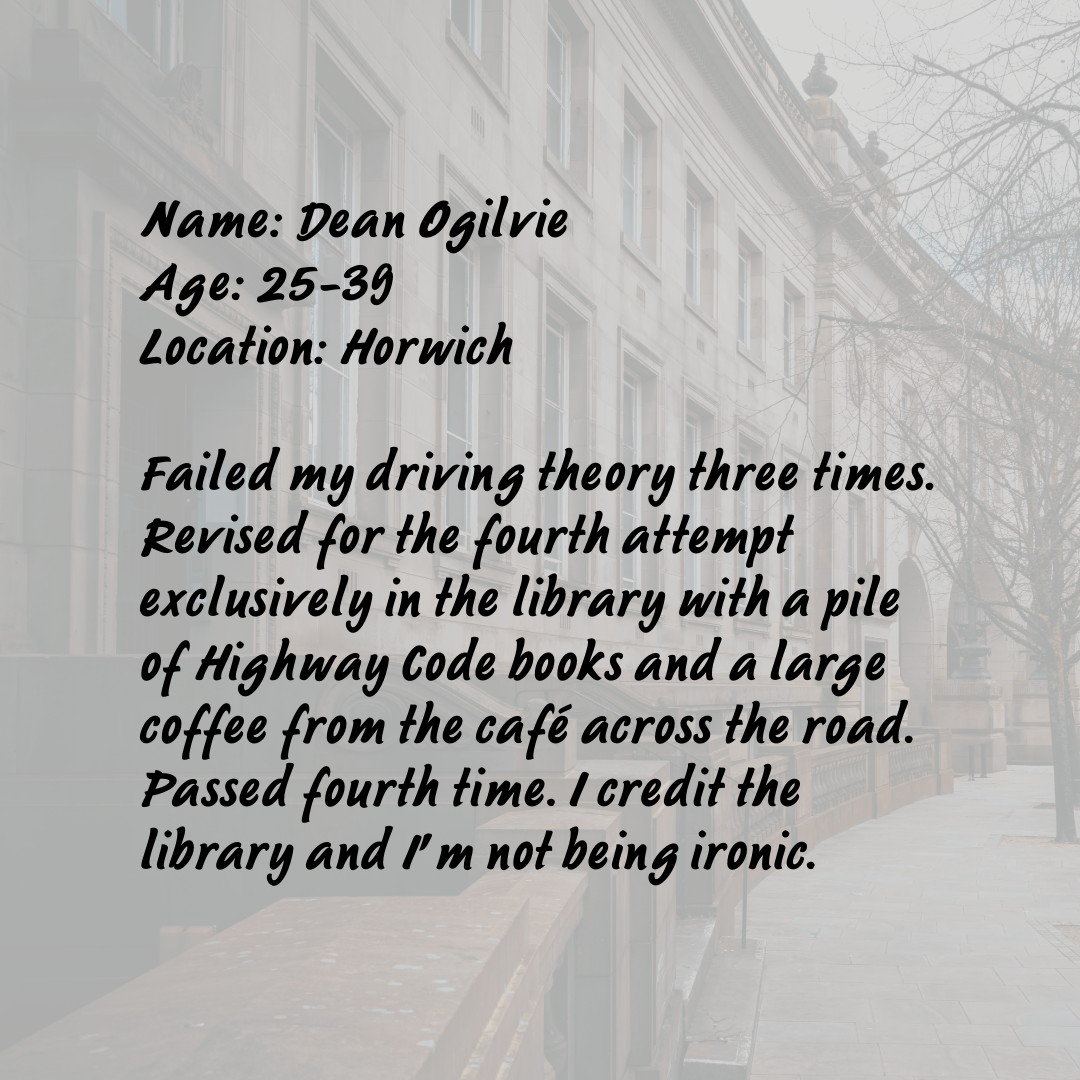
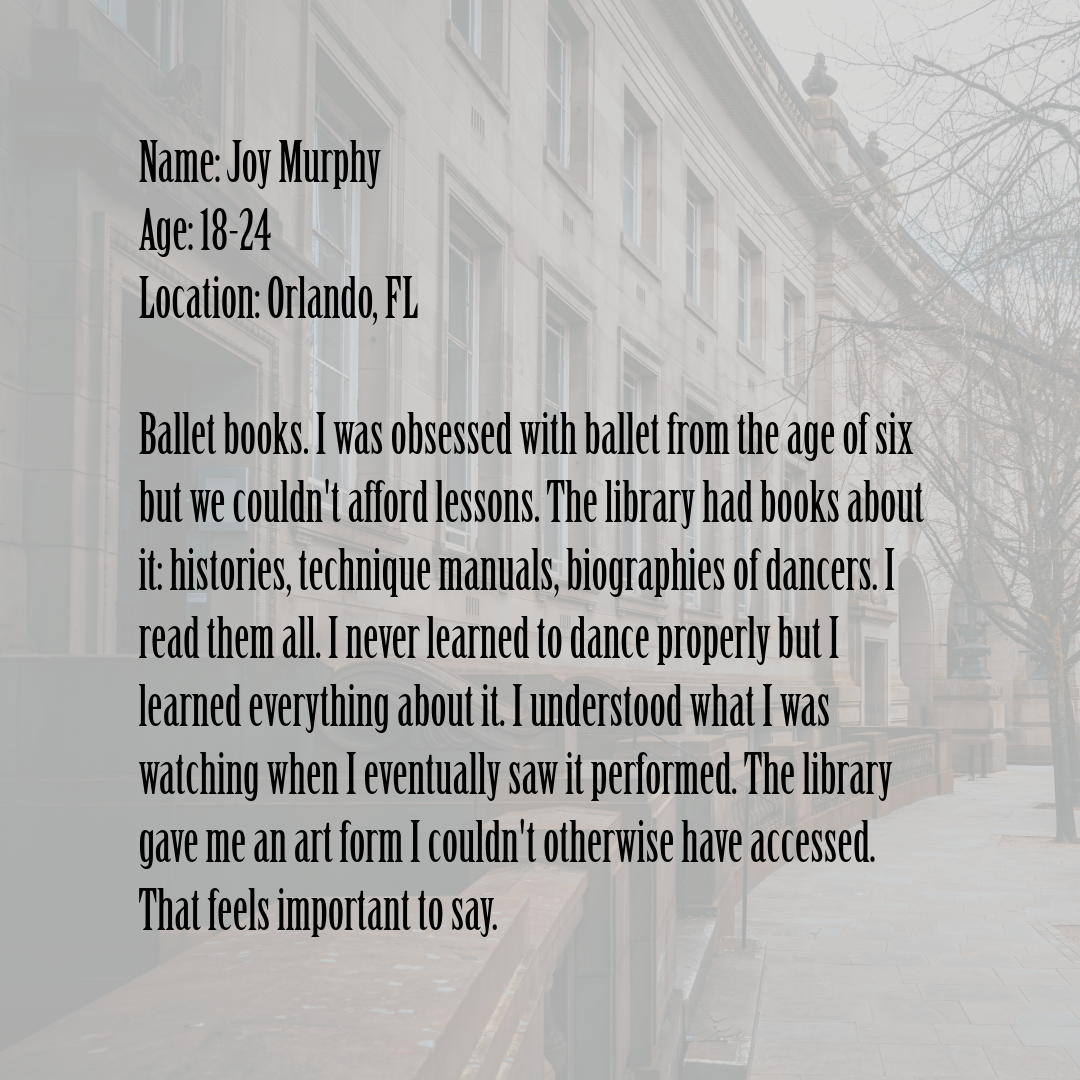
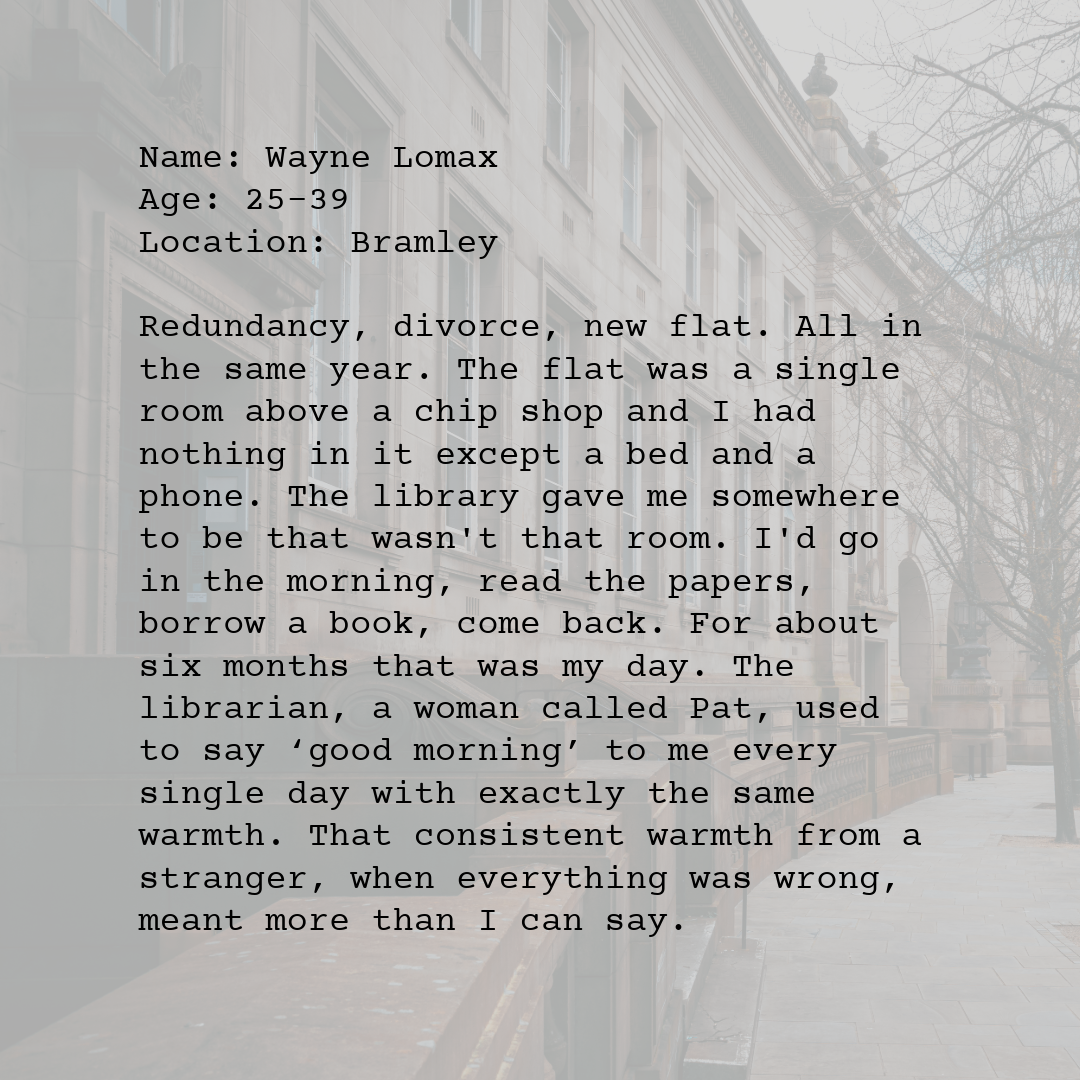
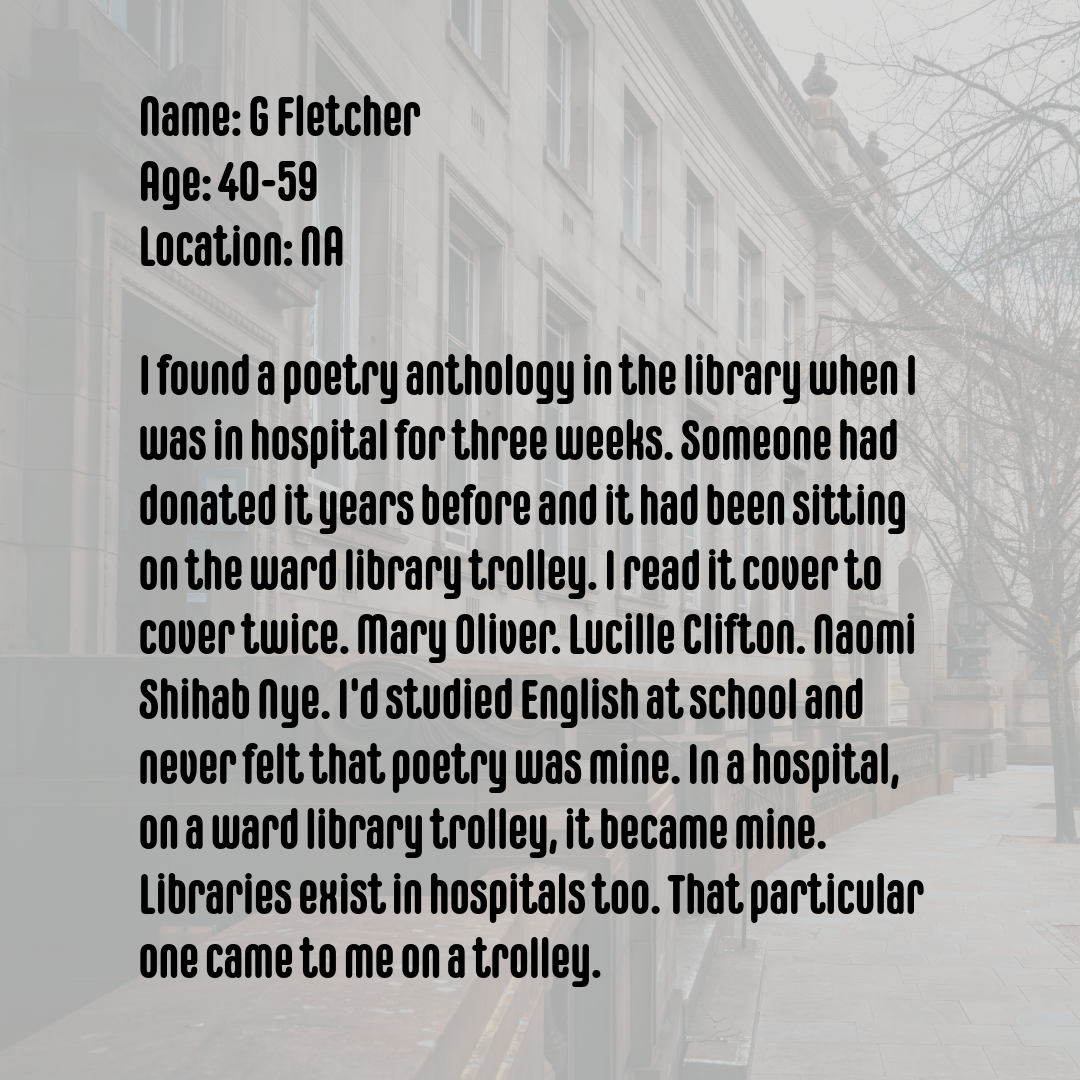
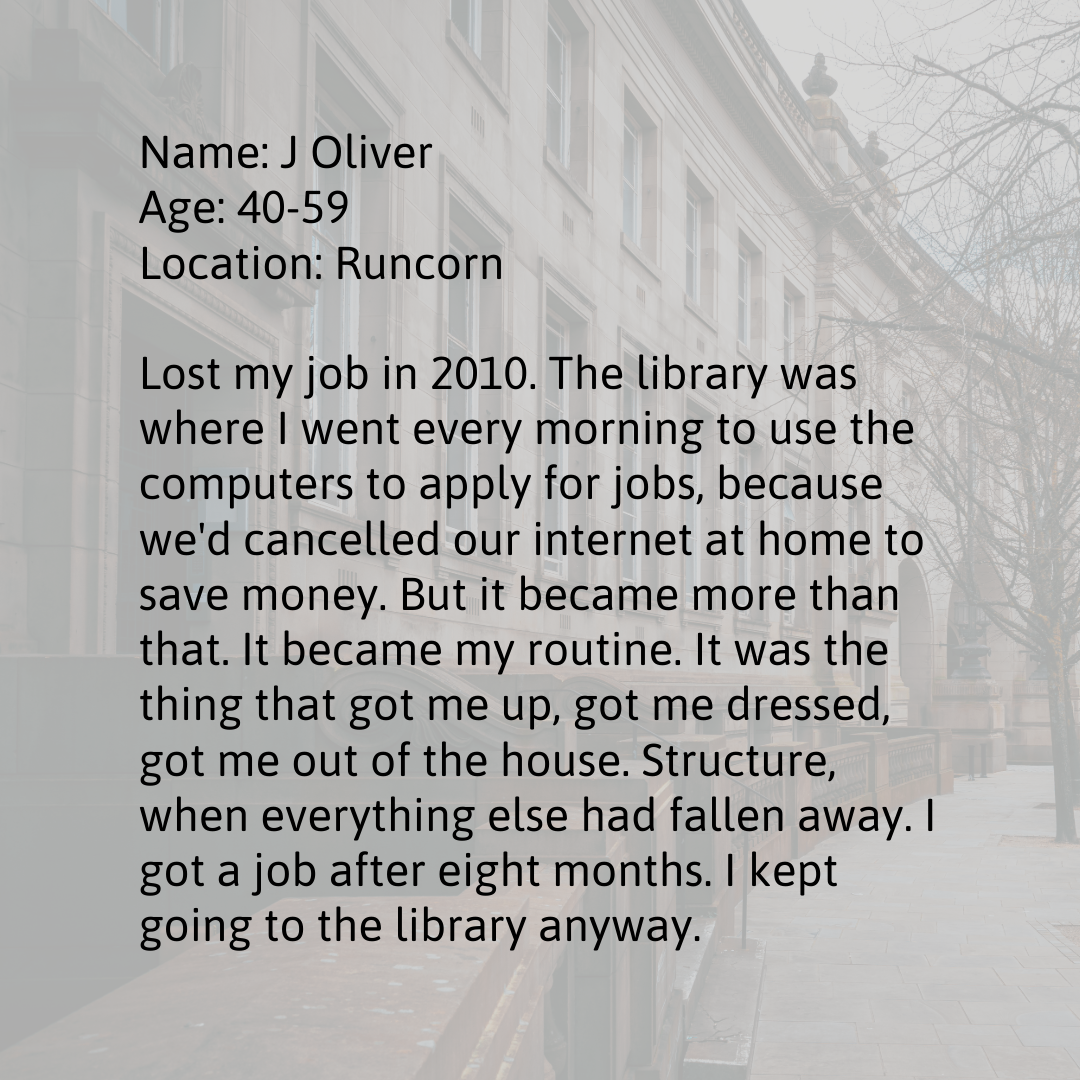
Several contributors described the library as the place they went when they had nowhere else to go. Not in a vague sense. In a specific, sometimes urgent one:
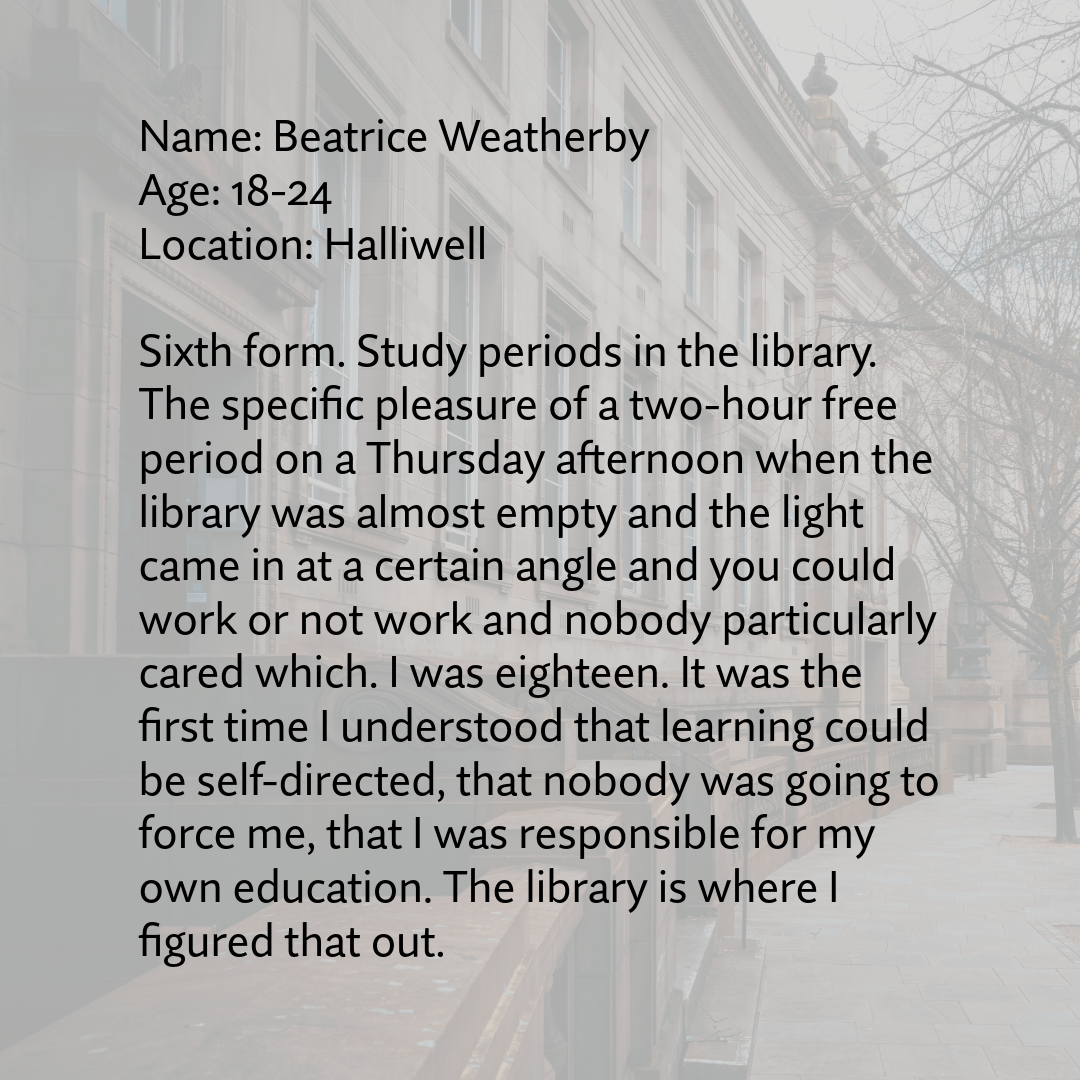
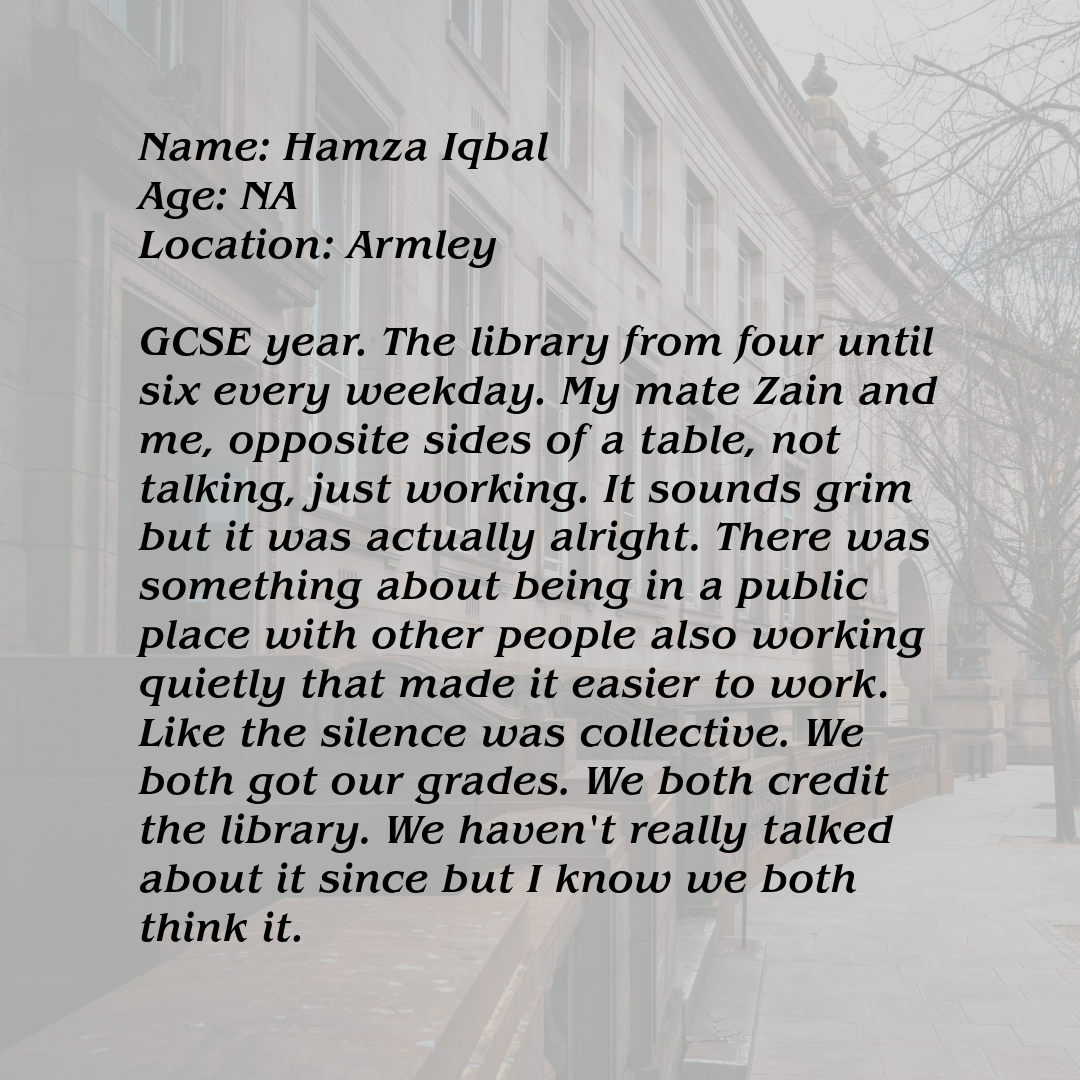
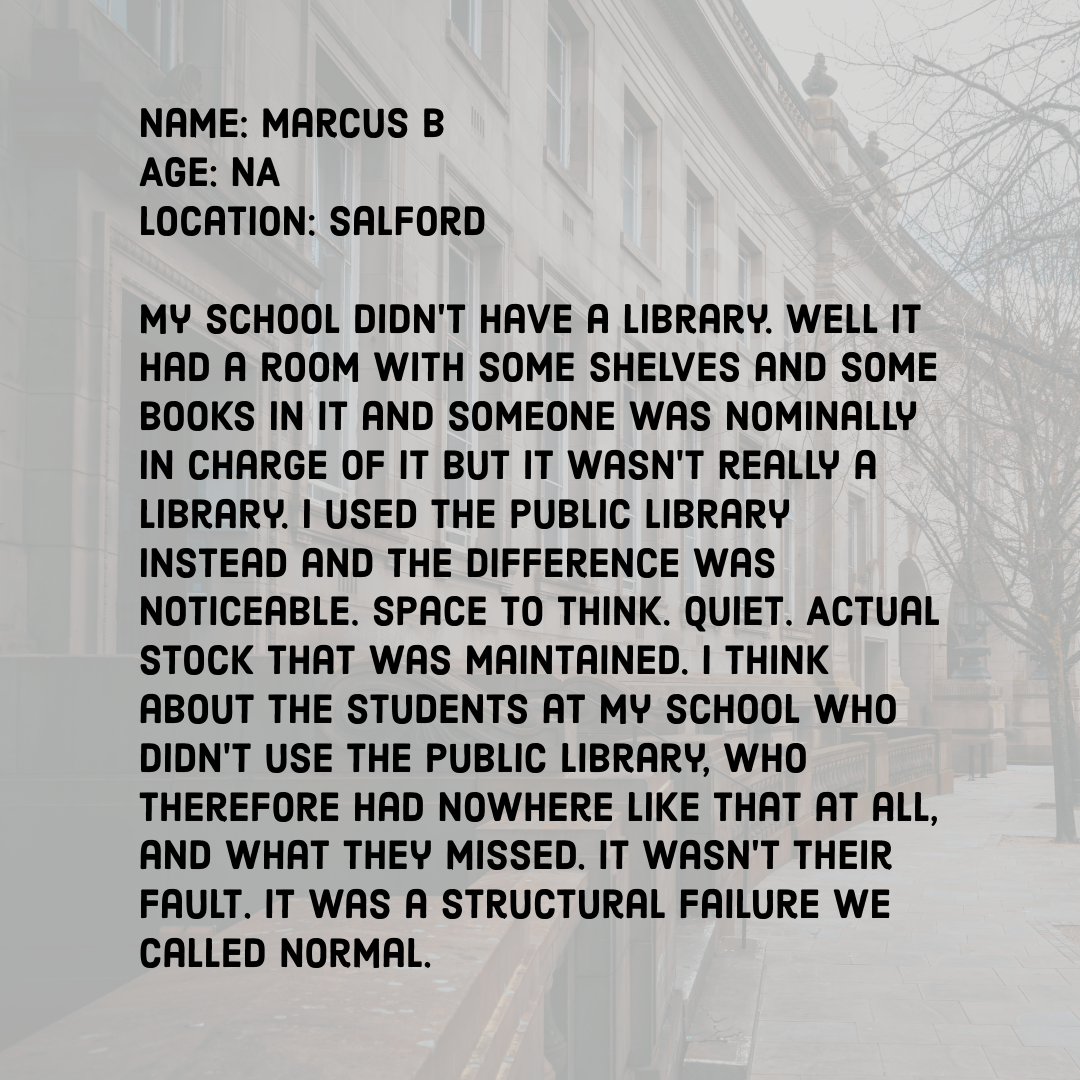
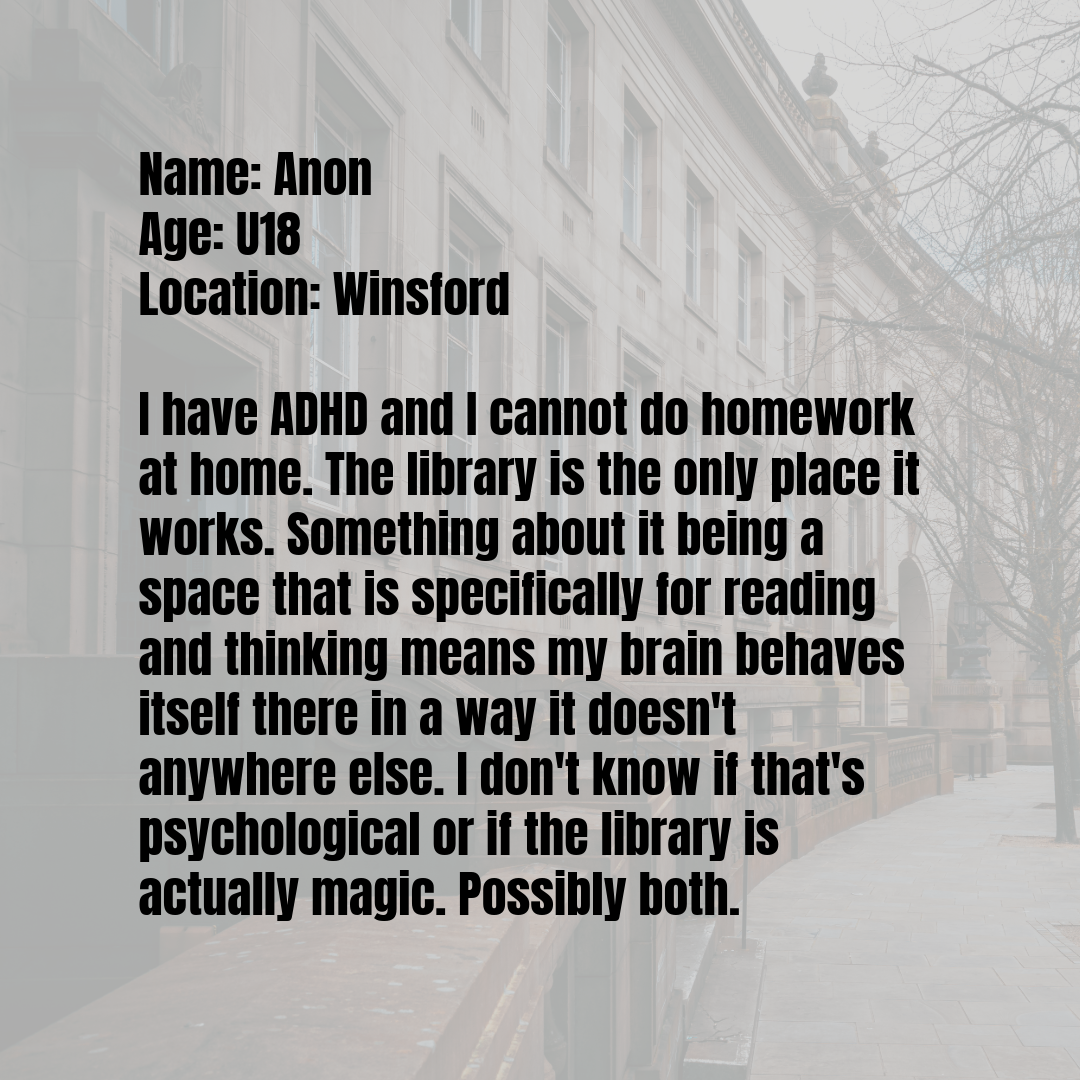
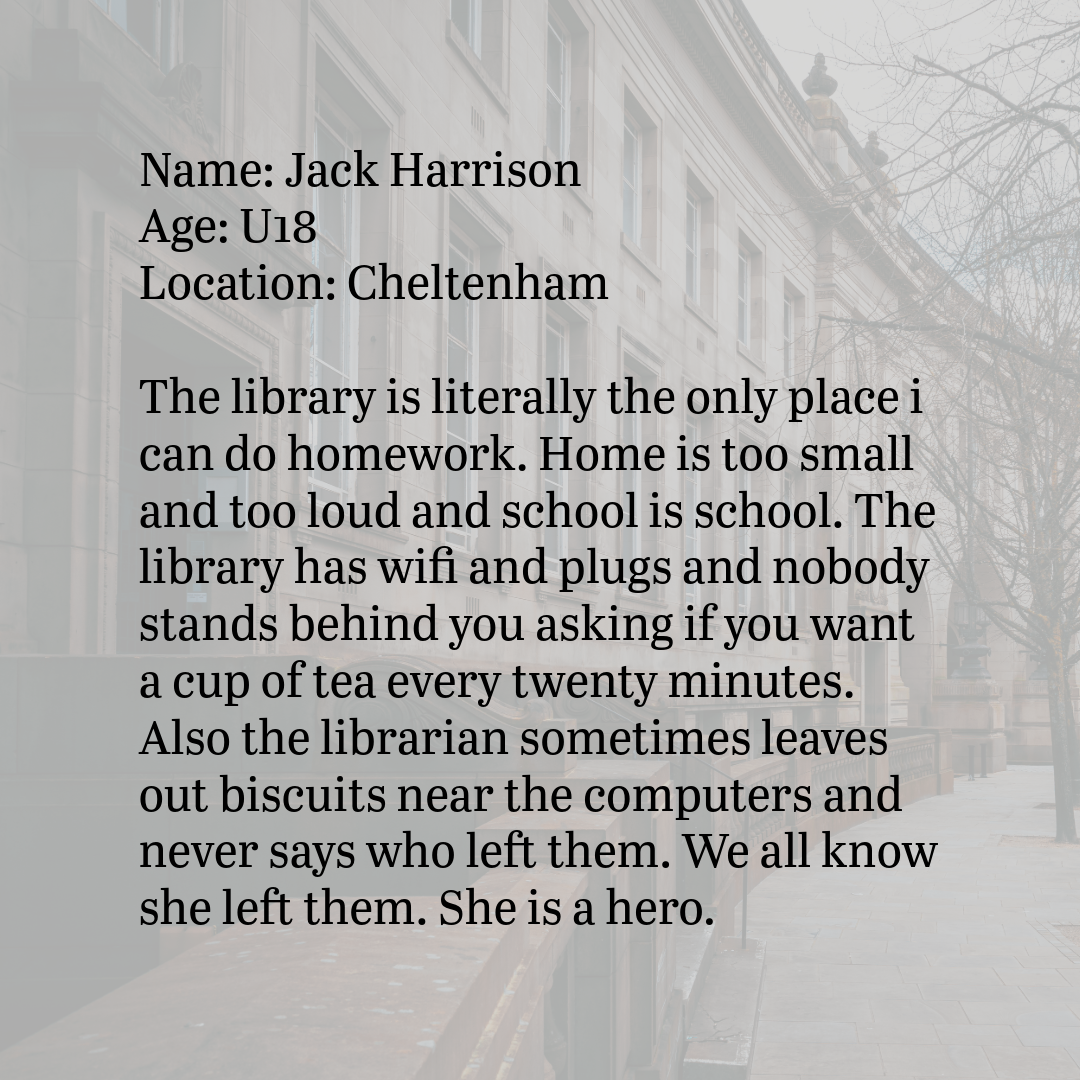
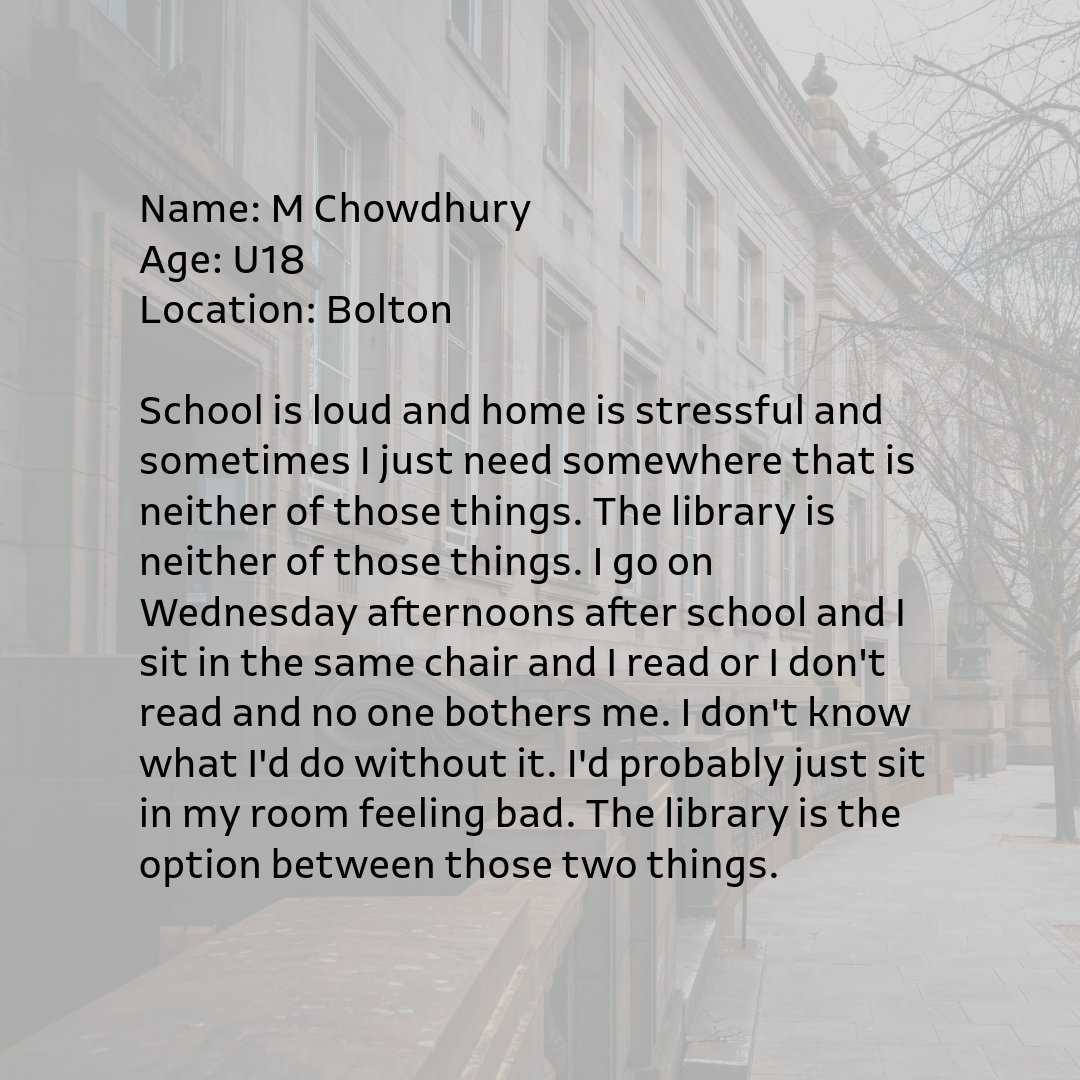
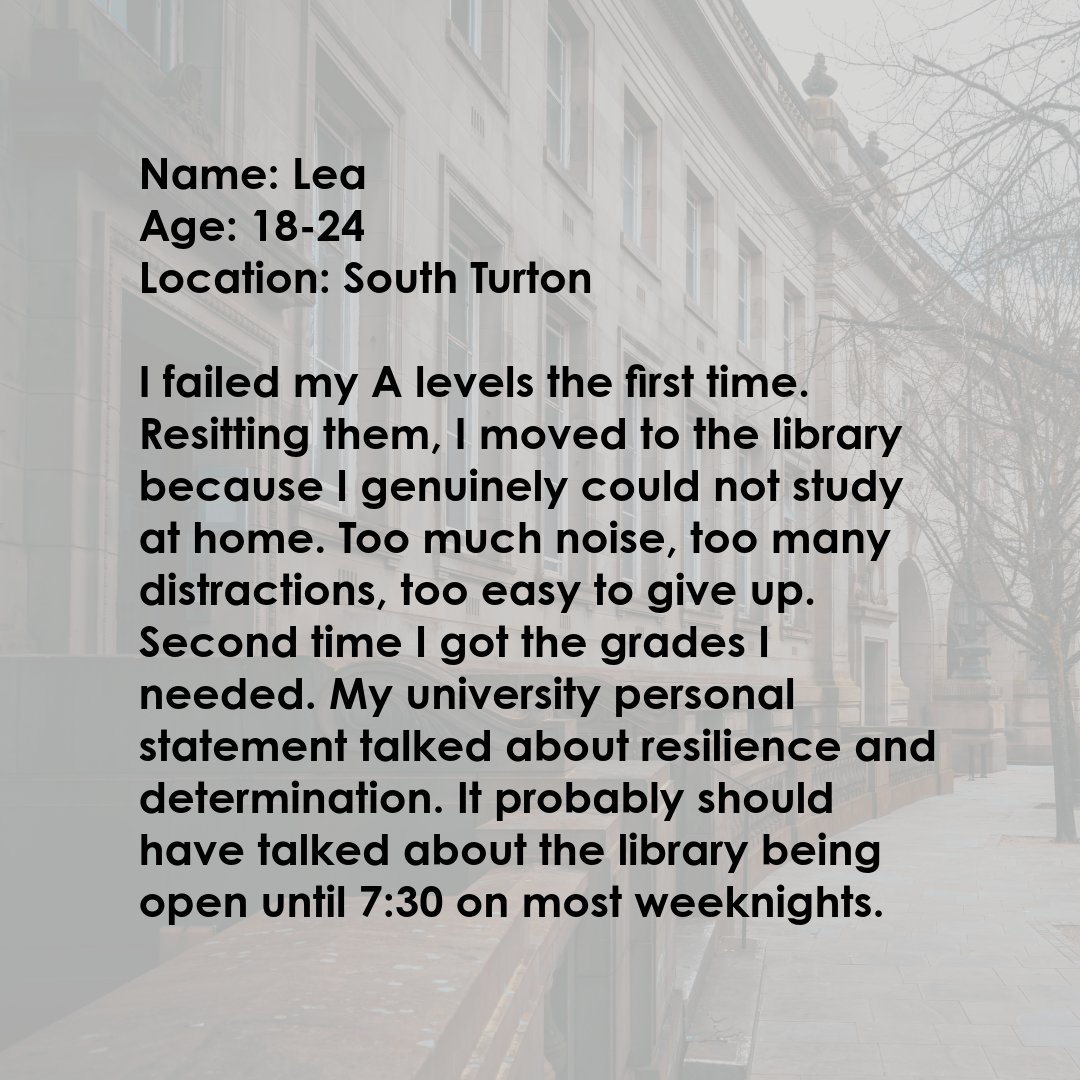
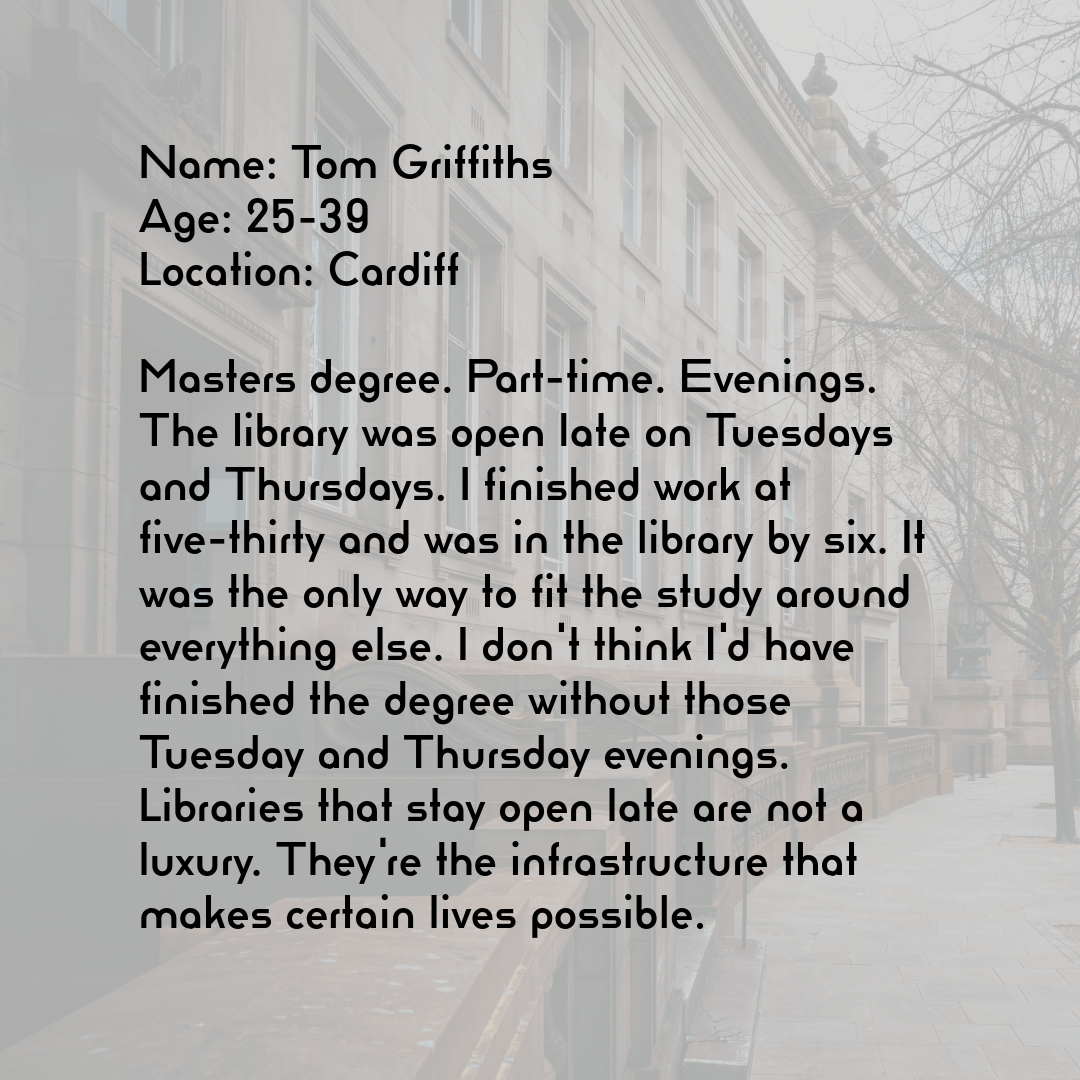
- When home was too loud to study.
- When home was not safe at all.
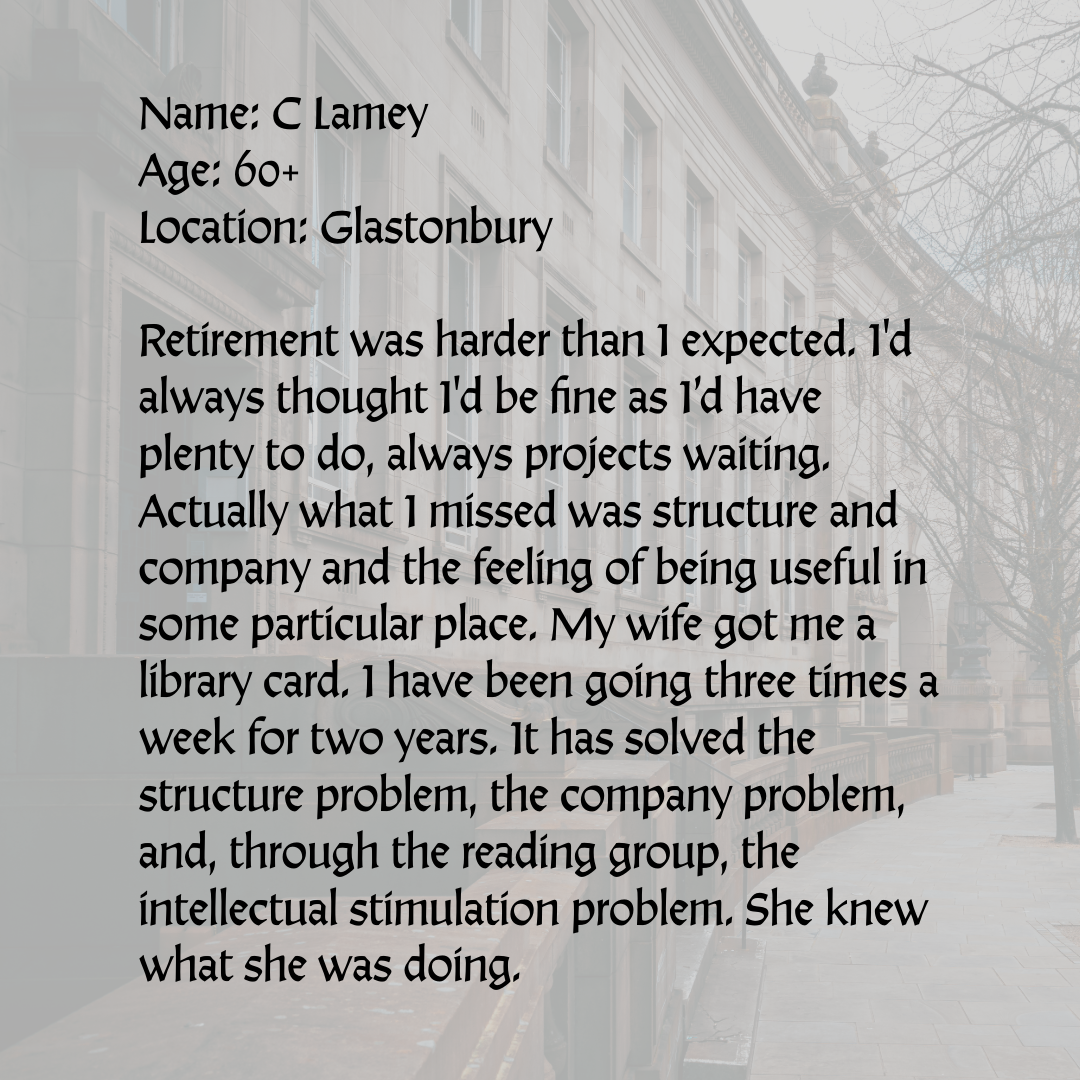
- When a marriage had ended and everything needed rebuilding.
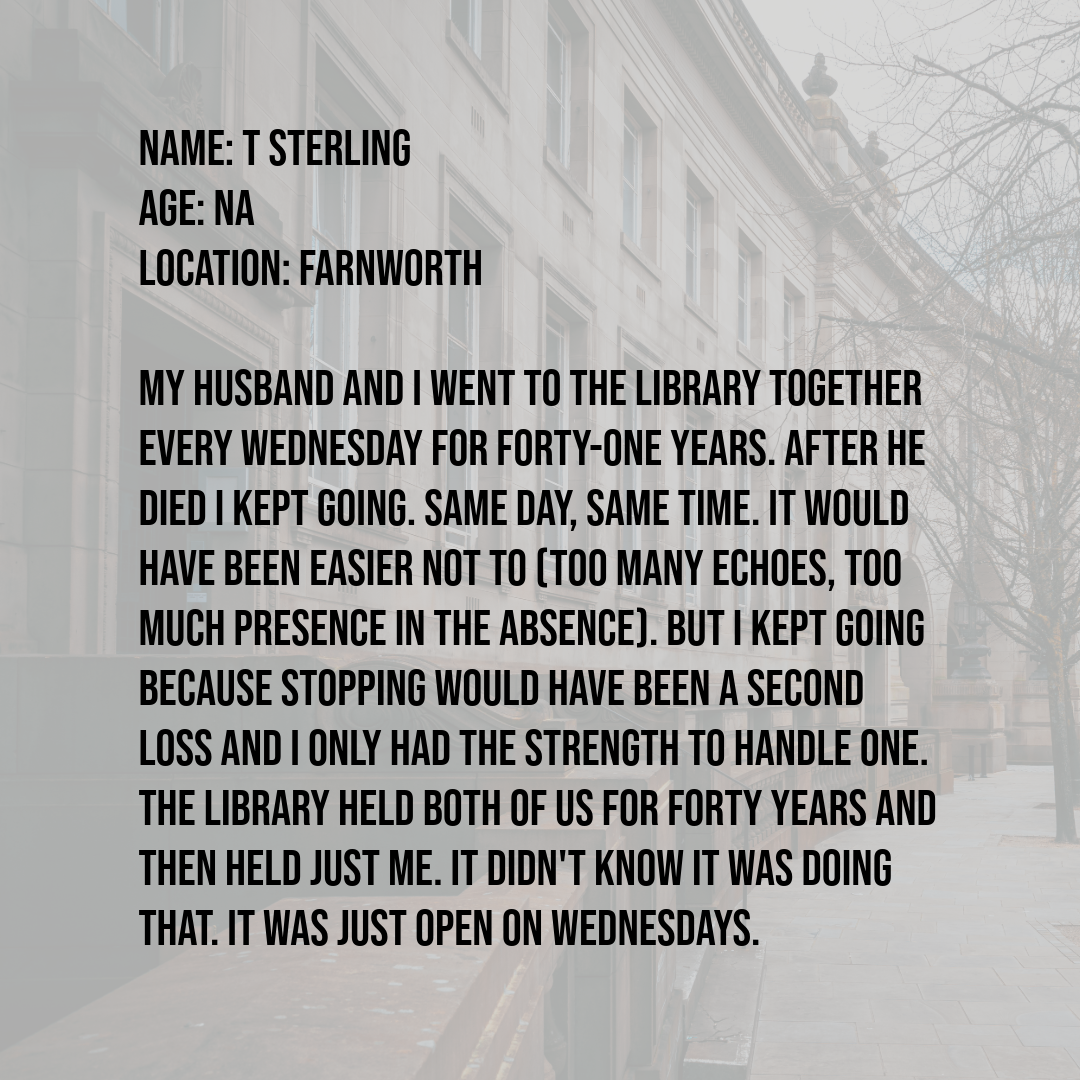
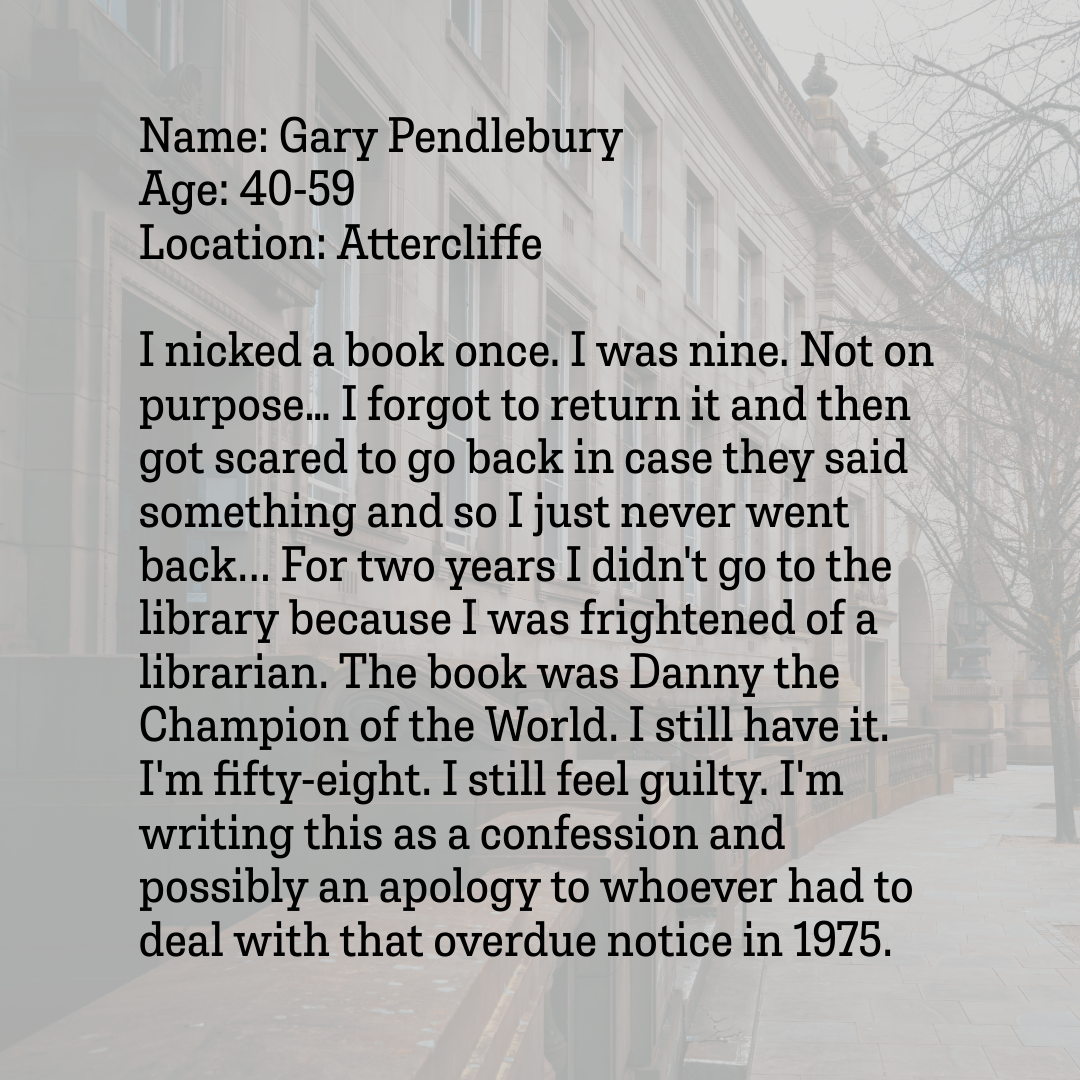
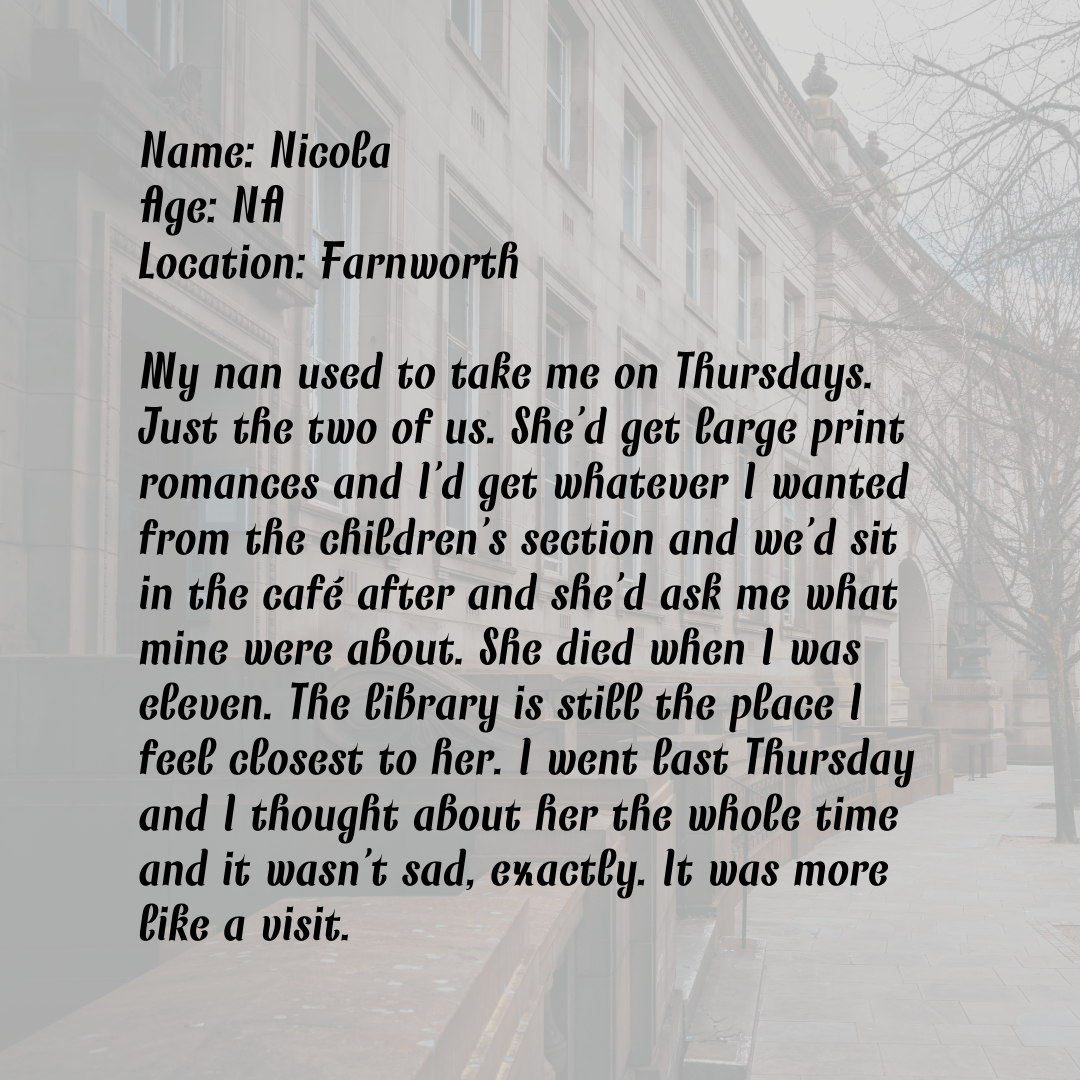
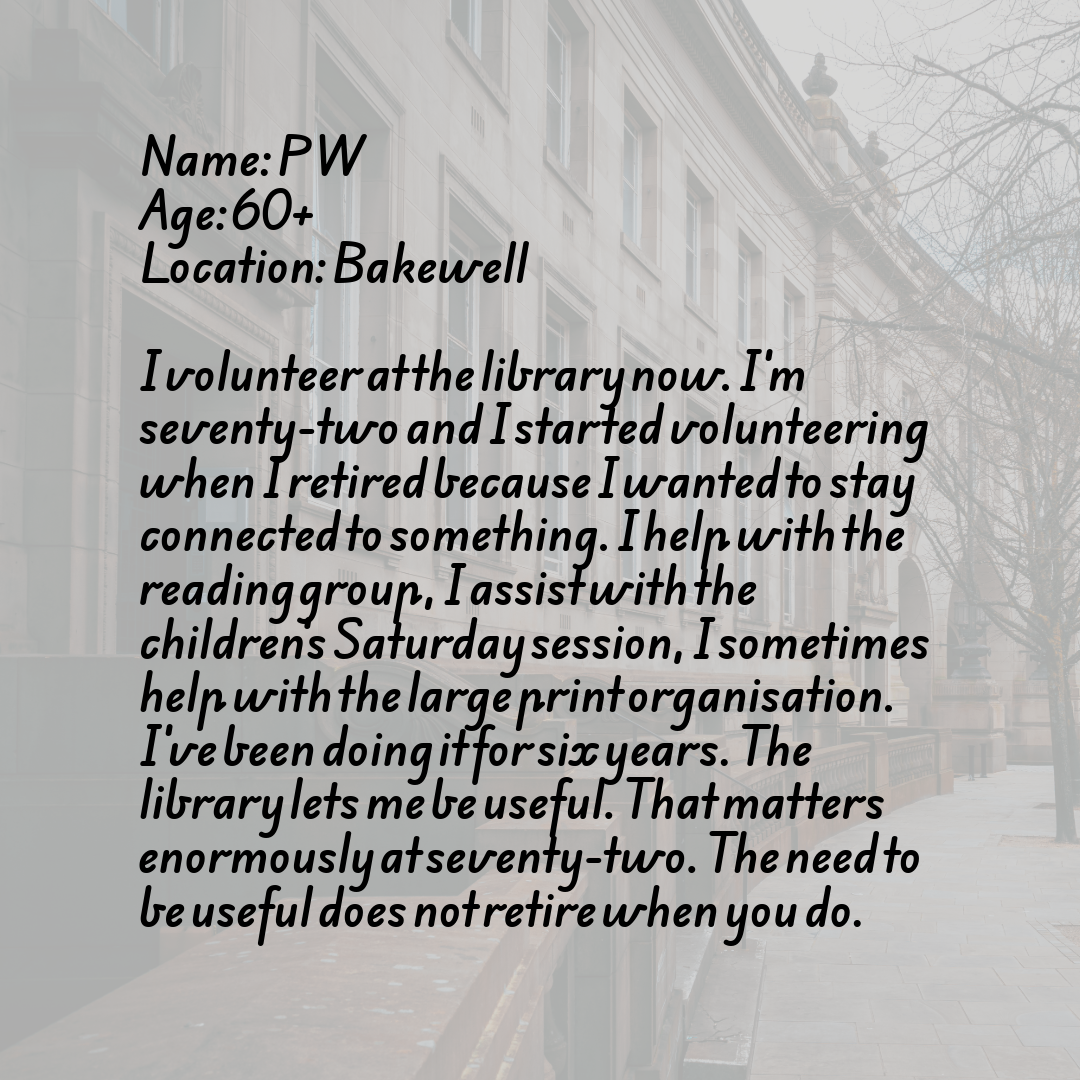
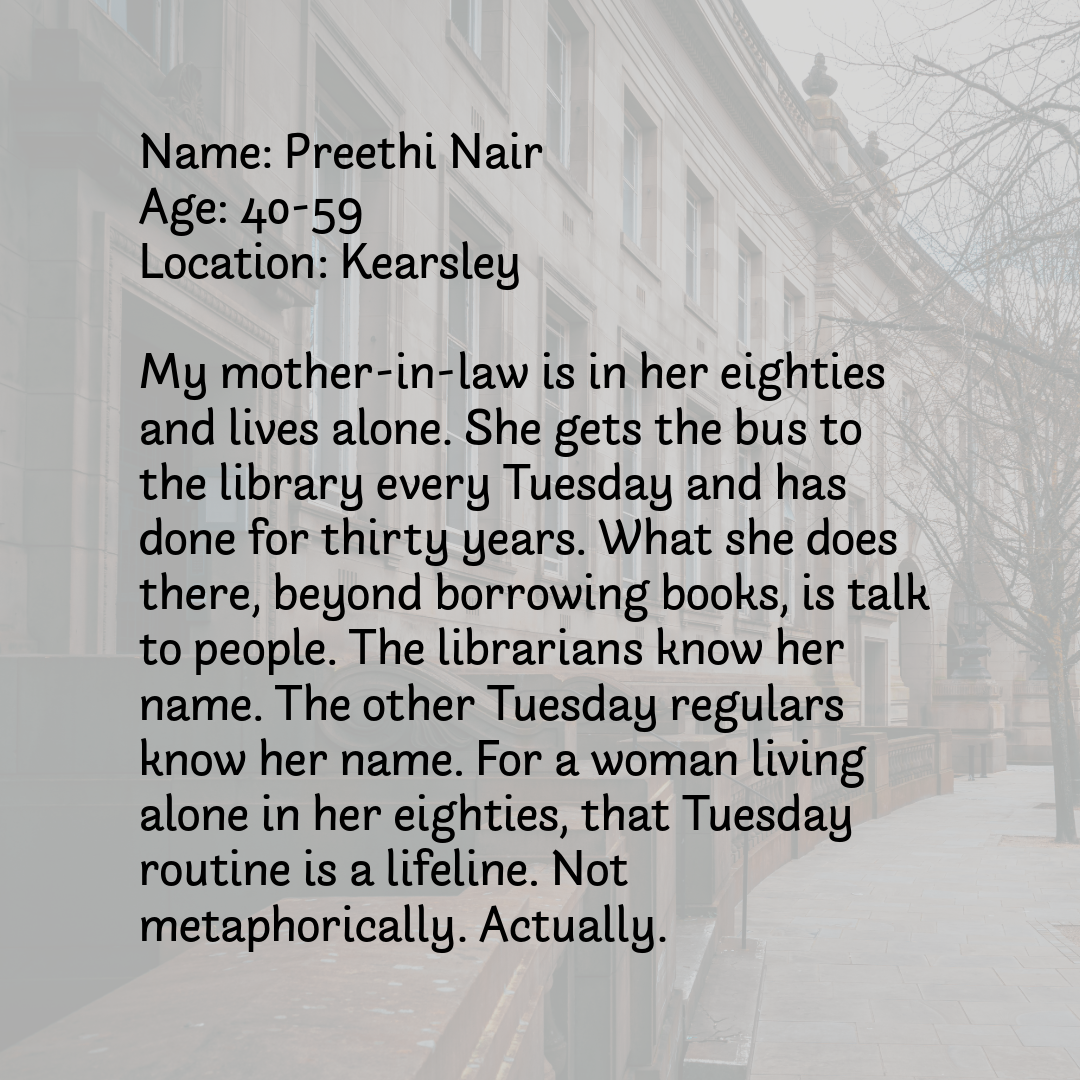
- When a husband of forty-one years had died and stopping the Wednesday visits would have meant a second loss.
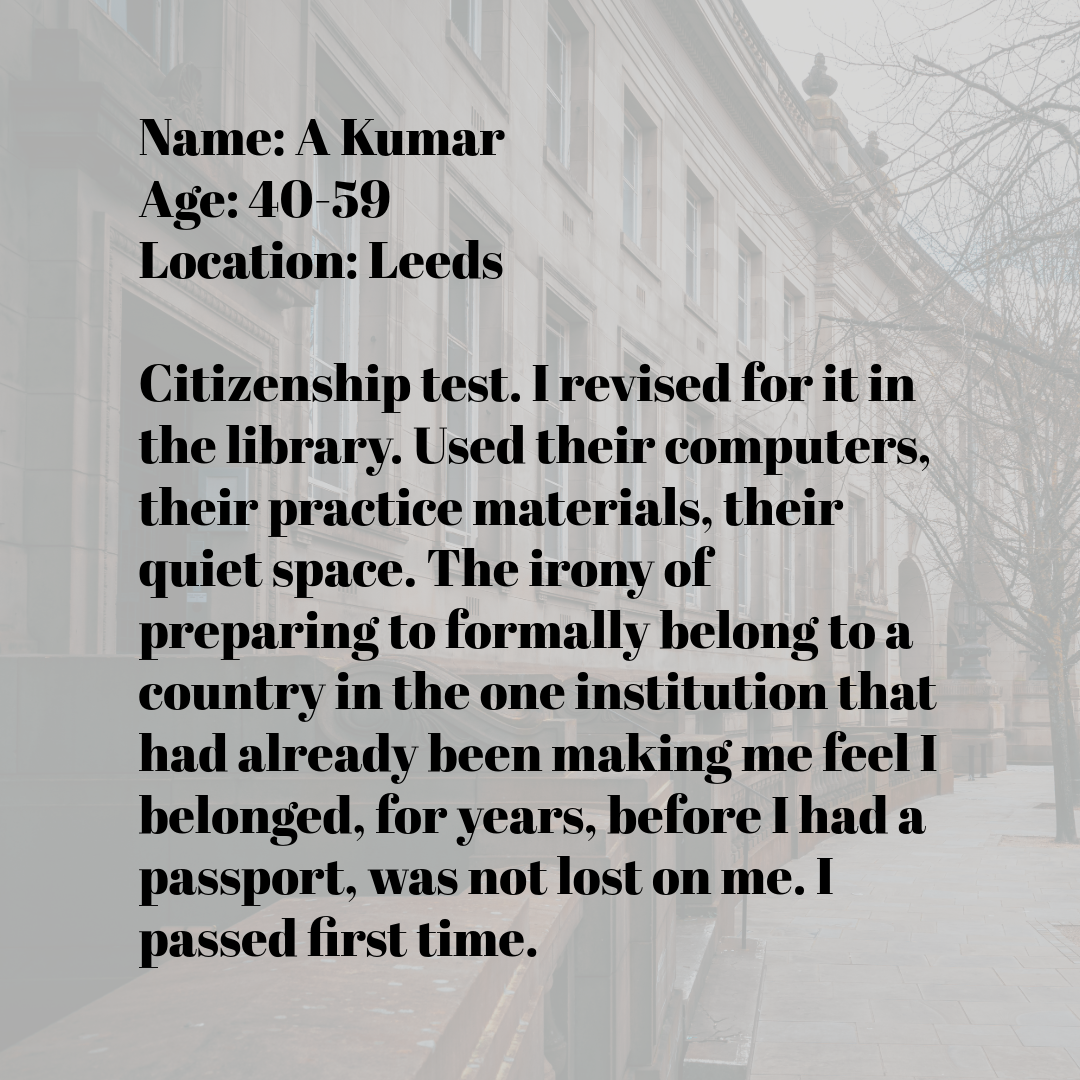
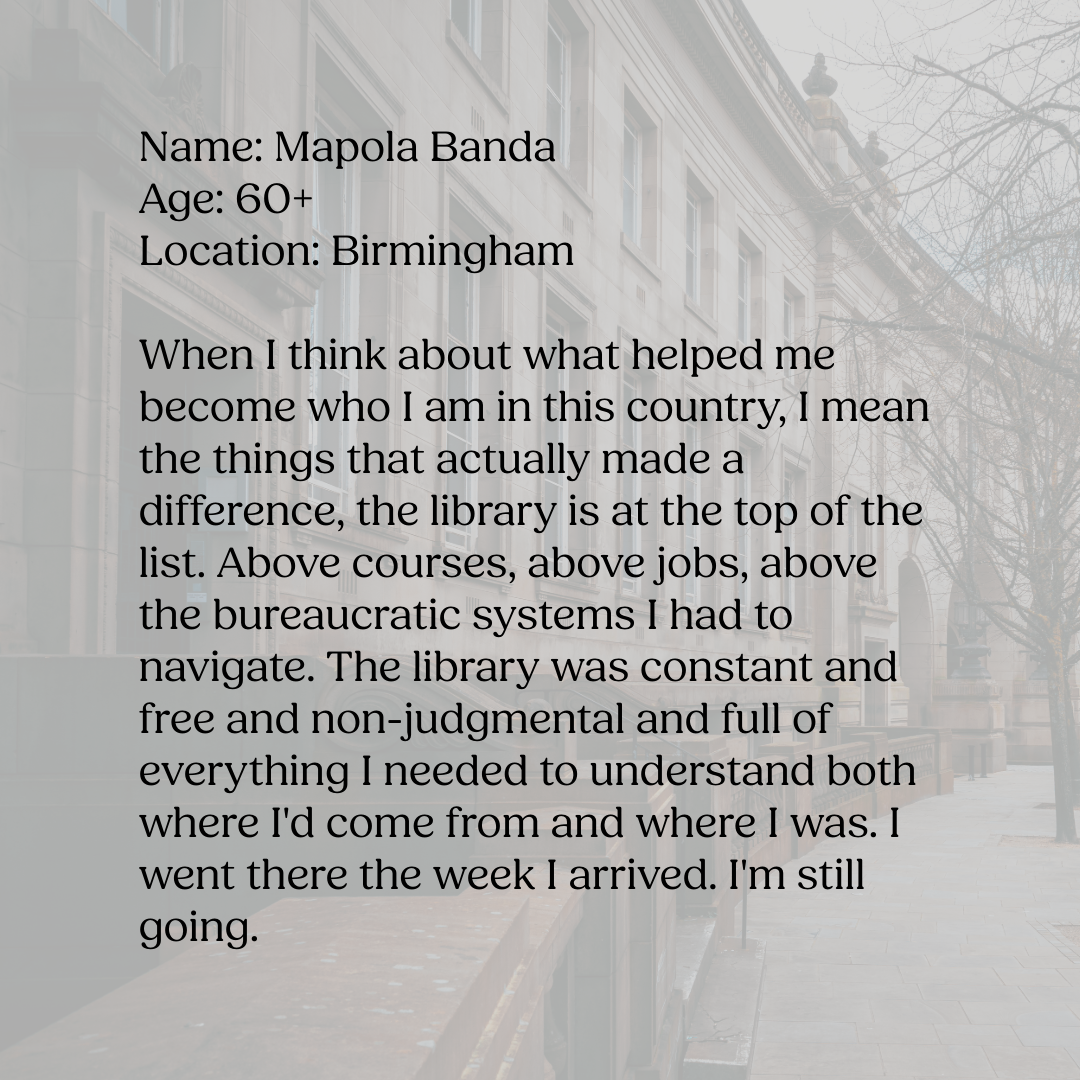
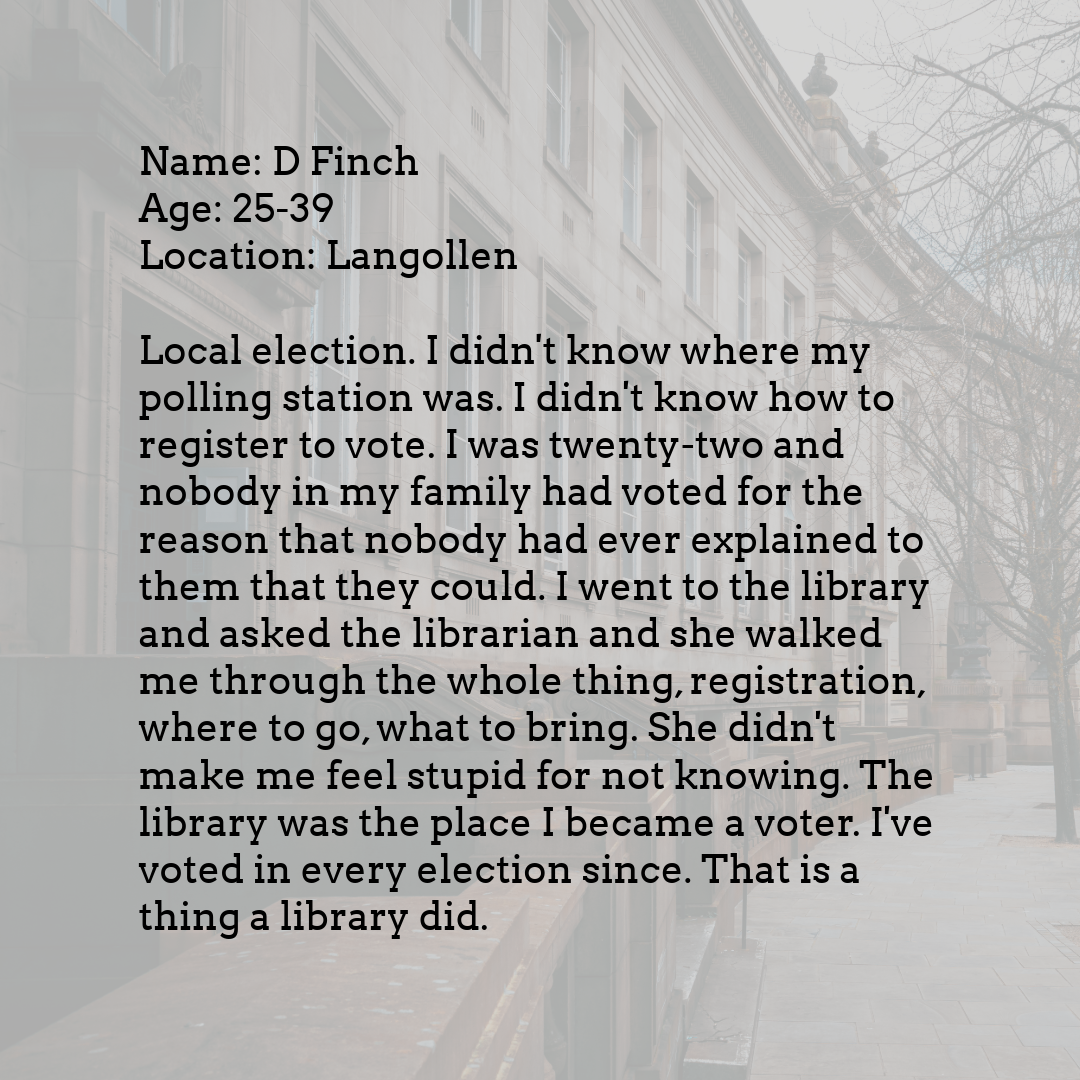
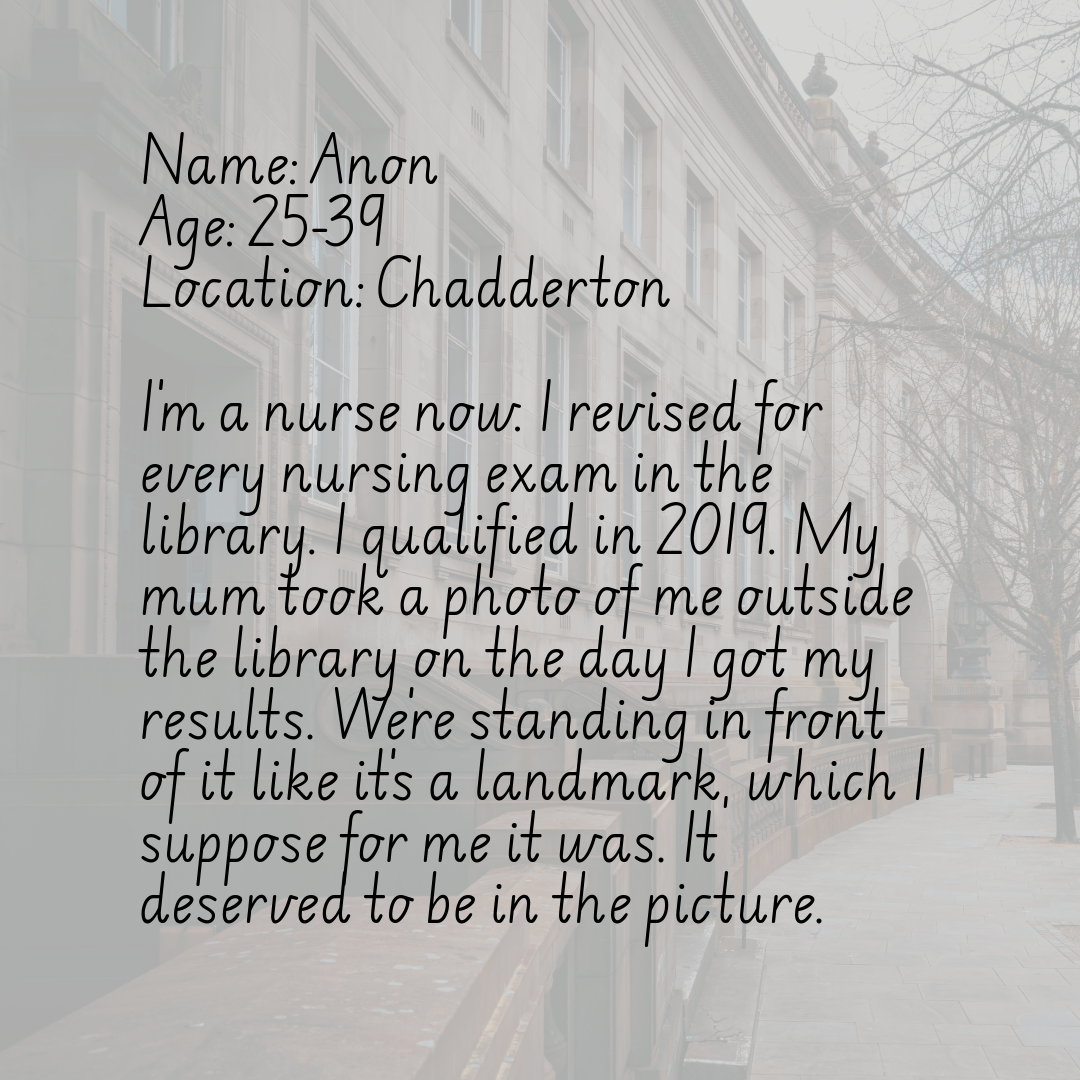
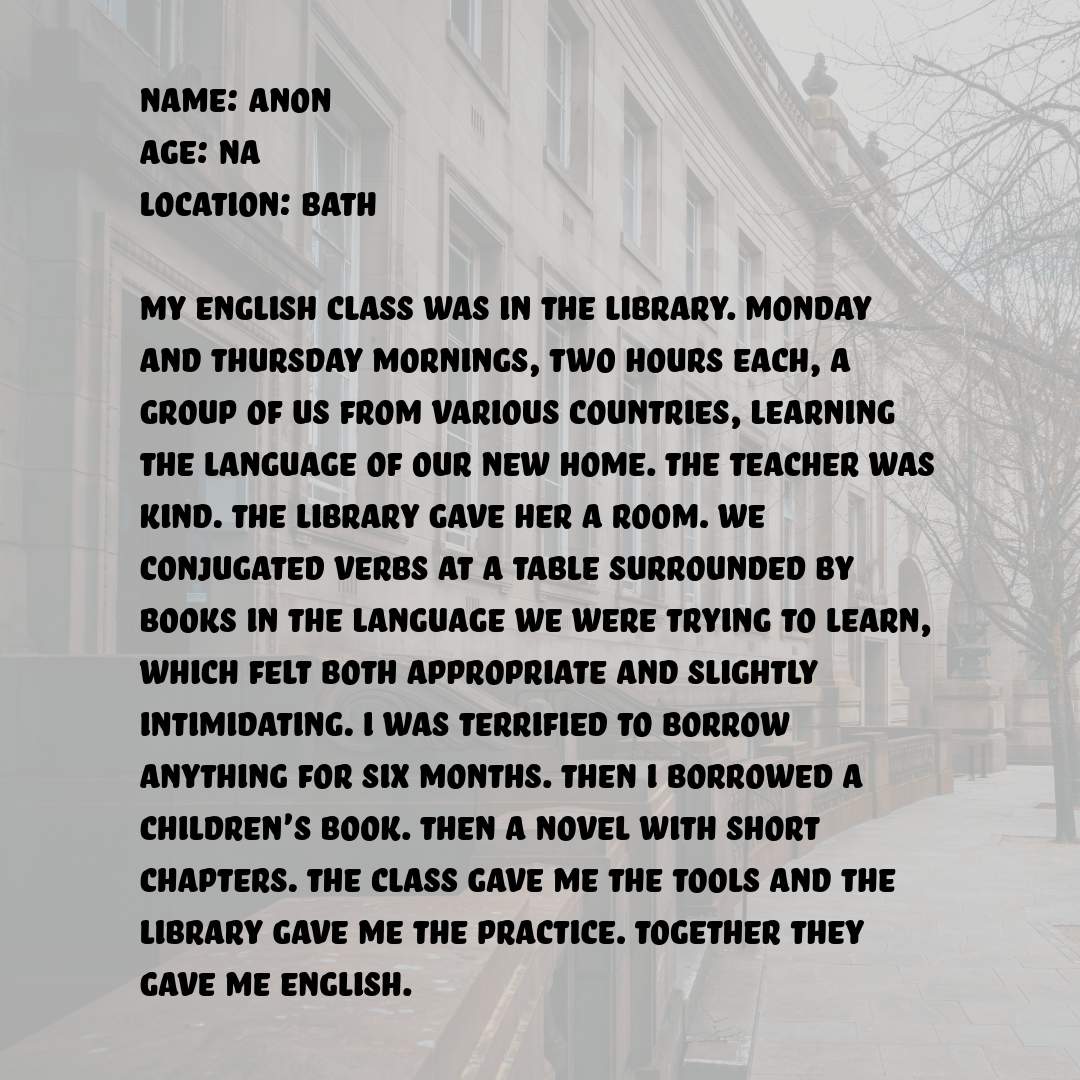
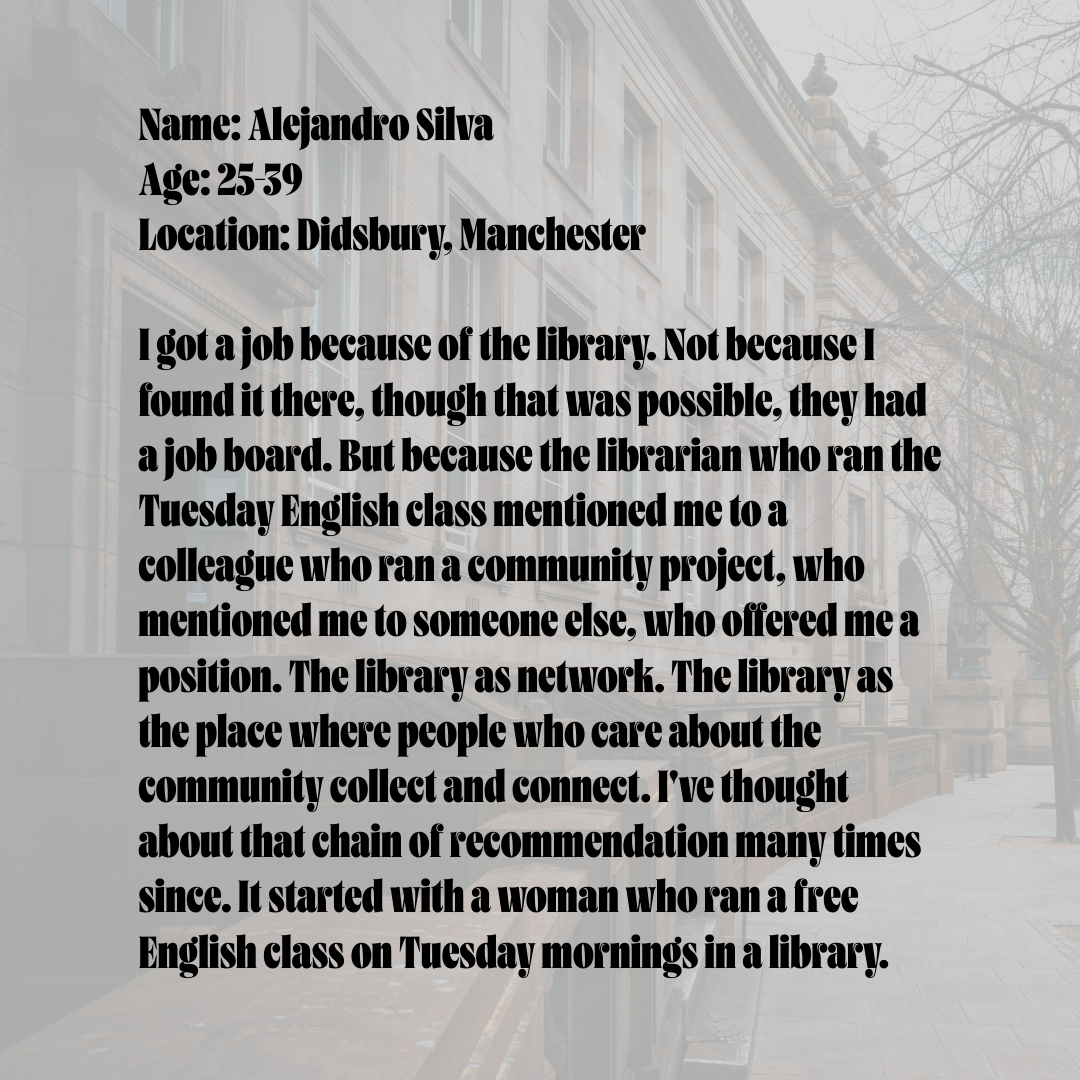
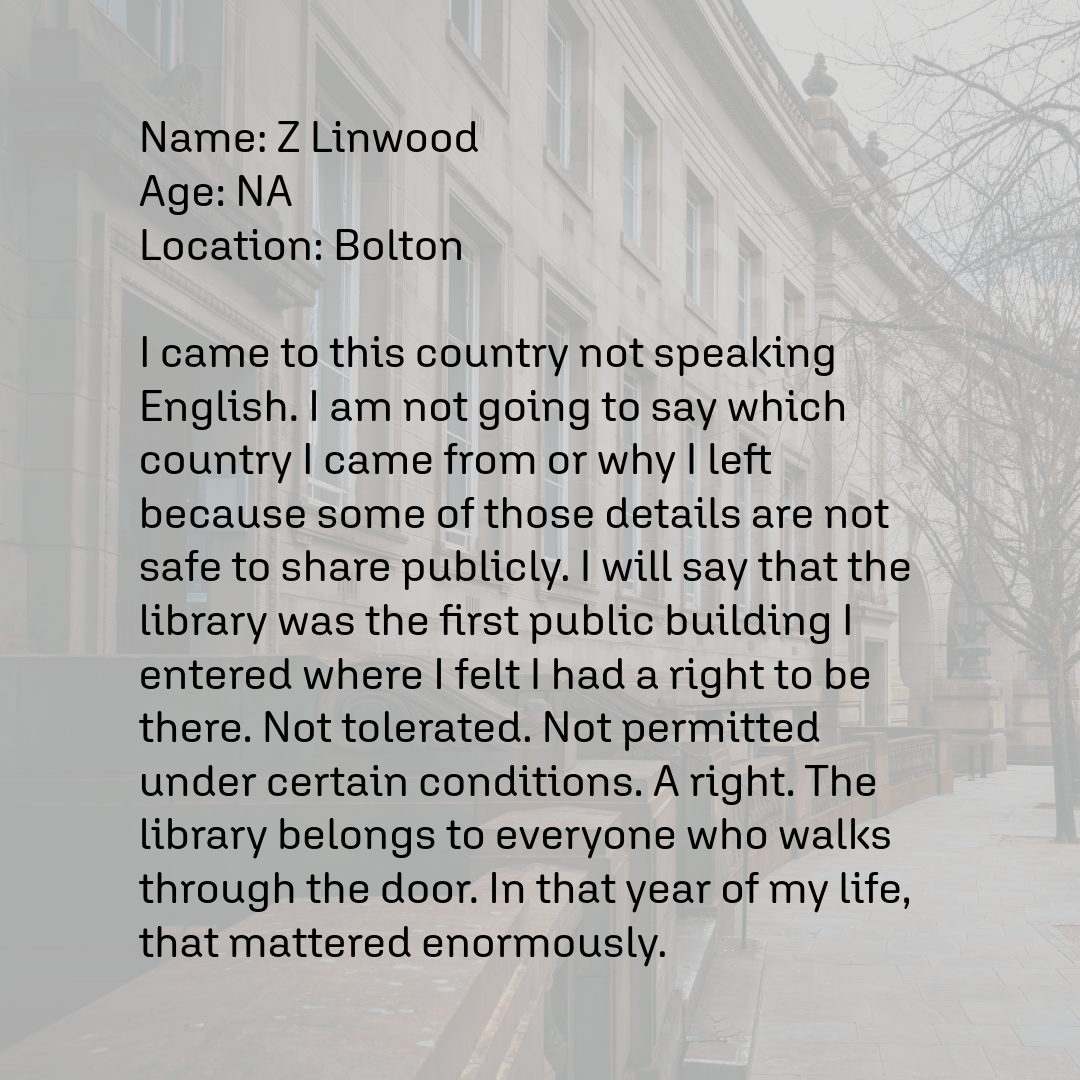
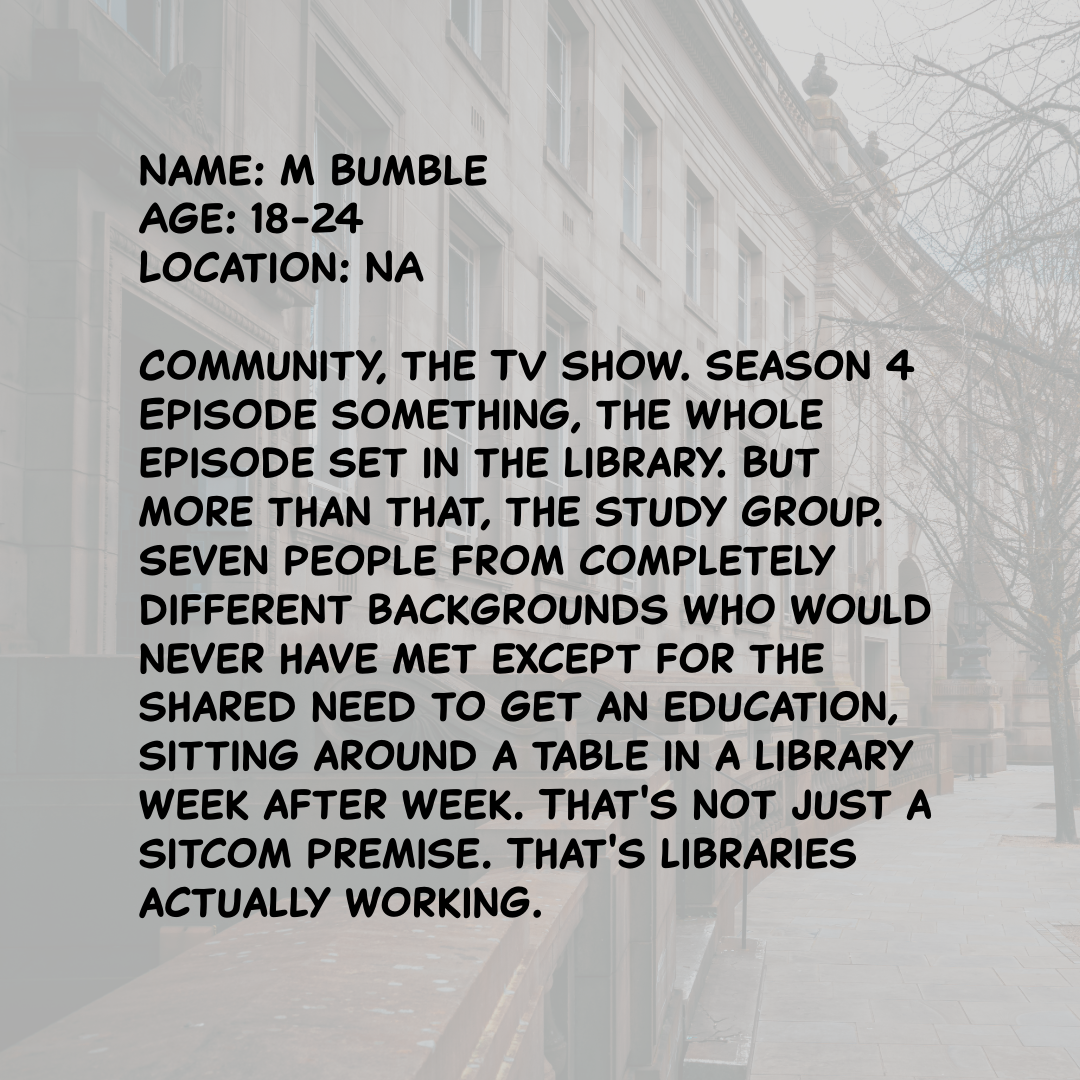
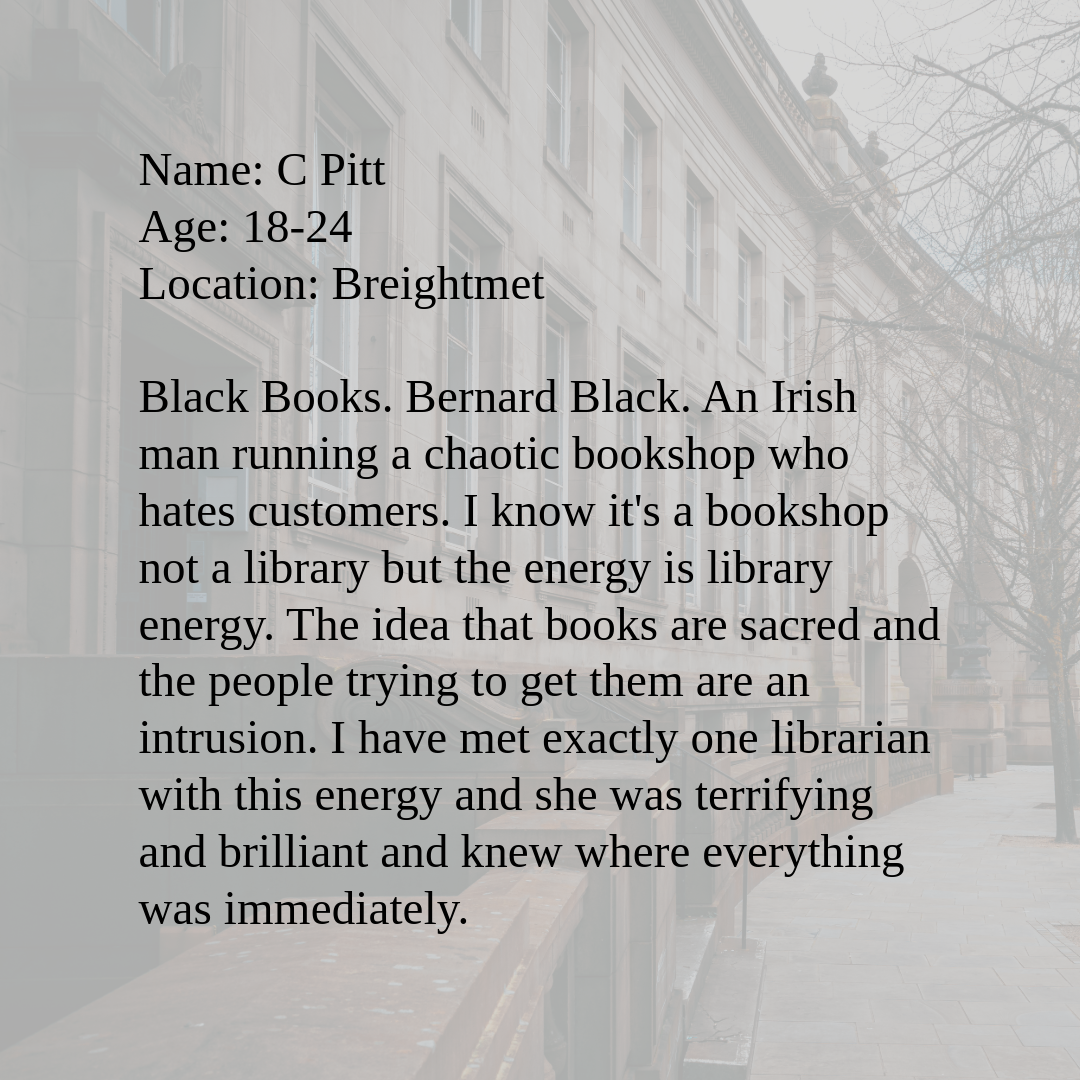
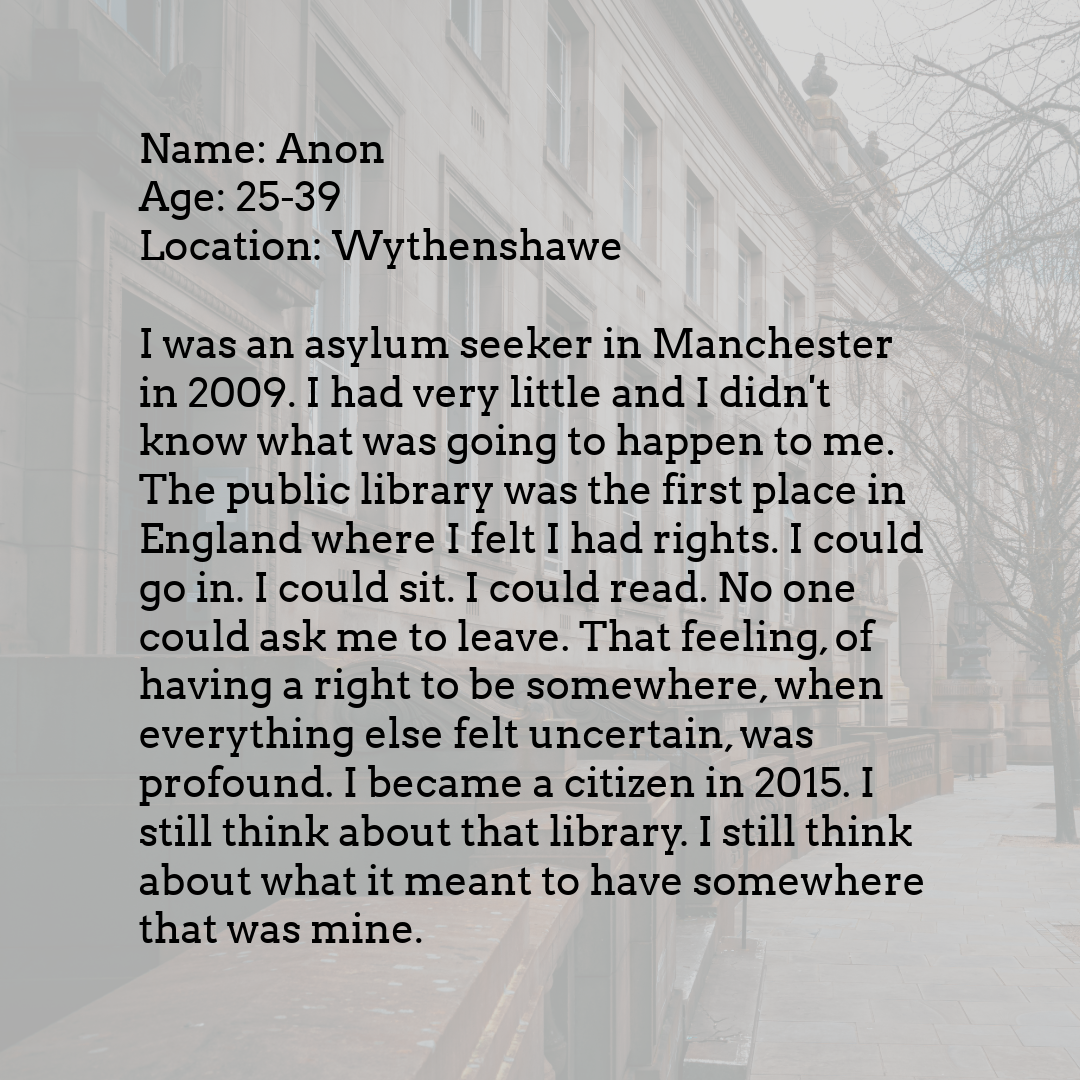
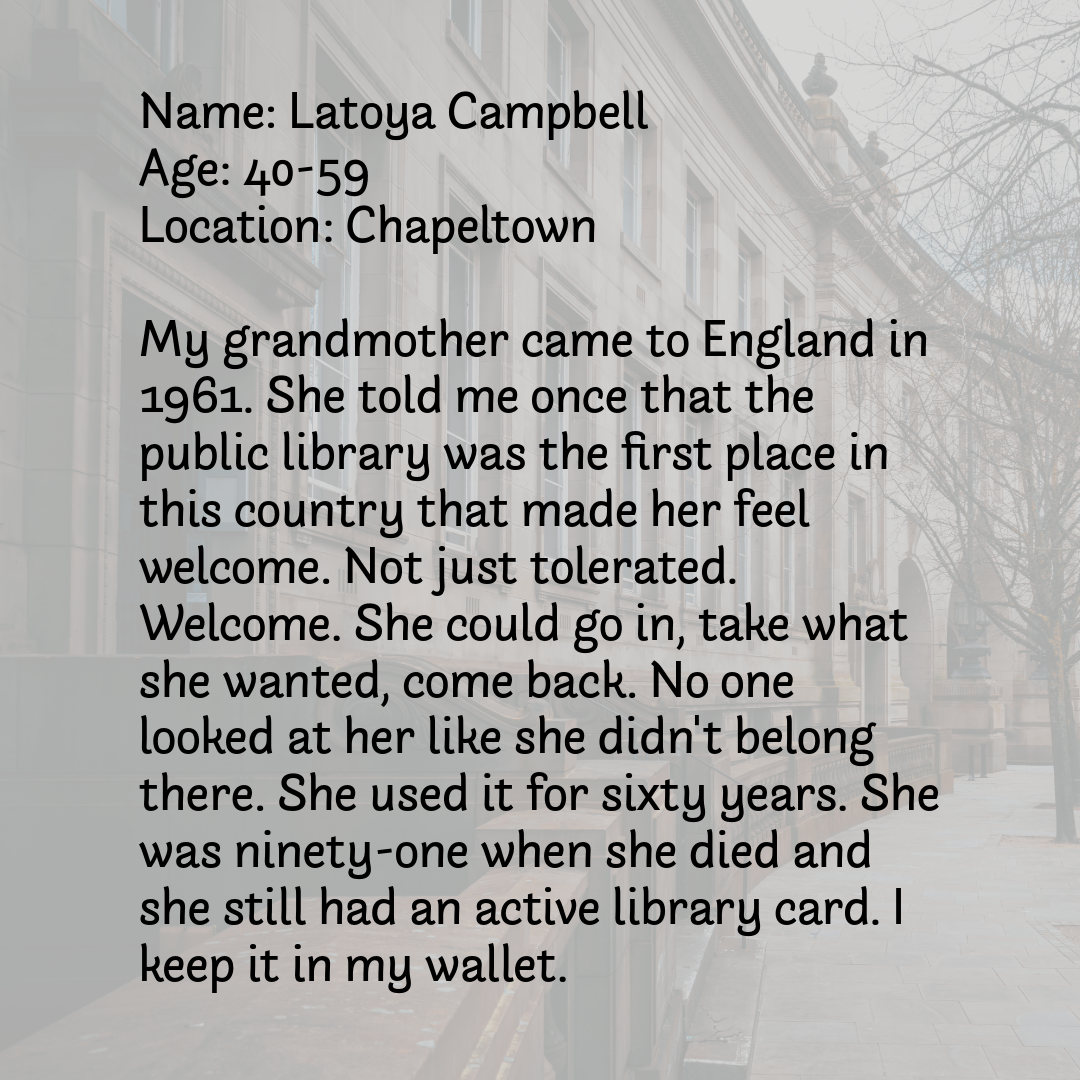
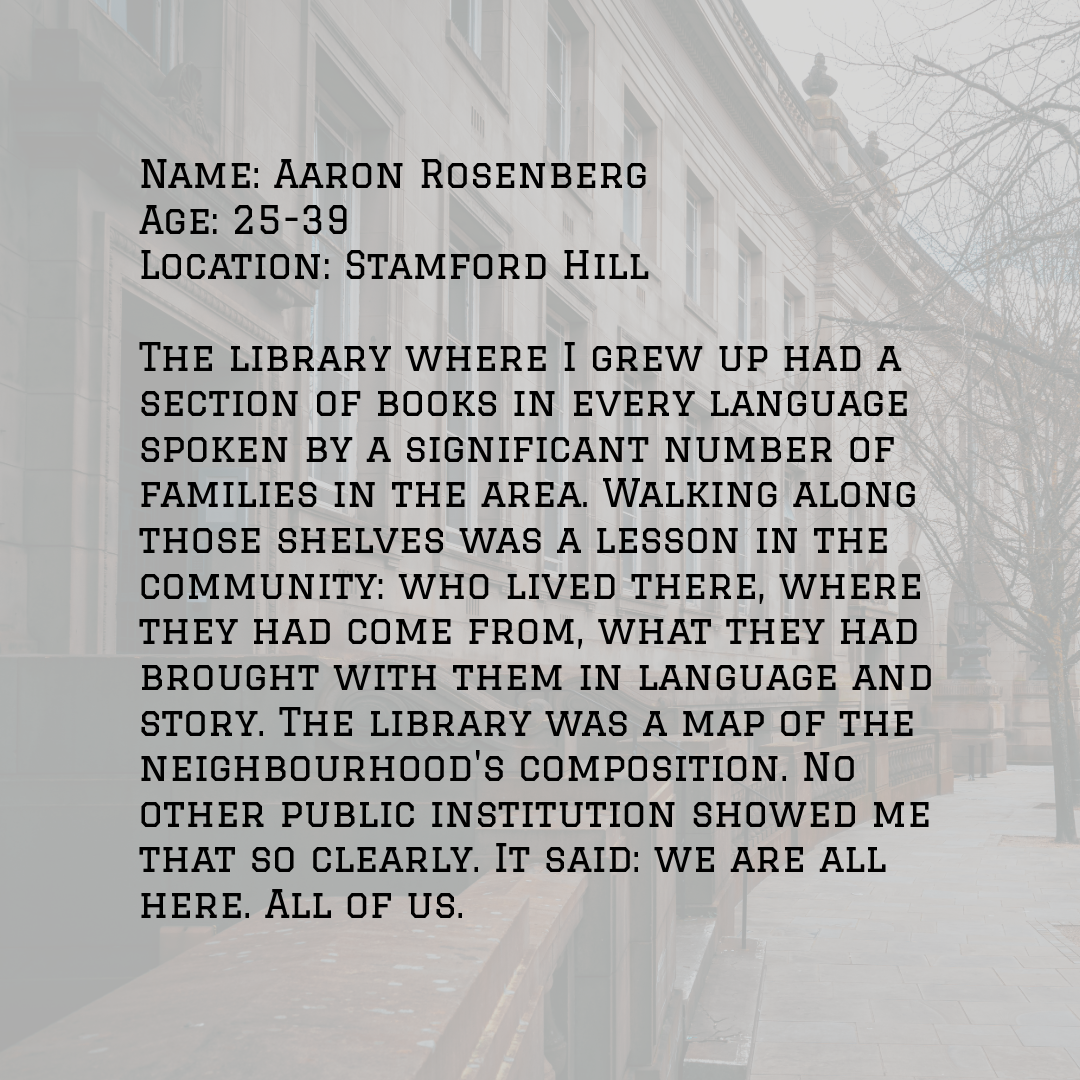
One contributor described preparing for their citizenship test at the library. The observation was quiet, almost offhand: becoming formally part of a country at the institution that had already been making them feel they belonged, long before they had a passport.
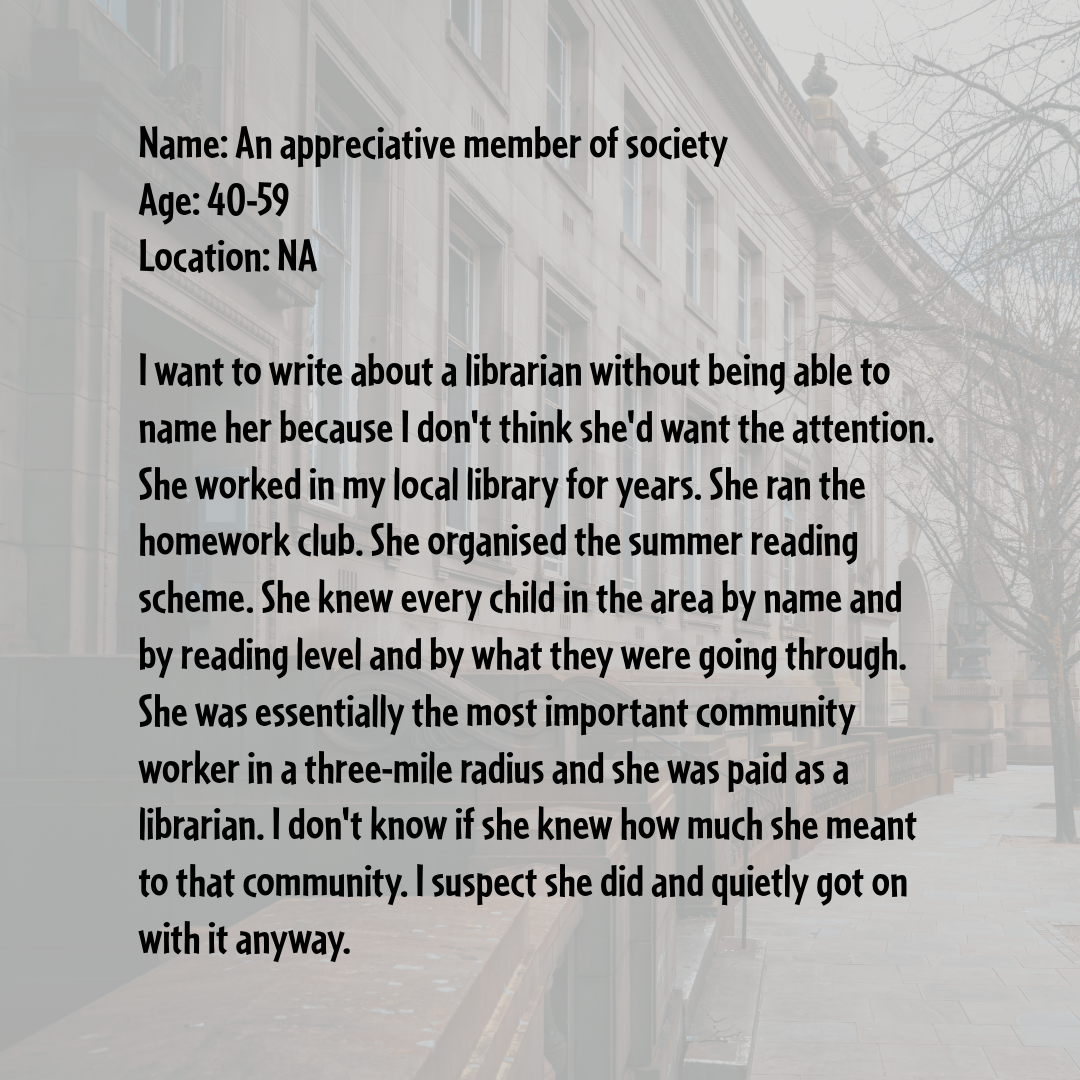
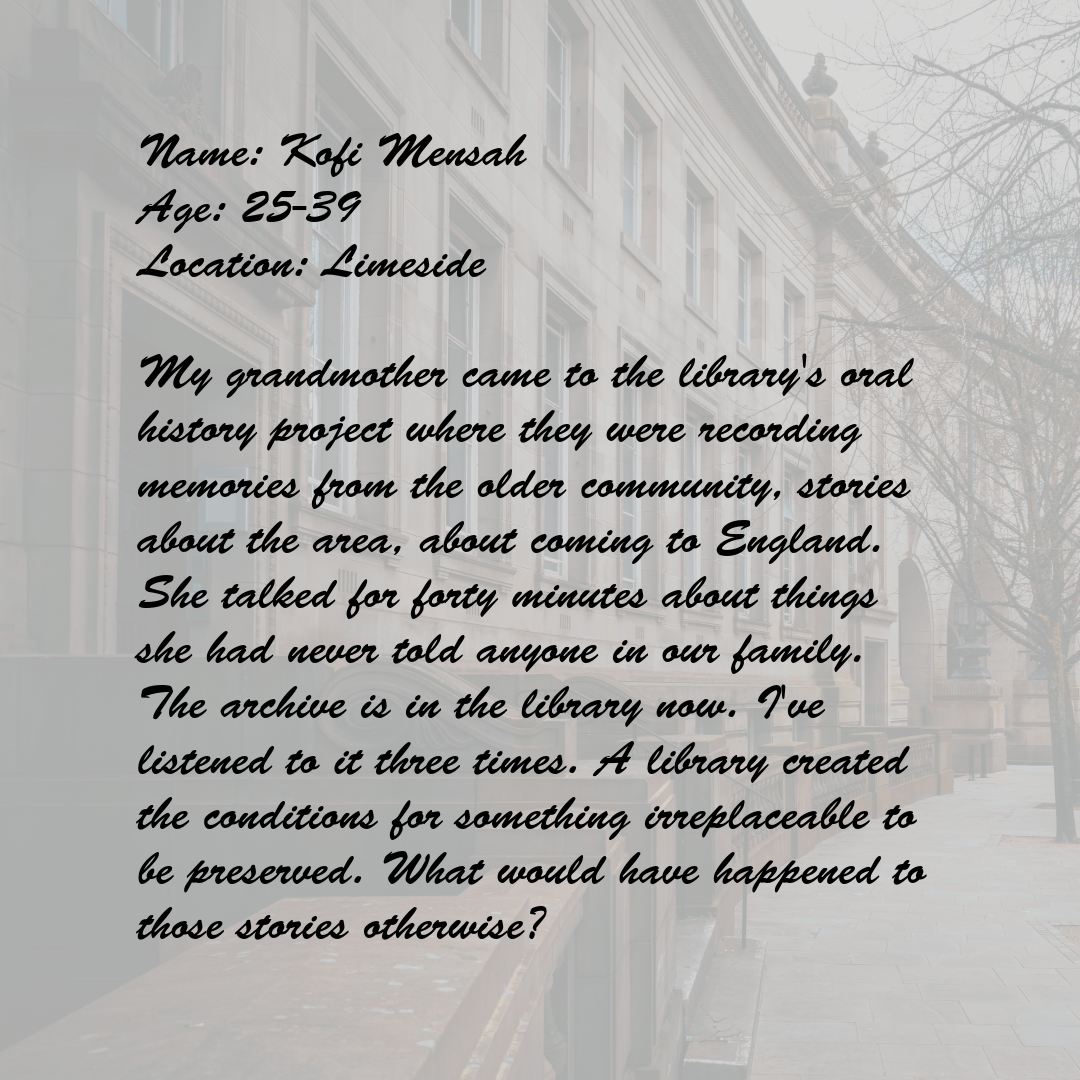
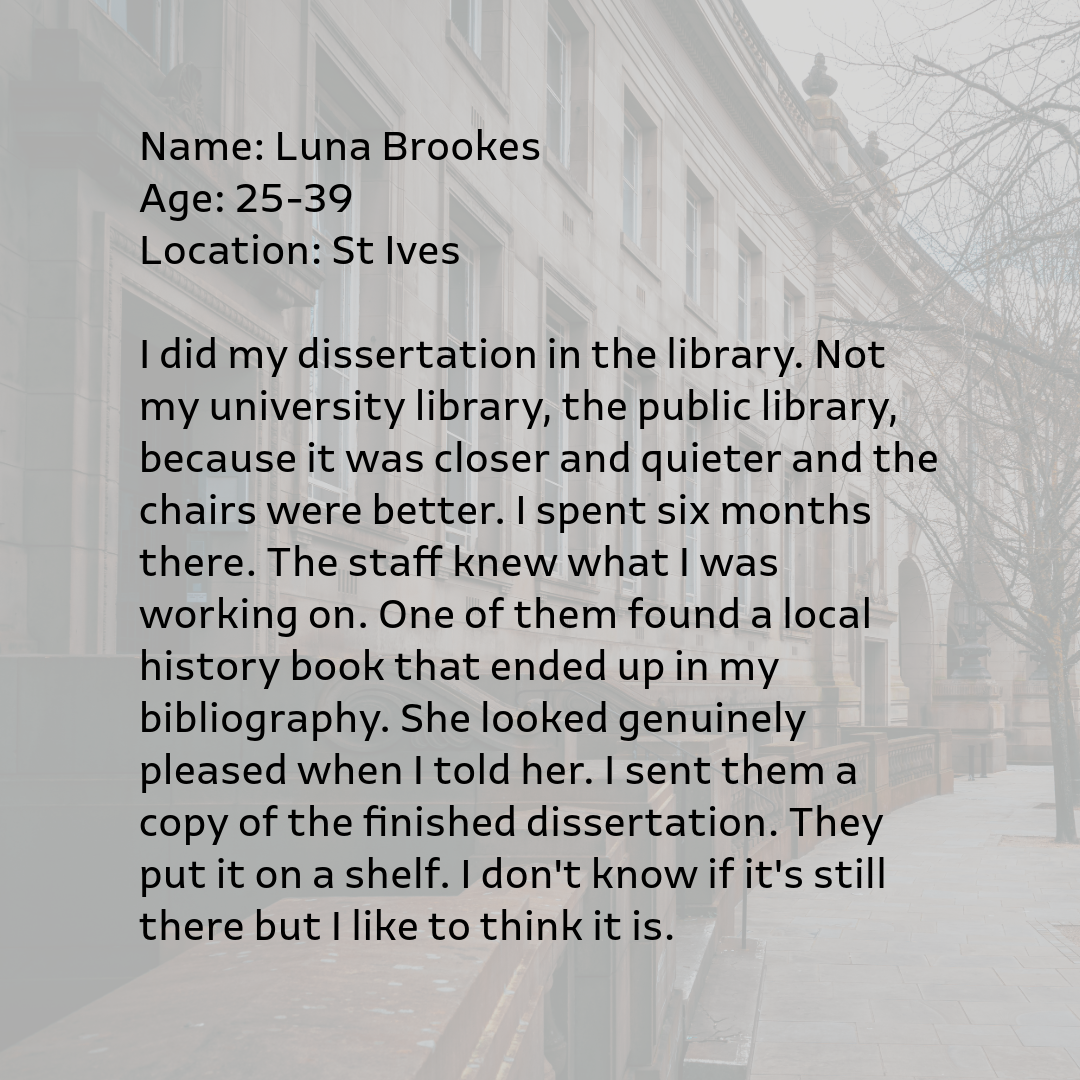
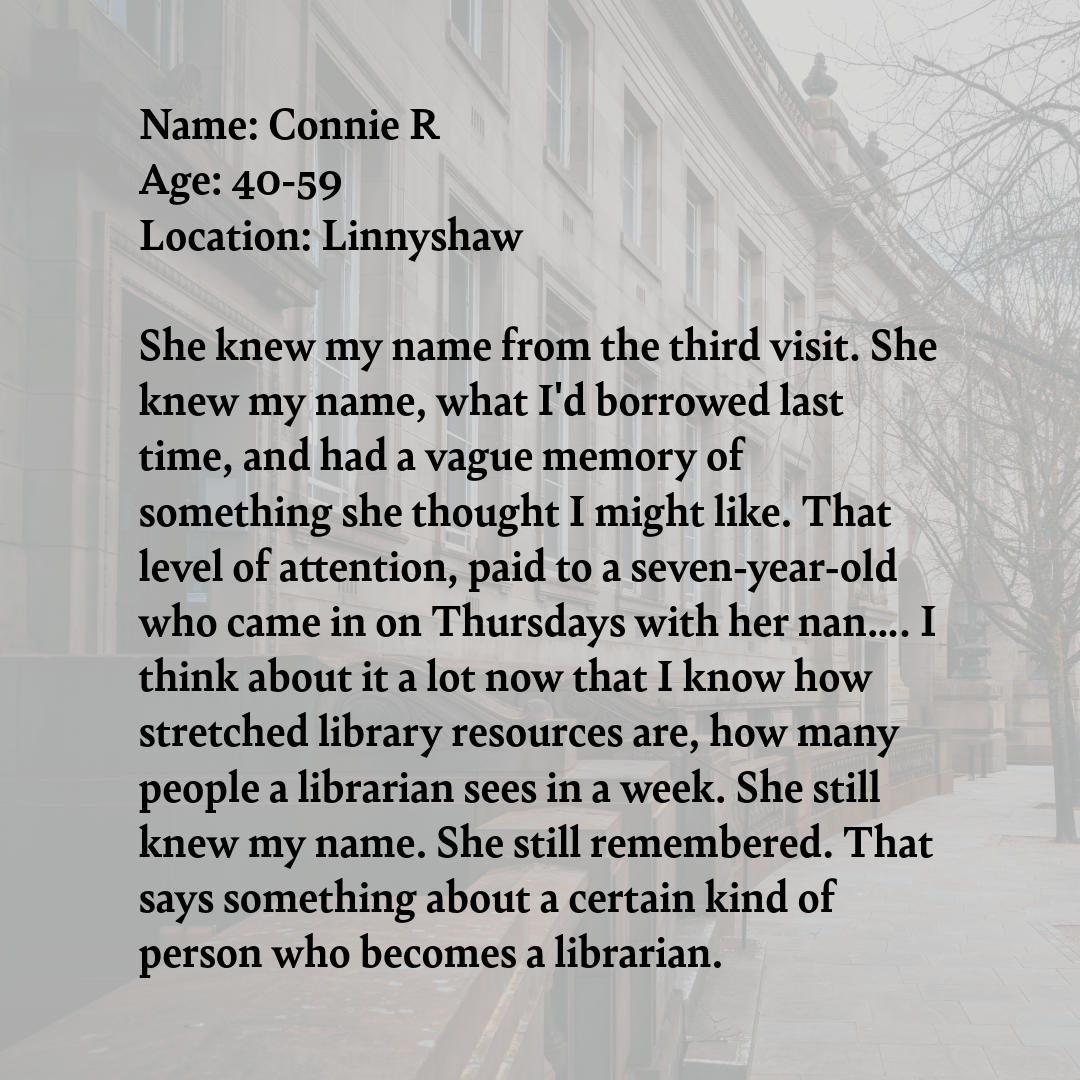
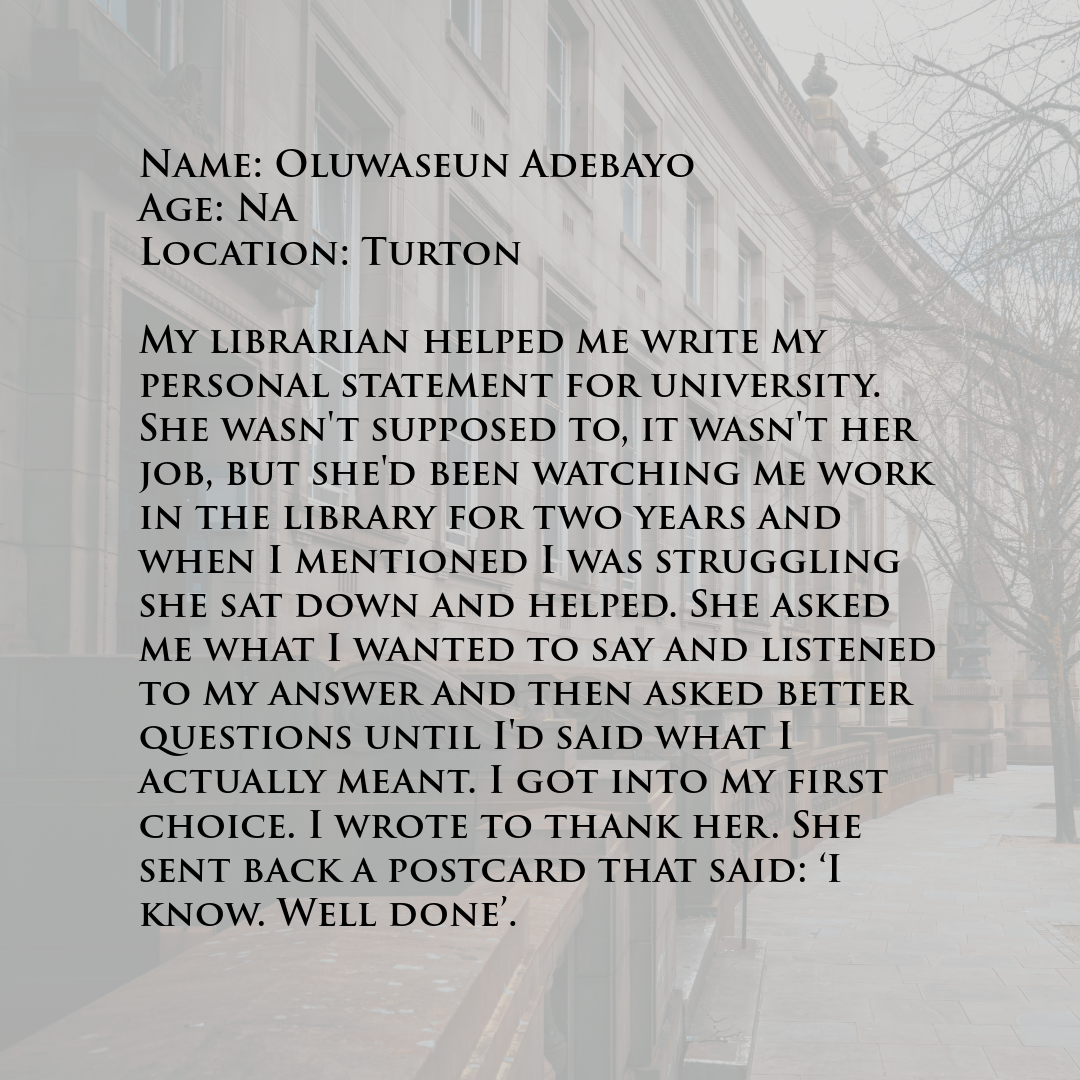
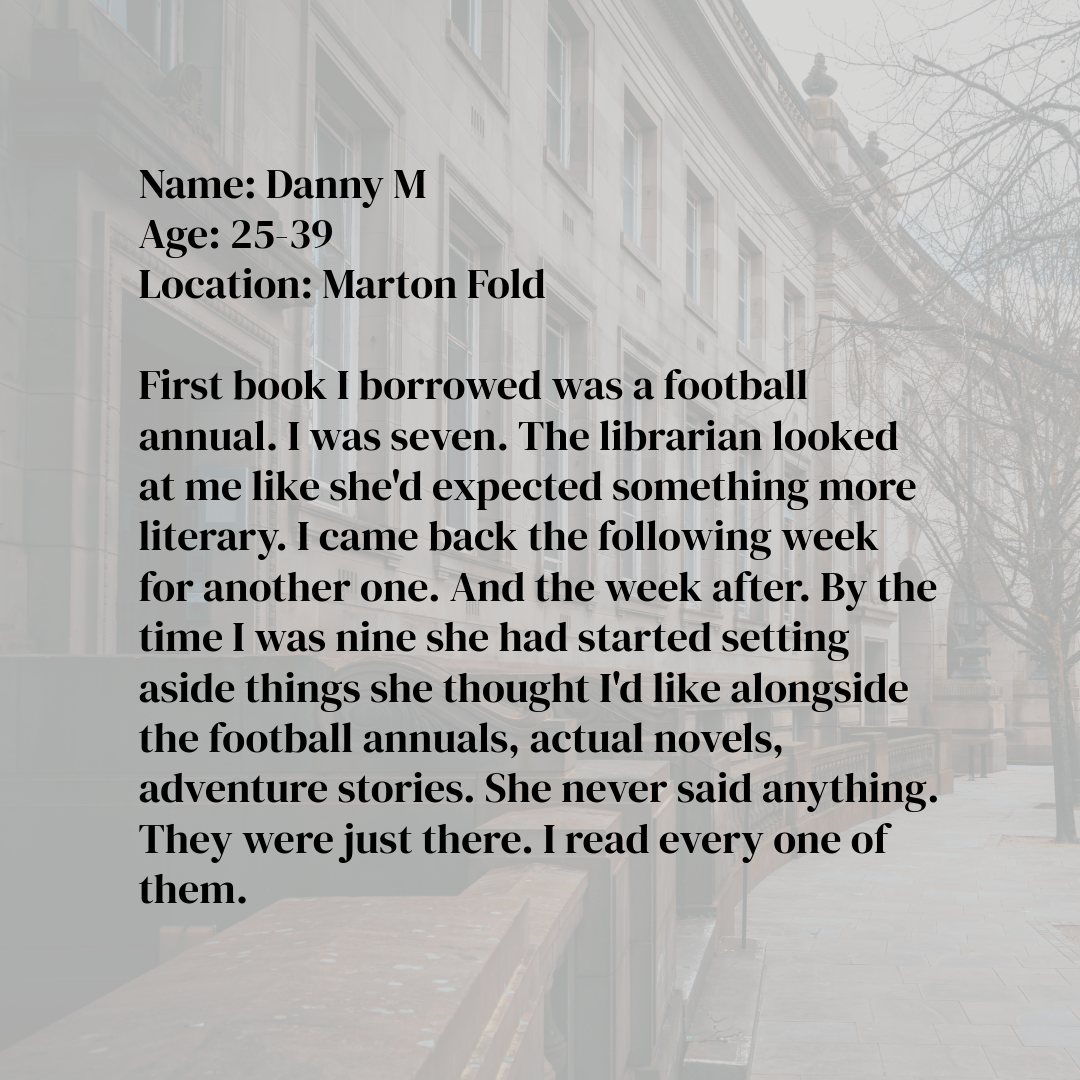
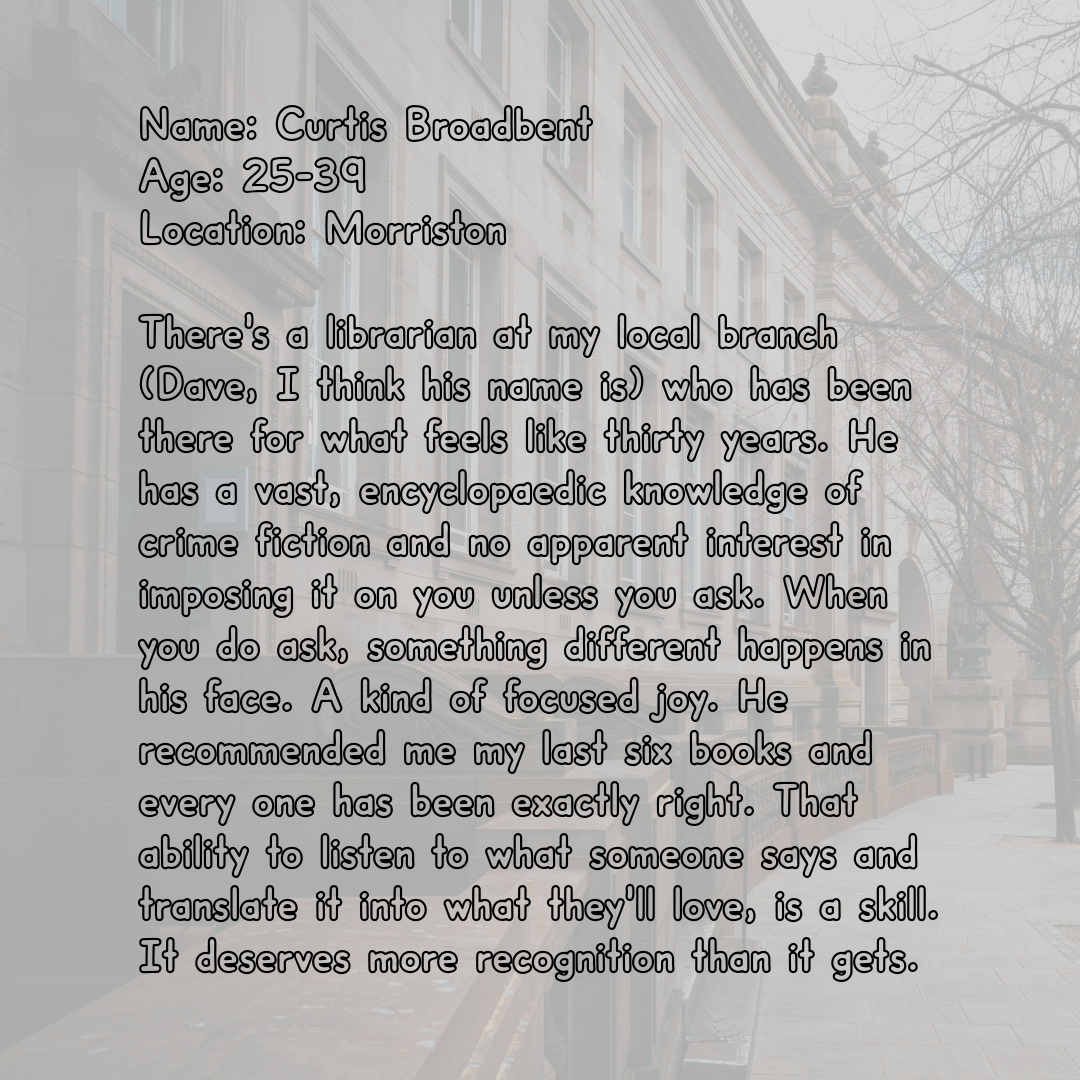
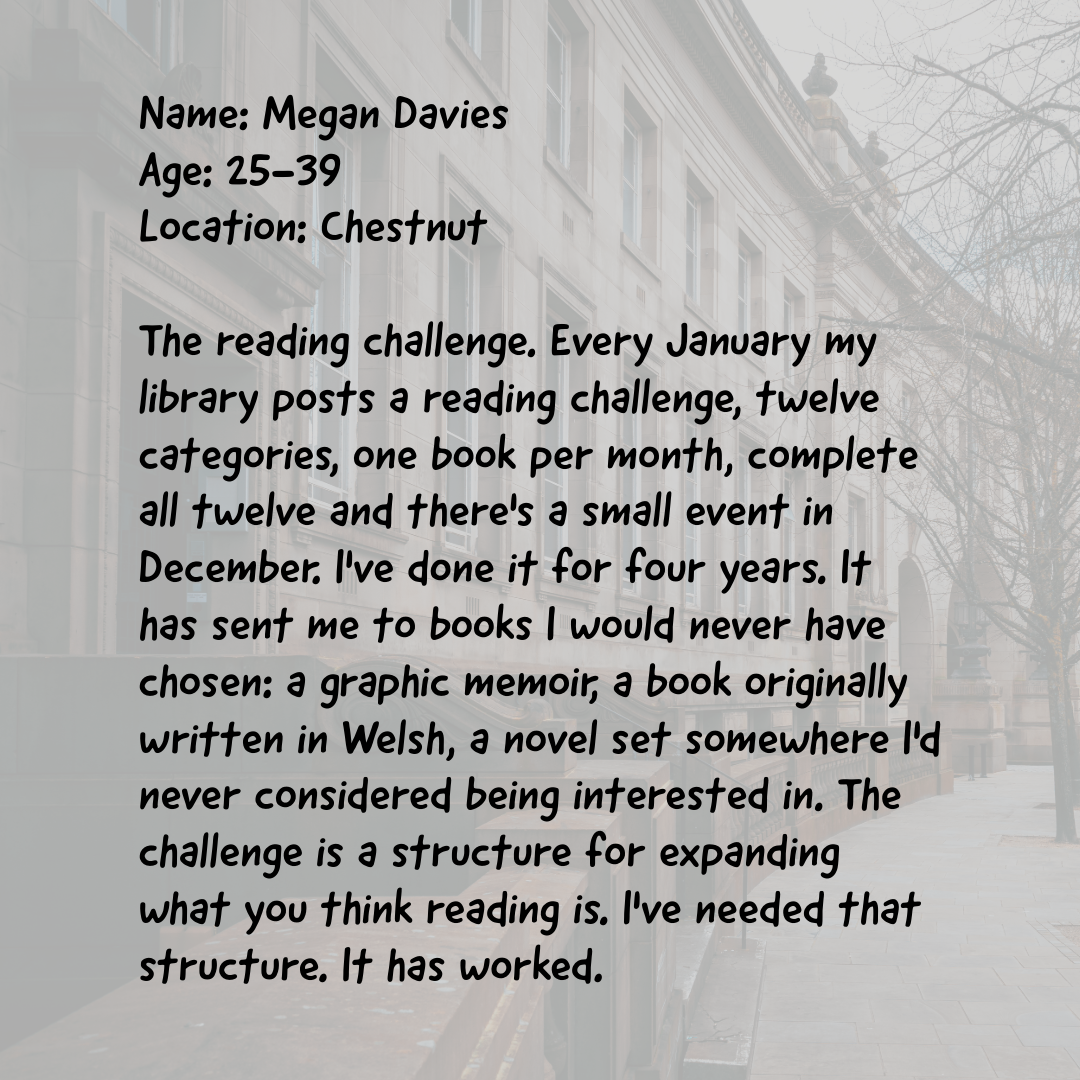
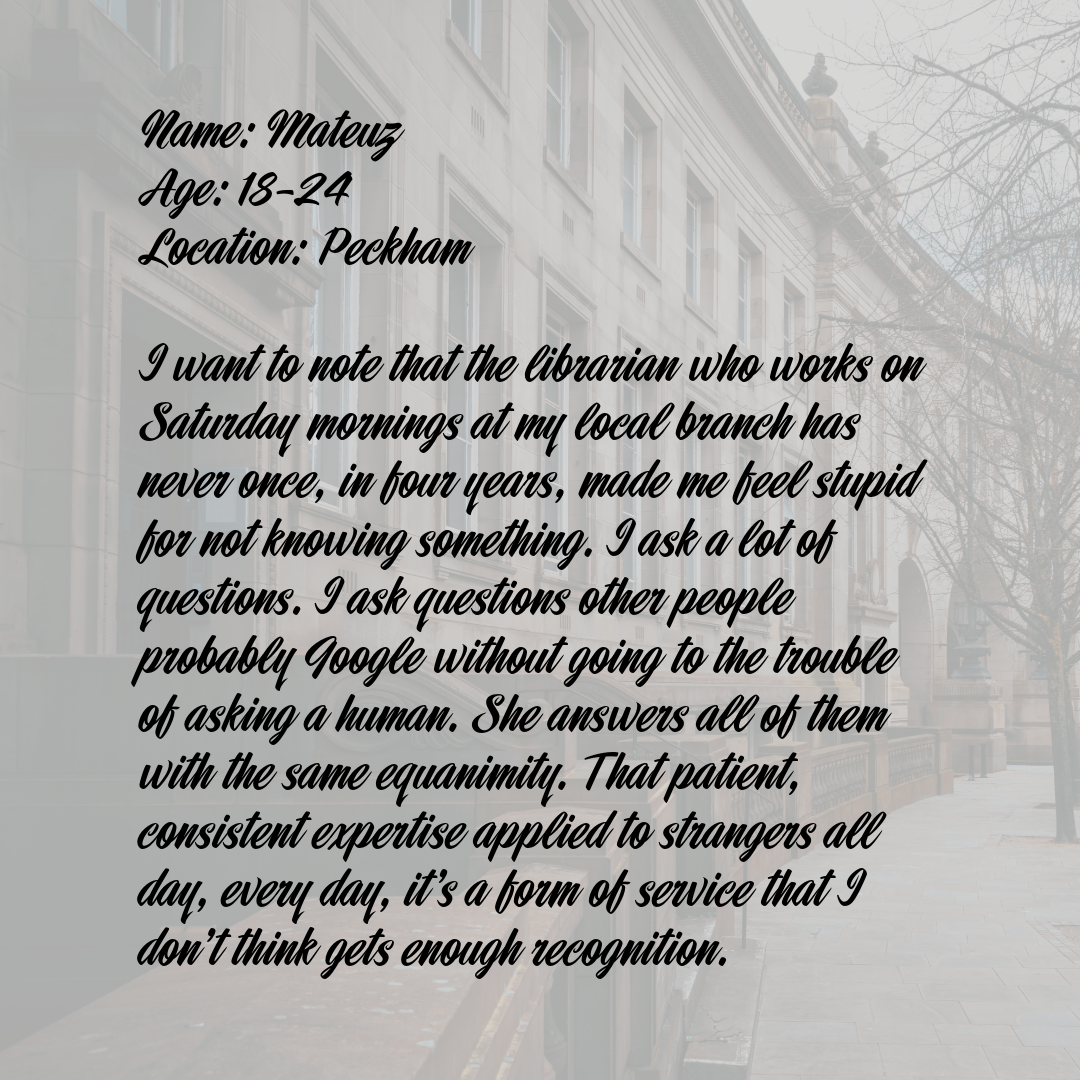
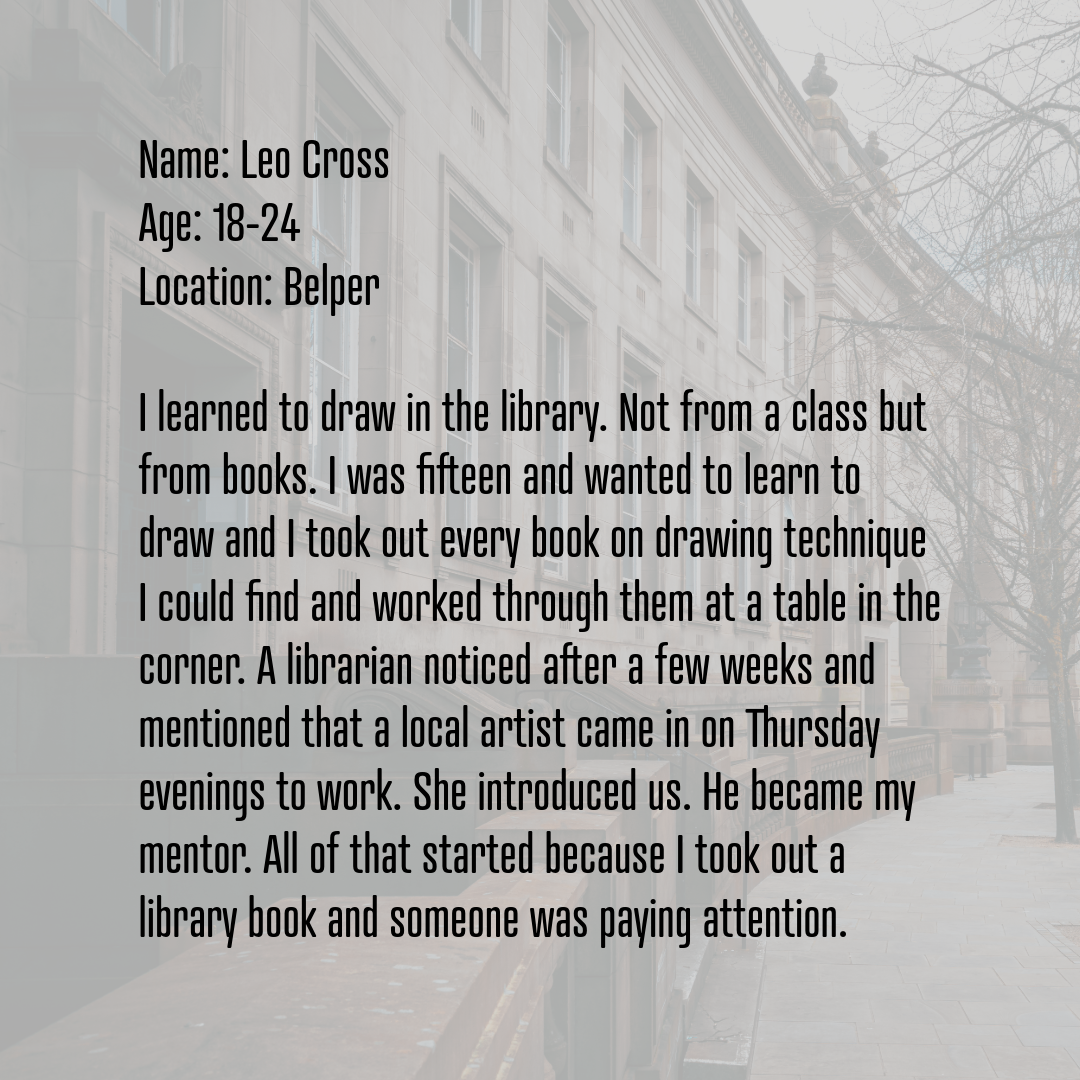
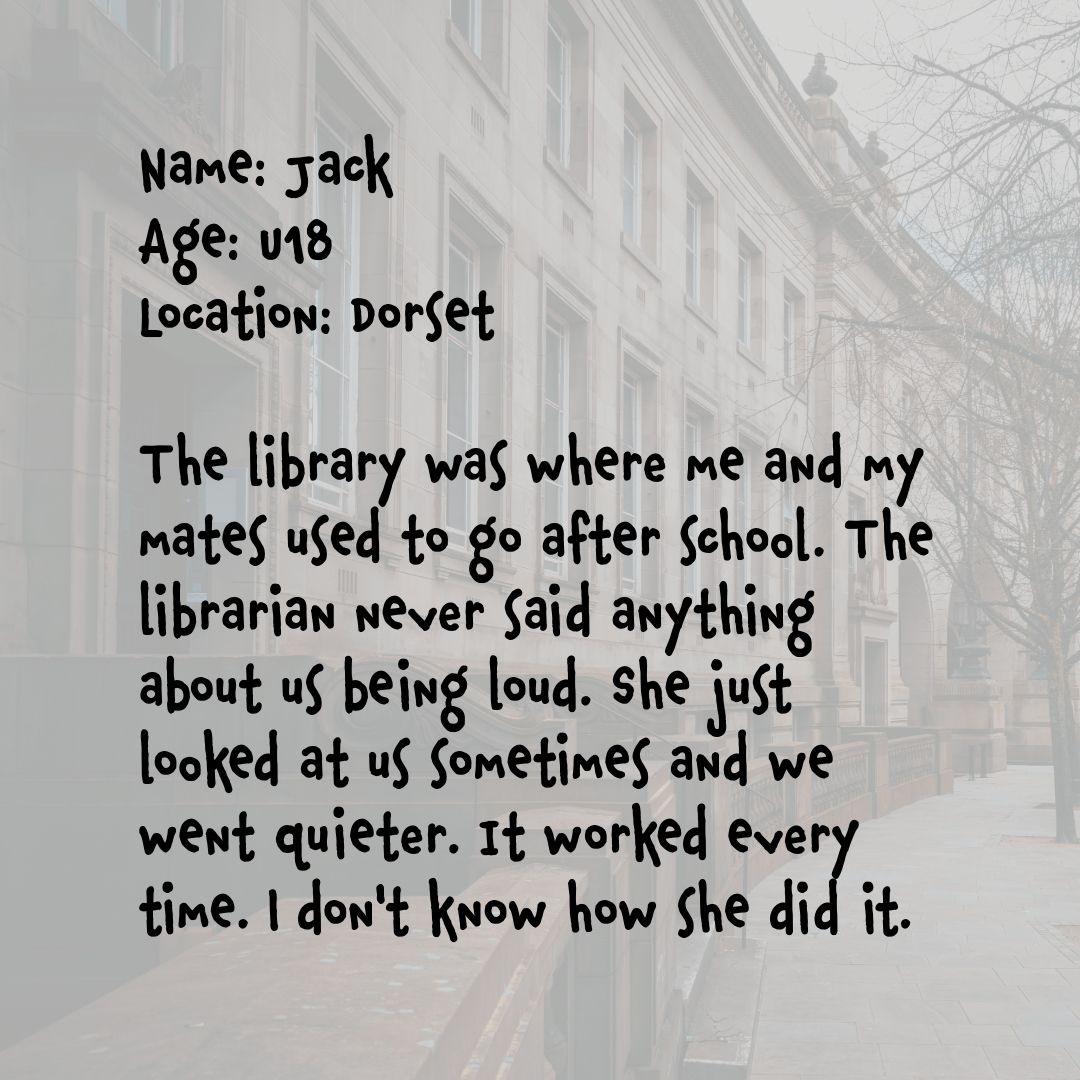
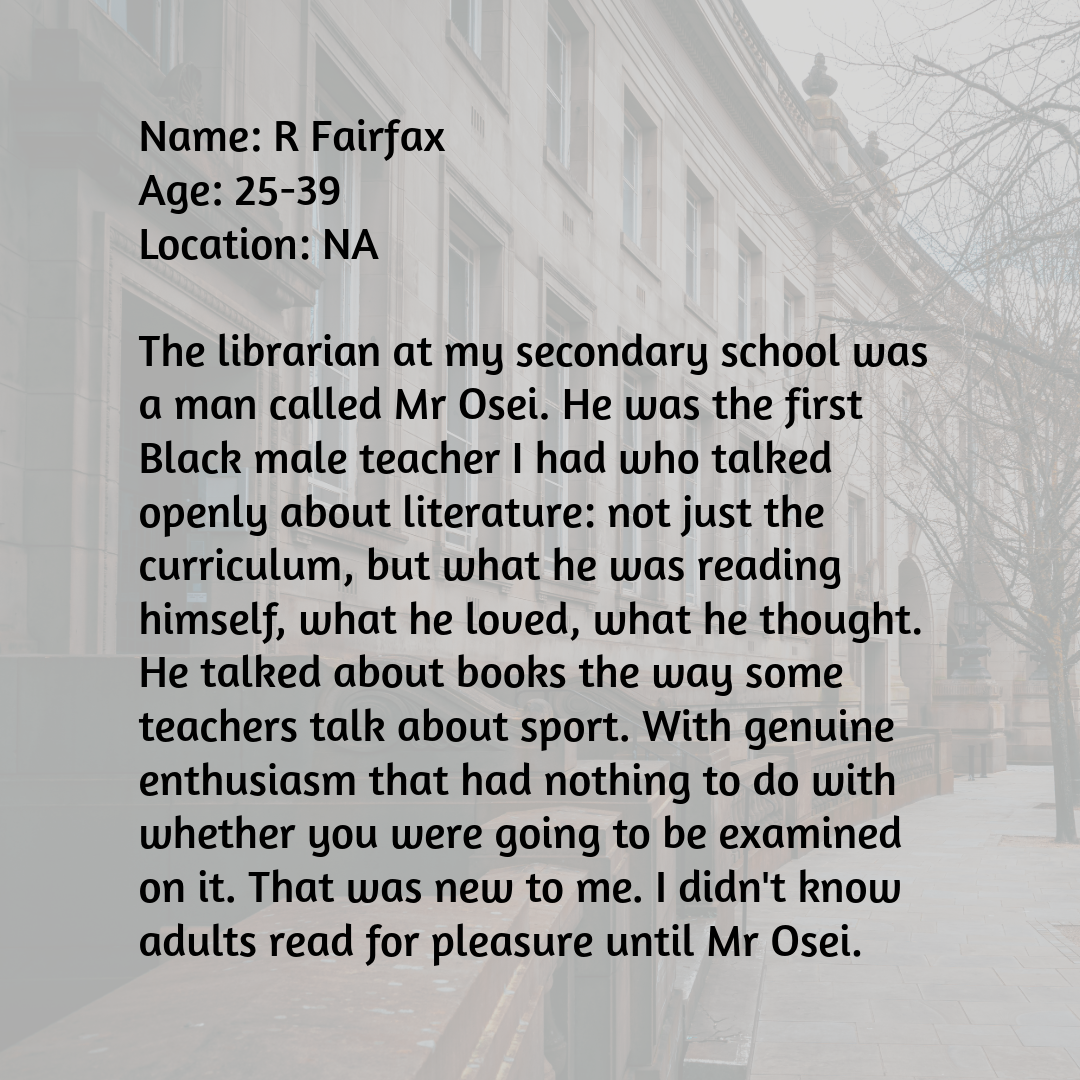
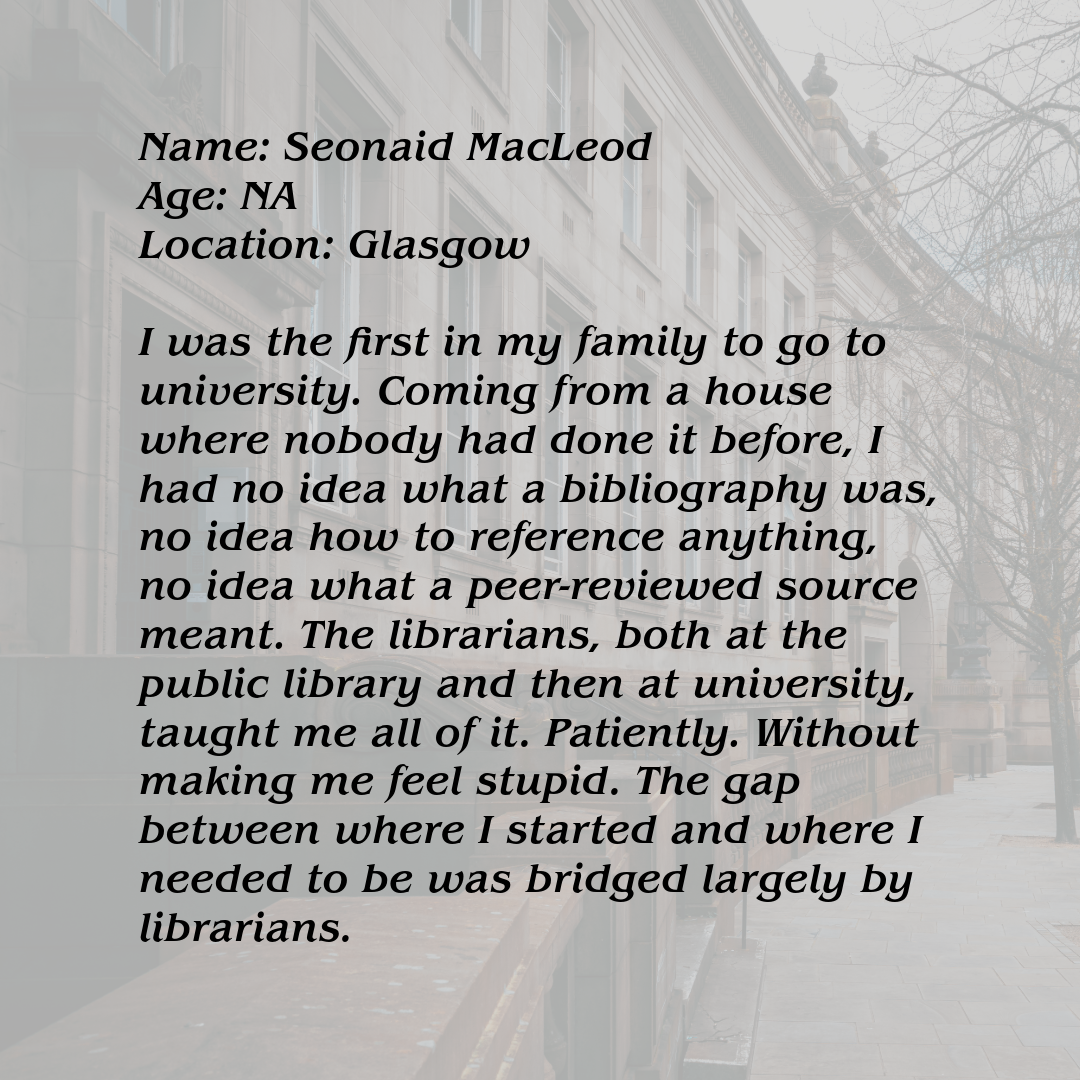
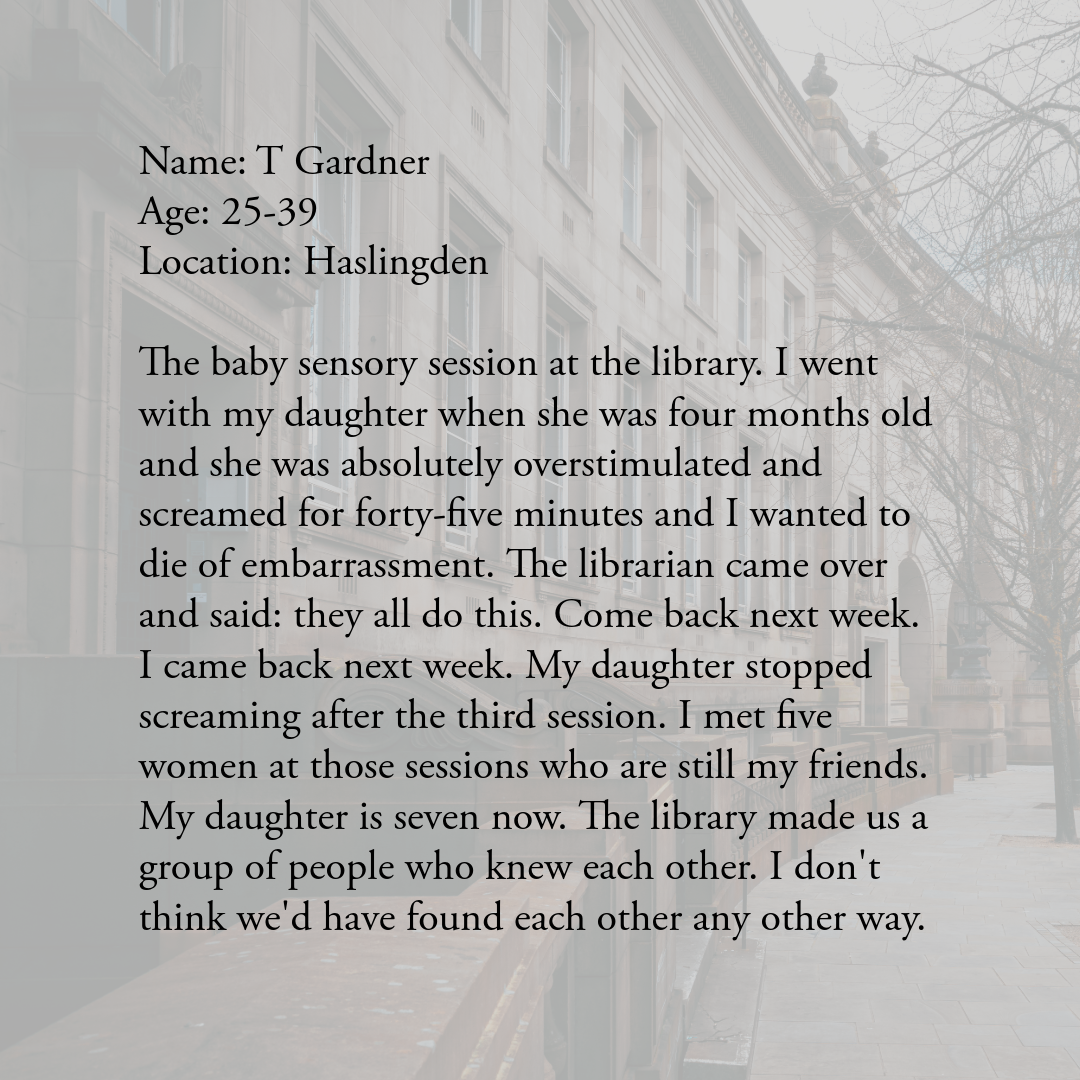
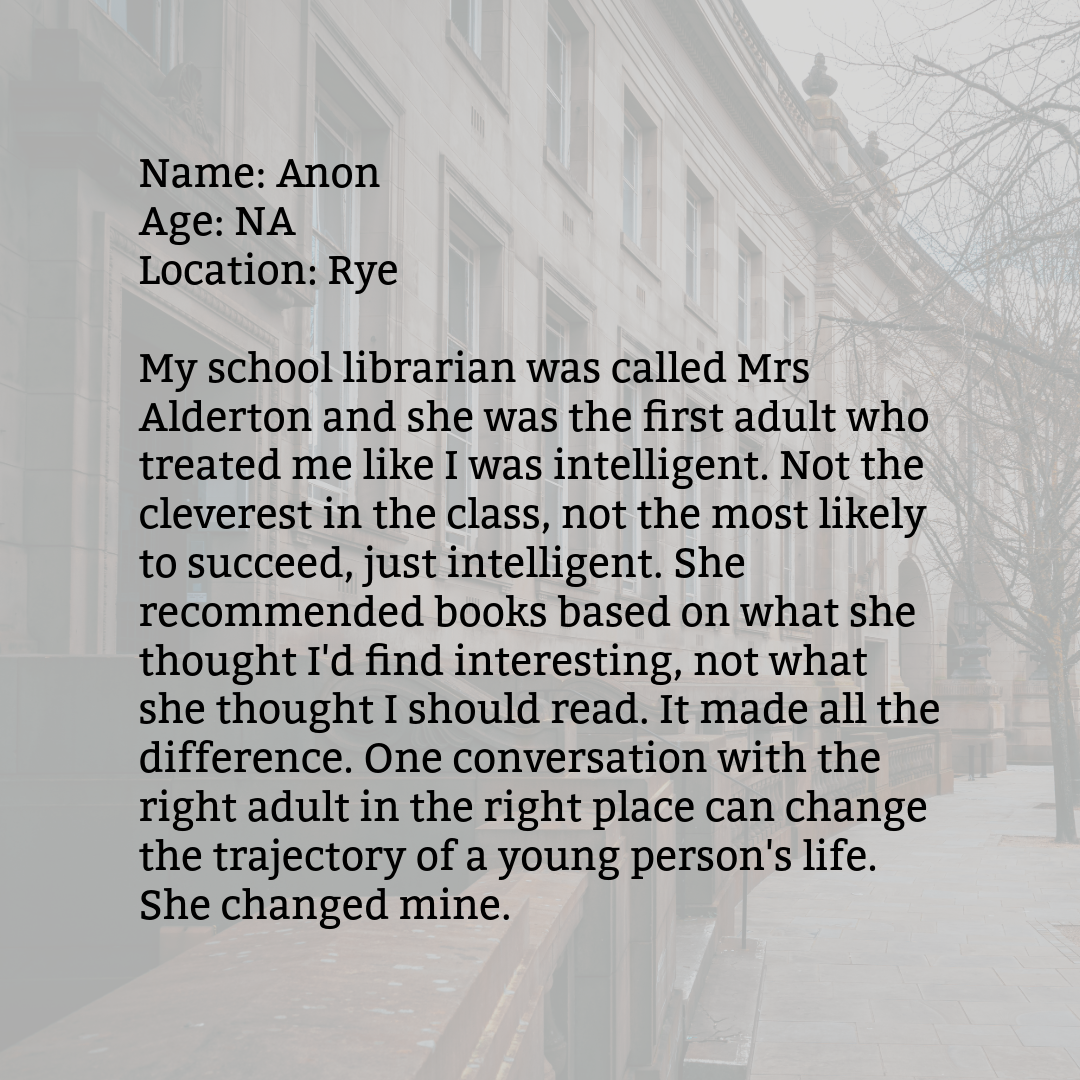
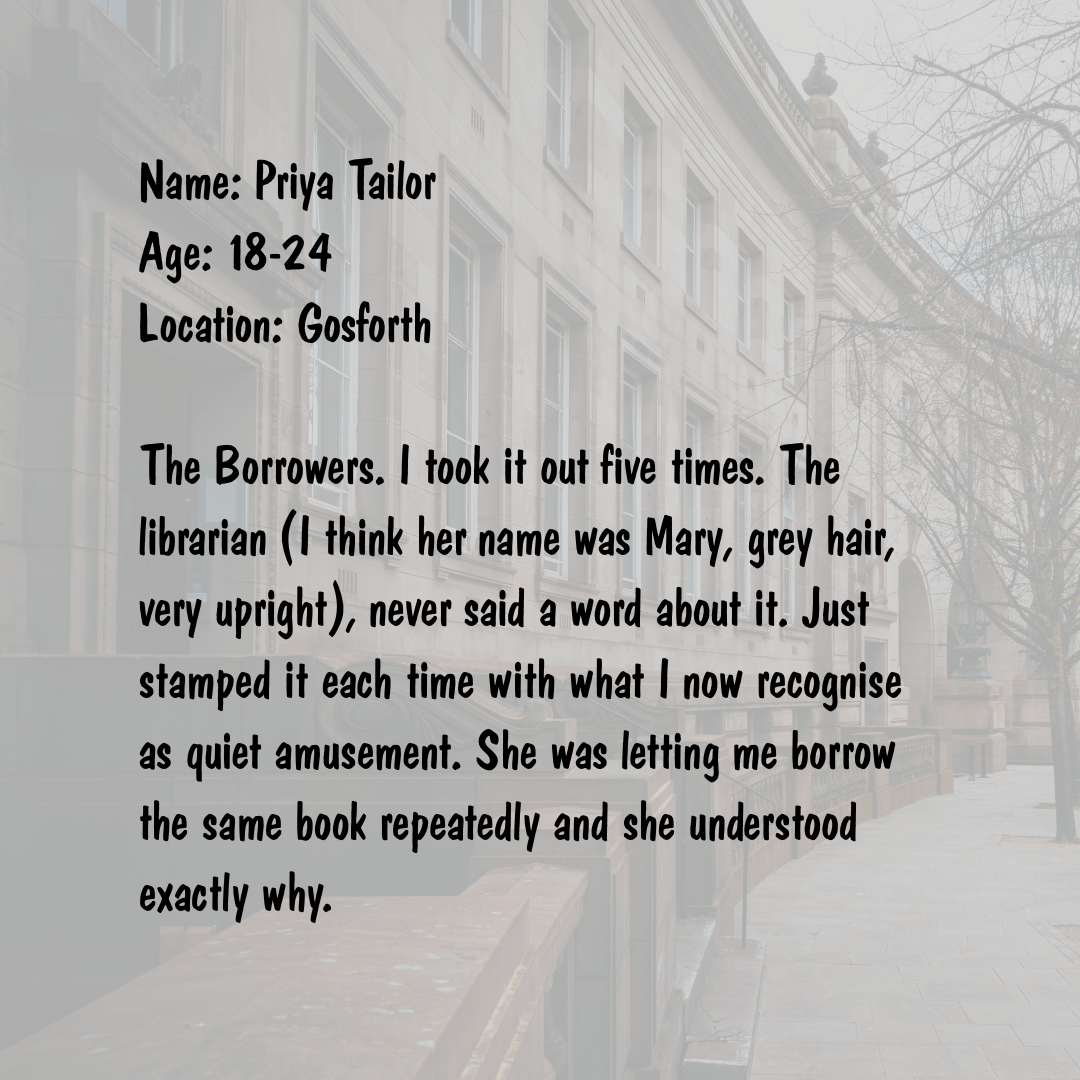
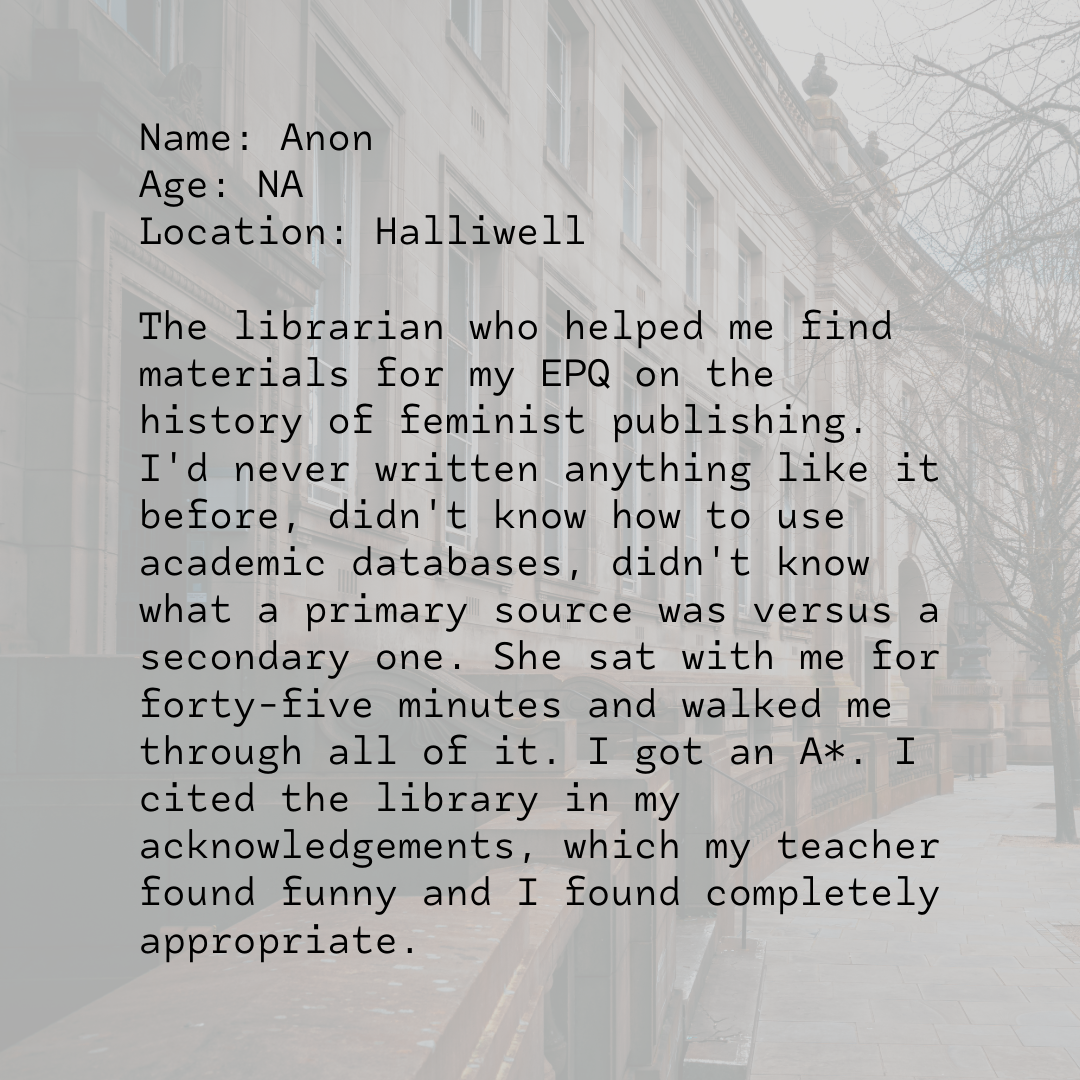
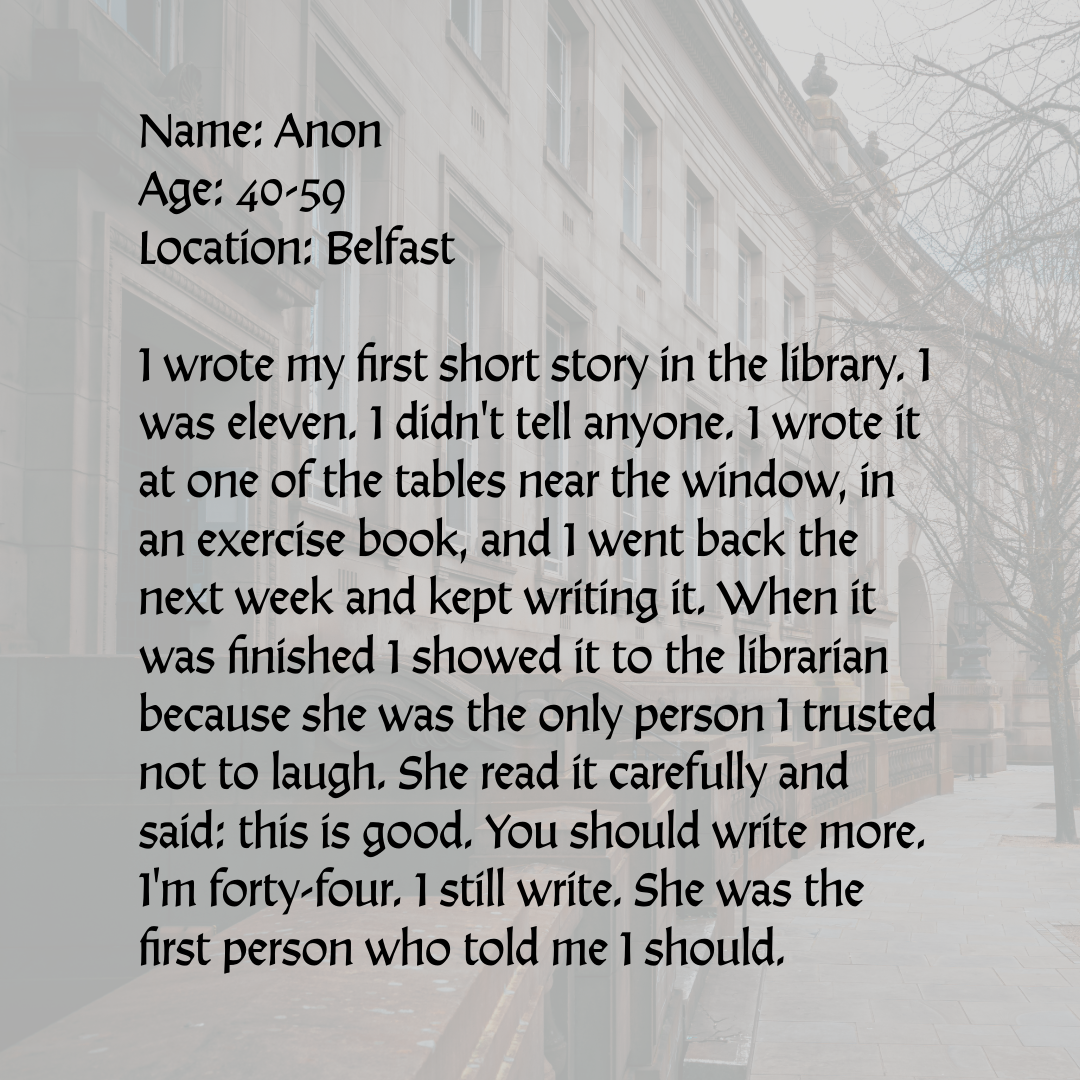
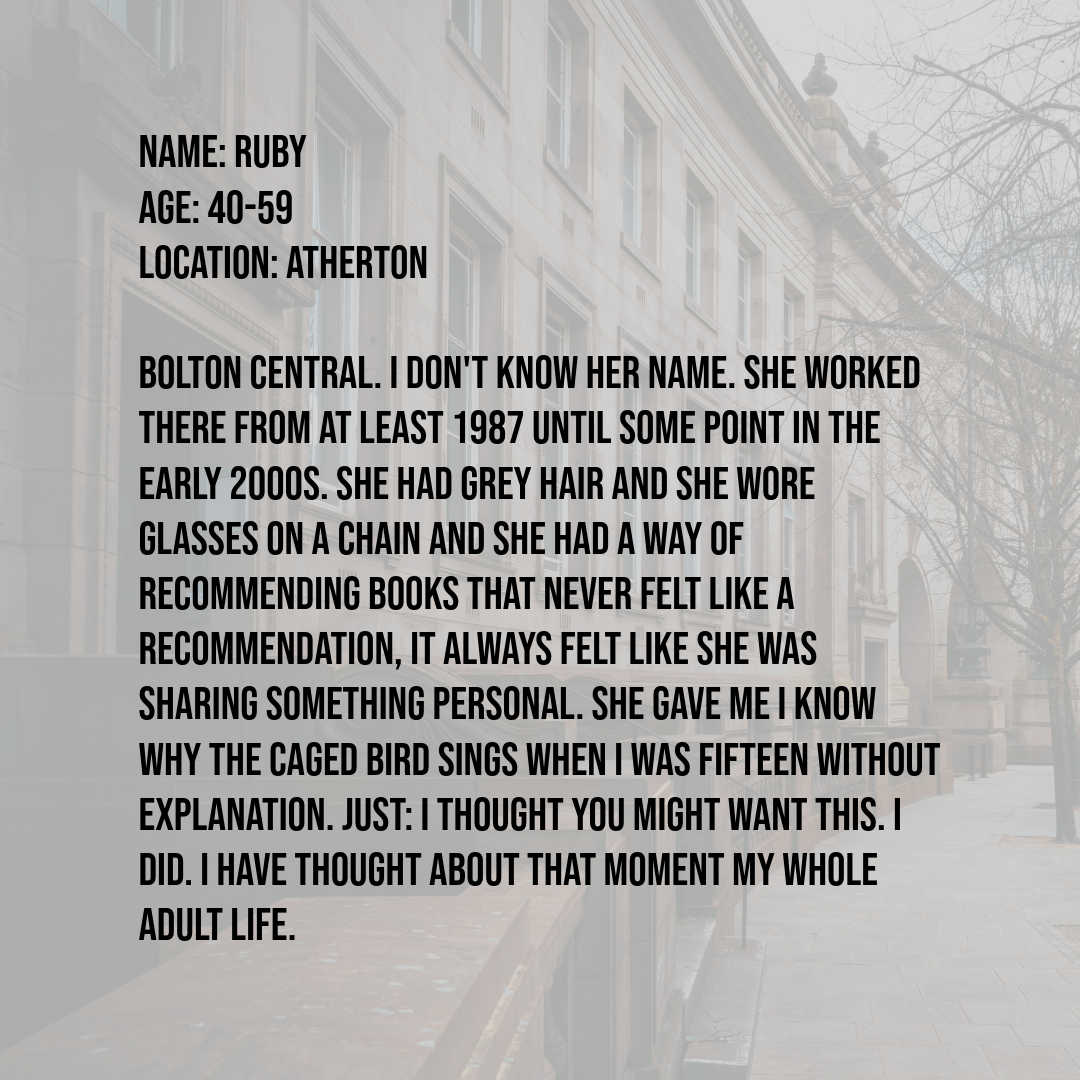
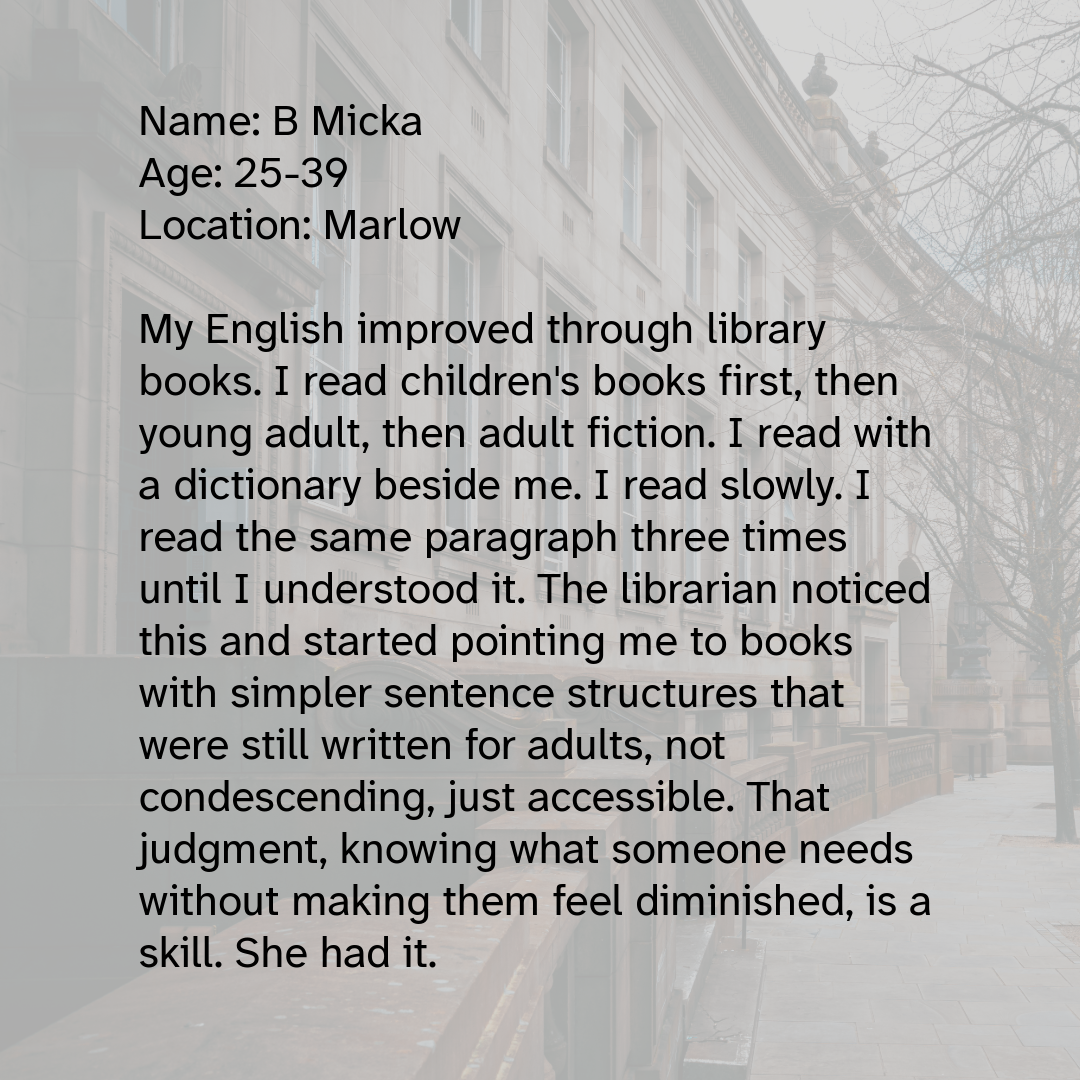
Librarians appear throughout the responses, not as background figures but as people who paid attention. Who remembered names. Who knew what someone needed before they’d quite said it. Several contributors described specific moments, a personal statement written together, a small card slid silently across a counter, a cup of tea on a very bad afternoon, that had stayed with them for decades.
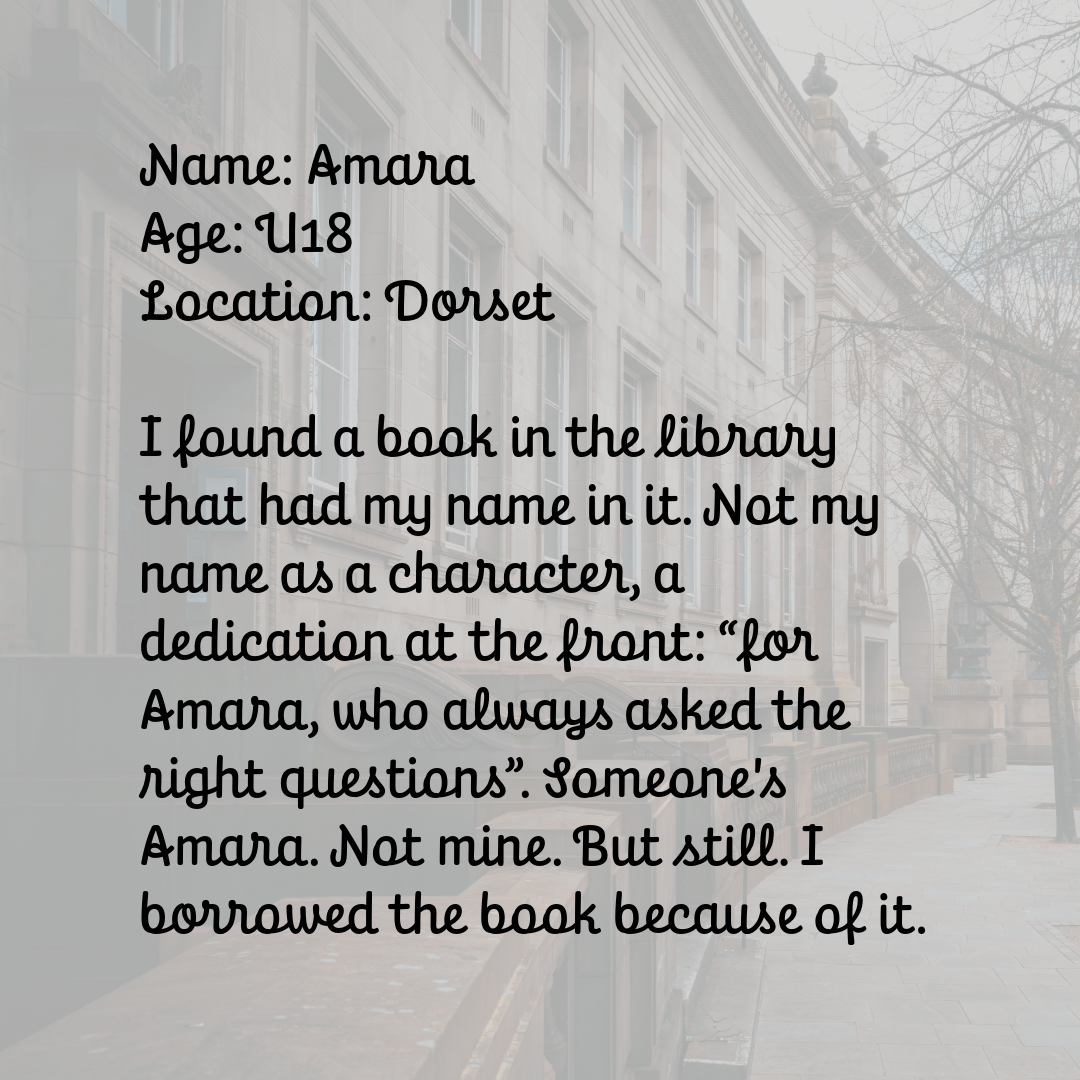
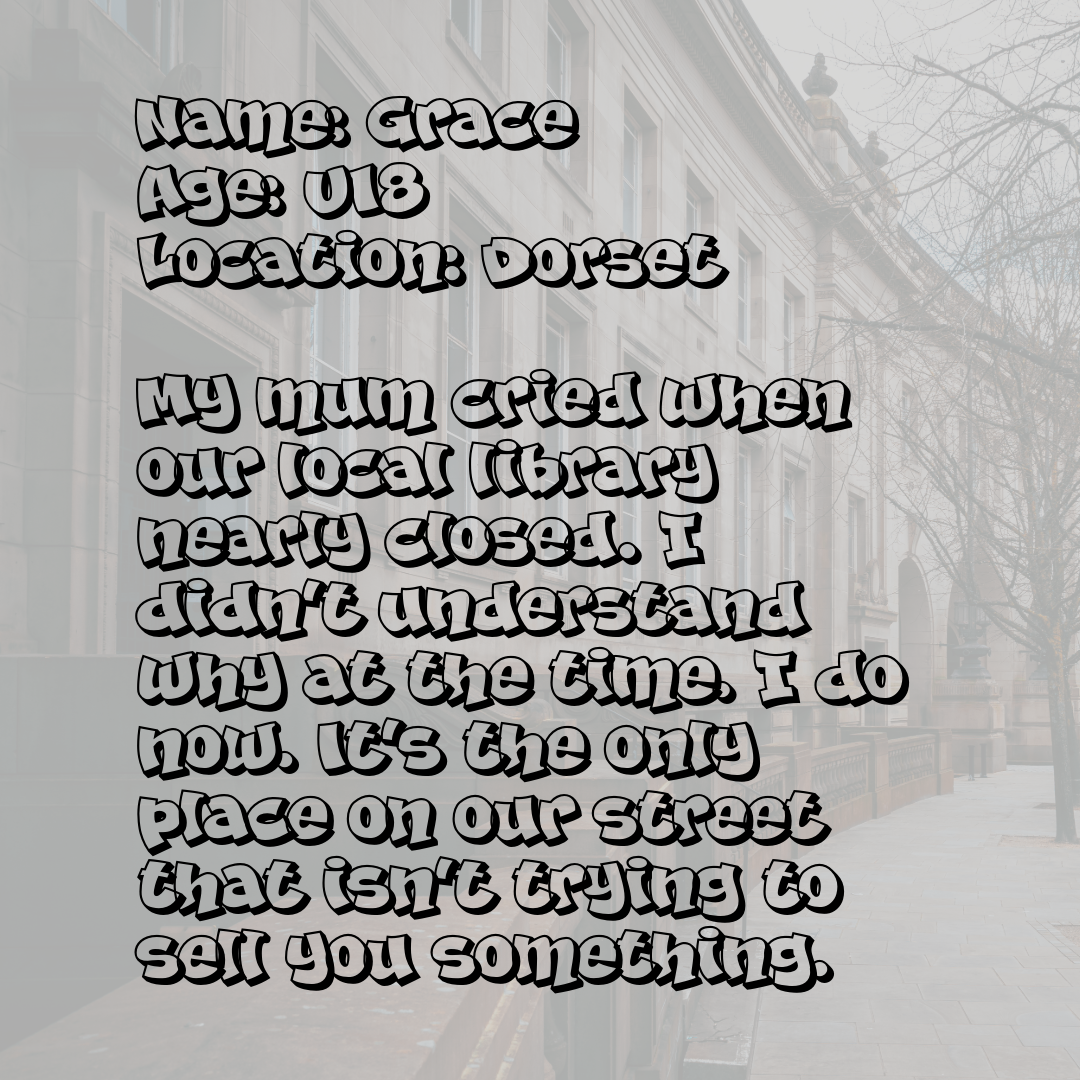
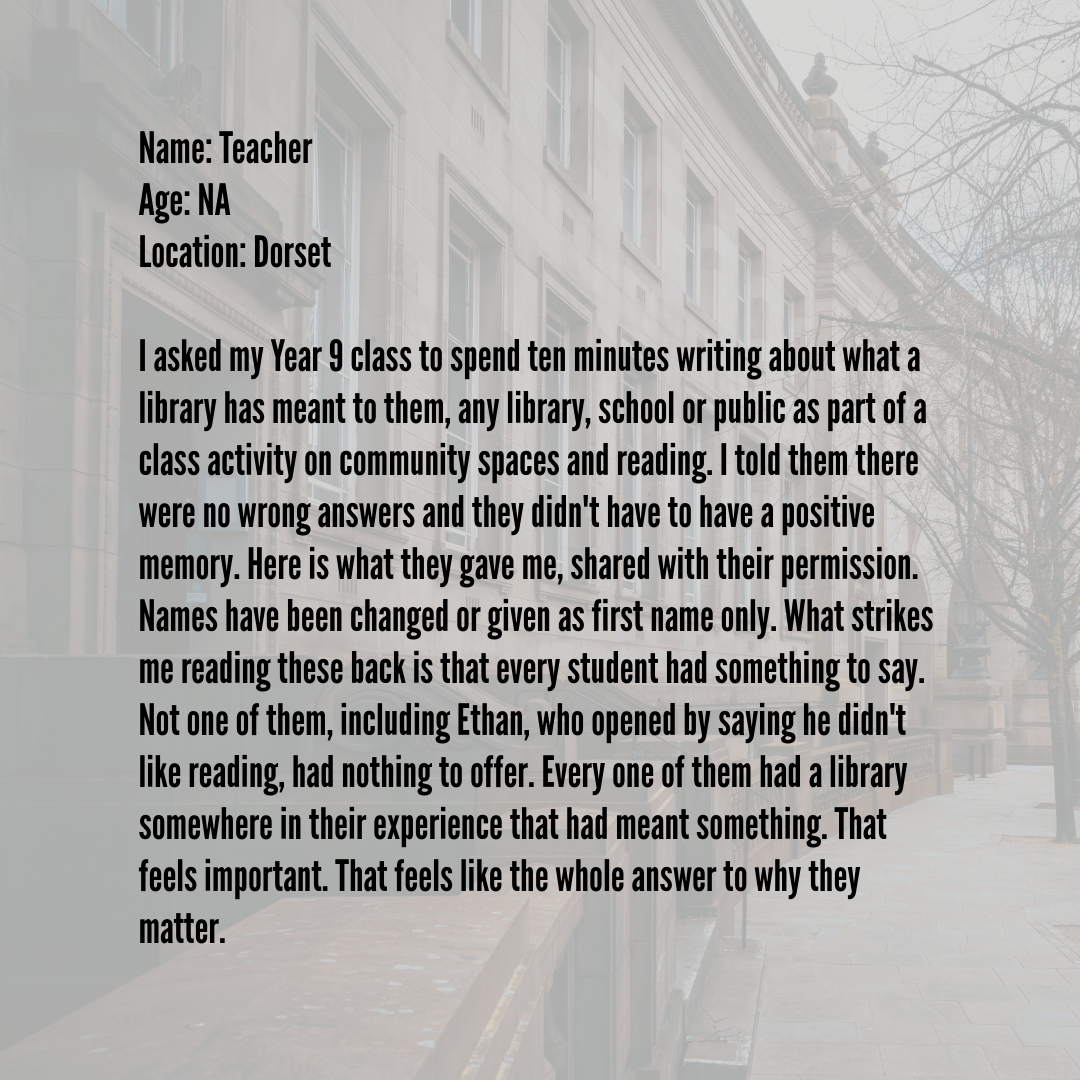
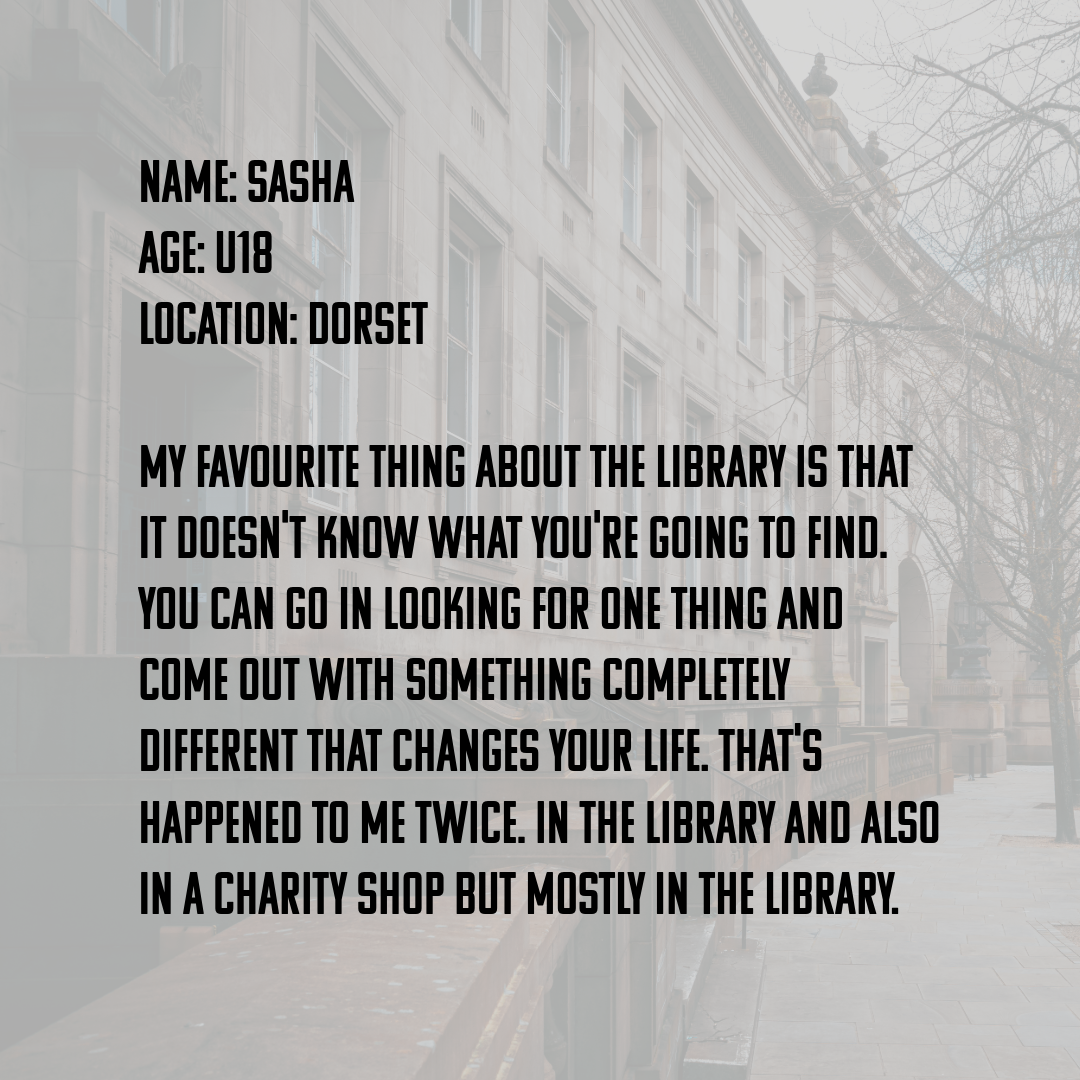
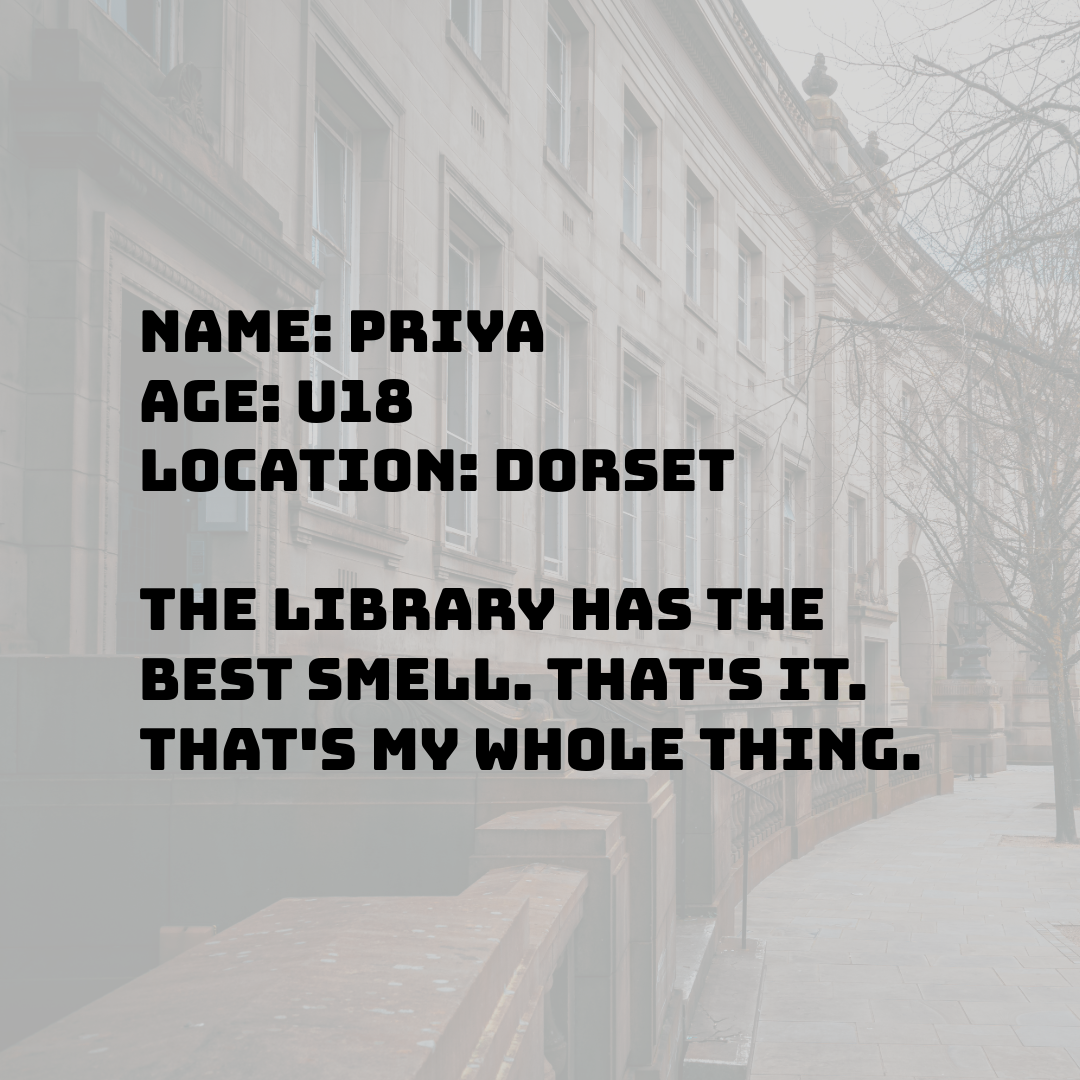
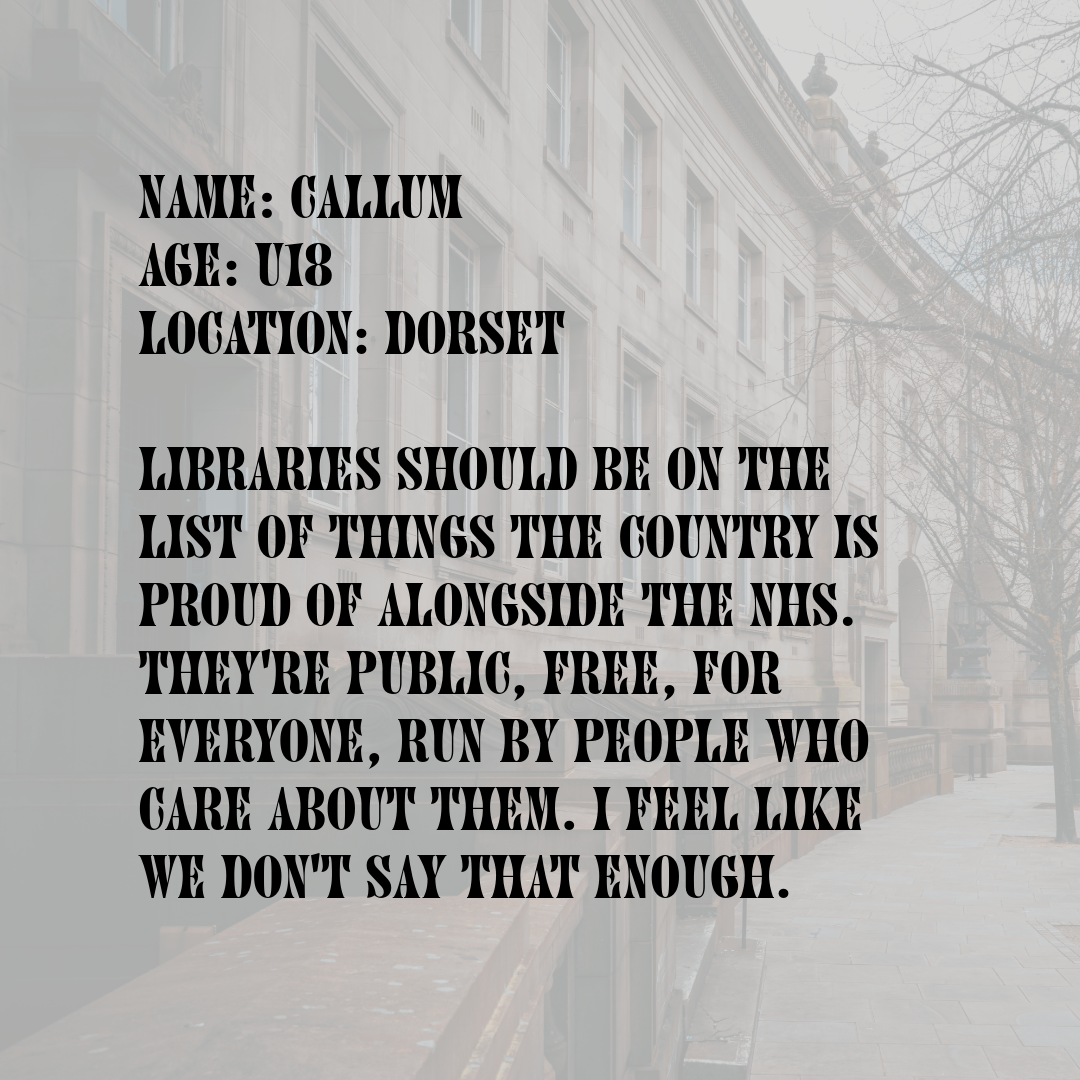
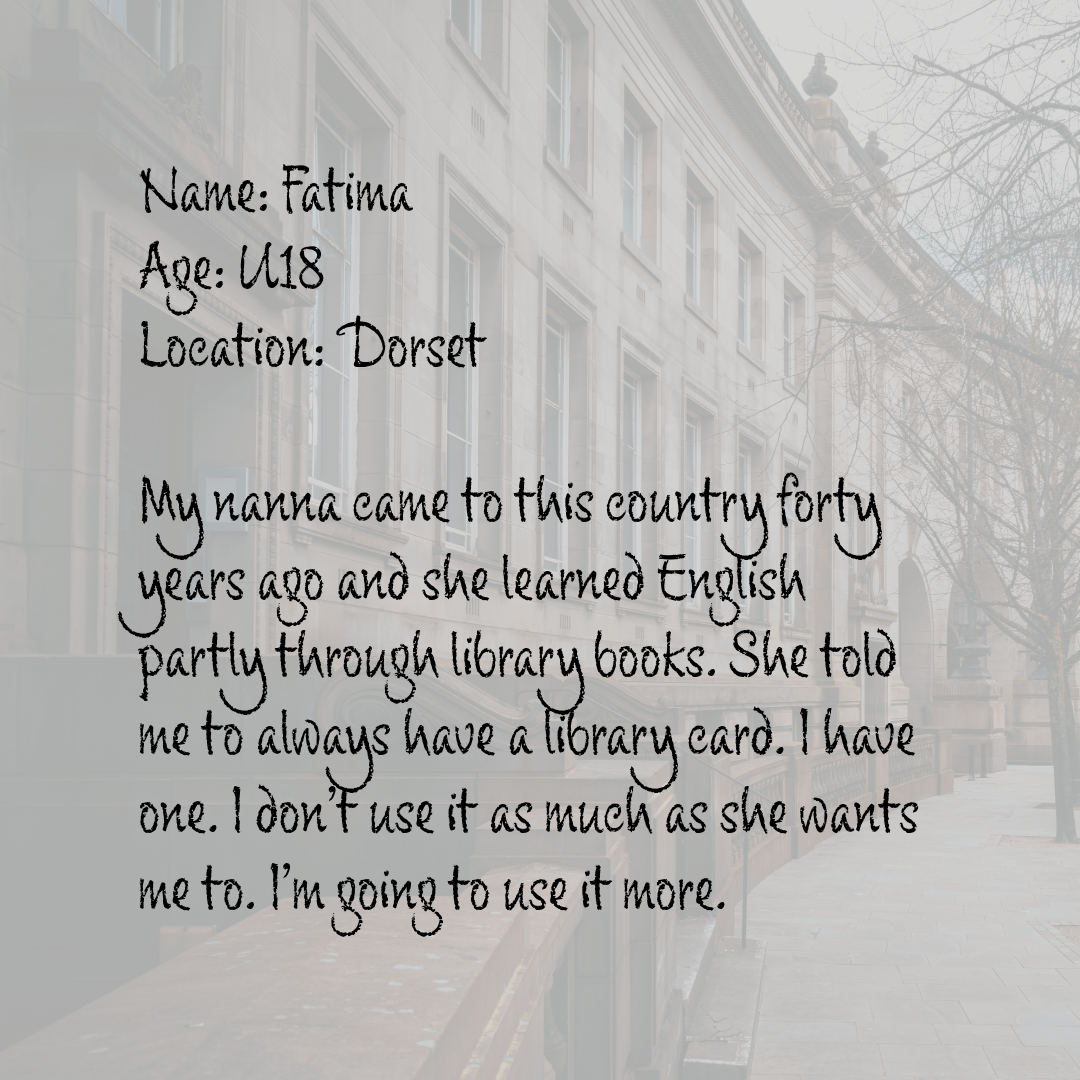
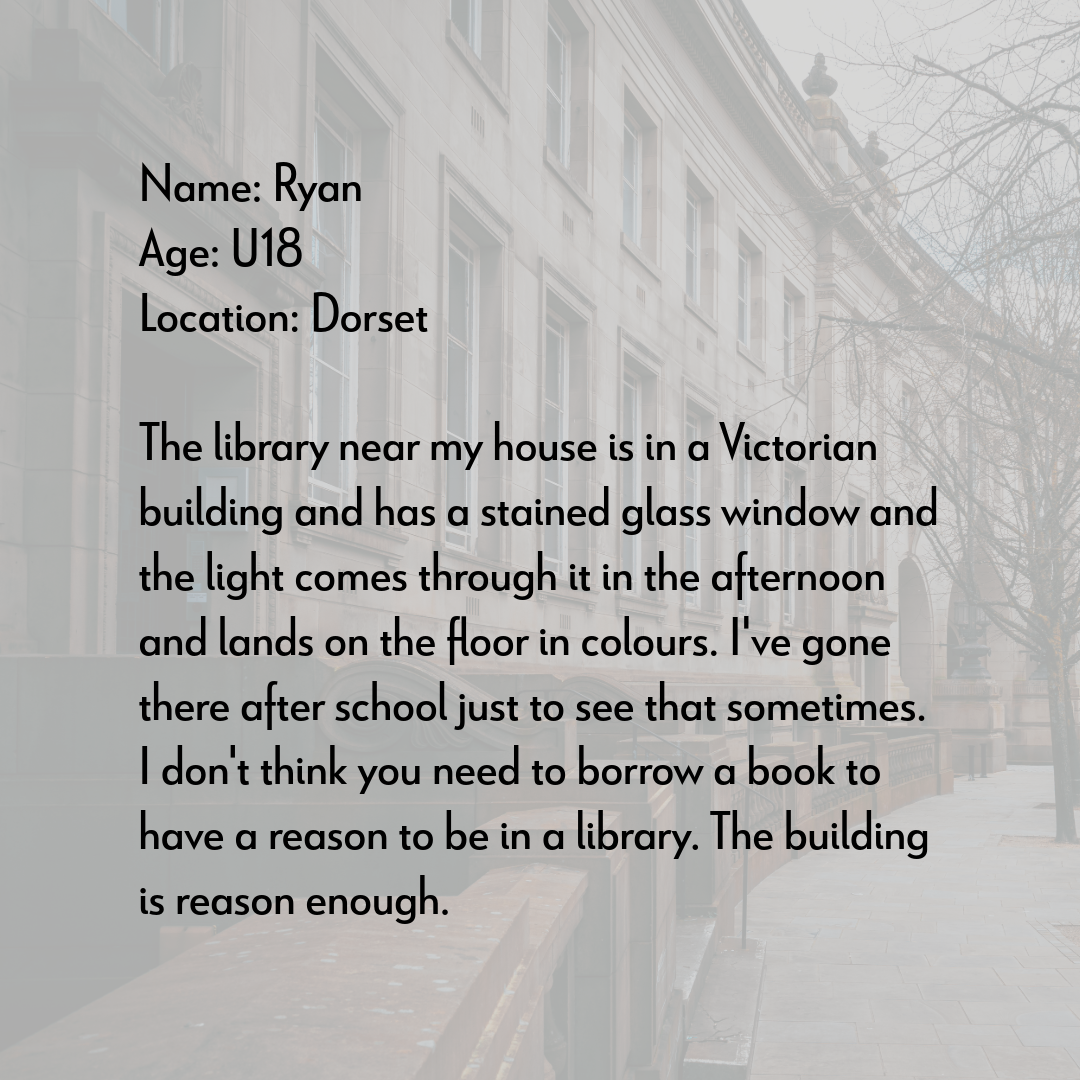
A Year 9 class from Dorset submitted responses as a group. Their teacher wrote afterwards:
‘What strikes me is that every student had something to say. Every one of them had a library somewhere in their experience that had meant something. That feels like the whole answer to why they matter.’
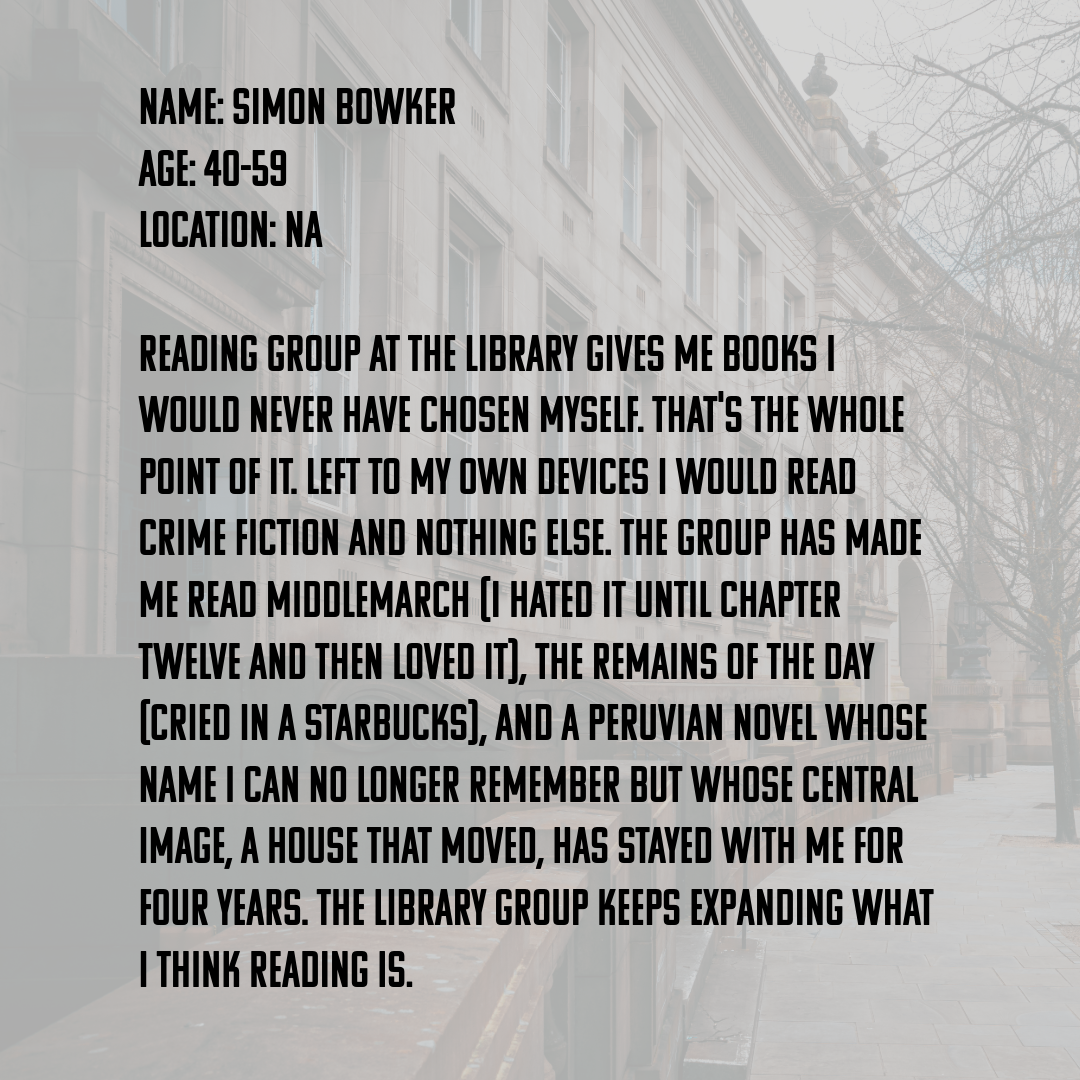
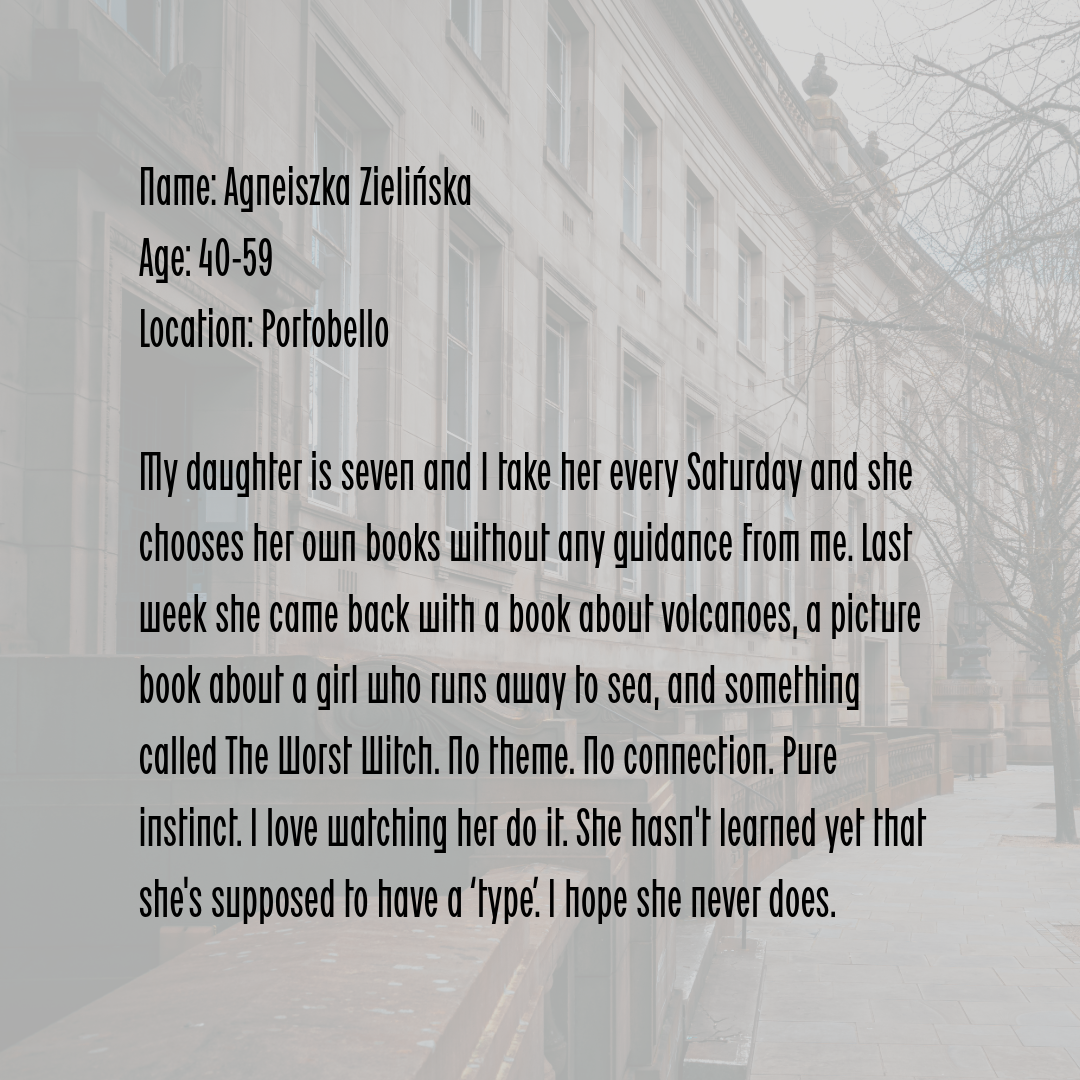
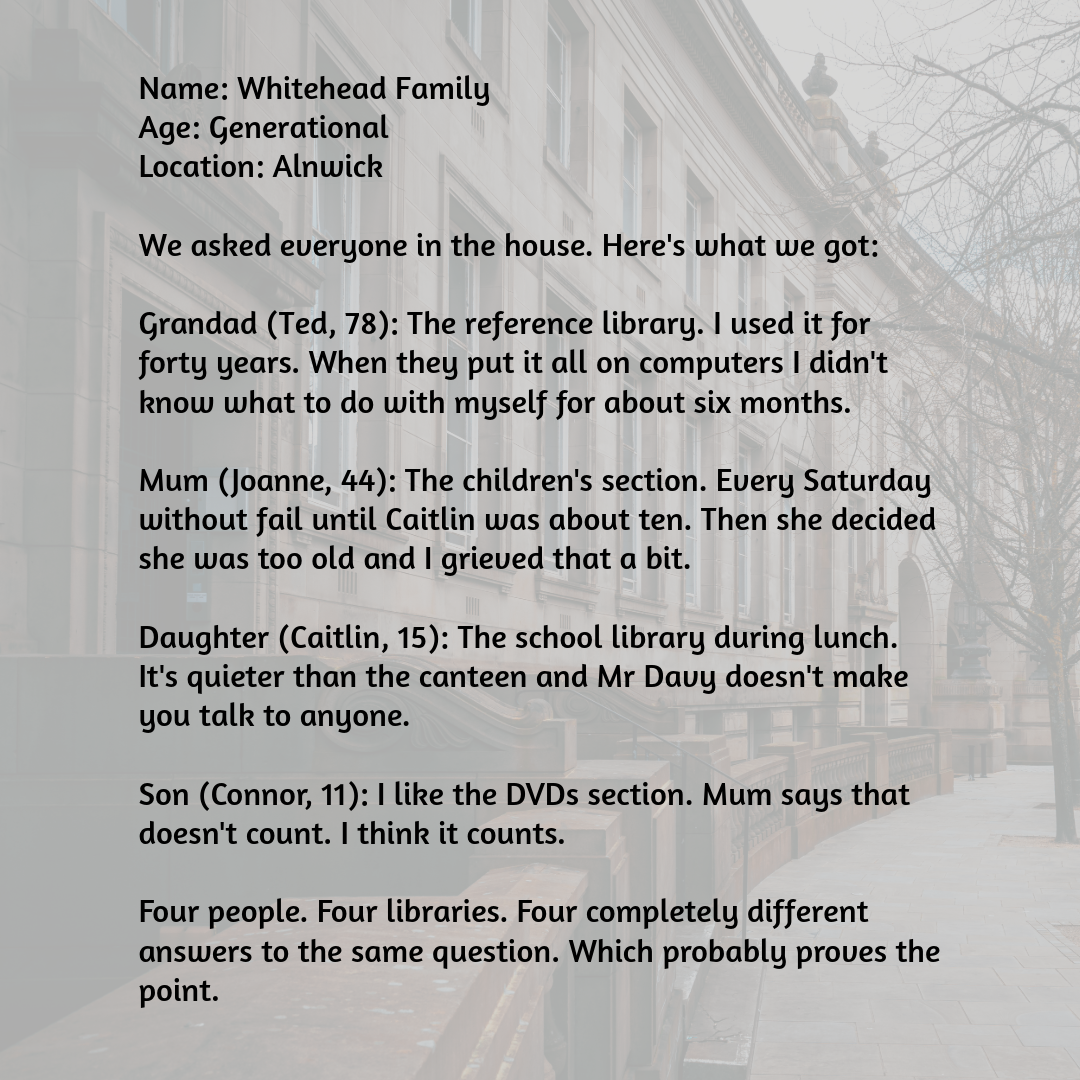
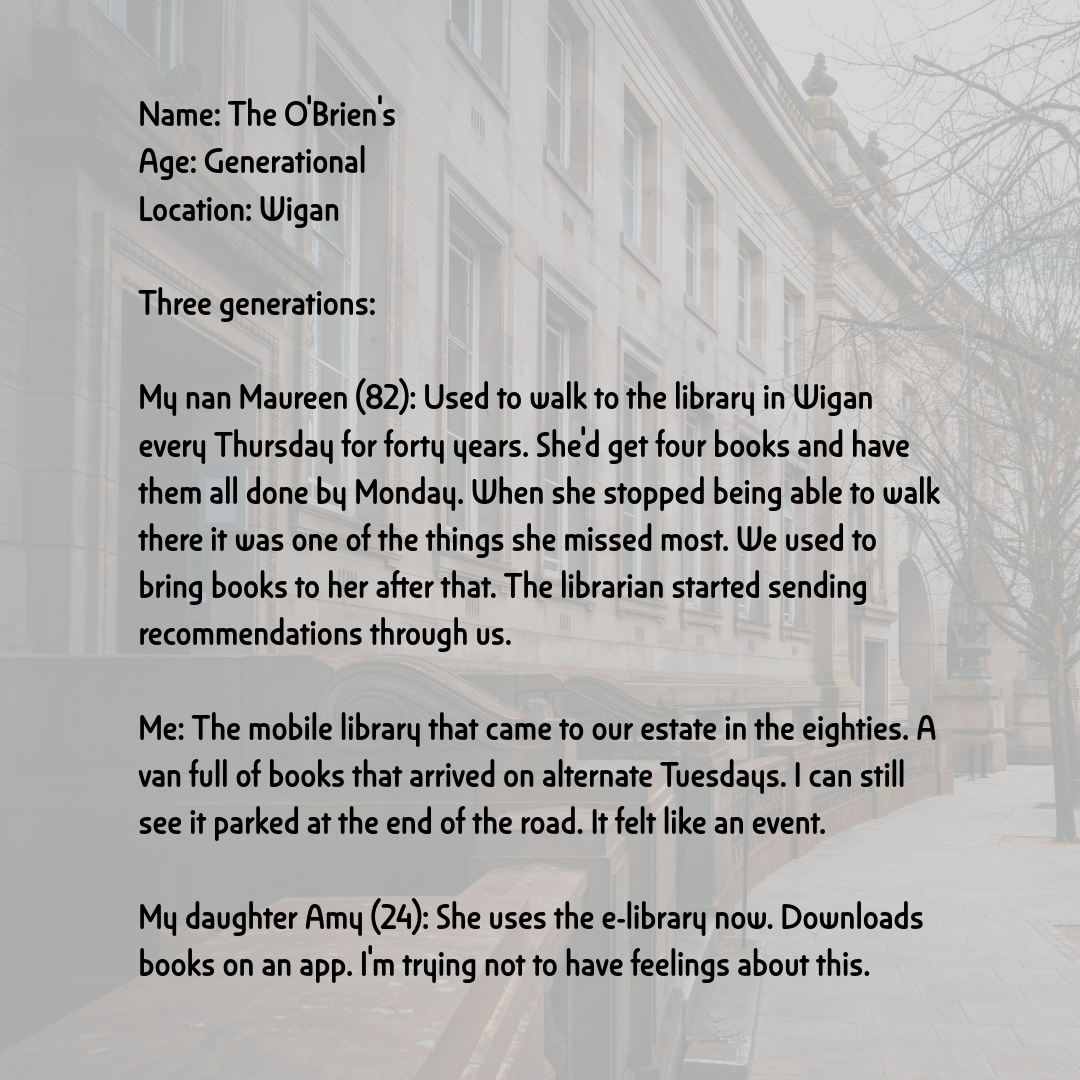
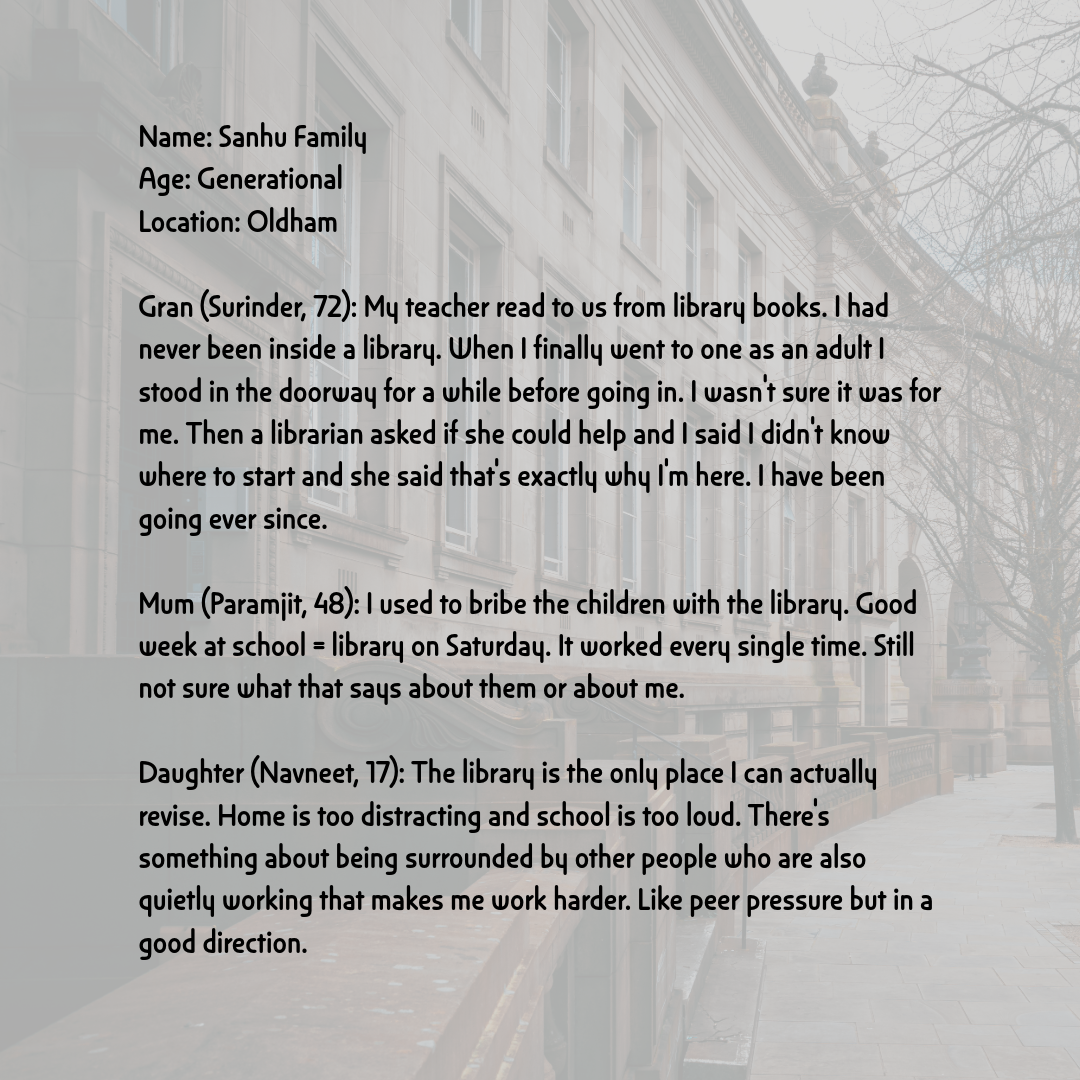
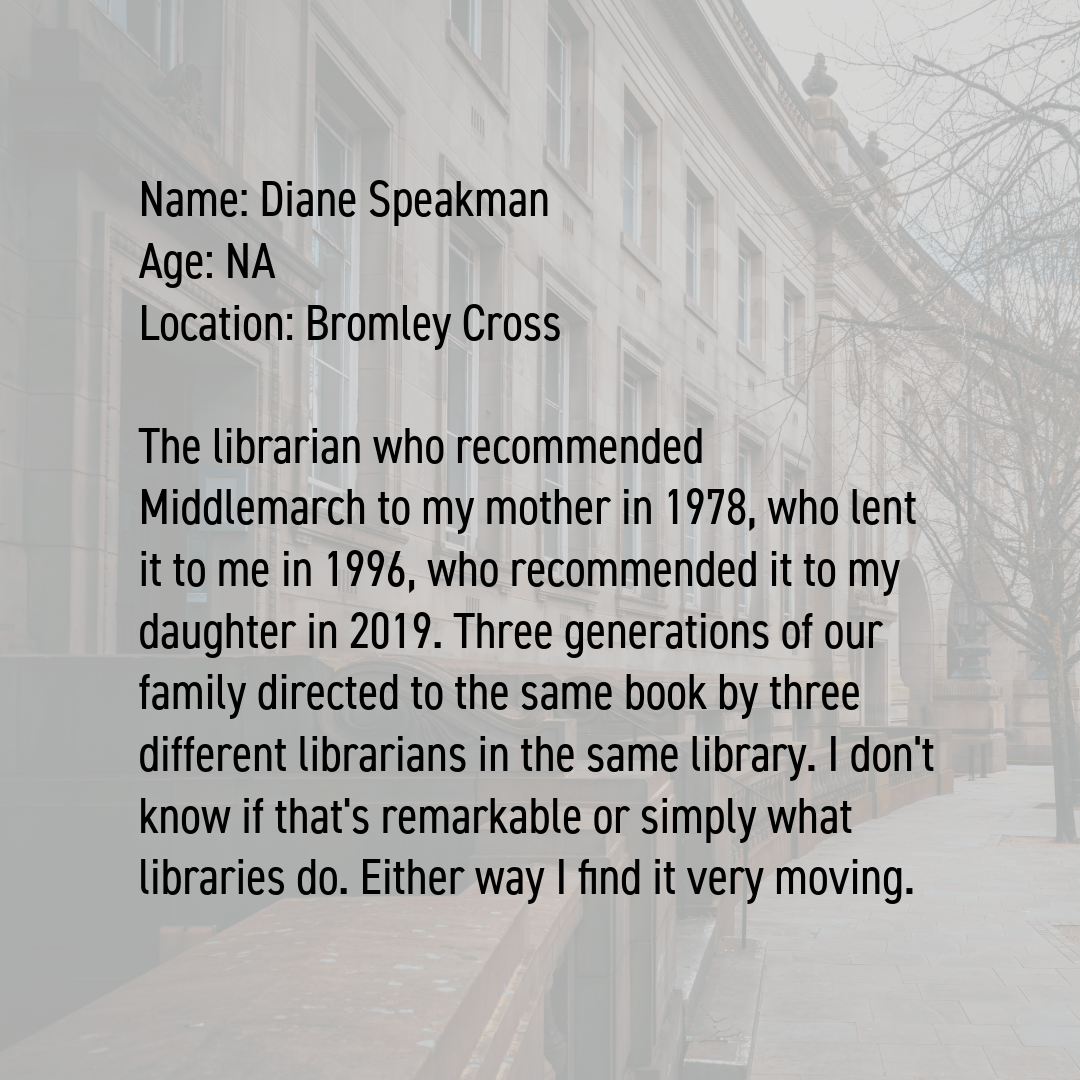
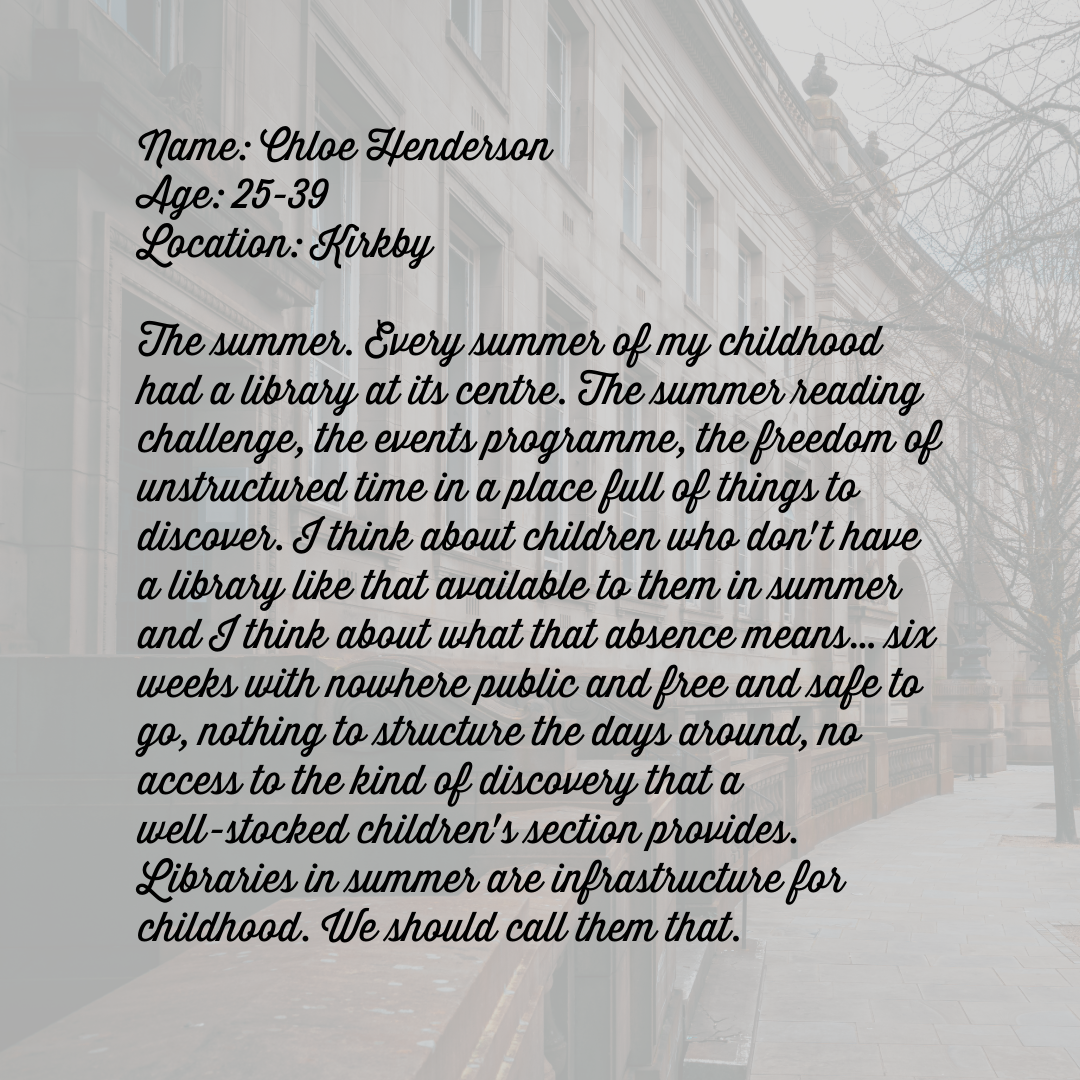
The multi-generational submissions were some of the richest we’ve received across any month. Whole families writing about what the library had meant across different lifetimes. One response described three generations of the same family being directed to the same book, Middlemarch, by three different librarians, in the same library, over four decades.
Why this matters:
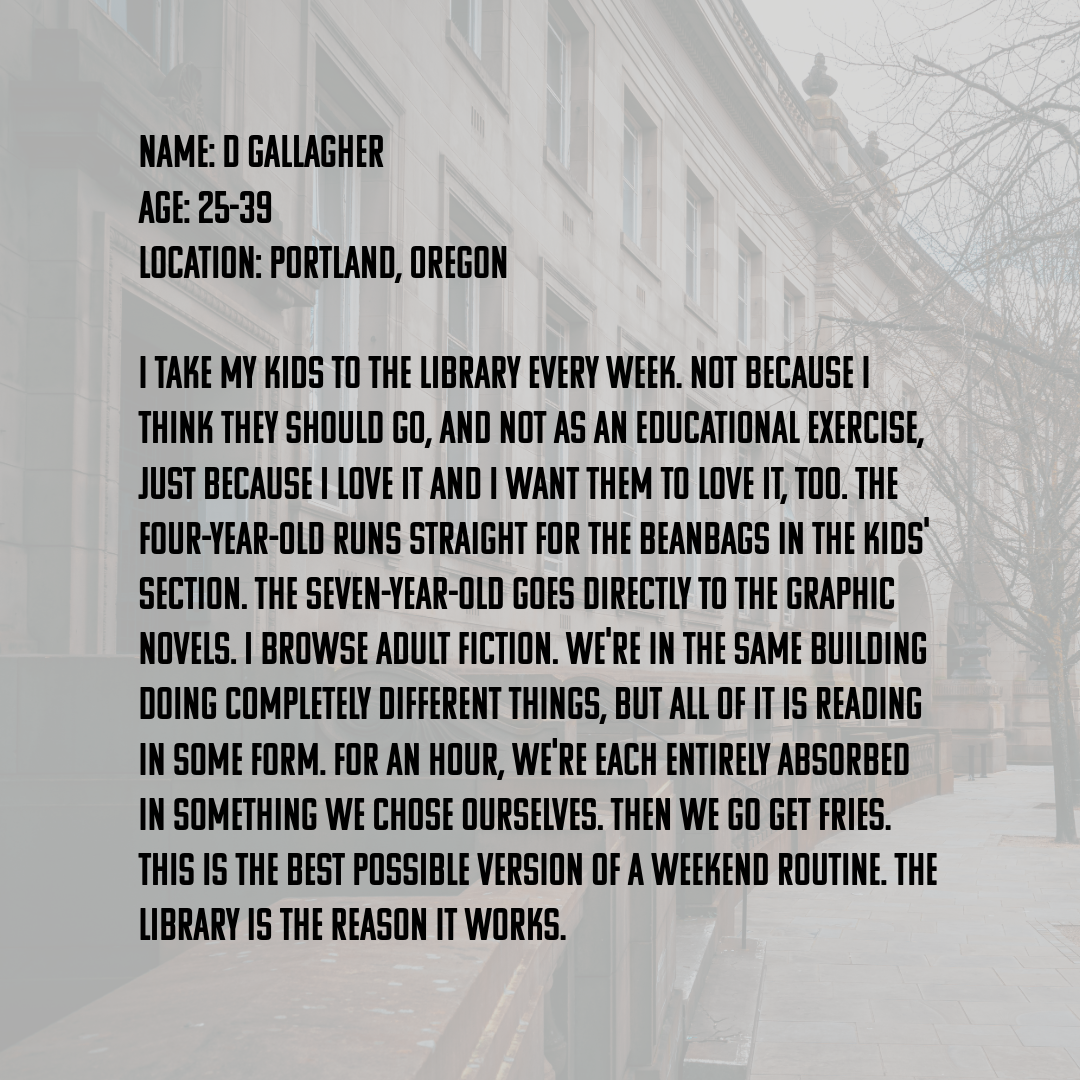
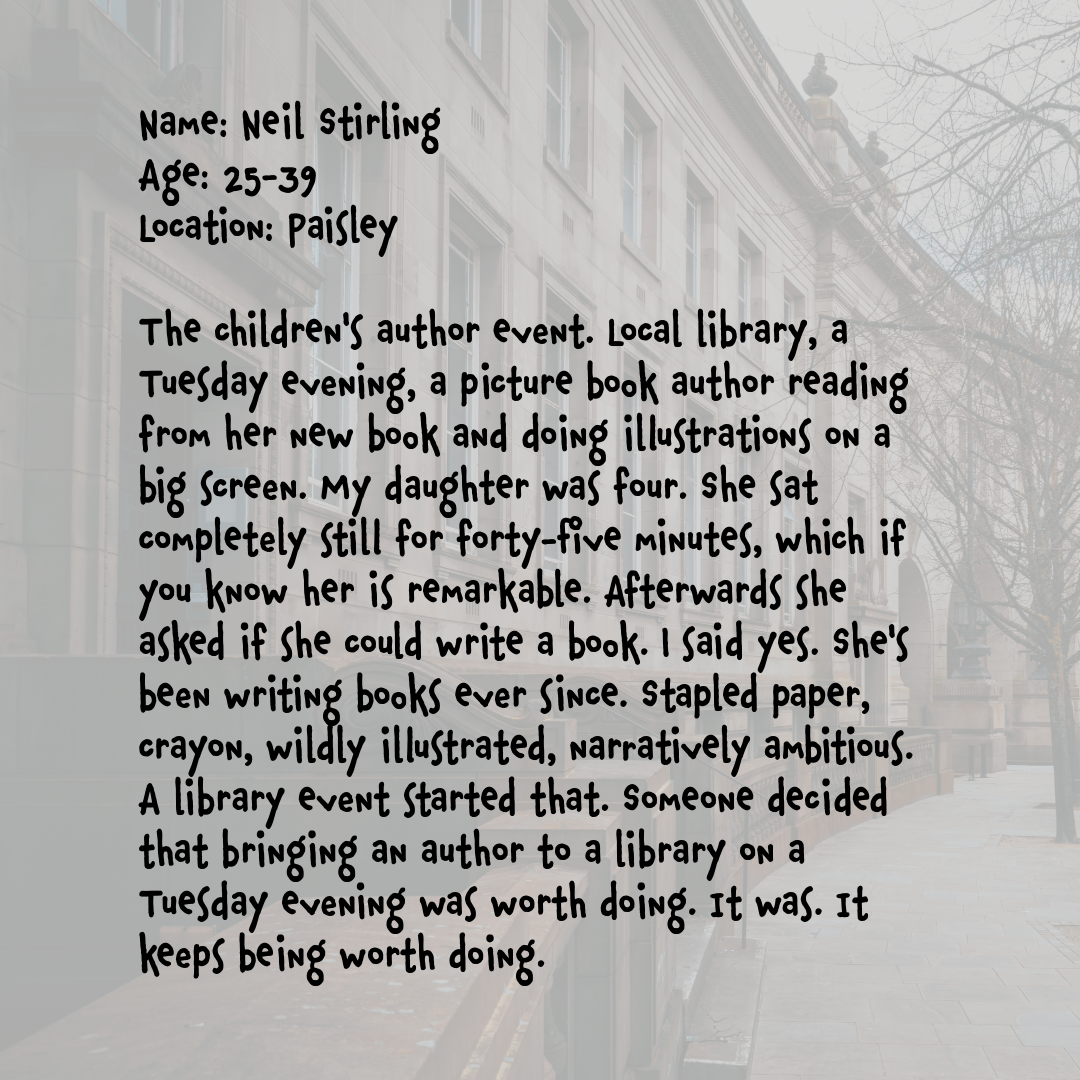
Conversations about libraries often focus on what they provide: books, internet access, study space, children’s programmes. Those things are real and important.
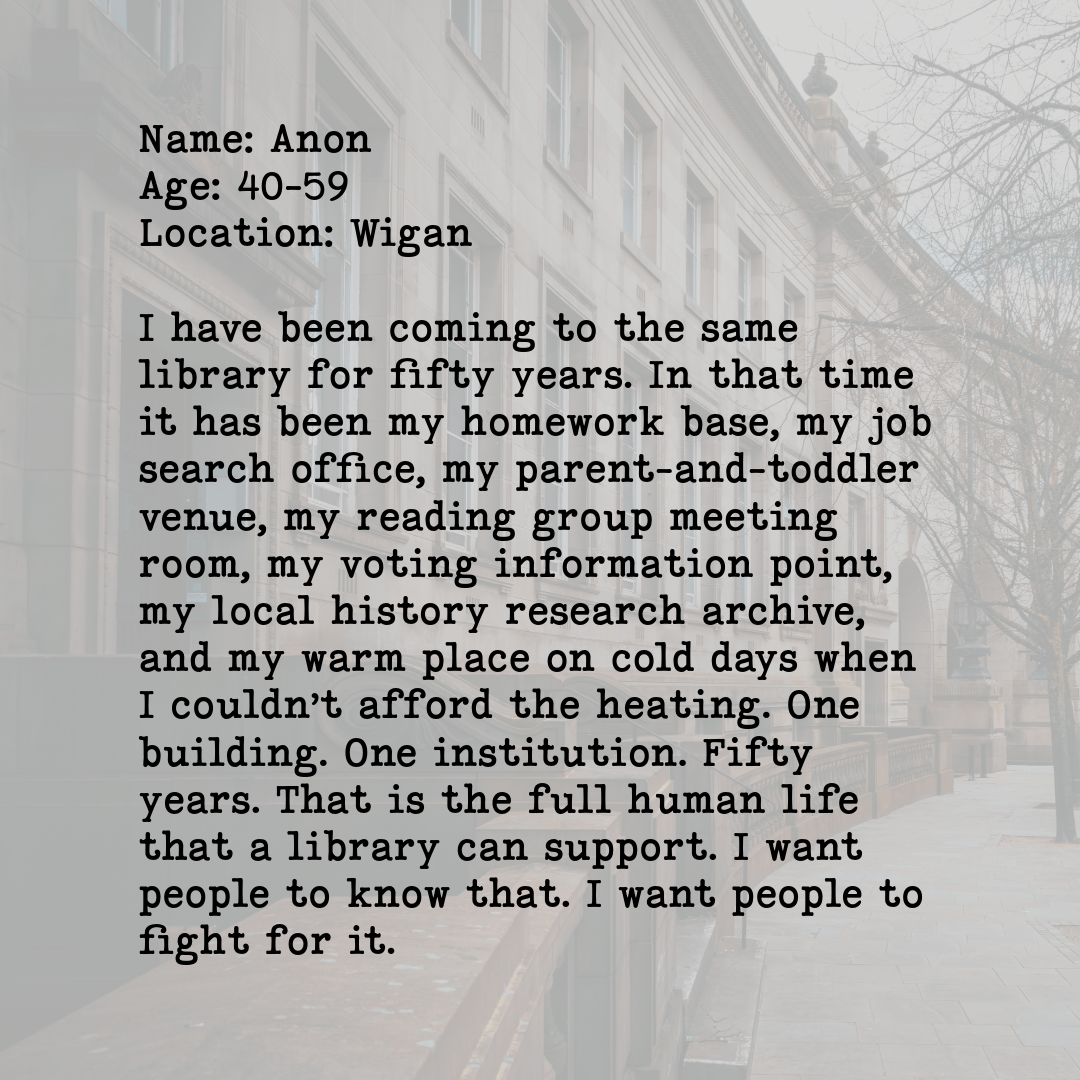
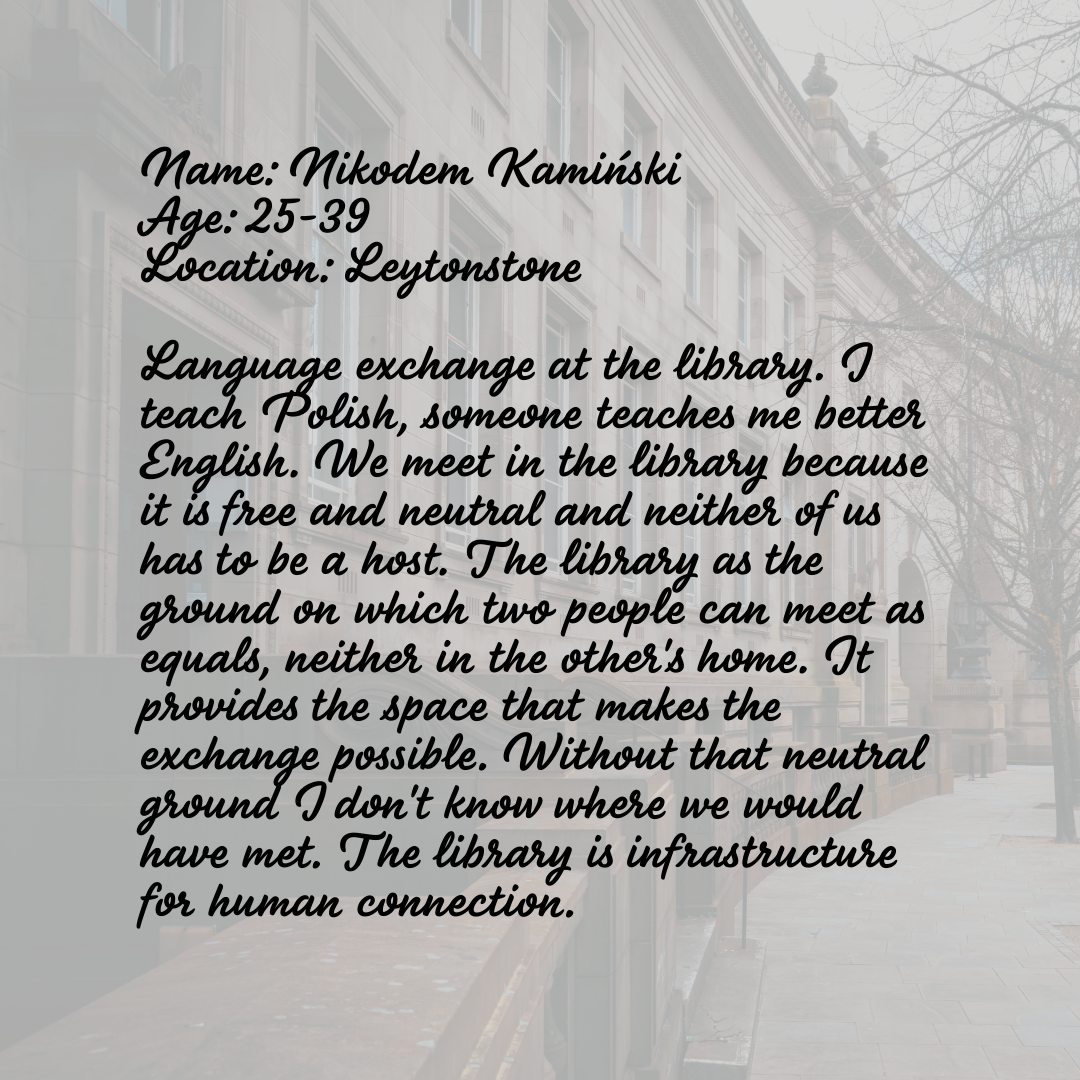
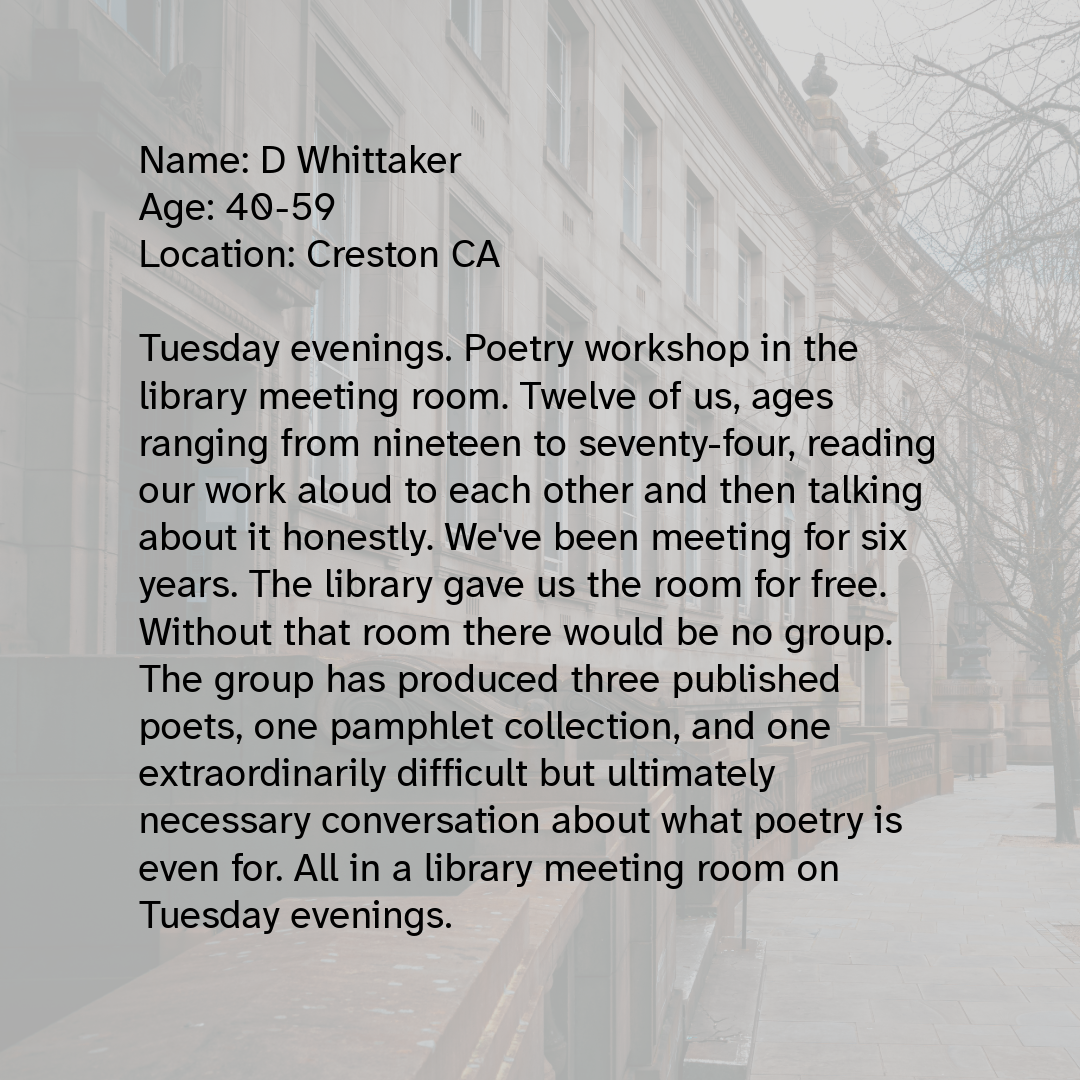
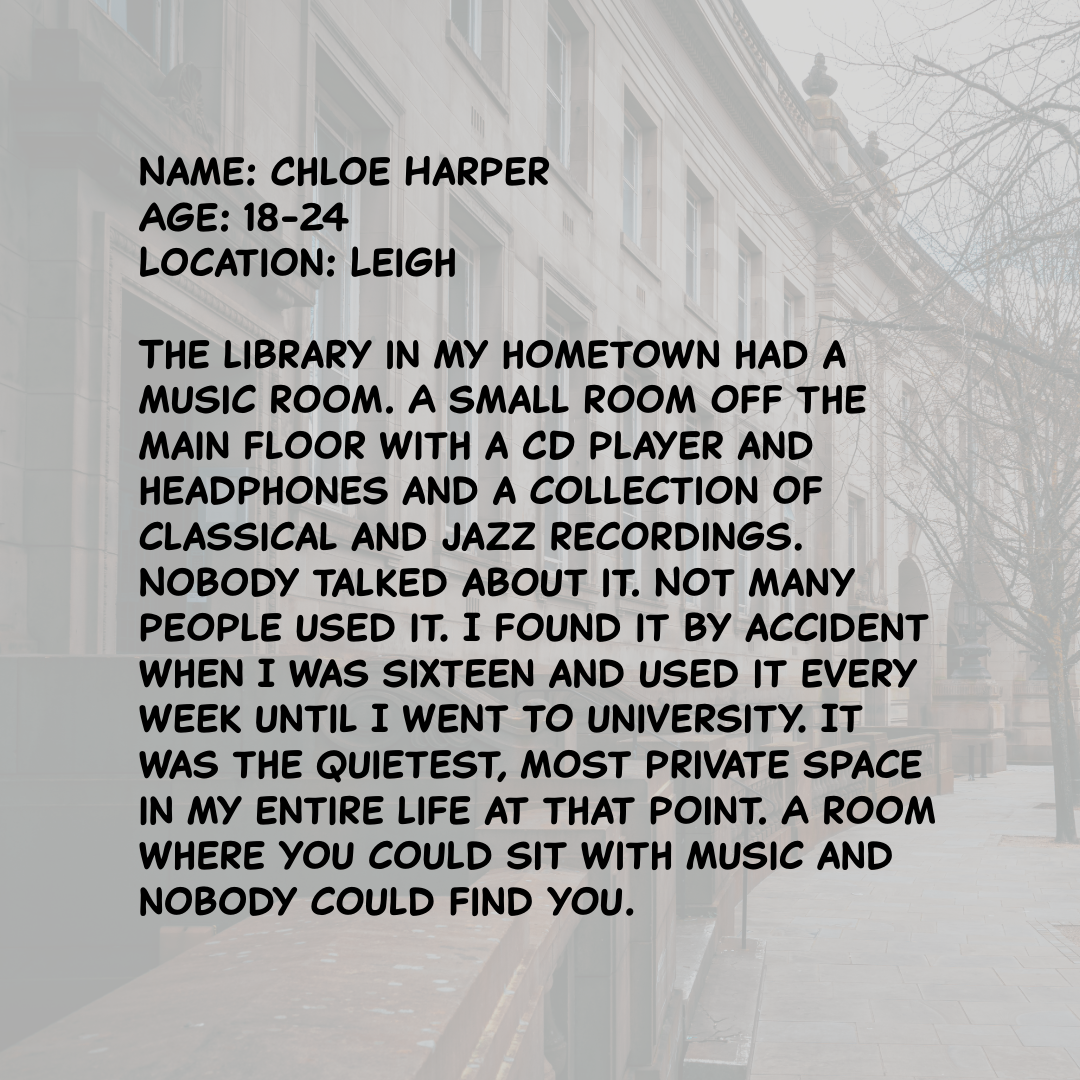
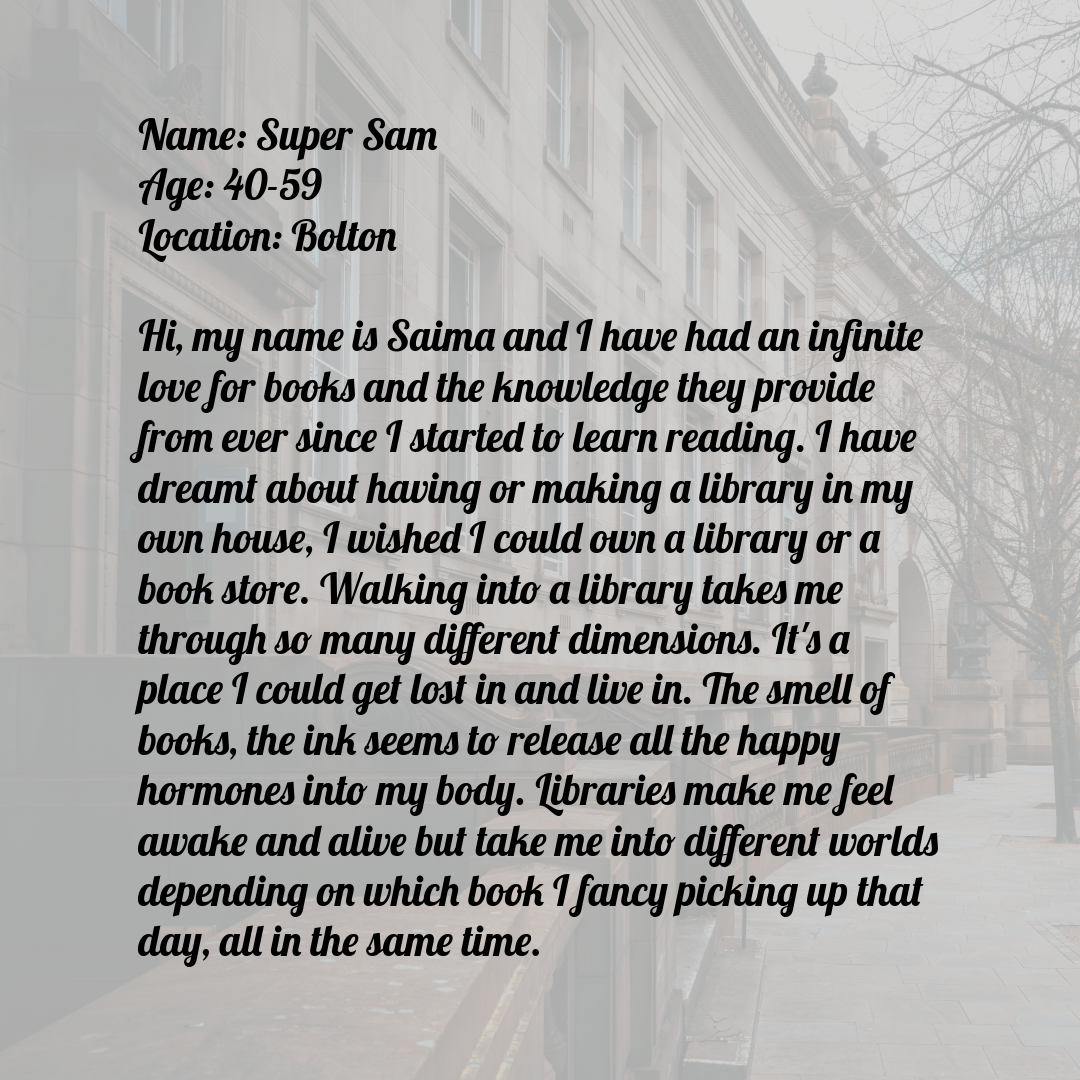
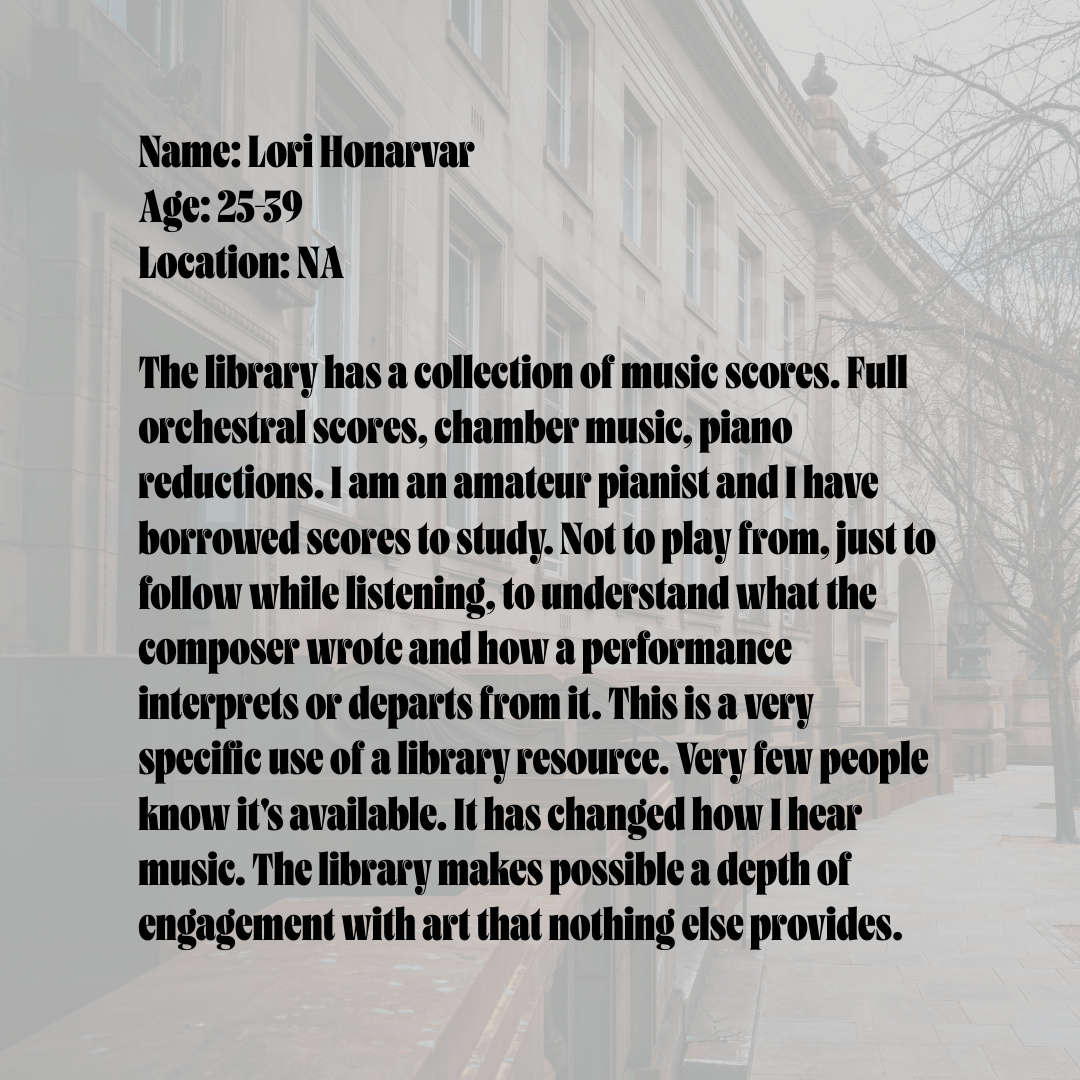
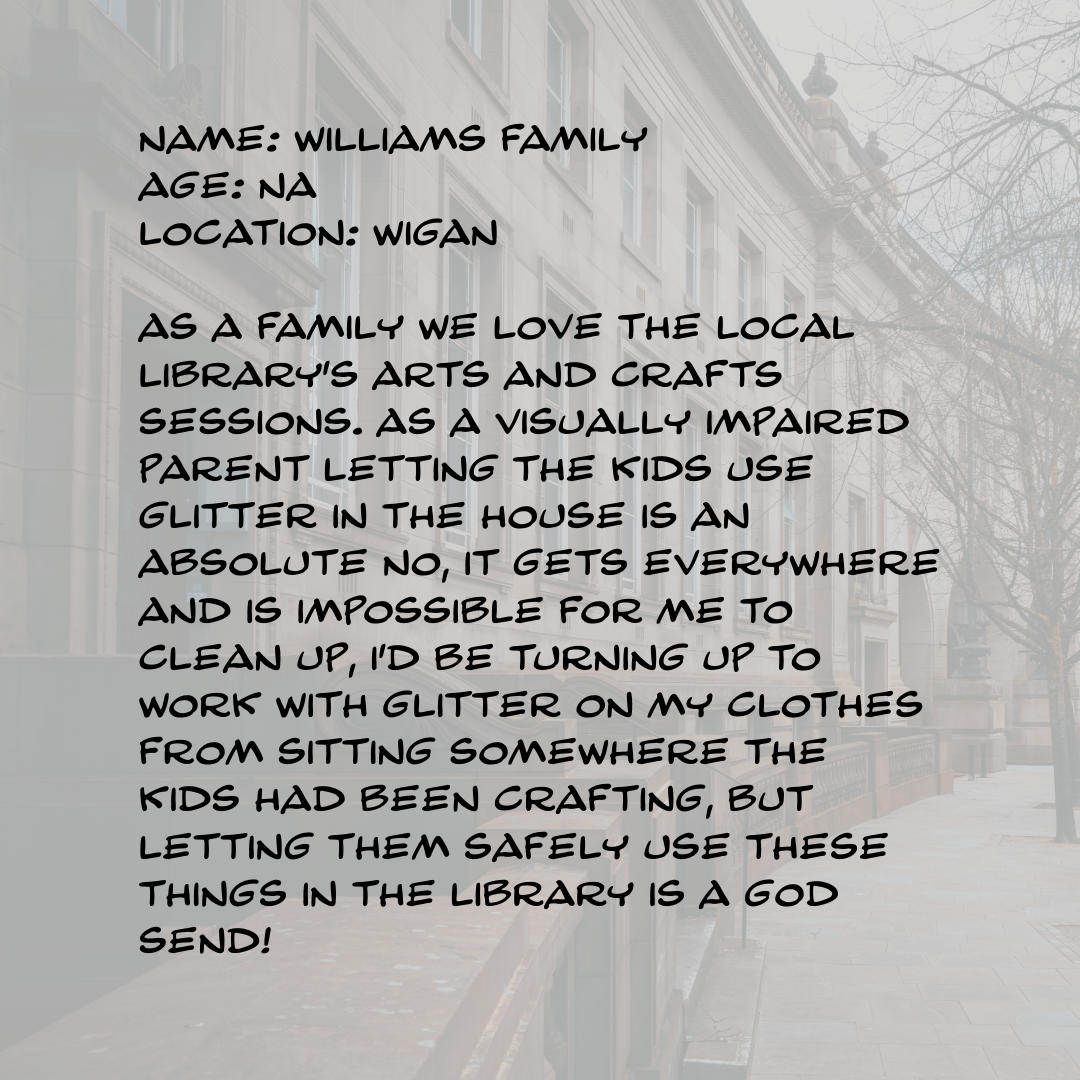
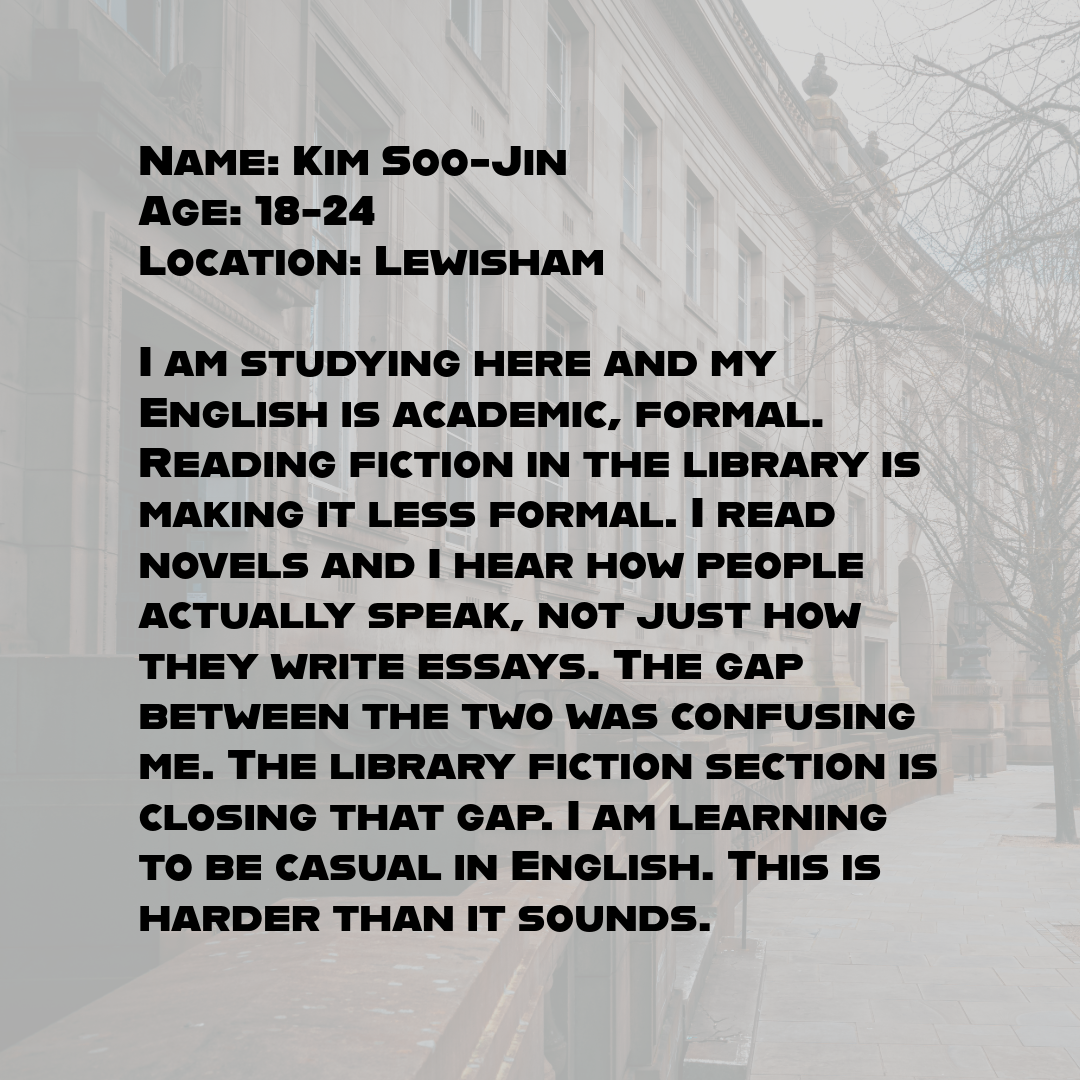
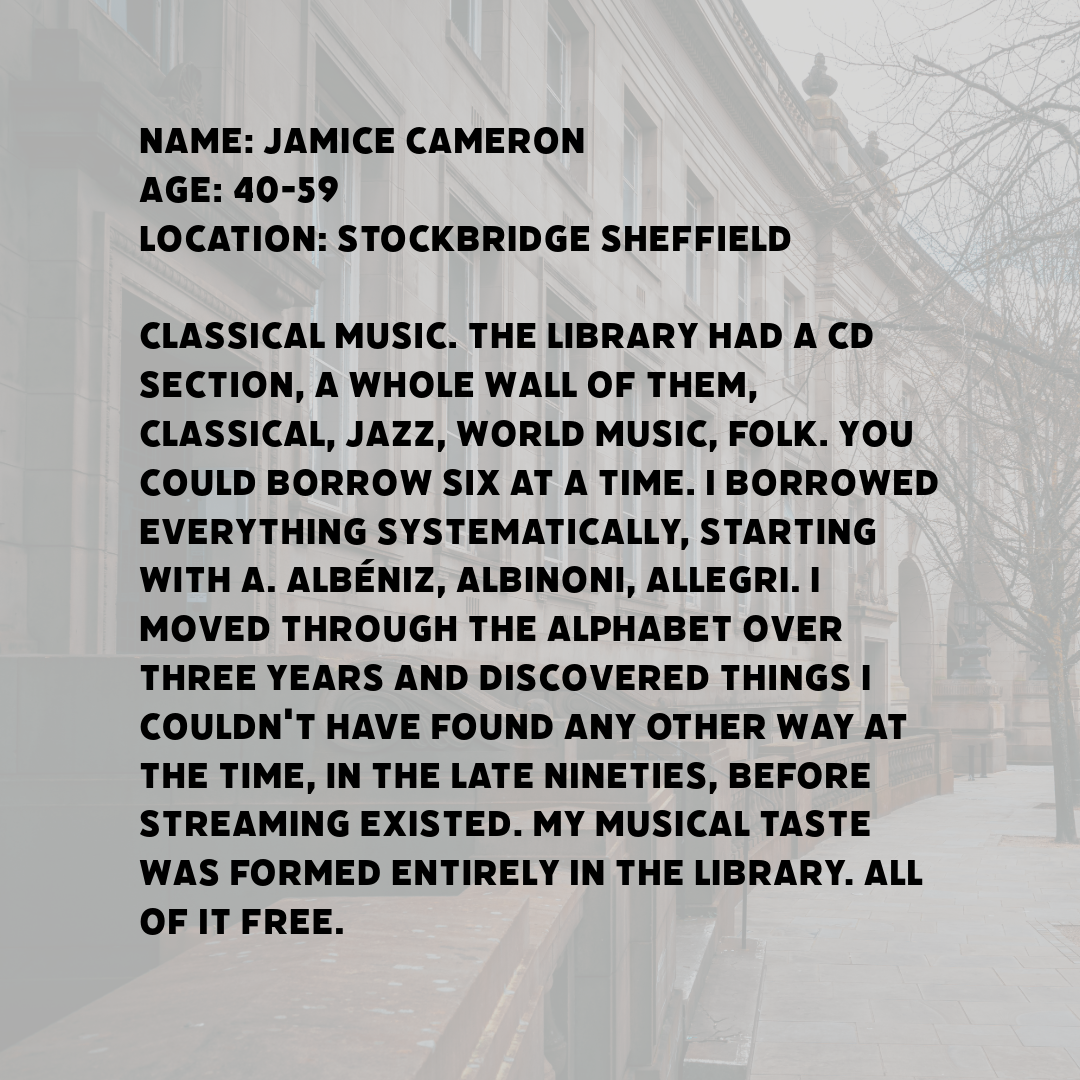
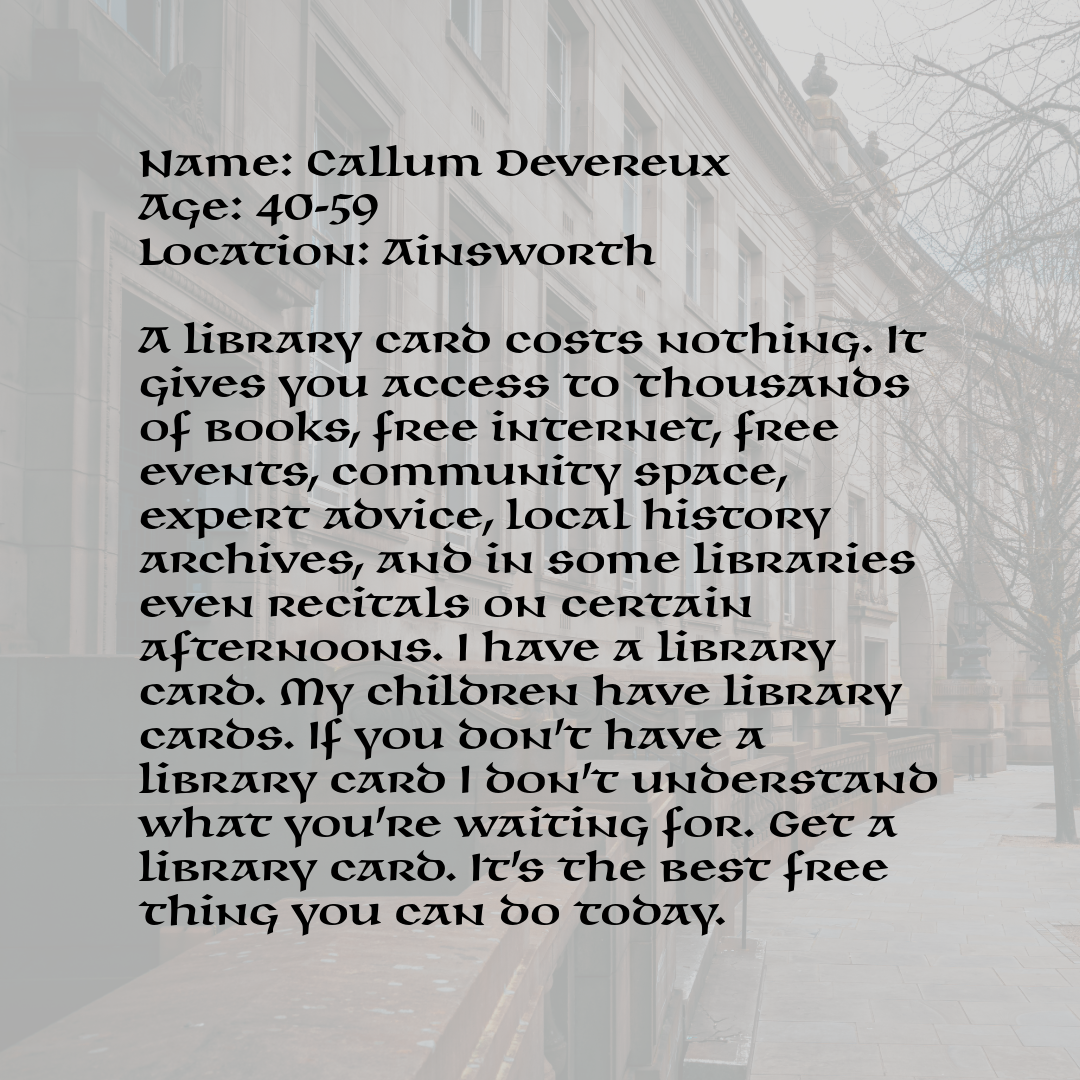
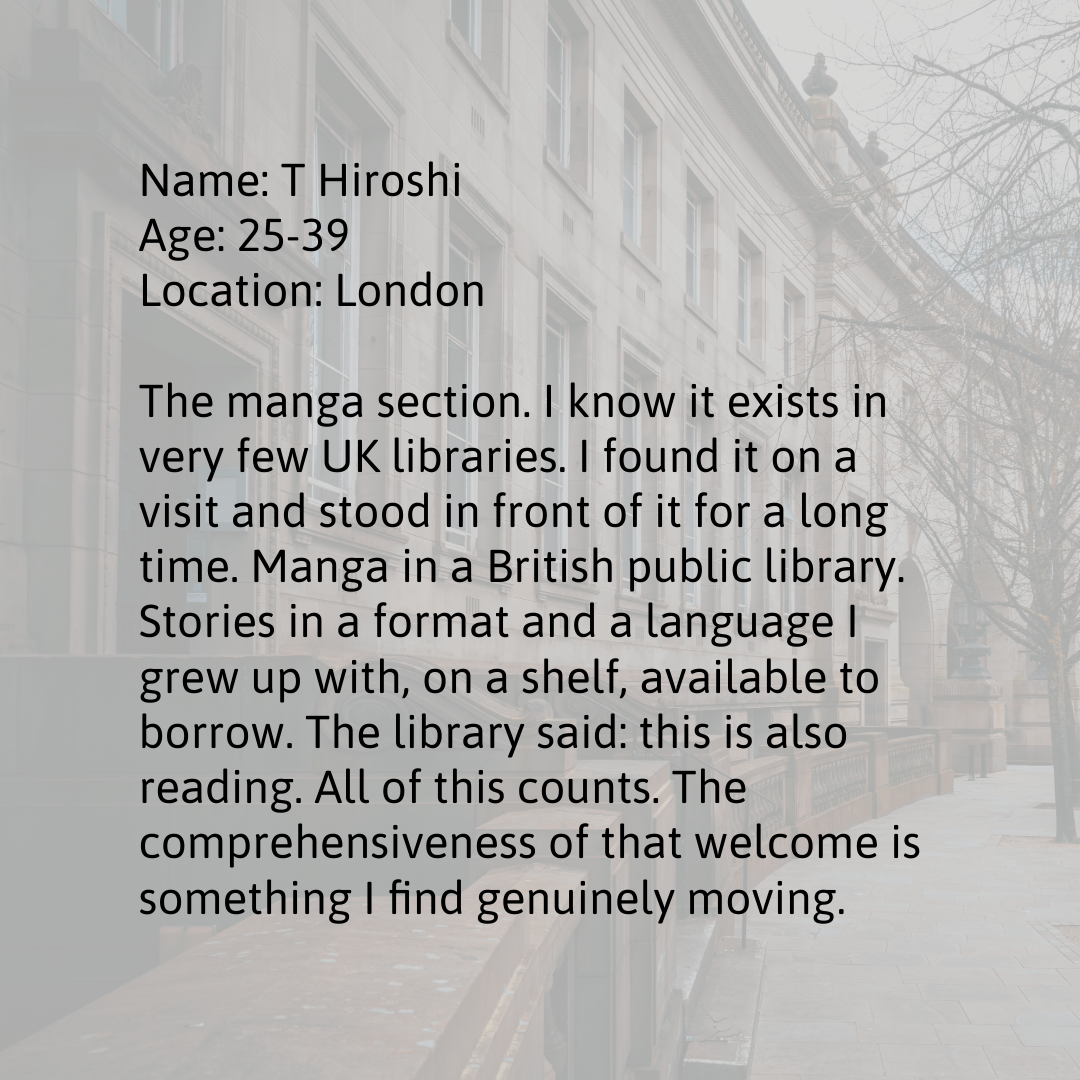
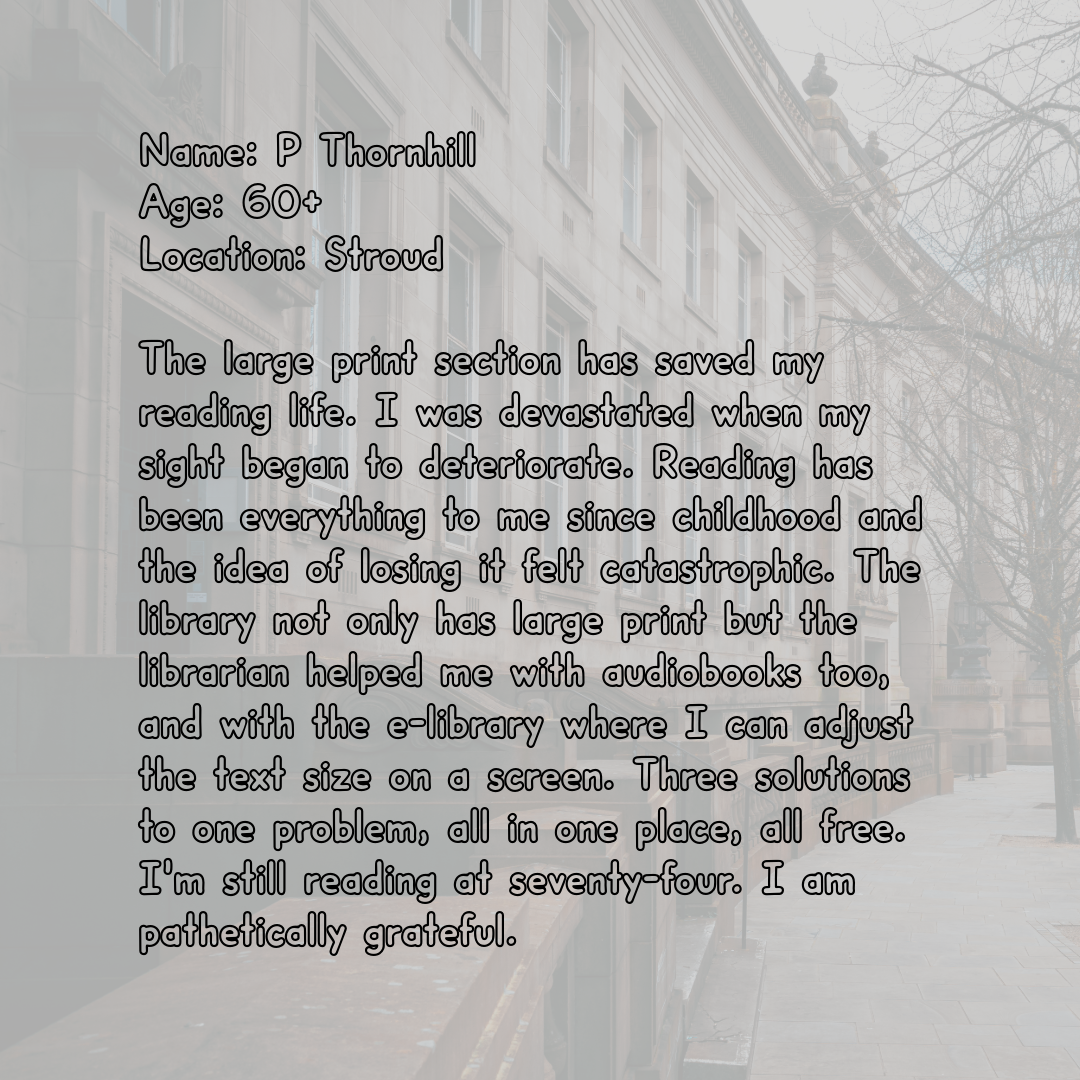
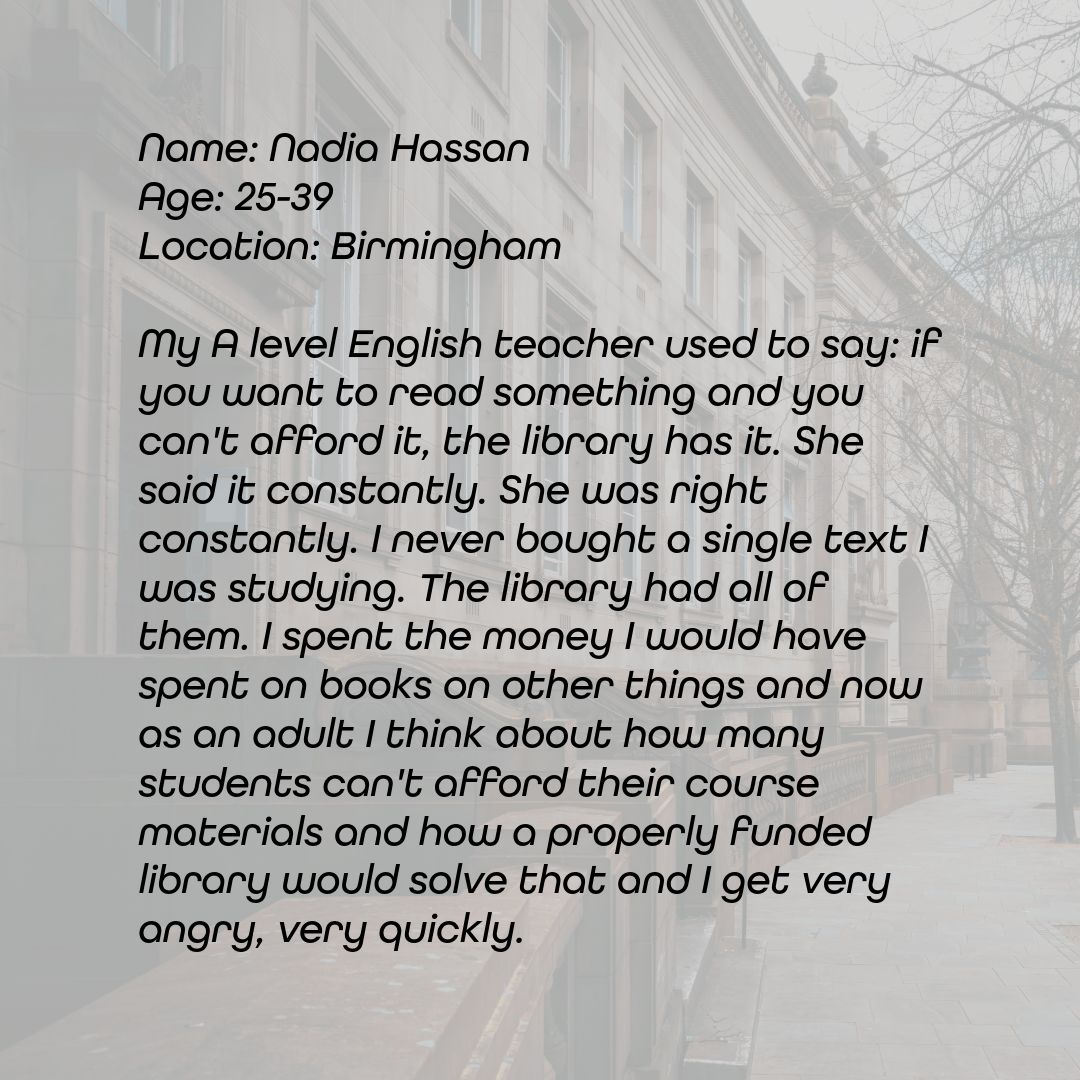
Many respondents reminded us that libraries are vital hubs for practical, almost compassionate daily services, providing public computers for job hunting, a place to cast a vote, access to music, and trusted human guidance when navigating complex paperwork.
Those resources are essential. But the responses this month also point to something harder to name, and harder to replace.
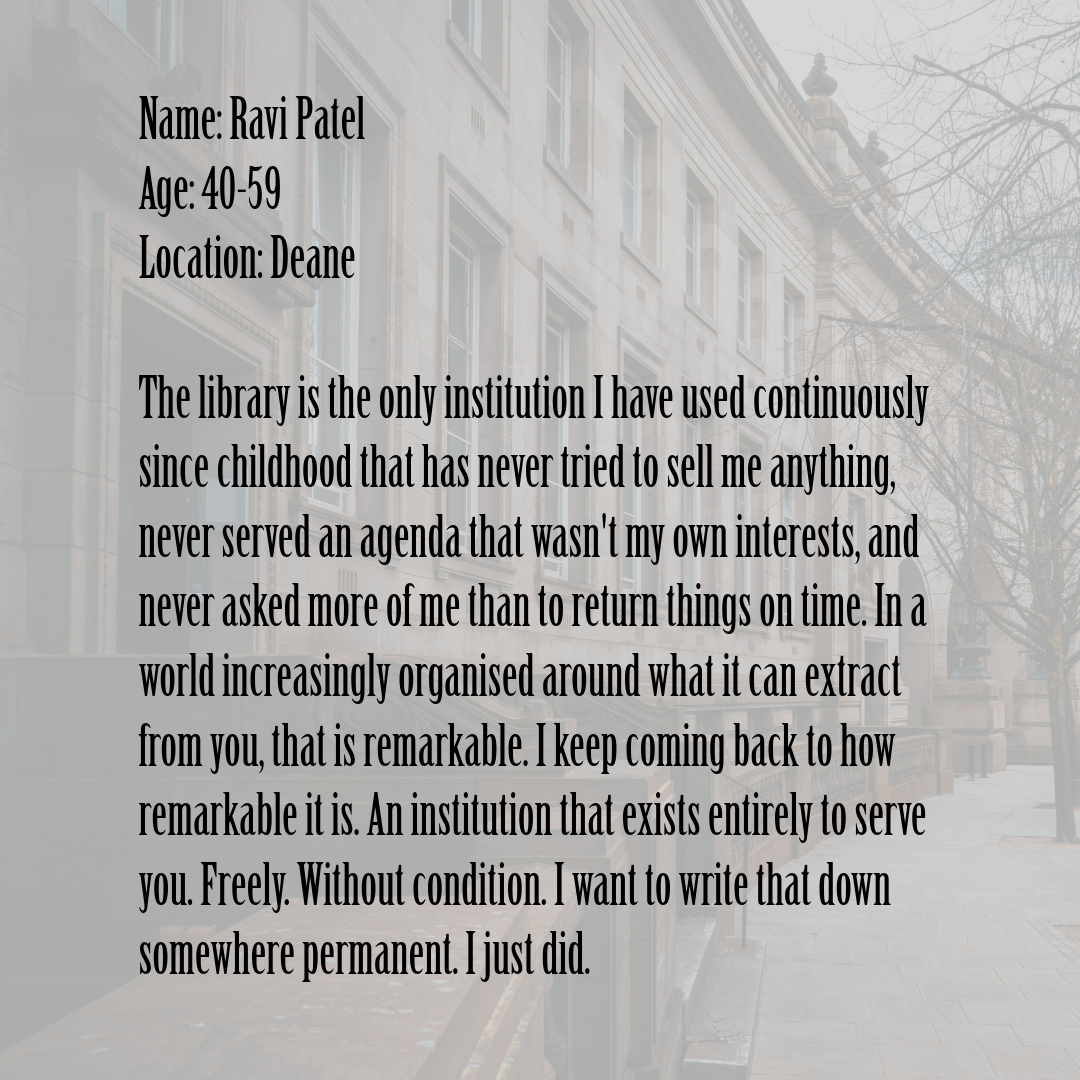
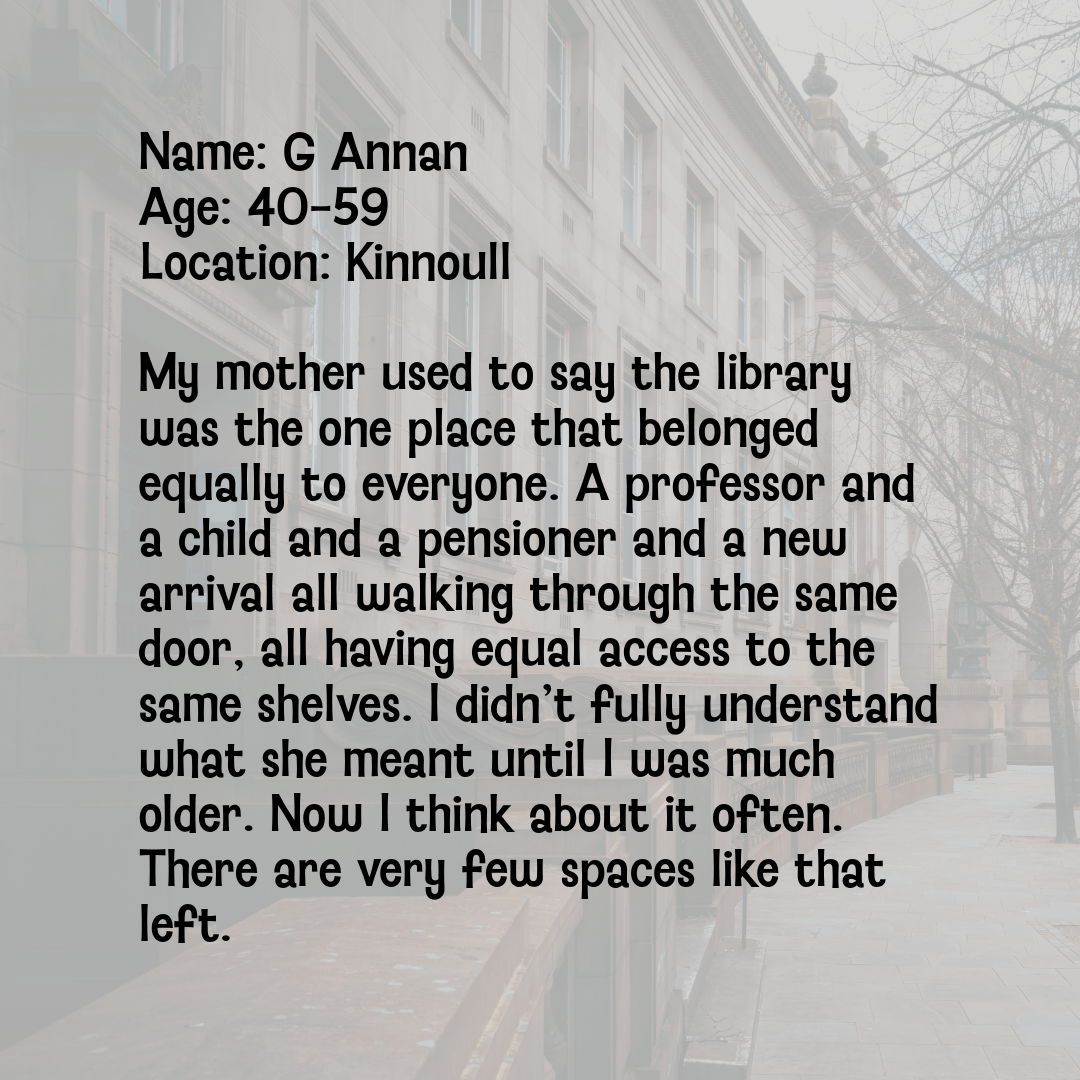
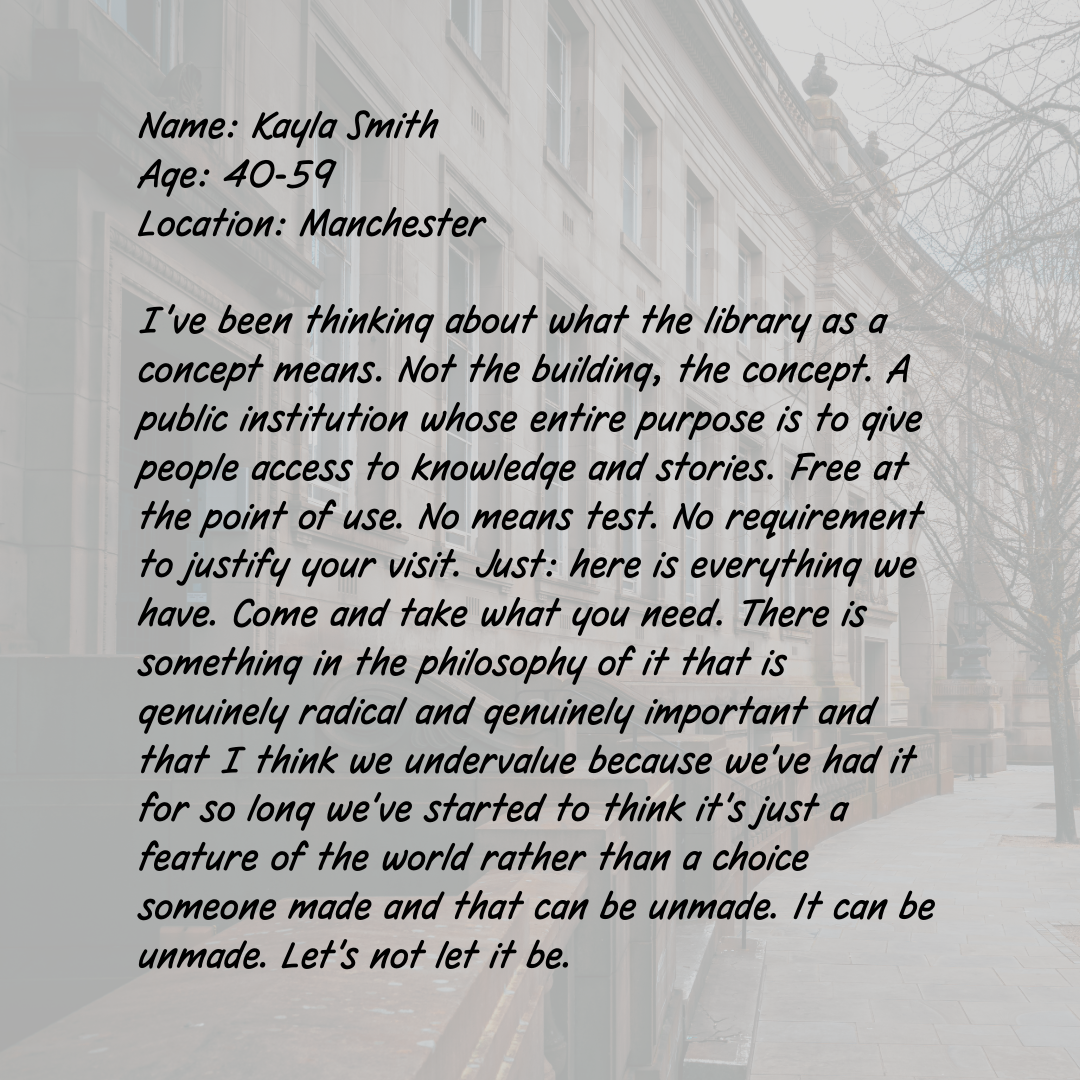
Libraries are one of the only institutions most people encounter that make no demands.
You don’t have to be a customer, a student, a patient, or a service user.
You don’t have to justify your visit or explain what you need.
The building is simply open, and you are welcome in it, and that is the whole arrangement.
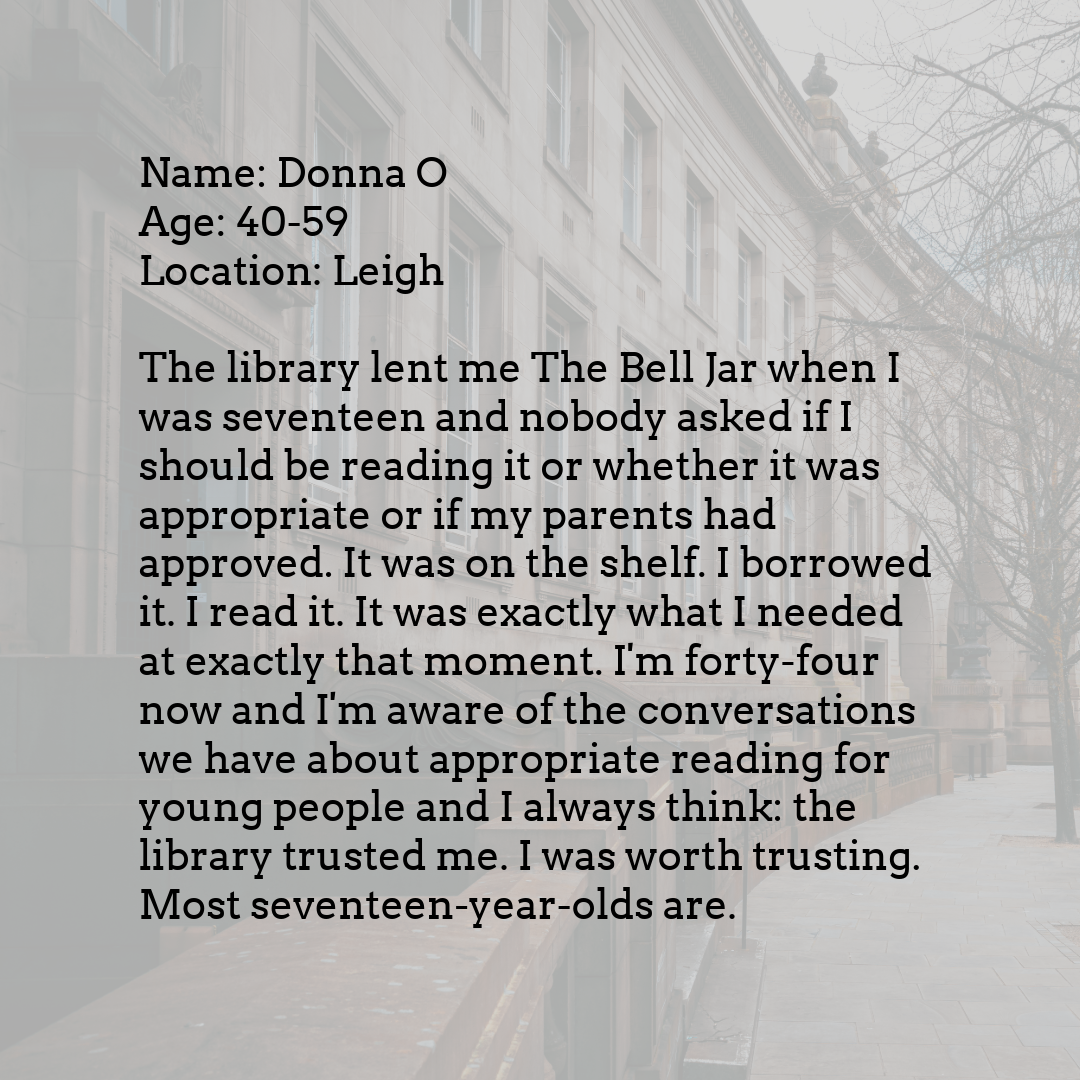
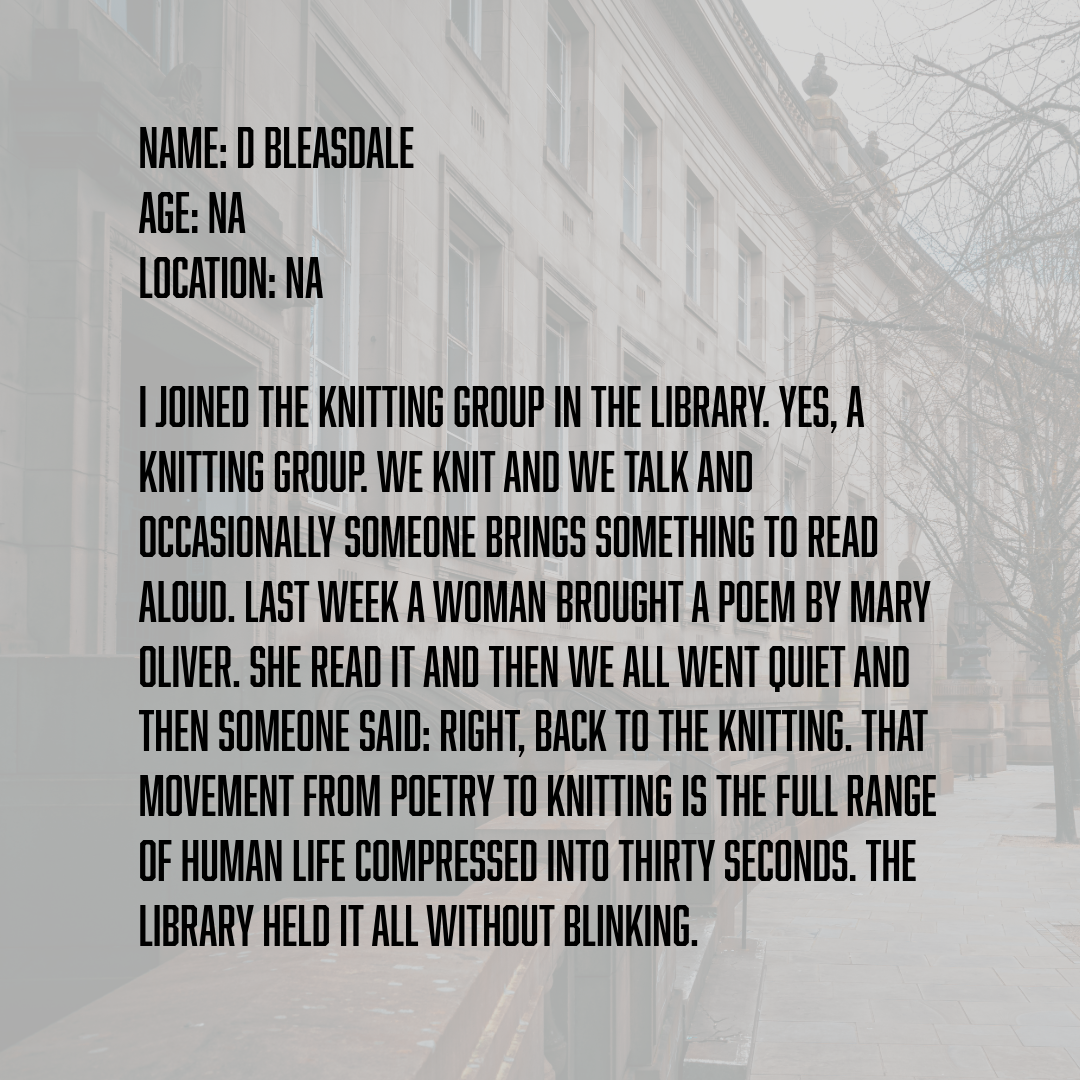
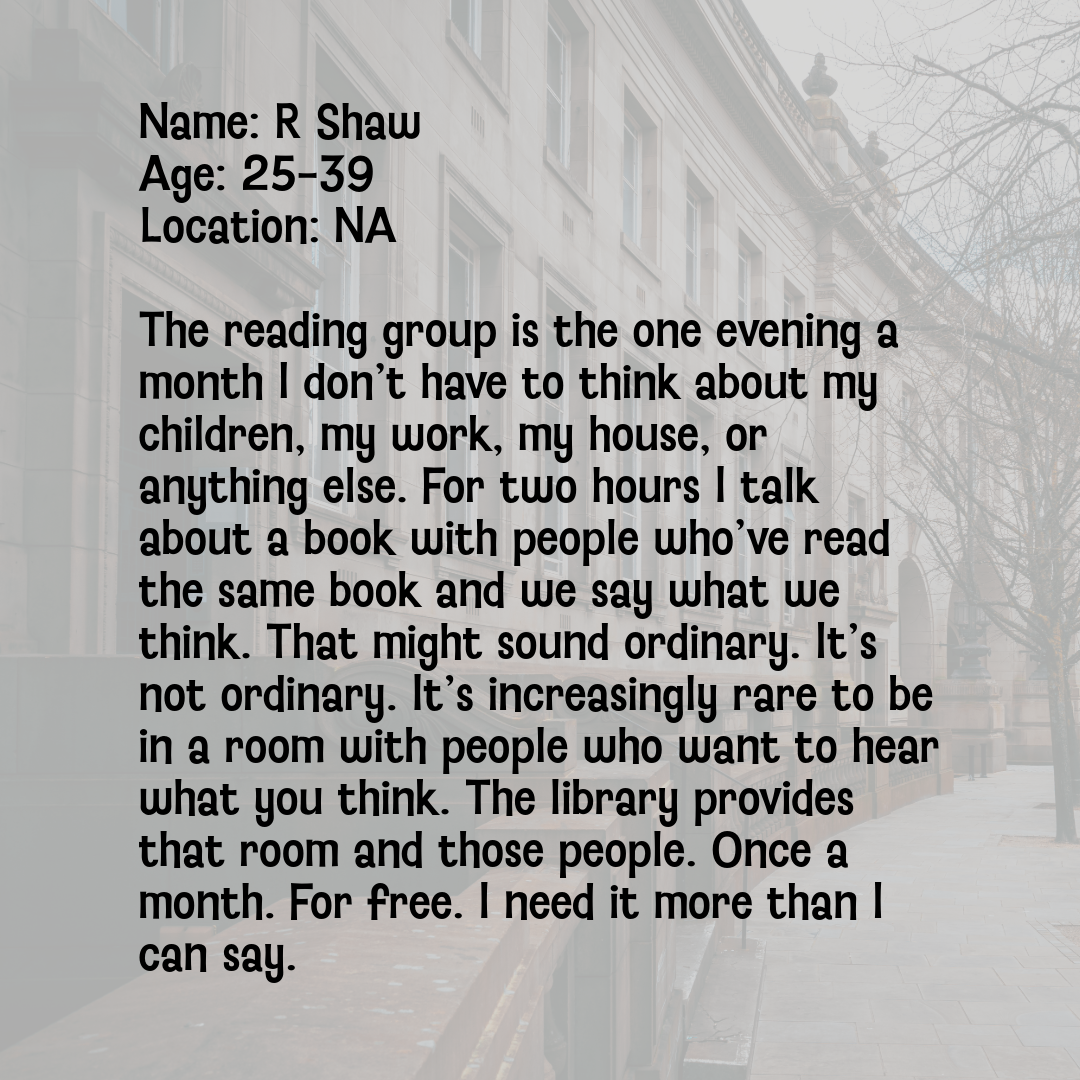
What contributors described, again and again, was what it meant to have access to a space like that, particularly at moments when everything else felt conditional. The library didn’t ask what was wrong. It didn’t require anything of them. It was just there, with its warmth and its quiet and its shelves, offering the same thing it had always offered.
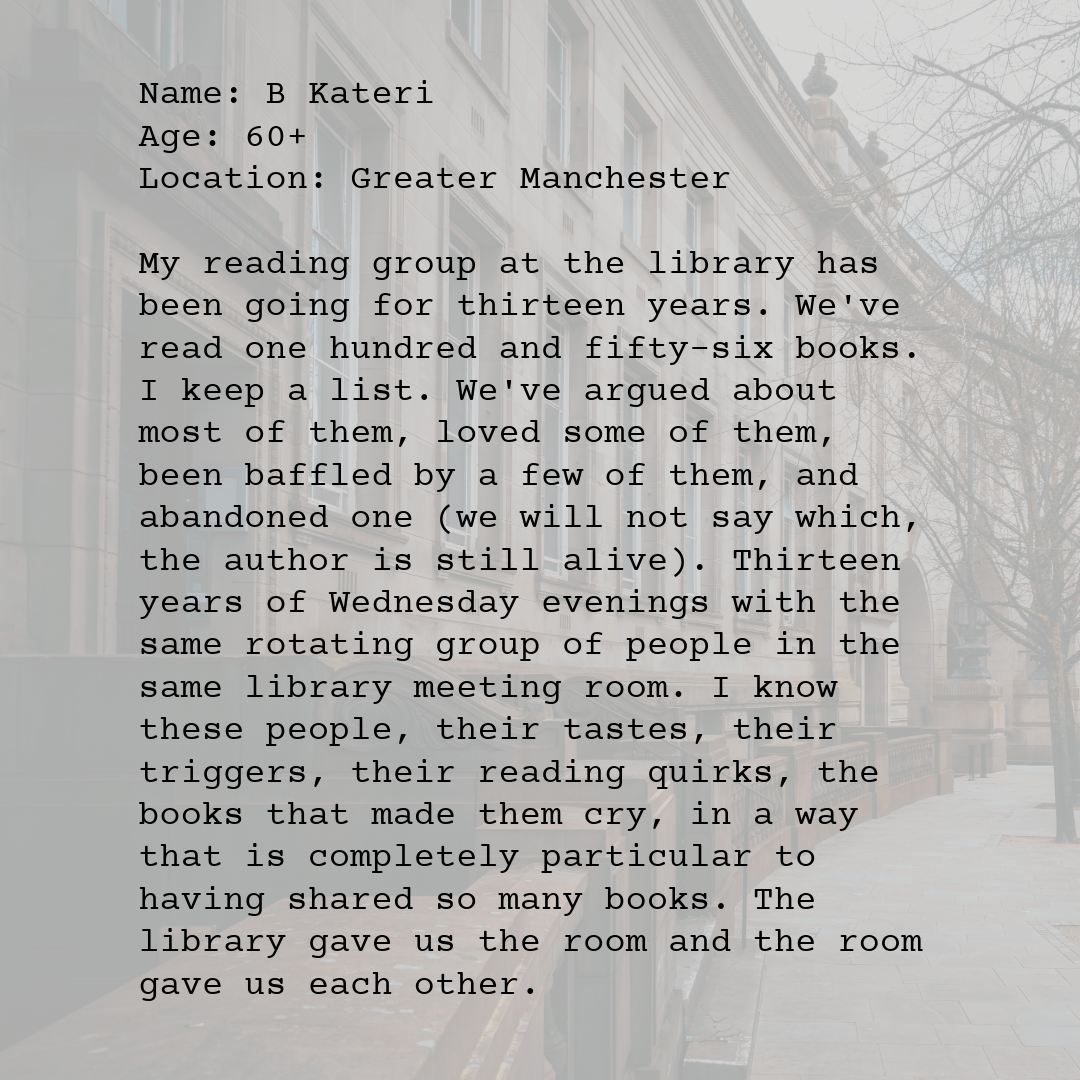
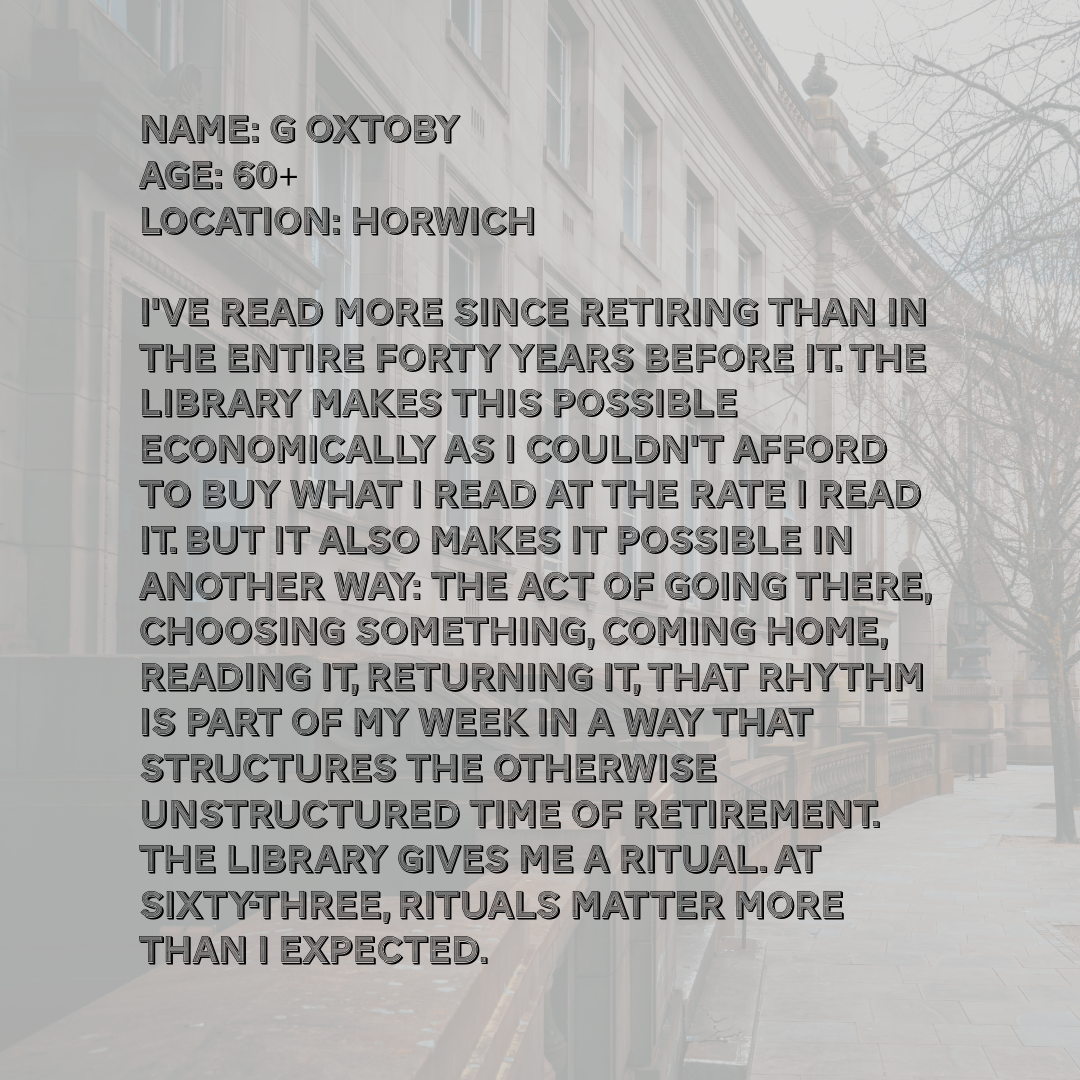
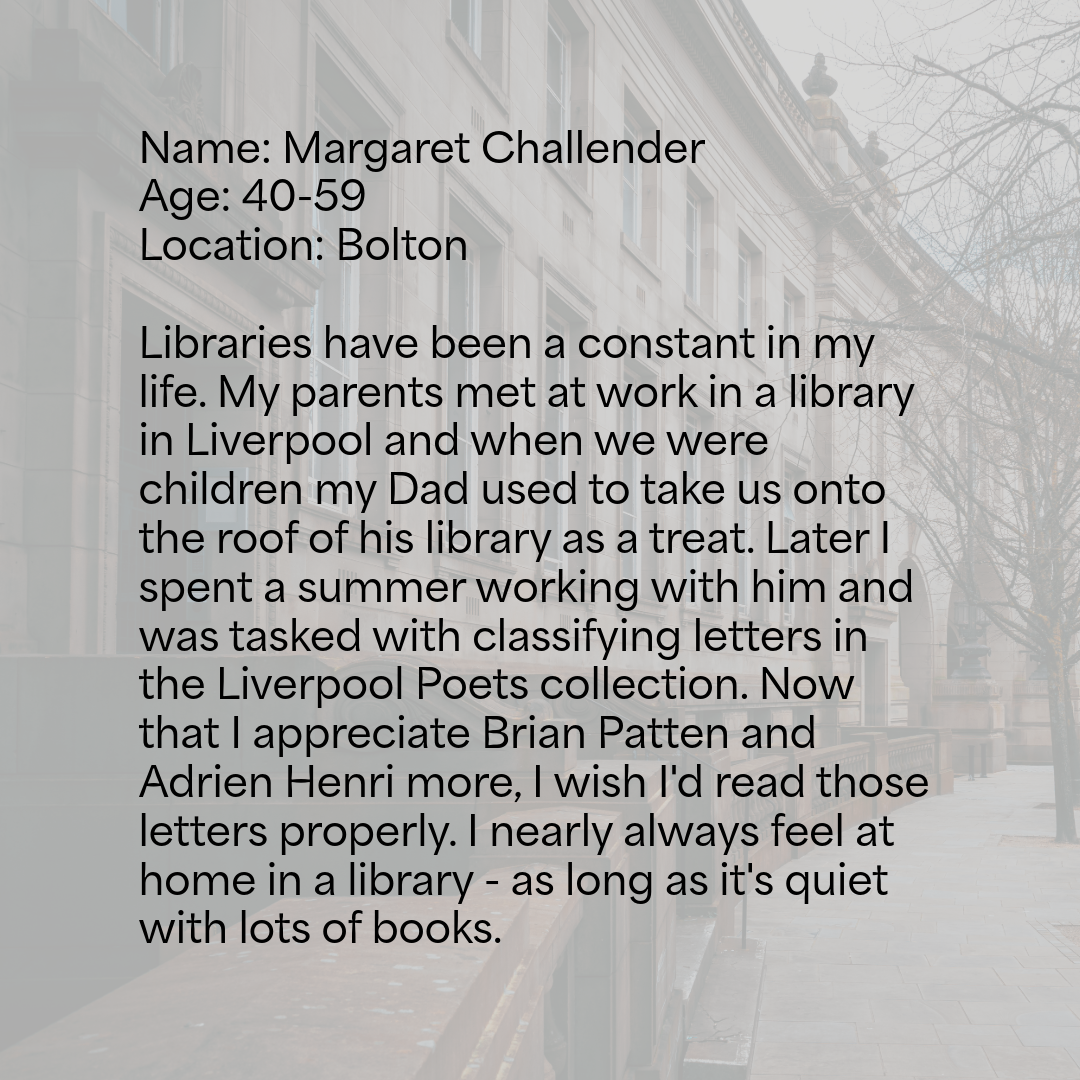
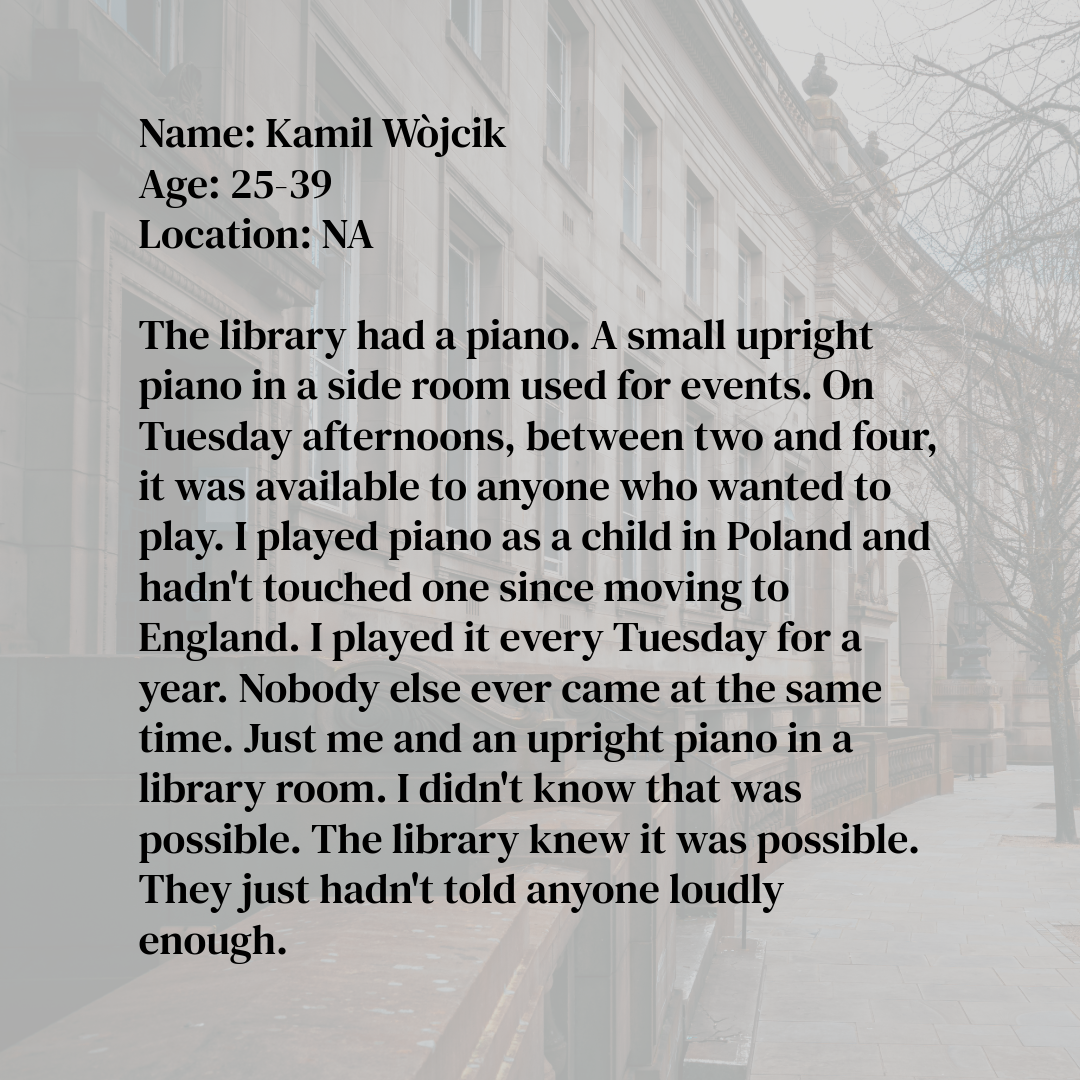
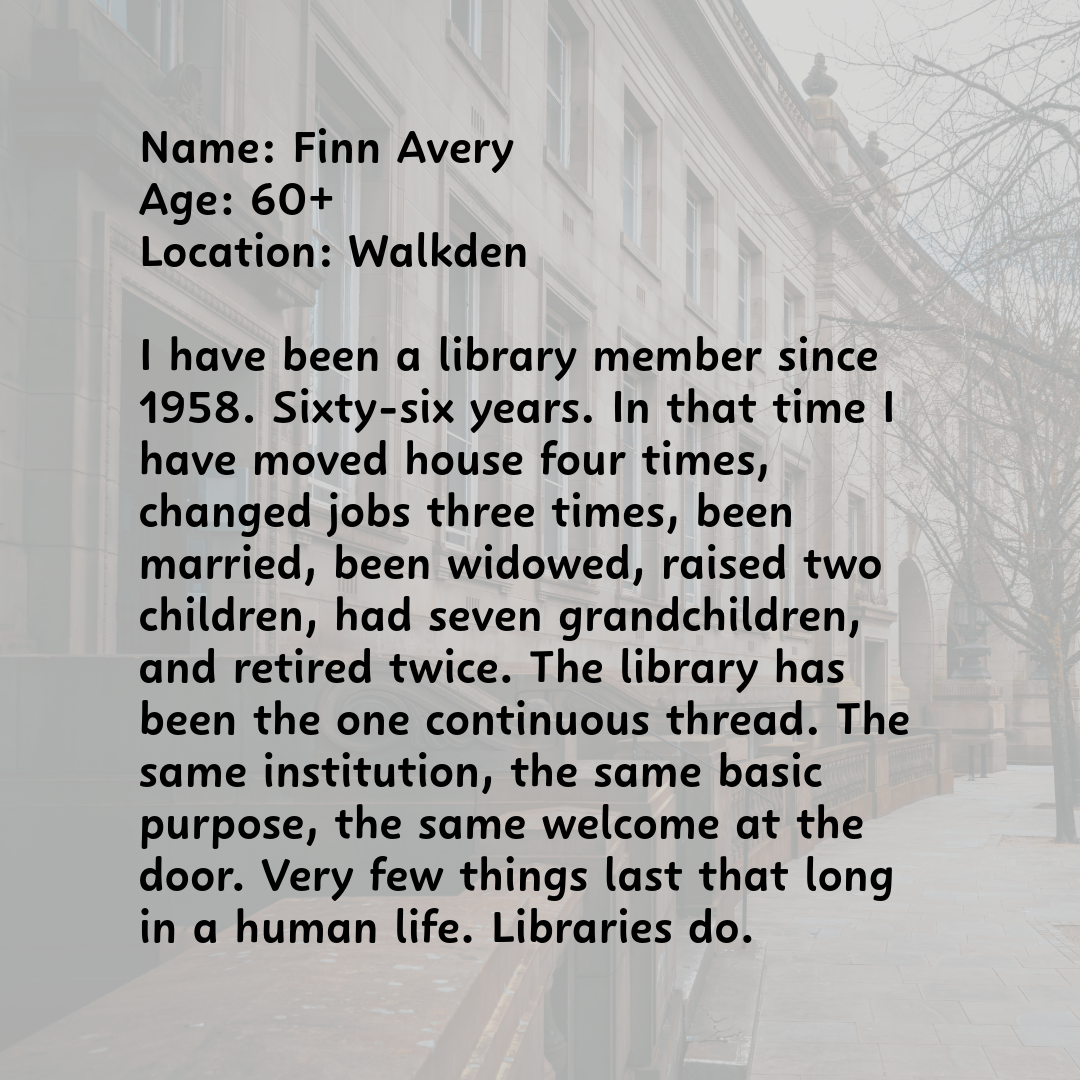
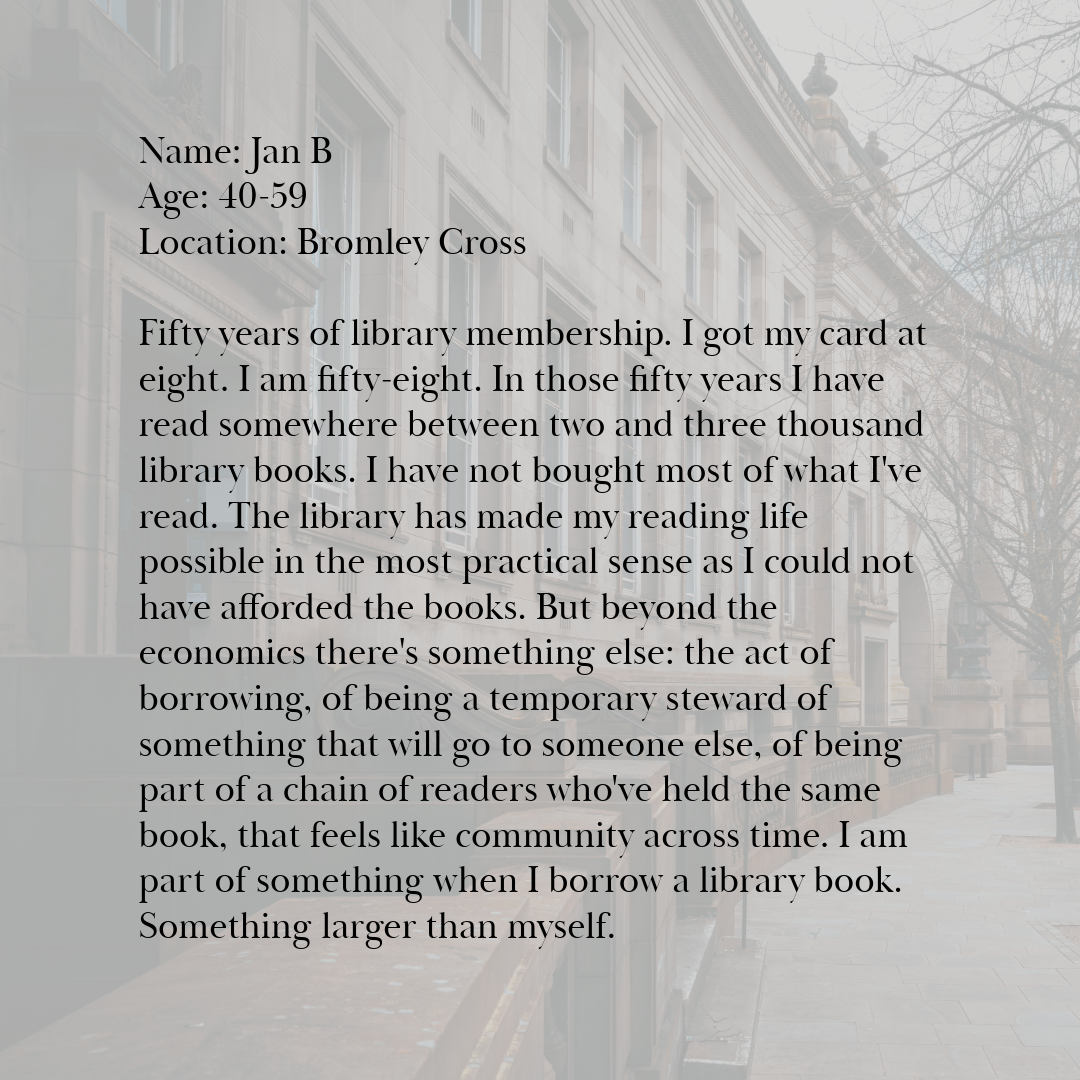
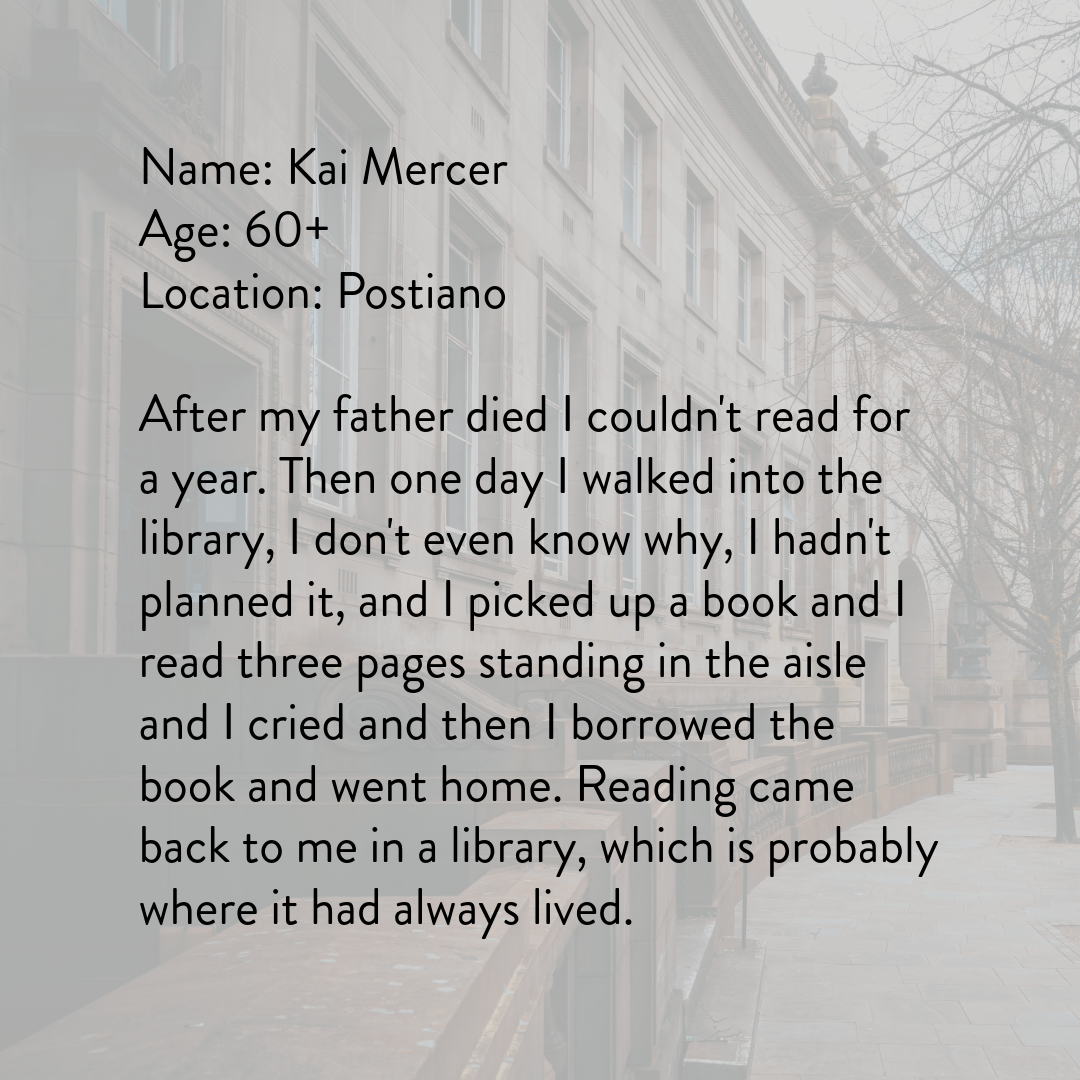
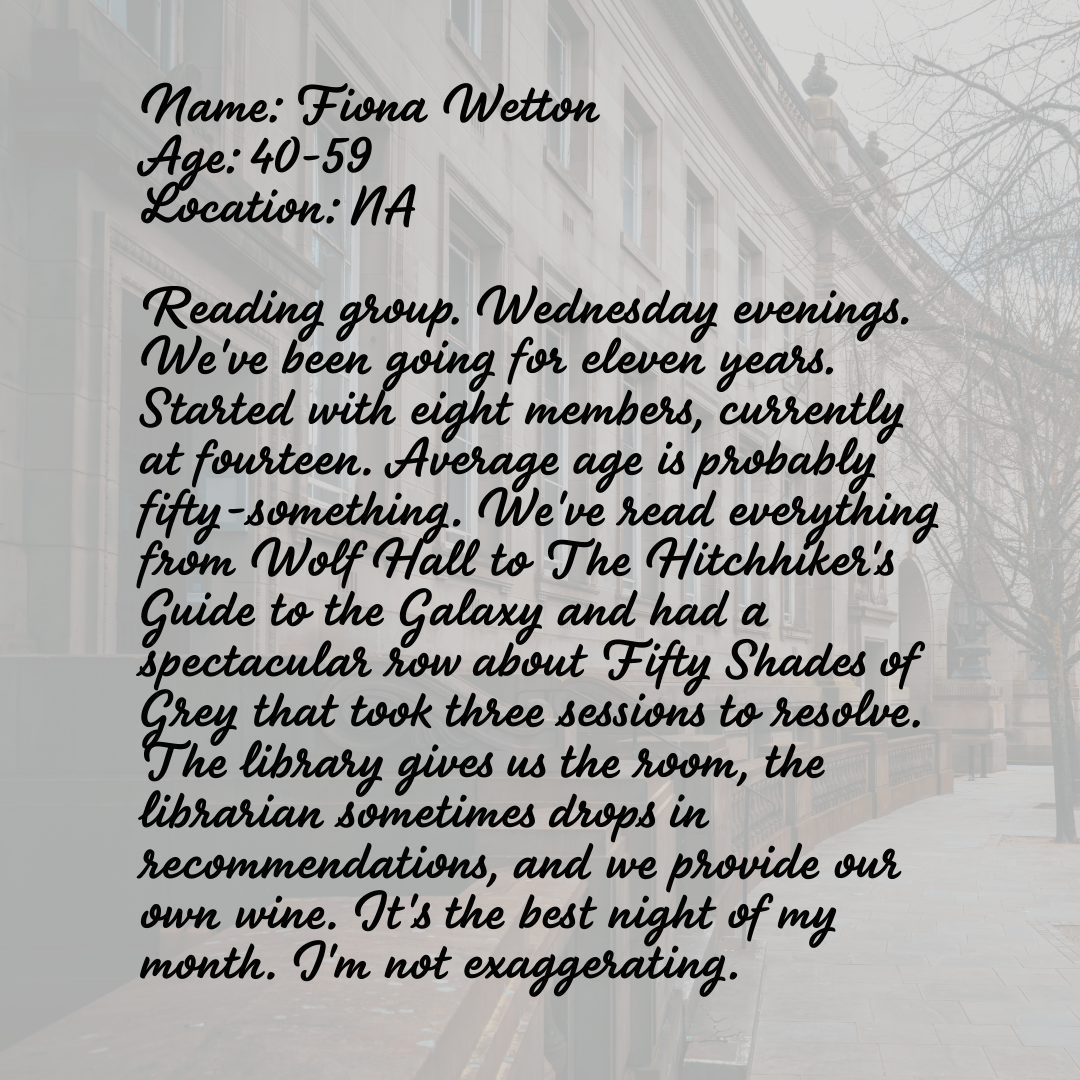
That consistency turns out to matter enormously. People described returning to the same library across decades, through school, redundancy, bereavement, new parenthood, retirement, and finding it unchanged in the ways that counted. One contributor wrote: I’ve been a library member since 1958. Sixty-six years. The library has been the one continuous thread.
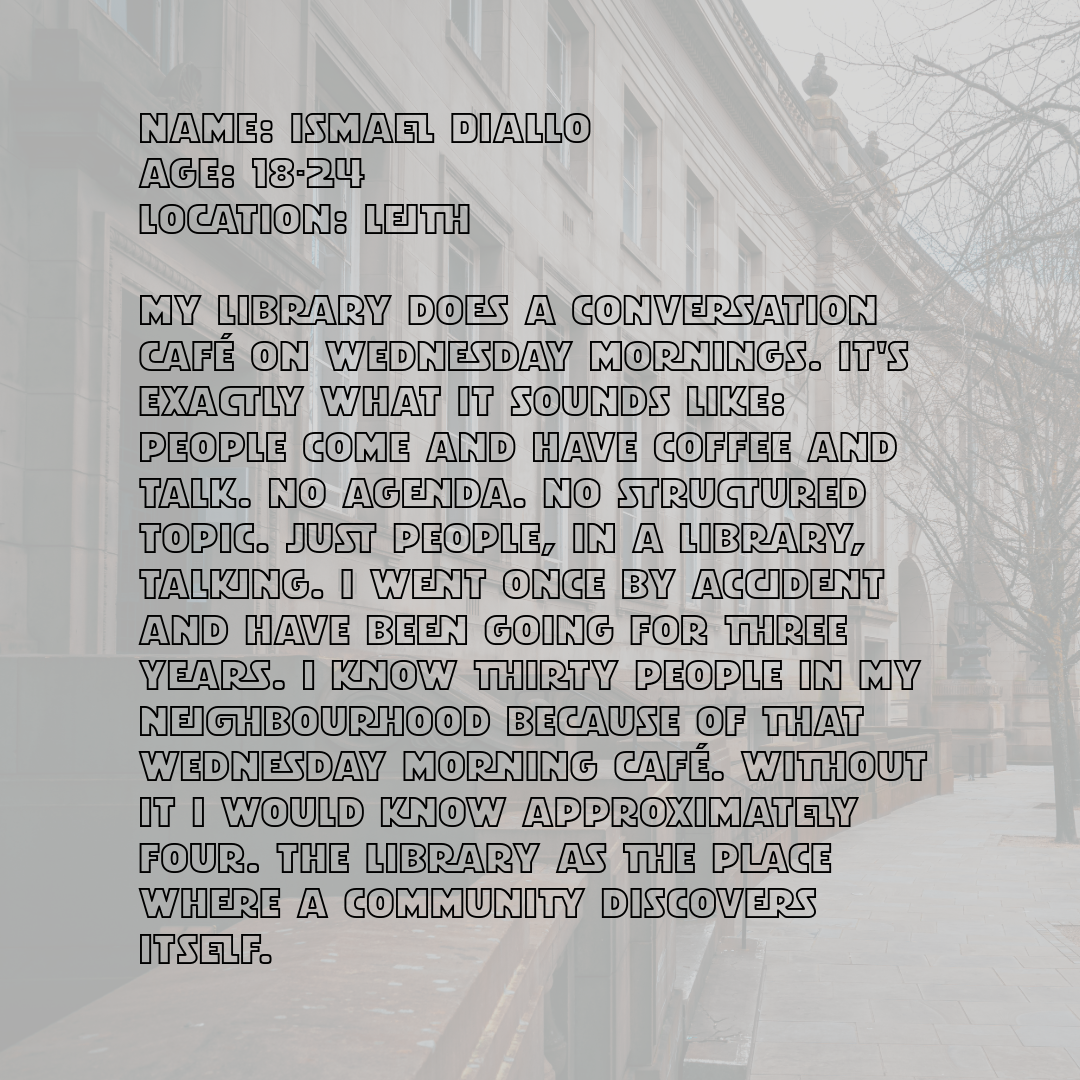
Libraries hold communities together across time in ways that are easy to overlook until they’re gone.
The responses this month are a reminder of what that thread actually consists of: not just books, but the accumulation of small, unhurried, uncounted acts of welcome.