
Six Months of Reading Bolton: What We Learned When We Stopped Asking People to Prove They Were Readers
When we launched Reading Bolton we made one deliberate decision that shaped everything else: no one would have to prove they were a ‘proper’ reader to take part. No login walls. No forms to fill in before you could contribute. No test at the start and another at the end to measure what had changed. Just a question, once a month, and an open invitation to answer it however you wanted, in writing, on video, or however felt right.
Six months and 1,004 contributions later, we think that decision was the right one.
The numbers:
Between February and July, 982 written submissions and 22 video accounts came in, spanning every age group we track, from under-18s to over-60s, plus 26 entries submitted jointly by families across generations. People answered from library computers, from armchairs, from knitting groups, from a “back bedroom of a terraced house in Bolton”. Some wrote a line. Some wrote paragraphs. All of it counted.
But the numbers were never really the point. What mattered was what people were willing to tell us, once nobody was grading them on it.
What people told us:
Again and again, contributors opened with a disclaimer, “I don’t really read books”, “I’m not particularly literary”, and then went on to say something quietly brilliant about a story, a character, or a place that had shaped them.
One contributor, Ethan, a teenager from Dorset, put it simply:
“I don’t really like reading. I’ll be honest. But the school library has manga and graphic novels and I read those. Mr Henshaw says that counts. I think Mr Henshaw is right.”
Others found themselves in characters they’d carried for decades. Dominika, reflecting on Paddington Bear:
“He always stood out to me because he didn’t quite fit in, but people still made space for him. I think that idea stayed with me, that you don’t have to be exactly the same as everyone else to be accepted.”
And some of the most moving submissions weren’t really about books at all, they were about what libraries and reading make possible between people. Latoya wrote about her grandmother, who arrived in England in 1961:
“She told me once that the public library was the first place in this country that made her feel welcome. Not just tolerated. Welcome. […] She used it for sixty years. She was ninety-one when she died and she still had an active library card. I keep it in my wallet.”
One anonymous contributor, describing how reading changed after their spouse’s Parkinson’s diagnosis, offered a definition of reading we hadn’t expected but couldn’t argue with:
“I started reading him differently. I learned his eyes instead. The way his hands move. […] Love teaches you to read. That’s what I’ve learned from it all. It just changes the language sometimes.”
What surprised us:
A few things emerged that we didn’t set out to find.
- People said things on camera they didn’t put on the page.
When we compared written submissions to video accounts from the same month, the video responses exposed disclosures of dyslexia, vivid physical memories (the torch under the covers, the exact chair), and stories of hearing a book read aloud long before ever reading it themselves, almost none of which showed up in writing. It’s a reminder that offering more than one way to take part isn’t just about accessibility box-ticking; different formats genuinely surface different truths.
- The definition of “reading” kept getting bigger.
Over six months, contributors told us that reading a football scrapbook counts. Reading a parish register counts. Reading a K-drama, a piece of music, a diary, even, by July, reading a person’s face or the weather, all counts. We didn’t set out to redefine reading. Our contributors did it for us.
- One writer told us something that changed how we think about our own service gaps.
Ashleigh, describing the first time she read her work aloud at a library writing group:
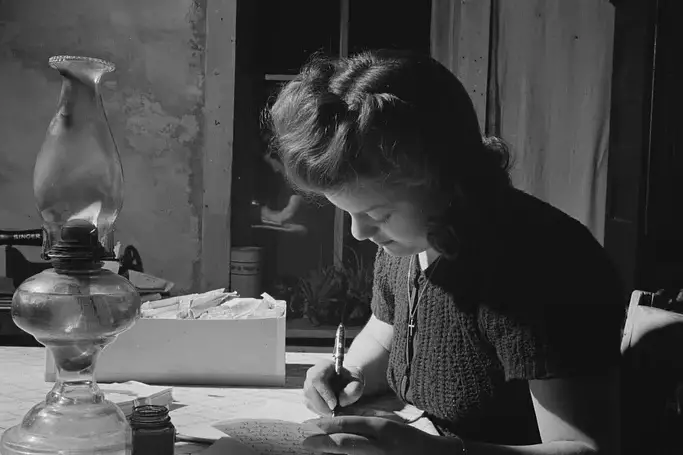
“I was forty-three. I had been writing in secret for twenty years. My hands shook so much I couldn’t hold the paper properly.”
Twenty years between wanting to write and finding somewhere to do it. That gap, between reading and writing quietly on your own, and finding a room where that’s welcomed, showed up again and again in our later months of data. It’s the clearest, most fixable thing this project has found.
What’s next:
We’re taking that last finding seriously. One of the concrete next steps coming out of this evaluation is a publicly accessible community writing toolkit, designed to help people who write privately find their way to existing library-hosted writing groups sooner than Ashleigh did. It won’t solve everything, but it directly addresses a gap our own contributors identified for us.
We’re also going to keep the spoken and video option open for future prompts, and keep watching for the patterns this first six months only started to reveal.
Read the full evaluation:
This post only scratches the surface. The full mid-term evaluation report, including our methodology, the complete dataset breakdown, and all our findings and recommendations, is available to view at this link.